
The Real Reason Ice Dams Form, Explained Five Whys Deep
The real reason ice dams form usually isn’t on the roof at all. Have you ever seen huge icicles hanging from a gutter, or a gutter pulling loose from the fascia under the weight of ice? That’s an ice dam, and it starts somewhere you can’t see from the driveway.
Ice dams can damage shingles, sheathing, insulation, and even the drywall inside your home. So let’s do what curious kids do best: keep asking “why?” until we reach the real reason.
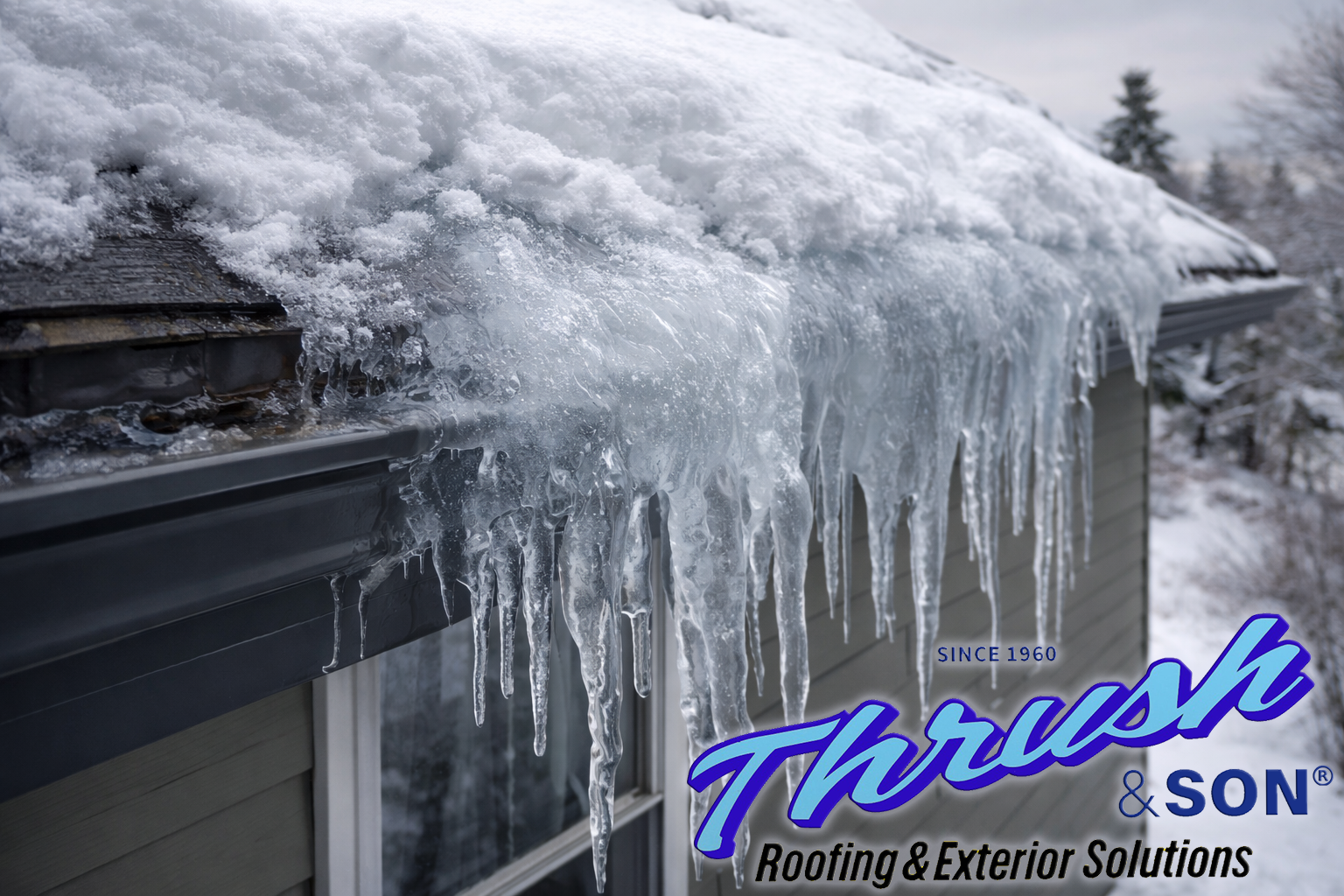
The Real Reason Is a Two-Temperature Roof
An ice dam needs a roof that is warm in one place and cold in another. The University of Minnesota Extension explains it simply: the higher part of the roof’s surface must be above 32°F while the lower surfaces stay below 32°F.
Snow melts on the warm upper roof, water trickles down, and it freezes again over the cold overhang. Every day it repeats, the dam grows, and the water behind it has nowhere to go but under the shingles.
Finding the Real Reason With Five Whys
Engineers use the “five whys” to find root causes. Tap the question under each answer to dig one level deeper.
-
What we see
There’s a ridge of ice and a row of long icicles along the edge of the roof.
-
Why #1
Snow higher on the roof melted, and the water ran down and froze again at the cold eave.
-
Why #2
The upper roof surface was above 32°F while the lower edge stayed below freezing, which is exactly how the University of Minnesota Extension explains ice dams.
-
Why #3
Heat from the living space got into the attic and warmed the underside of the roof deck.
-
Why #4
Warm air leaks through gaps around ceiling lights, chimneys, attic hatches, bath fans, and ductwork, and thin insulation lets even more heat through.
-
Why #5Root cause found
The attic was never sealed, insulated, and vented as one system. That’s the real reason ice dams form, and it’s the part you can fix for good.
Six Myths That Hide the Real Reason
Tap an ice cube to melt the myth. Each answer comes from university extension research or the building code.
How Much Insulation Is Enough Today?
Most of Ohio, including the Miami Valley, sits in climate zone 5. When we first wrote about ice dams, the conversation was R-38 to R-60. Today, ENERGY STAR recommends R49 when you’re adding to 3 to 4 inches of existing insulation, and R60 for an attic with none.
The depth it takes depends on the material, so a good installer works from the product’s coverage chart. Compare cellulose insulation and fiberglass vs spray foam, and remember: seal the air leaks first, or warm air simply flows around the insulation.
Six Steps That Treat the Cause
Heat cables and roof rakes treat symptoms. These steps go after the cause, starting in the attic and finishing at the roof edge.
- 1SealAir-seal the attic floorClose gaps around lights, plumbing and wiring holes, chimneys, and the attic hatch so warm air stays downstairs.
- 2InsulateBring insulation up to today’s levelsFor our climate zone, ENERGY STAR recommends R49 when adding to 3–4 inches of existing insulation and R60 for an empty attic (ENERGY STAR).
- 3VentBalance soffit intake and ridge exhaustNatural ventilation helps keep the roof deck evenly cold. Compare setups in ventilation options.
- 4RedirectRoute exhaust outdoorsBath and kitchen fans should vent outside through the roof or wall, never into the attic or just above the roof surface.
- 5ProtectInstall a leak barrier at the eavesGAF leak barrier at the roof edge is the backup that keeps water out if a dam does form.
- 6InspectCheck it every spring or fallA quick look at the attic and roof edge before winter catches problems while they’re small.
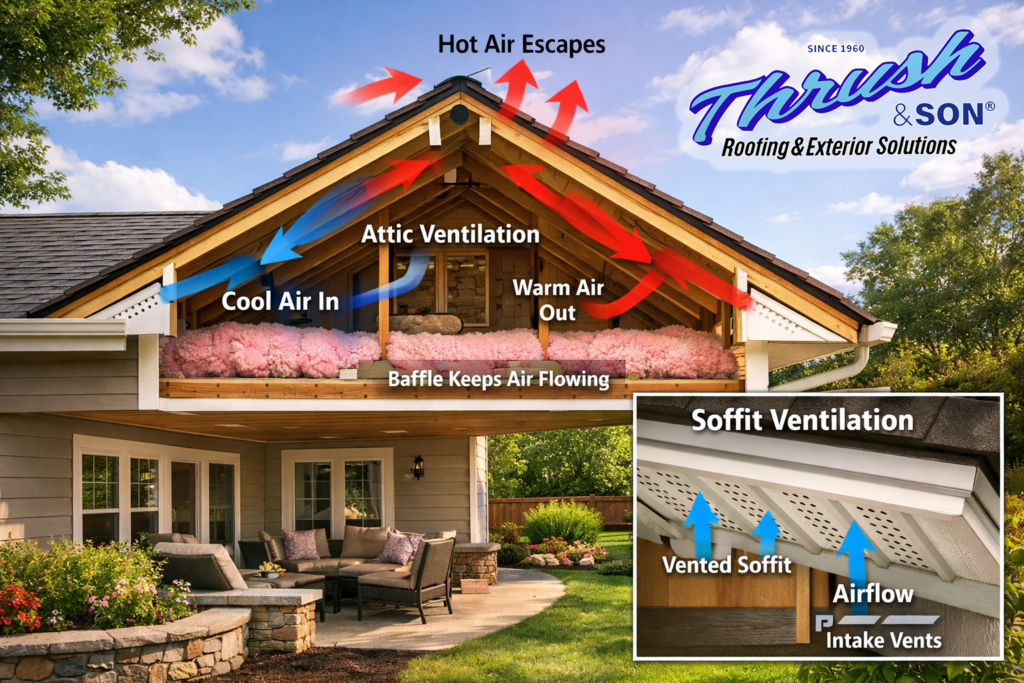
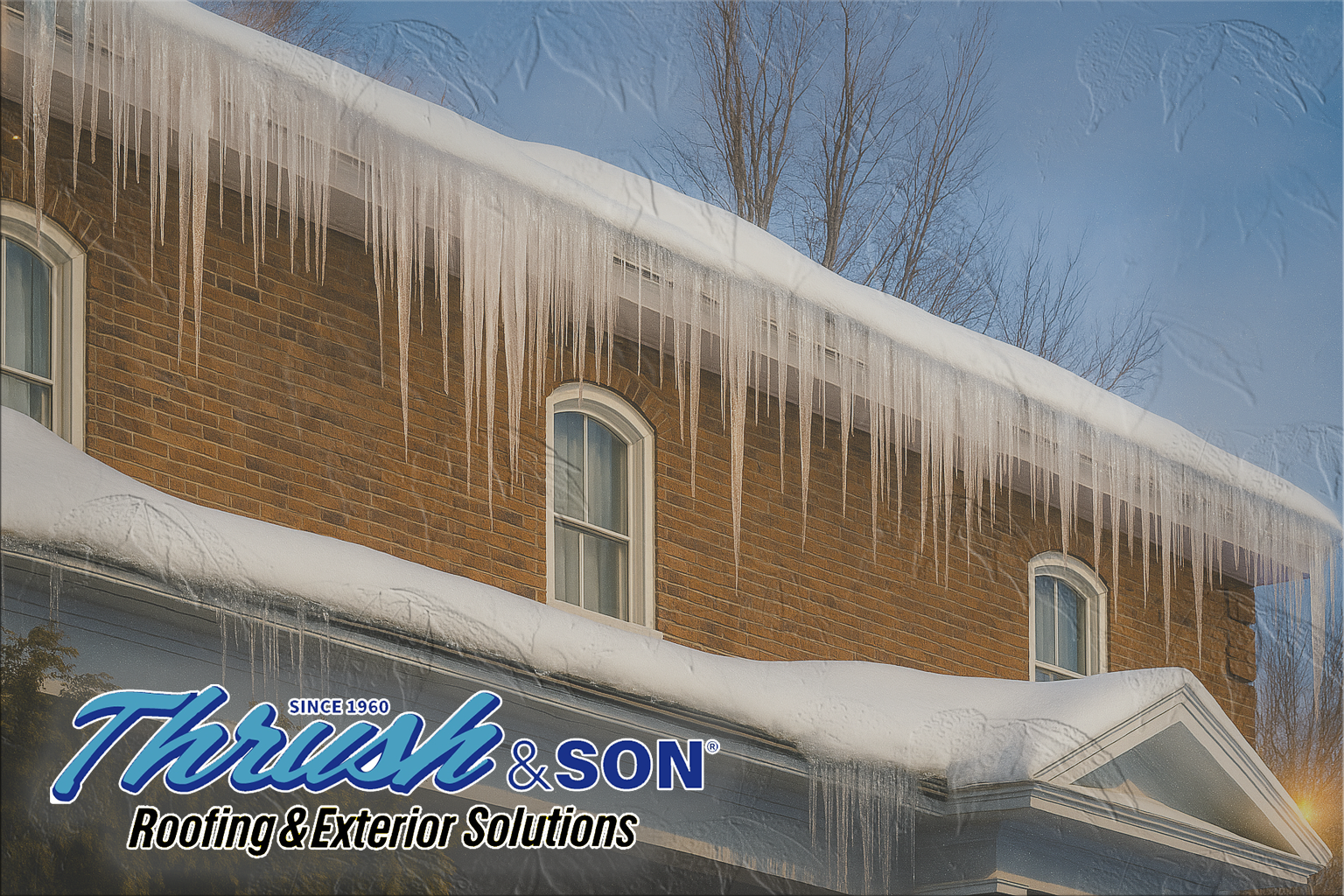
Want the whole roof edge done right? Our roofing team installs GAF systems with leak barrier at the eaves, and our soffit and gutter crews finish the job. Learn how the layers fit in parts of a roof, check attic ventilation, and read our arctic blast field guide.
The Family Behind the Fix
Wilbur Thrush founded Thrush & Son in 1960. W. Allen Thrush owns the company today, and Corey Thrush is the third generation. More than 31,000 homeowners across Miami, Montgomery, Greene, and Warren counties have trusted us from our Brookville headquarters and offices in Troy and Lebanon. Meet us in who we are.



As a GAF President’s Club Contractor, we look at the attic, the ventilation, and the roof edge together. See the project gallery, read homeowner reviews, and visit our storm damage page if winter has already left a mark.
The Real Reason: Your Questions, Answered
What is the real reason ice dams form?
Heat escaping from the living space warms the upper roof above 32°F while the eaves stay below freezing. Snow melts up high and refreezes at the edge. Air leaks and thin insulation are usually the source of that heat.
Are ice dams caused by bad gutters?
No. Gutters are where ice dams show up, not where they start. Guards and clean gutters help with drainage, but they won’t stop an ice dam; see gutter protection systems.
Will more attic ventilation stop ice dams?
Ventilation helps, but it isn’t the whole answer. Air sealing and insulation come first, and mechanical attic fans are not a recommended fix.
How much attic insulation should a Miami Valley home have?
For our climate zone, ENERGY STAR recommends R49 when you already have 3 to 4 inches of insulation, and R60 for an uninsulated attic.
What should I do if I have an ice dam right now?
Stay off the roof. If water is getting inside, call a roofer. Making a channel through the dam can let trapped water drain, but it’s a temporary fix. See ice damage for what to look for.
Does a new roof prevent ice dams?
A new roof with a leak barrier at the eaves limits leaks, but the real reason ice dams form is in the attic. We look at both. Read ice dam prevention and prevent ice dams.
When is the right time for an inspection?
Spring or fall, before snow season. That gives time to air seal, insulate, and fix ventilation before the first cold snap.
Let’s Find the Real Reason in Your Attic
Book a spring or fall inspection. We’ll check air sealing, insulation depth, ventilation, and the roof edge, then give you a written plan and estimate with no pressure. Visit our Exterior Design Center, and ask about financing.
Call 937-833-5136 · Office: Mon–Thu 9–4, Fri 9–2 · Michelle, our AI assistant, answers 24/7
