
Fiberglass vs Spray Foam: Which Insulation Belongs in Your Home?
Fiberglass vs spray foam is the question we hear most from Midwest homeowners planning an insulation upgrade. Both work. Both have passionate fans. And picking the wrong one for the wrong part of the house can cost you comfort, money, and sometimes the health of your roof.
Picture a 1970s ranch in Kettering. The owners spent good money spraying foam on the underside of the roof deck, but nobody closed off the old soffit and ridge vents. Two winters later, cold air was still washing through the attic and the upstairs bedrooms felt no warmer. The foam wasn’t the problem. The plan was.
Thrush & Son® has insulated, roofed, and sided Miami Valley homes since 1960. This guide gives you the honest pros and cons of the fiberglass vs spray foam decision, where each one wins, and the mistakes that turn a smart upgrade into an expensive lesson.

Fiberglass vs Spray Foam at a Glance
Before the pros and cons, here’s the side-by-side. Spray foam comes in two types that behave very differently, so the fiberglass vs spray foam comparison is really a three-way race.
R-values per the EPA’s spray foam product guide and typical manufacturer data. Always check the product you’re buying.
How Fiberglass vs Spray Foam Works Inside a Wall
The real difference in fiberglass vs spray foam isn’t the material. It’s what happens at the edges. Fiberglass traps still air in its fibers, but air can move around and through it. Spray foam expands to fill the cavity and bonds to the framing, closing the gaps where drafts and moisture travel.
Fiberglass vs Spray Foam Pros and Cons
Here are the honest pros and cons we walk through at kitchen tables across Dayton. Neither column is a sales pitch; both products earn their place in the right spot.
- Pros
- Lowest cost per R-value
- Non-combustible on its own
- Easy to add more depth later
- Won’t hide roof leaks
- Ideal for vented attic floors
- Cons
- No air sealing on its own
- Loses performance when gapped or compressed
- Itchy, dusty install
- Lower R per inch in tight cavities
- Pros
- Seals air and insulates in one step
- High R per inch, especially closed-cell
- Closed-cell resists moisture
- Great for rim joists and odd spaces
- Open-cell quiets rooms
- Cons
- Costs several times more
- Needs trained installers and time away from home
- Hard to remove or modify later
- Can hide roof leaks and deck rot
- Needs a code-required covering
Fiberglass vs Spray Foam: Pick Your Project
There’s no single winner in fiberglass vs spray foam, only a winner for each part of the house. Choose your project to see what we’d recommend and why.
In the fiberglass vs spray foam choice for a vented attic, blown fiberglass (or cellulose) over a well air-sealed ceiling is the most cost-effective way to reach R49 to R60. Spray foam earns a spot only as the air sealer around wires, pipes, and top plates.
Our tip: Air seal first, keep baffles at the soffits, then blow to depth.
With the studs exposed, fiberglass batts are the budget pick if the gaps are sealed carefully. Closed-cell foam packs more R-value into a 2x4 wall and seals air in one step. A thin layer of foam with batts over it, often called flash and batt, splits the difference.
Our tip: Decide your budget and air-tightness goal before the drywall order.
This is the clearest fiberglass vs spray foam win for foam. Rim joists leak air and see cold, damp surfaces. Closed-cell foam seals the joints, resists moisture, and stops the condensation that batts can trap against the wood.
Our tip: Closed-cell foam, then a code-required covering where it stays exposed.
Spraying the underside of the roof creates an unvented, conditioned attic. It works well for cathedral ceilings and attics full of ductwork, but the roof has to be designed for it, with no attic vents left fighting the foam.
Our tip: Have the roof and ventilation reviewed together before anyone sprays.
Here the fiberglass vs spray foam question has a third answer. Batts can’t go into closed walls, and standard spray foam needs open cavities. Dense-packed blown insulation through small holes is usually the smarter retrofit.
Our tip: Ask about dense-pack, or wait until siding comes off to insulate.
3 Fiberglass vs Spray Foam Mistakes We See
Most bad outcomes in the fiberglass vs spray foam debate don’t come from choosing the wrong product. They come from installing the right product the wrong way.
Mistake two is where most Miami Valley ice dams begin. Our ice dam prevention guide shows why air sealing outranks every other winter fix, and The Home Improvement Minute’s ice dam prevention guide covers the warning signs.
Mistakes one and three are roof problems as much as insulation problems. Before choosing a side in the fiberglass vs spray foam decision, read Is Attic Ventilation Important?, which explains how intake and exhaust have to balance before anything gets sprayed.
Fiberglass vs Spray Foam Safety and Air Quality
Safety belongs in every fiberglass vs spray foam conversation. Fiberglass is irritating to skin and lungs during installation, so crews wear protection, but once it’s in place it’s inert. Spray foam is a chemical product mixed on site, and the U.S. Consumer Product Safety Commission’s spray foam safety recommendations are worth reading before you sign:
- Plan to be out of the house during installation and for at least 24 hours afterward, including pets.
- Ask about isocyanates if anyone in the home has asthma, respiratory allergies, or chemical sensitivities.
- Hire trained, insured installers and ask how they’ll isolate and ventilate the work area.
- Expect a covering. Codes require foam in living spaces to sit behind drywall or another approved barrier.
The EPA’s overview of spray foam product types explains the difference between open-cell and closed-cell foam, including density and R-value.
How Much Insulation Does a Dayton Home Need?
Whichever side of fiberglass vs spray foam you land on, aim for the right target. Dayton sits in climate zone 5, where ENERGY STAR’s recommended R-values call for R60 in an uninsulated attic and R49 when you’re adding to 3 to 4 inches already there.
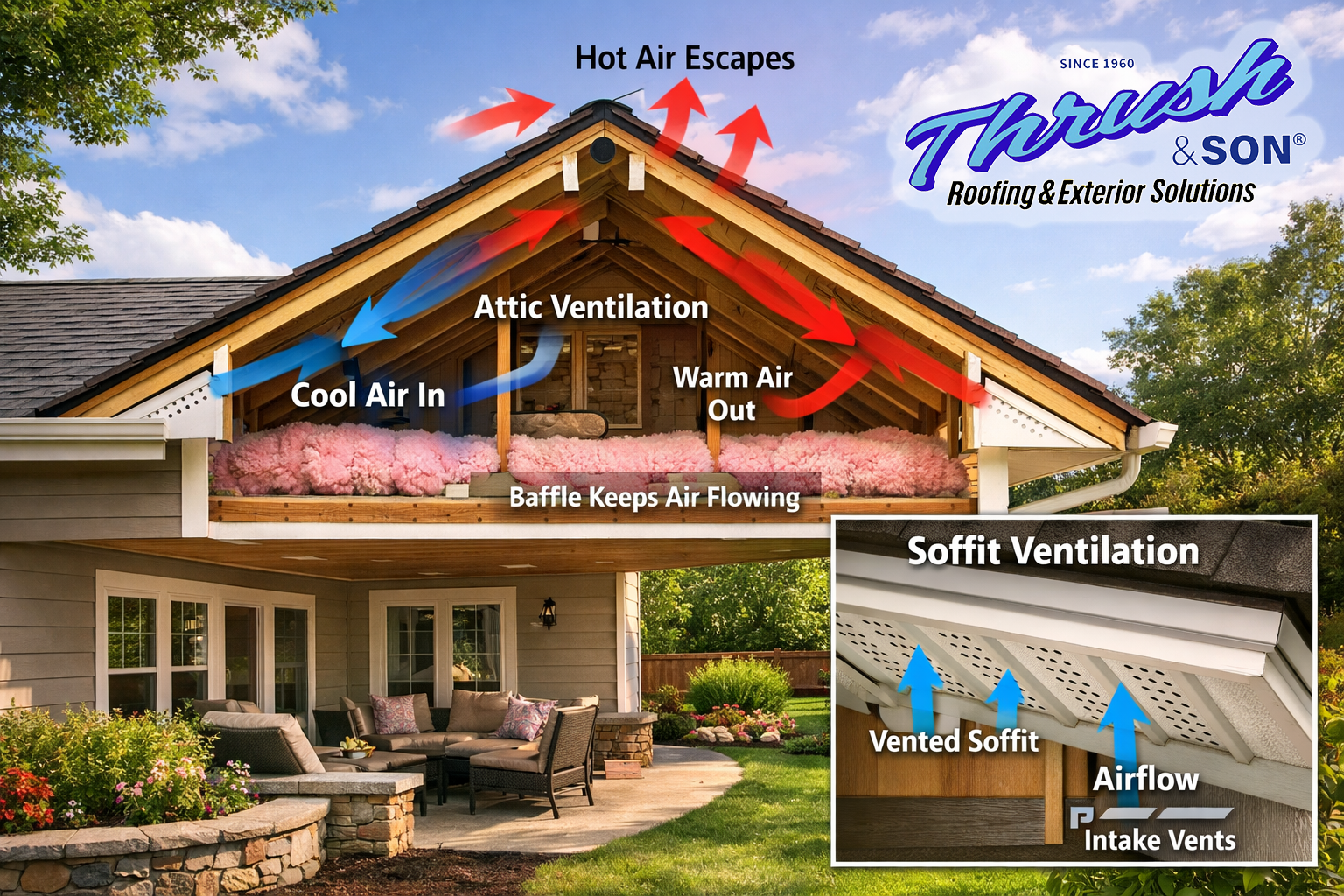
In an open, vented attic, reaching R60 with blown fiberglass or cellulose is far less expensive than trying to reach it with foam. That’s why our cellulose insulation guide and its depth chart pair so well with this one. Spray foam earns its premium in tight spaces where every inch counts and air sealing is hard to reach any other way.
Long-term value is the real scoreboard. A balanced plan protects the roof deck, keeps rooms comfortable, and lowers heating and cooling bills for decades. If cost is the hurdle, our financing guide shows how homeowners spread the investment into manageable payments.
Fiberglass vs Spray Foam FAQ
Is spray foam better than fiberglass?
Not automatically. In the fiberglass vs spray foam debate, foam wins on air sealing and R-value per inch, while fiberglass wins on cost and is the smarter choice for most vented attic floors. The right answer depends on where in the house it goes.
How much more does spray foam cost?
Spray foam typically costs several times more per square foot than fiberglass for the same area. Closed-cell costs more than open-cell. The fiberglass vs spray foam cost gap narrows when you count the air sealing foam does in the same step.
Can spray foam go over existing fiberglass?
Not directly. Old fiberglass usually has to be removed so foam can bond to the framing or deck. In attics, it’s often better to air seal and add more loose fill instead.
Is spray foam safe for my family?
When trained installers follow the manufacturer’s instructions, yes. The Consumer Product Safety Commission advises leaving the home during installation and for at least 24 hours afterward, and anyone with asthma or chemical sensitivities should talk with their doctor first.
Does fiberglass lose R-value over time?
Not if it stays dry and uncompressed. Problems come from gaps, compression, and air washing through it, which is why air sealing matters so much in any fiberglass vs spray foam comparison.
Trusted by Miami Valley Homeowners Since 1960

Wilbur Thrush founded Thrush & Son® in 1960, and three generations later we still treat every home as a system: roof, attic, insulation, and walls working together. We don’t push one product. We match fiberglass vs spray foam to each space, air seal first, and leave your roof easy to inspect for decades.
Make This the Last Winter You Feel the Draft
Every month without the right insulation is money leaving through the ceiling. Let our team inspect your attic, walls, and roof deck, then give you a straight answer on fiberglass vs spray foam for each space, with a written plan and price. Call (937) 833-5136 or schedule online today.
- GAF President’s Club Contractor
- Best of Dayton 2024 Winner · 2025 & 2026 Finalist
- BBB Accredited A+
Michelle, our AI assistant, answers 24/7
Office: Mon–Thu 9–4, Fri 9–2
