
Gutter Protection Systems: What’s Inside One, What It Stops, and When You Need It
Gutter protection systems are the simplest way to stop clogs, prevent overflow, and protect the parts of your home water hurts most: the roof edge, the walls, and the foundation. Installed right, they let rain flow freely while leaves, needles, and grit stay outside the gutter.
But a guard alone isn’t a system. Below, take one apart layer by layer, see the five benefits that matter, count the ladder trips you’d skip over ten years, and check your house for the warning signs.
Take Apart Gutter Protection Systems
Gutter protection systems work because six parts work together, from the roof edge down to the ground. Tap a layer to pull it out and see its job.
Drip edge
The metal flashing at the roof edge guides water off the shingles and into the gutter instead of behind it. A good system works with the drip edge, not against it.
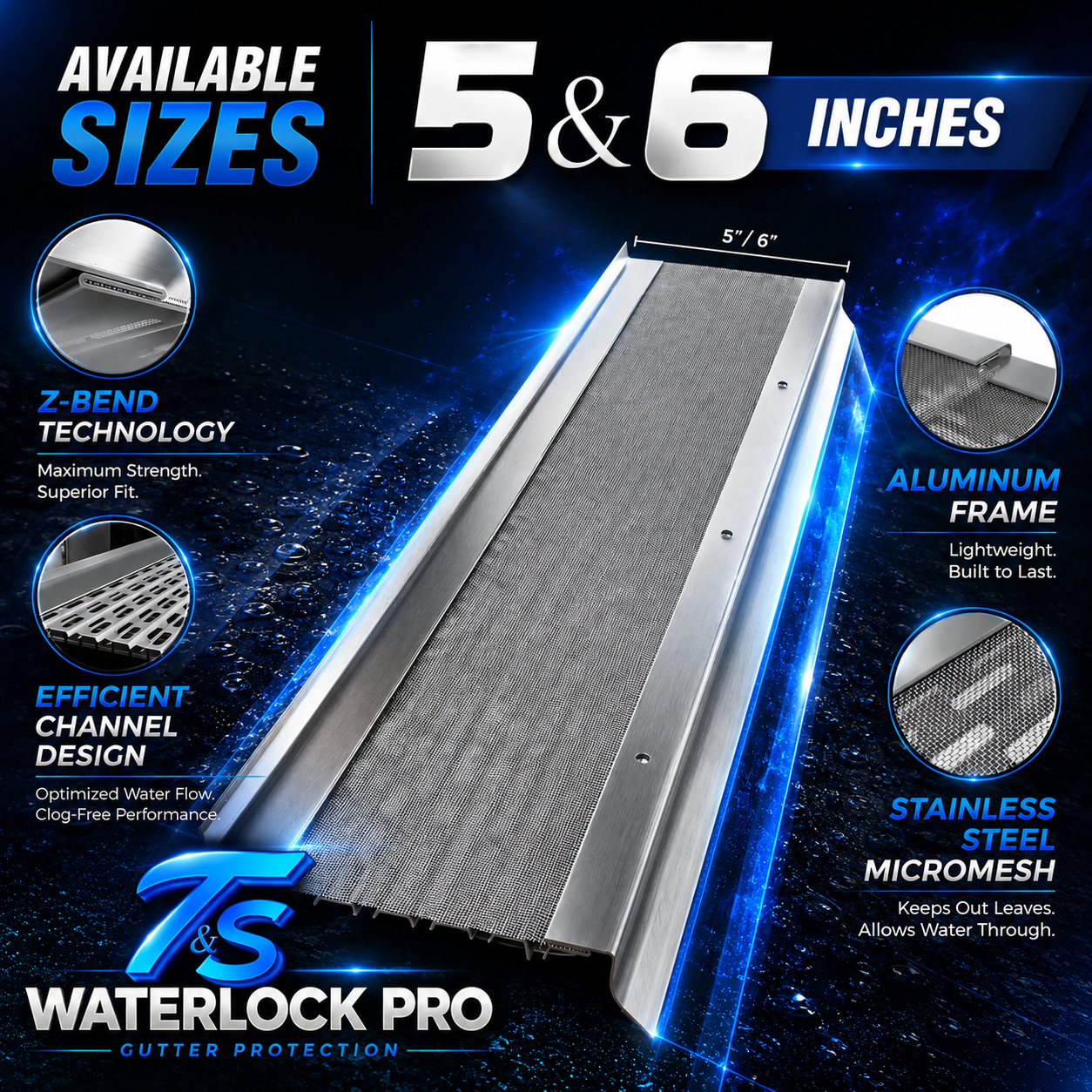
Stainless micromesh
A fine stainless steel screen lets rain through and keeps leaves, needles, seeds, and shingle grit on top, where wind and sun clear them away.
Aluminum frame
A formed aluminum frame holds the mesh taut, so it doesn’t sag under wet leaves or snow, and keeps the profile low from the street.
Hidden hangers
Concealed hangers inside the trough hold the gutter tight to the fascia and keep its pitch, so water runs toward the outlet instead of sitting.
Seamless gutter
Gutters formed on site in one continuous run have no seams to leak. We size them 5″ or 6″ to match your roof and the rain it sheds.
Outlet & downspout
Every gallon leaves through the outlets. Sized downspouts and well-placed elbows carry water away from the foundation, where it can soak into the yard.

Why the Whole System Matters
Open gutters collect everything above them: oak tassels, pine needles, seed pods, and shingle grit. Once debris builds up, water sheets over the edge, soaks the fascia and siding, and drives moisture toward the basement.
Gutter protection systems filter the channel so water drains while debris stays on top to dry and blow away. Our WaterLock® Pro system is the version we install, and if trees are your biggest problem, read how to stop trees clogging your gutters.
5 Easy Benefits of Gutter Protection Systems
These are the five things homeowners notice first after their new system goes up.
Clear flow, all year
Water enters the gutter while debris stays on top, so the outlets stay open through spring seeds, fall leaves, and winter needles.
A drier roof edge, walls, and basement
Water that stays in the gutter can’t soak the fascia and soffit, streak the siding, or pool against the foundation.
Fewer ladder trips
Less cleaning means less time on a ladder, and that matters: the CDC counted 161 deaths and 22,710 injuries from ladder falls among workers in 2020 alone.
Ready for Ohio storms
When a cloudburst hits, open outlets are the difference between water going down the downspout and water going over the edge.
A clean, finished roofline
Low-profile panels sit almost out of sight and match the gutter, so the eave looks finished instead of patched.

Where that water ends up matters too. The EPA’s Soak Up the Rain program recommends pointing downspouts toward lawns, gardens, or rain barrels, so roof water soaks into the ground instead of rushing off as runoff.
That only works if the water reaches the downspout in the first place. Gutter protection systems keep the outlets open, so every gallon follows the path you planned for it rather than spilling over the front edge and onto the foundation.
Ladder Math: 10 Years at a Glance
Pick the yard that looks most like yours to compare ten years of gutter cleanings against ten years with gutter protection systems.
Even without trees, shingle grit, blown leaves, and nests collect. A system turns that yearly scoop into a quick look.
Two cleanings a year is the minimum we recommend. With a system, one walk-around check covers it.
Big trees mean spring seeds and fall leaves, plus a cleanup in between. A system takes you off the ladder for nearly all of it.
Needles fall every month and slip through basic screens. Micromesh keeps them out, with an occasional surface rinse.
Planning estimate based on the cleaning schedule we recommend. Your trees and weather will move these numbers.
Signs You Need Gutter Protection Systems
Walk around the house and check off what you see. The rain gauge fills as the warning signs add up.
How We Install Gutter Protection Systems
Our gutter protection systems all go in with the same five steps, done by our own crews and finished with a water test.
- 1
Walk & measure
We look at the roof, the trees, every outlet, and how water leaves the yard.
- 2
Tune up the gutters
Pitch, fasteners, joints, and outlets get checked first, because a guard can’t fix a gutter that won’t drain.
- 3
Fit to the roof edge
Panels are fit to your roof edge, following its specs so the shingles stay undisturbed.
- 4
Fasten the frame
The aluminum frame is secured along the full run so the mesh stays taut and low.
- 5
Water test
We run water through the system and watch it leave every downspout before we call it done.
Built to Fit the House You Have
Some homes need only the guard. Others need new seamless gutters first, because a guard can’t fix a gutter that sags, leaks, or is too small for the roof. Our gutter services cover both, so the assessment ends with the right fix rather than the easiest sale.
If winter is your worry, clean gutters also help the roof edge drain during thaws. Our ice dam prevention guide covers the attic side of that problem.

Parts Drawer: Your Questions
Pull a drawer for the answers homeowners ask most about gutter protection systems.
Bin AWhat’s the difference between gutter guards and gutter protection systems?
A guard is the cover. Gutter protection systems are the cover plus the gutters, hangers, outlets, and downspouts underneath it, sized and pitched to work together. A guard on a gutter that sags or drains slowly won’t fix the overflow.
Bin BWill gutter protection systems handle heavy Ohio downpours?
Micromesh lets water through quickly, but how much the system can carry depends on the gutters and downspouts below it. Large or steep roofs often need 6″ gutters and bigger downspouts, which we size during the assessment.
Bin CDo gutter protection systems still need cleaning?
Far less. Plan on a quick look once a year and an occasional rinse or brush of the mesh, especially under pines or cottonwoods. That’s a long way from scooping wet leaves twice a year.
Bin DCan you add gutter protection systems to existing gutters?
Often, yes, if the gutters are sound, pitched correctly, and attached tightly. If they sag, leak, or are undersized, it usually makes more sense to install new seamless gutters and the guard together.
Bin EAre gutter protection systems worth it with no trees nearby?
They still help. Shingle grit, blown leaves, seeds from the neighbor’s trees, and nests all collect in open gutters, and every cleaning is another trip up the ladder.
Hung on the Wall for a Reason
Thrush & Son® has been family-owned since Wilbur Thrush founded it in 1960. Three generations later, we’re headquartered in Brookville with offices in Troy and Lebanon, and our own crews install all the gutter protection systems we sell.

See finished work in our project gallery.
Put the Ladder Back in the Garage
We’ll inspect your gutters, downspouts, and roof edge, then show you whether a guard, new seamless gutters, or both will solve it. You’ll get a written quote, and financing is available. Call 937-833-5136.
Michelle, our AI assistant, answers 24/7 · Office: Mon–Thu 9–4, Fri 9–2
The Nuts and Bolts of Staying Connected
Follow the Thrush family, our crews, and BooBoo.
