
After the Thaw: Finding and Fixing Winter Roof Damage
Ice damage rarely announces itself. The ice dam melts, the icicles drop, and a week later there’s a brown ring on the bedroom ceiling. By then, water has already been through the roof edge, the insulation, and the drywall.
This guide is about what happens after the freeze: where ice damage hides, what to do in the first 48 hours, and how a leak barrier keeps it from happening again. For what causes ice dams in the first place, see our ice dam prevention guide.
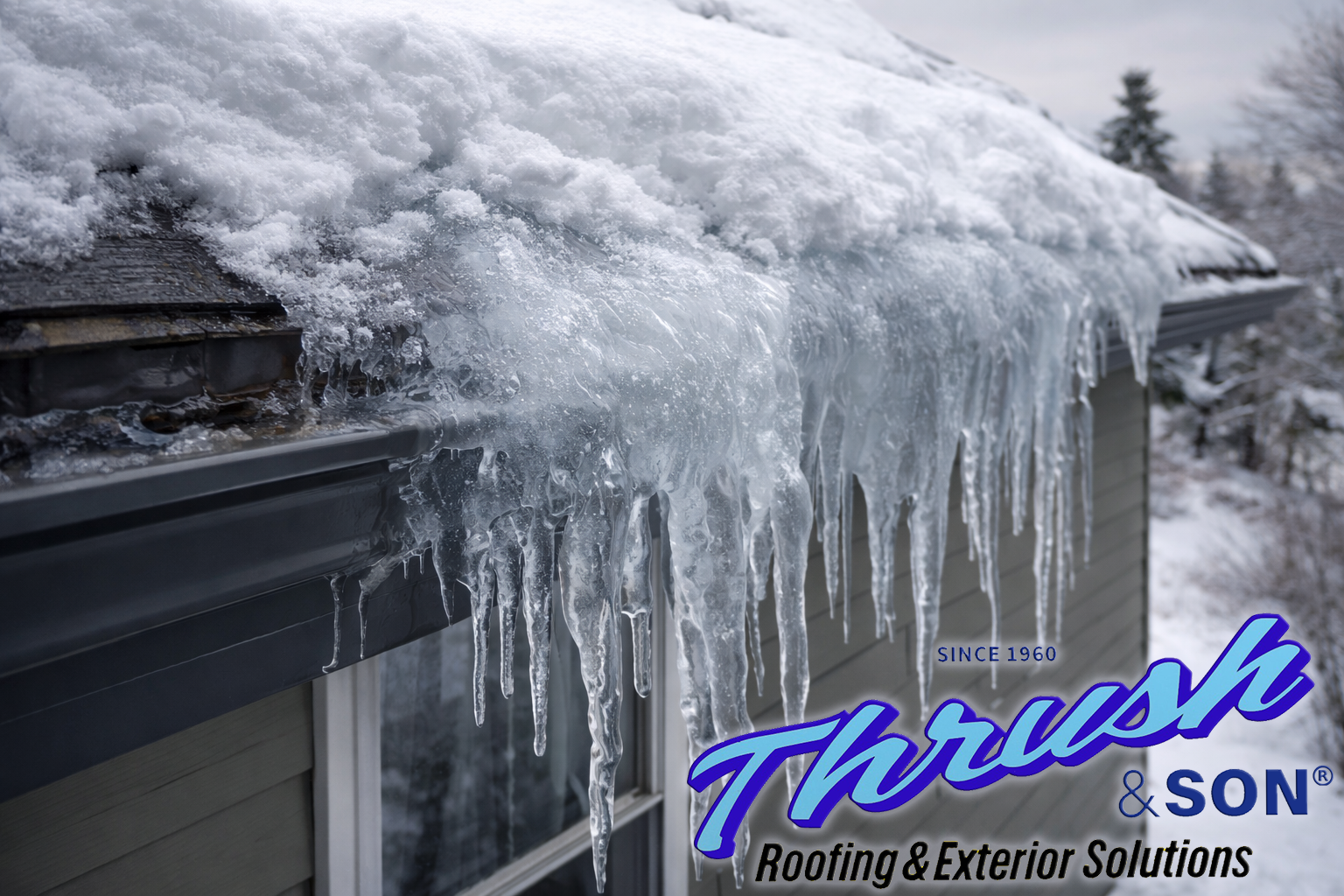
Where Ice Damage Hides, Room by Room
Ice damage starts at the roof edge but shows up all over the house. Pick a spot to see the signs to look for and what each one usually means.
Stains that start at a chimney or vent rather than along the eaves usually point to flashing, not ice damage. Read The #1 Roof Flashing Mistake if that sounds familiar, and Prevent Water Damage for the rest of the water path.
Found Ice Damage? Your First 48 Hours
Water keeps moving after you find it. These steps limit ice damage to what’s already wet.
- Hour 0
Stay safe
Don’t climb an icy roof or chip at ice with tools. Shut off power to any light fixture with water in it.
- Hour 1
Contain the water
Buckets, towels, and a tarp over belongings. Poke a small hole in a bulging ceiling over a bucket to relieve the pressure.
- Hour 2
Document everything
Photos and video of stains, the roofline, and damaged items, with dates. You’ll want them for any claim.
- Day 1–2
Dry it out
The EPA advises drying wet materials within 24 to 48 hours to keep mold from starting. Fans, dehumidifiers, and pulling wet insulation.
- Day 2
Call the pros
A roofer to find the entry point and protect the roof, and your insurance agent to ask how your policy handles it.
On insurance: many policies cover sudden water damage caused by ice dams, but not removing a dam that hasn’t caused damage, and not problems traced to neglected maintenance. Policygenius explains the common rules, and your agent can tell you how yours reads. We can provide the roof findings and photos your adjuster asks for; see our storm damage page.
Where Leak Barriers Stop Ice Damage
A leak barrier is a self-adhering waterproof membrane that goes on the roof deck, under the shingles. GAF’s WeatherWatch leak barrier self-seals around nails and is installed at the eaves and rakes, in valleys, and around chimneys and skylights. Turn each zone on to see it on the roof plan.
How far up from the eave the barrier needs to run is a code question with real numbers behind it. Our roof edge guide walks through the 24-inch rule with a calculator. The rest of the deck gets standard underlayment; see roof underlayment and roofing components.

Fixing Ice Damage So It Doesn’t Come Back
Patching the ceiling fixes the symptom, and a new coat of paint can hide ice damage until the next thaw brings it back. Stopping ice damage takes two things working together: a colder roof edge, so less ice forms, and a waterproof deck, so the water that still backs up can’t get in.
- Find the entry point. We trace the stain back to the roof edge, valley, or penetration where the water got in.
- Fix the heat leak. Air sealing, insulation, and attic ventilation keep the eaves cold.
- Rebuild the edge. On a reroof, leak barrier, drip edge, and gutters go back as a system.
- Replace what got wet. Soaked insulation and soft decking come out, not just painted over.
Leak Barriers Belong in the Whole Roof System
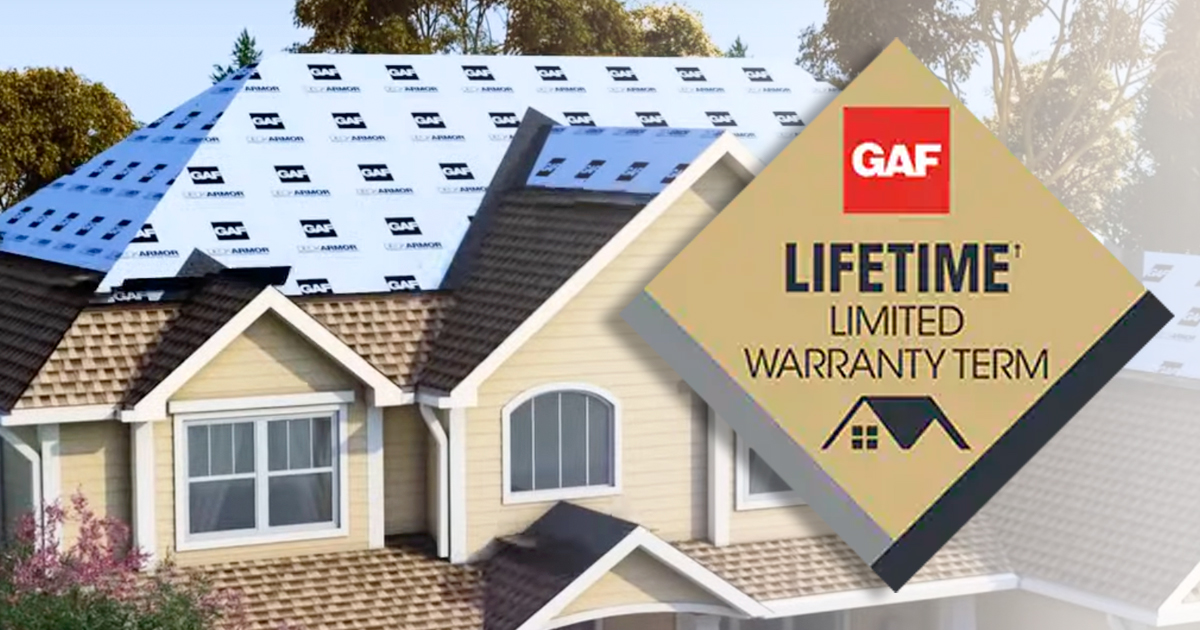
A leak barrier does its job as part of a complete roof. With GAF, using qualifying accessories like the leak barrier, starter, and ridge caps with Lifetime shingles is also what opens the door to stronger warranty coverage. Our Understanding Warranties series and Golden Pledge page explain how that works.
That’s why we don’t sell ice and water shield as an add-on. On every reroof, we put it where the roof needs it, then build the rest of the system around it, so ice damage has nowhere to start.

Ohio Winters Are Our Specialty
Wilbur Thrush founded Thrush & Son in 1960. W. Allen Thrush owns the company today, and Corey Thrush is the third generation. More than 31,000 Miami Valley homeowners have trusted us, from our Brookville headquarters and offices in Troy and Lebanon.
As a GAF President’s Club Contractor, we’ve traced and fixed ice damage through more Ohio winters than we can count. See the project gallery and homeowner reviews.
Ice Damage Questions, Answered
What homeowners ask us most after a hard freeze.
What does ice damage to a roof look like?
Outside, look for lifted or cracked shingles at the eaves, bent gutters, and stained soffit or siding. Inside, look for brown rings on ceilings near exterior walls, wet insulation along the eaves in the attic, and frost on the underside of the roof deck.
Does homeowners insurance cover ice damage?
Many policies cover sudden water damage from ice dams, but not removing an ice dam that hasn’t caused damage, and not problems from neglected maintenance. Policygenius has a good overview, but your own policy and agent have the final word.
What is a leak barrier?
A self-adhering waterproof membrane installed on the roof deck under the shingles. GAF’s WeatherWatch leak barrier, for example, self-seals around nails and goes at eaves, rakes, valleys, and around chimneys and skylights.
Can a leak barrier be added without a new roof?
Not really. It goes directly on the deck, so the shingles above have to come off. That’s why the right time to add it is during a reroof, when every edge, valley, and opening can be covered properly before new shingles go on.
How fast do I need to dry out a leak?
The EPA advises drying wet materials within 24 to 48 hours to prevent mold growth. Wet insulation usually needs to come out.
How do I stop ice damage from happening again?
Fix the cause and the defense: air sealing, insulation, and ventilation keep the roof edge cold, and a leak barrier stops water that still backs up. Our ice dam prevention and roof edge guides go deeper.
Spotted a Stain After the Thaw?
We’ll find where the water got in, document it for your records, and give you a written plan with no pressure. See our roofing services, and ask about financing.
Call 937-833-5136 · Office: Mon–Thu 9–4, Fri 9–2 · Michelle, our AI assistant, answers 24/7
