
156 roofing terminology terms, A to Z
Roofing terminology is the language behind every estimate, warranty and inspection report, and this glossary puts all of it in plain English.
From aggregate to wind uplift, here are the 156 words homeowners run into most when they replace a roof, compare contractors or read the fine print on a warranty. Jump to a letter, or start with the six parts of a shingle roofing system that matter most.
Thrush & Son® has been explaining roofing terminology at Miami Valley kitchen tables since 1960. If a piece of roofing terminology on your quote isn’t here, ask us and we’ll add it.
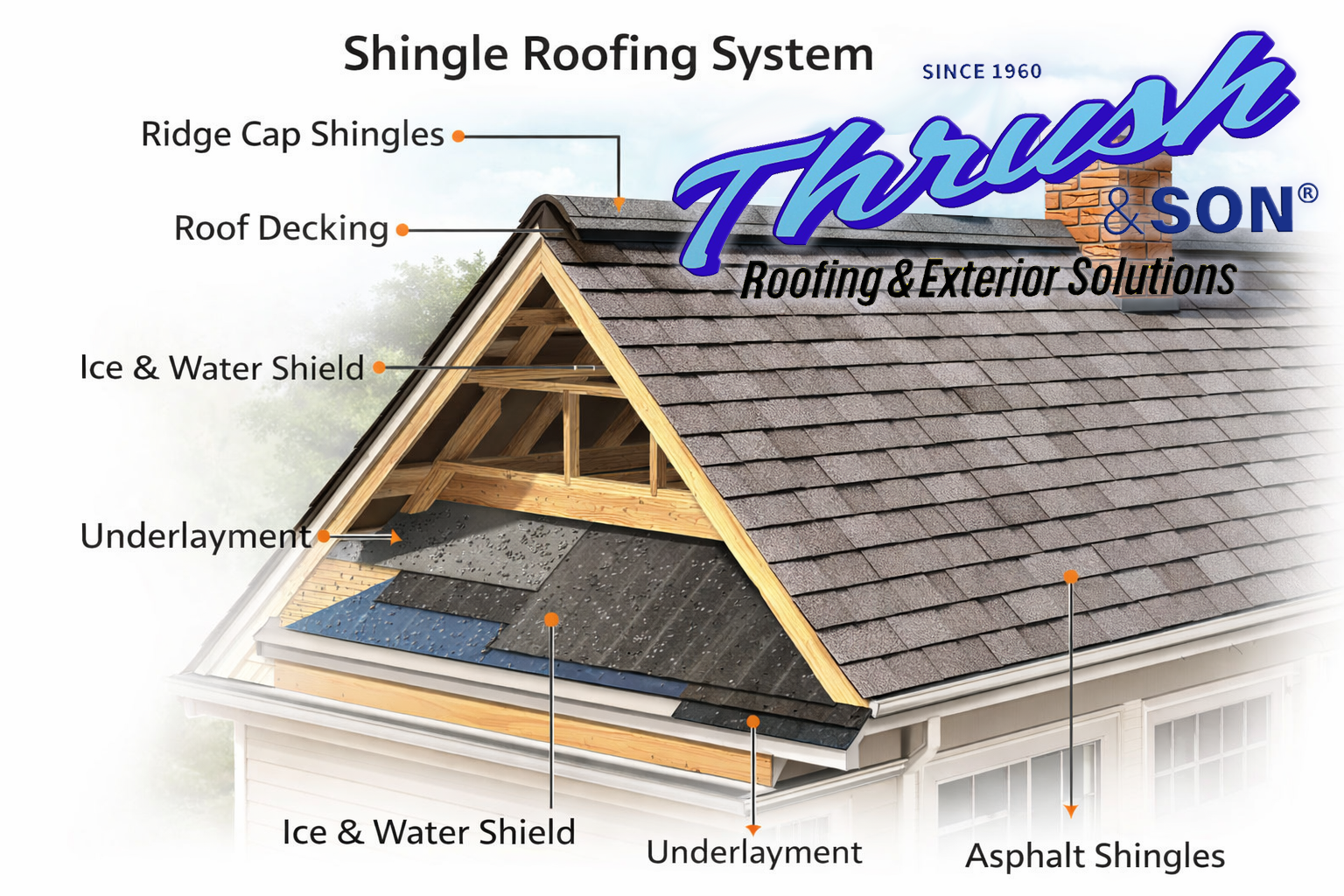
Six roofing terminology terms on every quote
These six roofing terminology terms make up the system on a modern shingle roof. Tap any one to jump to its definition.
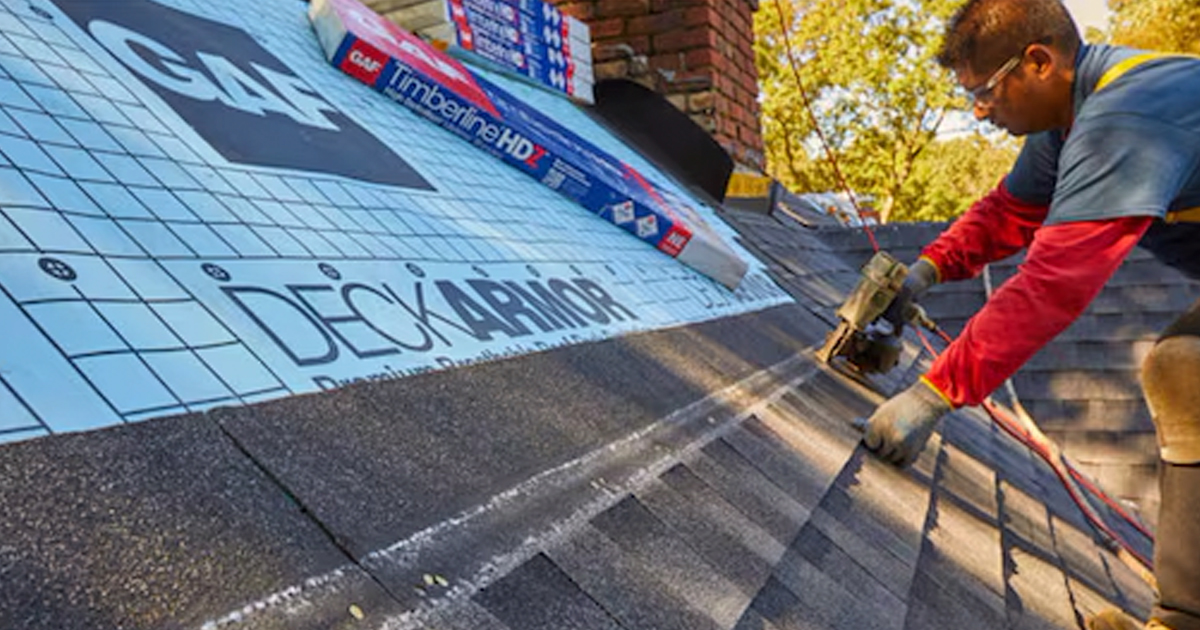
- 01Ice & Water ShieldEaves, valleys, around every pipe
The self-sticking membrane that stops ice-dam leaks before they reach the deck.
- 02Synthetic UnderlaymentOver the whole deck
The backup layer under your shingles if water ever gets past them.
- 03Starter StripFirst row at the eaves and rakes
Seals the first course so wind can’t peel the roof from the edge.
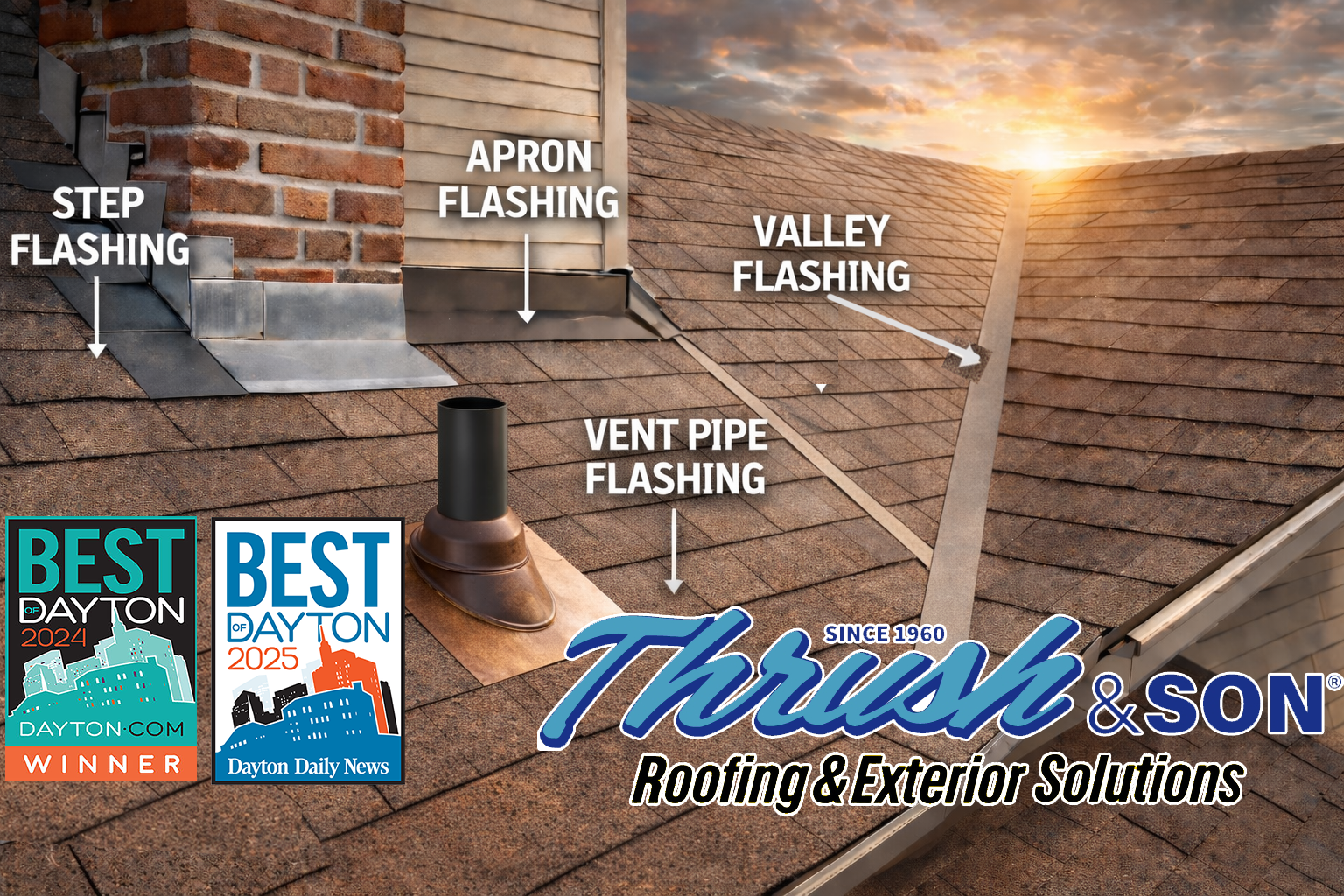
- 04Step FlashingWhere the roof meets a wall
Woven in with every course so water is turned back out onto the shingles.
- 05Ridge VentAlong the peak
Lets hot, moist attic air out, which protects the shingles from below.
- 06Ridge CapOver the ridge and hips
The finishing shingles that seal the top of the roof.
Roofing terminology from A to Z
All 156 roofing terminology terms, alphabetized. Use the letter bar to jump; it stays with you as you scroll.
Roofing terminology: A
- Aggregate
- Crushed stone, slag or gravel spread over a flat roof surface to protect the membrane from sunlight and foot traffic.
- Application Rate
- How much of a material goes down over a set area, such as gallons of coating per 100 square feet.
- Algae
- Airborne organisms that grow on shaded, damp roofs and leave dark streaks. Algae-resistant shingles help keep them away.
- Apron Flashing
- A single piece of metal flashing at the bottom edge of a chimney or wall, where it meets the roof below.
- Architectural Shingle
- A multi-layer asphalt shingle with dimension and shadow lines, also called laminated or dimensional.
- ARMA
- The Asphalt Roofing Manufacturers Association, the trade group that publishes installation standards for asphalt roofing.
- Asphalt Roof Cement
- A thick asphalt-based compound troweled on to seal flashing edges and small gaps.
Roofing terminology: B
- Bitumen
- The sticky, waterproof petroleum base used in asphalt shingles, roll roofing and flat-roof membranes.
- Blister
- A raised bubble in a roof membrane or shingle, usually caused by trapped air or moisture expanding in the heat.
- Bond
- The strength of the connection between two materials once they are joined.
- Bond, Chemical
- A connection formed when materials fuse at the molecular level, such as with adhesives or heat welding.
- Bond, Mechanical
- A connection held by physical fasteners or by one material gripping the texture of another.
- Bonding Agent
- A product applied to a surface so a coating or membrane will stick to it.
- Boot
- A flexible collar that seals around a pipe where it passes through the roof.
- Built-Up Roof Membrane (BUR)
- A flat-roof system made of alternating layers of asphalt and reinforcing felts, often topped with gravel.
- Butt Joint
- The point where two pieces of material meet end to end without overlapping.
- Butyl
- A synthetic rubber known for staying flexible and watertight; used in tapes, sealants and coatings.
- Butyl Coating
- A liquid-applied butyl layer that forms a flexible, waterproof film.
- Butyl Rubber
- The solid form of butyl, used in gaskets, flashing tape and membranes.
Roofing terminology: C
- Cap Flashing
- The top piece of a two-part flashing system that covers and protects the base flashing below it.
- Cap Sheet
- The mineral-surfaced top layer of a built-up or modified bitumen roof.
- Caulk
- A flexible sealant used to fill joints and small gaps against air and water.
- Caulking
- The act of applying caulk to seal a joint.
- Chalk Line
- A string coated in chalk and snapped onto the roof to mark straight lines for shingle courses.
- Chalking
- A powdery residue that forms on a weathered paint finish, often on older metal roofing.
- Chemical Resistance
- How well a roofing material stands up to oils, solvents or other chemicals without breaking down.
- Chlorinated Polyethylene (CPE)
- A durable thermoplastic used in some single-ply roofing membranes.
- Clip
- A small metal tab that holds roofing panels or flashing in place while allowing movement.
- Coated Base Sheet
- An asphalt-coated felt used as the first layer of some flat-roof systems.
- Cold Process Built-Up Roof
- A built-up roof assembled with cold-applied adhesives instead of hot asphalt.
- Coping
- The cap that covers the top of a wall or parapet to keep water out of it.
- Copper
- A long-lasting metal used for flashing, valleys and accents; it weathers to a green patina.
- Counterflashing
- Metal set into a chimney or wall that laps over the base flashing so water can’t run behind it.
- Course
- One horizontal row of shingles or roofing material.
- Cricket
- A small peaked structure behind a chimney that diverts water around it instead of letting it pool.
- Curb
- A raised frame that lifts skylights, vents or equipment above the roof surface.
- Cure
- The process of a sealant, adhesive or coating reaching its full strength.
- Cure Time
- How long a material needs to cure before it can handle weather or traffic.
Roofing terminology: D
- Dead Valley
- A spot where roof planes meet without a path for water to drain, so it collects instead of running off.
- Dew Point Temperature
- The temperature at which moisture in the air condenses into water, which matters for attic and roof condensation.
- Double Coverage
- An installation where every point of the roof is covered by at least two layers of material.
- Double Lock Standing Seam
- A metal roof seam folded over twice for extra wind and water resistance.
- Downspout
- The vertical pipe that carries water from the gutter down to the ground.
- Drain
- An outlet that carries water off a flat or low-slope roof.
- Drip Edge
- Metal trim along the eaves and rakes that directs water off the roof and away from the fascia.
- Dry-In or Dry-In Felt
- The underlayment layer that makes a roof temporarily weather-tight before shingles go on.
- Dutch Roof
- A hip roof topped with a small gable, also called a Dutch gable.
Roofing terminology: E
- Edge Stripping
- Membrane strips used to seal the edge of a flat roof to the metal edge trim.
- Edge Venting
- Ventilation installed along the roof edge to pull fresh air into the attic.
- End Lap
- The overlap where the end of one roll or panel meets the next.
- EPDM
- A synthetic rubber membrane widely used on flat and low-slope roofs.
- Ethylene Propylene Diene Terpolymer (EPDM) (Rubber Roof)
- The full name of EPDM, the black rubber roof you often see on porches and additions.
- Expansion Joint
- A gap built into a roof to let materials expand and contract without tearing.
- Exposed-Nail Method
- An installation where the fasteners are left visible on the surface, common with roll roofing.
- Exposure
- The part of a shingle left visible to the weather after the next course goes on.
Roofing terminology: F
- Factory Seam
- A seam made at the plant during manufacturing rather than on the roof.
- Fasteners
- Nails, screws and clips that secure roofing materials to the deck.
- Felt
- Asphalt-saturated paper laid under shingles as underlayment; now largely replaced by synthetics.
- Field Seam
- A seam joined on the job site during installation.
- Fire Resistance
- How well a roofing material resists catching or spreading fire, rated Class A, B or C.
- Flame Retardant
- A treatment or ingredient that slows the spread of flame.
- Flashing
- Metal or membrane pieces that seal the roof where it meets walls, chimneys, valleys and pipes.
- Flashing Cement
- A heavy-bodied sealant made for sealing flashing edges.
- Flashing Collar
- A pre-formed collar that seals around a vent pipe or flue.
Roofing terminology: G
- Gable Roof
- A roof with two slopes that meet at a center ridge, forming a triangle at each end.
- Gambrel Roof
- A barn-style roof with two slopes on each side, the lower one much steeper.
- Galvalume
- Steel coated with an aluminum-zinc alloy, a common base for metal roofing.
- Galvanized Steel
- Steel coated with zinc to protect it from rust.
- Granule
- The small ceramic-coated stones on top of asphalt shingles that block UV light and add color.
- Gravel Stop
- A raised metal edge that keeps gravel from washing off a flat roof.
- Gutter Apron
- Flashing that runs from under the shingles into the gutter so water can’t get behind it.
Roofing terminology: H
- Headlap
- The amount a shingle is overlapped by the course two rows above it.
- Heat Welding
- Joining thermoplastic membranes such as TPO or PVC with hot air so the seams fuse together.
- Hip Roof
- A roof that slopes down on all four sides to meet at a ridge or peak.
Roofing terminology: I
- Ice & Water Shield
- A self-adhering waterproof membrane installed at eaves, valleys and penetrations to stop ice-dam and wind-driven leaks.
- Ice Dam
- A ridge of ice at the roof edge that traps meltwater and pushes it back under the shingles.
- Infrared Thermography
- Using a thermal camera to find wet insulation or hidden moisture in a roof.
- Insulation
- Material that slows heat moving between the house and the attic or roof.
- Intake Ventilation
- Vents low on the roof, usually in the soffit, that draw fresh air into the attic.
- Interlayment
- Felt or membrane woven between courses of wood shakes.
Roofing terminology: L
- Lap
- Any area where one piece of material overlaps another.
- Lap Seam
- A seam where two materials overlap and are sealed together.
- Layover
- See Re-Cover: installing a new roof over the existing one.
- Leak Barrier
- See Ice & Water Shield: the self-adhering membrane used in leak-prone areas.
- Lichen
- A crusty growth of fungus and algae that can root into shingles and hold moisture.
Roofing terminology: M
- Mansard Roof
- A four-sided roof with a very steep lower slope and a flatter upper section.
- Mastic
- A thick, sticky sealant used for bedding flashing and sealing gaps.
- Material Safety Data Sheets (MSDS)
- Manufacturer documents listing a product’s hazards and safe-handling steps; now called SDS.
- Mechanically-Fastened Membranes
- Flat-roof membranes held down with screws and plates rather than glue or ballast.
- Membrane
- The waterproof sheet that forms the main layer of a flat or low-slope roof.
- Metal Flashing
- Flashing formed from aluminum, steel or copper.
- Metal Valley
- A valley lined with metal so water runs off quickly over a smooth surface.
- Mineral-Surfaced Roofing
- Roofing with a granule surface for UV protection, such as roll roofing or cap sheets.
- Model 750
- A common slant-back static roof vent style used to exhaust attic air.
- Modified Bitumen
- Asphalt blended with polymers for flexibility, used in rolled flat-roof systems.
- Mopping
- Applying hot asphalt with a mop to bond the layers of a built-up roof.
Roofing terminology: N
- Nailer
- A wood strip fastened to the deck or wall so roofing materials have something solid to attach to.
- Nailing
- Fastening roofing materials with nails in the pattern the manufacturer requires.
- Nailing Zone
- The marked strip on a shingle where nails must go to hold it down and keep the warranty valid.
- Neoprene
- A synthetic rubber used in gaskets and pipe boots.
- NRCA
- The National Roofing Contractors Association, a trade group that publishes roofing standards and training.
Roofing terminology: P
- Parapet Wall
- A low wall that rises above the roof line along the edge of a flat roof.
- Partially-Attached
- A membrane that is fastened or adhered only at set points rather than across the whole surface.
- Penetration
- Anything that passes through the roof, such as pipes, vents, skylights or chimneys.
- Pipe Boot
- A rubber or metal collar that seals around a plumbing vent pipe.
- Polymer
- A material built from long chains of molecules; the base of most modern membranes and sealants.
- Polyvinyl Chloride (PVC)
- A thermoplastic single-ply membrane with heat-welded seams.
- Ponding
- Water that stays on a flat roof for more than 48 hours after rain.
- Positive Drainage
- A roof designed so water runs off completely instead of sitting.
- Power Vent
- An electric fan that pulls hot air out of the attic.
- Primer
- A thin coat applied to a surface so adhesives or membranes bond properly.
Roofing terminology: R
- Re-Cover
- Installing a new roof over an existing one instead of tearing it off.
- Re-Roof
- Replacing a roof, either by tearing off the old layers or covering them.
- Ridge Cap
- Shingles shaped to cover and seal the peak of the roof.
- Ridge Course
- The final row of shingles installed at the top of the roof.
- Ridge Vent
- A low-profile vent along the peak that lets warm, moist air escape the attic.
- Roll Roofing
- Asphalt roofing sold in rolls, used on low-slope sheds and outbuildings.
- Roof Assembly
- Every layer of the roof together, from deck to finished surface.
- Roof Curb
- A raised frame that mounts equipment or skylights above the roof plane.
- Roof Seamer
- A tool that crimps or folds metal roof seams together.
- Roof Slope
- The steepness of a roof, written as rise over run, such as 6/12.
- Roof System
- All the components, from deck protection to ridge cap, designed to work together as one.
Roofing terminology: S
- Seam
- Any joint where two pieces of roofing material are joined.
- Shed Roof
- A single sloped roof plane, common on additions and porches.
- Side Lap
- The overlap along the long edge of a roll or panel.
- Single-Lock Standing Seam
- A metal roof seam folded over once.
- Single-Ply Membranes
- Flat-roof membranes installed in one layer, such as TPO, PVC and EPDM.
- Single-Ply Roofing
- A roof covered with a single-ply membrane.
- Single-Ply System
- The full single-ply assembly: the membrane plus how it’s held down, whether adhered, ballasted, mechanically fastened or partially attached.
- Split Boot
- A pipe boot made in two halves so it can wrap around a pipe without removing it.
- Square
- A roofing unit of measure equal to 100 square feet of roof surface.
- Standing Seam
- A metal roof with raised, interlocking seams between panels and hidden fasteners.
- Starter or Starter Strip
- The first course installed along the eaves and rakes to seal down the first row of shingles.
- Static Vent
- A roof vent with no moving parts that lets hot air rise out of the attic.
- Steep-Slope Roofing
- Roofs steeper than 3/12, where shingles, shakes and tile are used.
- Step Flashing
- Individual L-shaped pieces woven with each shingle course where the roof meets a wall.
- SBS (Styrene-Butadiene-Styrene)
- A rubber polymer blended into modified bitumen to keep it flexible in the cold.
- Substrate
- The surface a roofing material is installed on.
- Synthetic Underlayment
- A woven polymer underlayment that is lighter, stronger and more tear-resistant than felt.
Roofing terminology: T
- Tapered Edge Strip
- A sloped insulation strip that eases the transition at a roof edge or curb.
- Taping
- Sealing seams or joints with tape.
- Tar
- A thick, dark petroleum or coal product used in older roofing.
- Termination
- Where a membrane or flashing ends, secured and sealed so water can’t get behind it.
- Thermal Barrier
- A layer that keeps foam insulation from igniting quickly in a fire.
- Thermal Block
- A spacer that reduces heat transfer through fasteners and framing.
- Tobacco Juicing
- Brown streaks that can wash off new asphalt shingles after the first rains; it fades with time.
- Thermoplastic Polyolefin (TPO)
- A white, heat-welded single-ply membrane known for reflecting heat.
- Turtle Vent
- A low, box-shaped static vent near the ridge that releases attic air.
Roofing terminology: U
- Underlayment
- The water-resistant layer laid over the deck beneath the shingles.
- Underwriters Laboratories, Inc. (UL)
- An independent lab that tests and rates roofing for fire and wind performance.
Roofing terminology: W
- Wicking
- Water drawn into a material, such as felt edges or wood, by capillary action.
- Wind Load
- The force wind puts on a roof, which shapes how it must be fastened.
- Wind Turbine
- A spinning roof vent that uses wind to pull air out of the attic.
- Wind Uplift
- The lifting force wind creates on a roof surface and edges.
Roofing terminology: 0–9
- 634 Broan Vent
- A roof cap that vents a bathroom or kitchen exhaust fan through the roof.
- 636 Broan Vent
- A larger Broan roof cap for exhaust ducts that need more airflow.
Why understanding residential roofing terminology matters
A roof is the most expensive system on most houses that homeowners never get to see up close. The only window into what you’re buying is the paperwork, and the paperwork is written in roofing terminology. When you know the difference between felt and synthetic underlayment, or between a re-cover and a full tear-off, two quotes stop looking alike.
Knowing roofing terminology also helps you spot what’s missing. A quote with no ice & water shield, no starter strip or reused flashing isn’t a bargain; it’s a roof with gaps. Ventilation roofing terminology matters too: intake and exhaust have to be balanced, and the U.S. Department of Energy explains how attic insulation and airflow work together on energy use.
Use this roofing terminology guide alongside our shingle roofing and metal roofing pages, and bring your questions to your estimate. We’ll answer every one in plain English.
- Roofing Terms: the short list34 roofing terminology basics with what to look for on your estimate.
- Siding, soffit & gutter glossaryThe words for everything below the roof edge.
- Roof underlayment explainedFelt, synthetic and leak barriers compared.
- The roof flashing mistakeThe shortcut behind more leaks than any other.
- Compare roofing estimatesSeven gaps to check before you sign.
A word on your quote you can’t find?Call (937) 833-5136 or book an estimate. We’ll walk you through the roofing terminology line by line, with no pressure.
Schedule now