
Home Energy Efficiency, Zone by Zone
Home energy efficiency comes down to one question: where is your heat going? In winter it escapes through the attic, the walls, and the windows. In summer it pushes back in through the same places. Drafts, uneven rooms, and rising bills are usually the first signs.
This is where we explain each of those zones in plain language: attic ventilation, insulation, insulated siding, replacement windows, and the glass science inside them. Pick a zone below to see why it matters, a quick check you can do yourself, and the guides that go deeper. They’re written by the Thrush family, who have been making Miami Valley homes more comfortable since 1960.
Source: ENERGY STAR.
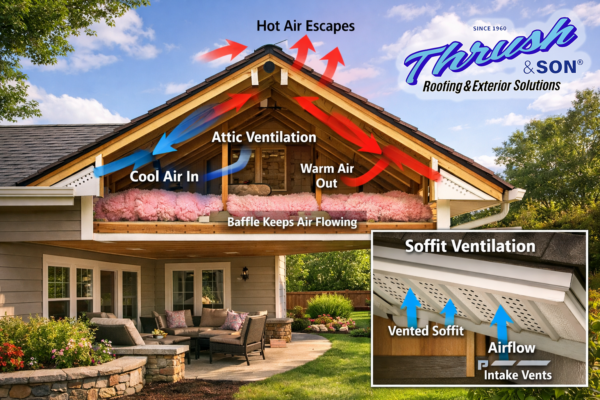
Attic & Ventilation
Heat rises into the attic all winter and bakes there all summer. Balanced intake and exhaust keep that heat moving out instead of soaking into the house and the roof deck.
Insulation
Insulation slows heat on its way out in winter and on its way in during summer. ENERGY STAR estimates that air sealing and insulating can save an average of 15% on heating and cooling costs.
Walls & Siding
Wall studs carry heat straight through the insulation between them. Insulated siding wraps the whole wall in a continuous layer, studs included.
Windows
Older windows let heat slip through the glass, the frame, and every gap around the sash. The right replacement depends on the label numbers, the frame, and how the window opens.
Glass Science
The glass package does most of a window’s work. Coatings, gas fills, and spacers decide how much heat passes through and whether the edge of the glass fogs.
More Home Energy Efficiency Reading: Roof & Savings
Ready to find out where your home is losing energy? Schedule a consultation or call 937-833-5136. Every post in this category is listed below.
