
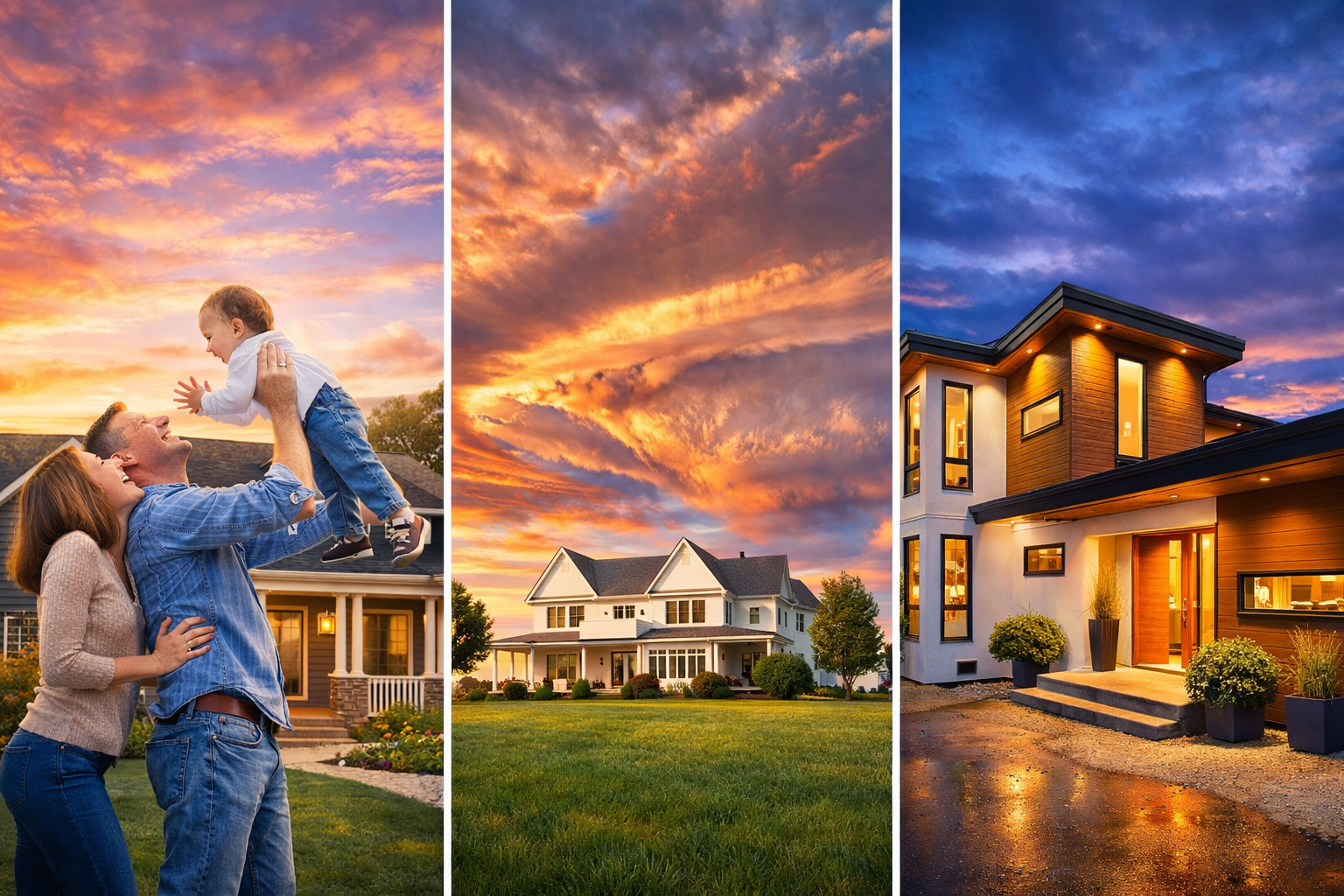
Make the Front of the House Your Home’s Centerpiece
Your Home’s Centerpiece isn’t a coffee table or a fireplace. It’s the view from the curb: the door, the roofline, the windows, and everything that frames them.
What Makes a Front Elevation Work
Designers talk about a focal point, the one spot the eye lands first. Inside, it might be a fireplace. Outside, your home’s centerpiece is the front elevation, and the strongest ones are built around the entry. Everything else, from the roof to the trim, either leads the eye there or distracts from it.
That’s why some houses look finished and others look like a collection of projects. When the colors, proportions, and materials work together, your home’s centerpiece reads as one design. When they don’t, even new materials can look patched together.
The good news: you rarely need to change everything. Most front elevations improve the most from one or two moves aimed at the weakest element. The checkup below helps you find yours, and our curb appeal guide has more ideas for the yard and walkway.
- One focal pointLet the entry win. Everything else should support it, not compete.
- BalanceSymmetry isn’t required, but visual weight should feel even from side to side.
- ScaleDoors, lights, and trim sized to the house. Small fixtures make a big front look bare.
- ContrastOne accent color, used two or three times, looks intentional. Five looks busy.
Four rules for your home's centerpiece
The Centerpiece Checkup
Stand across the street and rate each part of the front. Mark anything that looks tired, and your plan builds on the right. It’s the same order we walk through when we’re helping someone plan your home’s centerpiece.
Mark any element as “Tired” and the matching next step appears here. Strong and OK items don’t need a plan yet.
Start with the door. A new insulated entry door in a color that contrasts with the siding gives the eye a place to land, and it seals out drafts.
The roof is the biggest color block on the front. If it’s worn, plan the roof first so every other color is chosen to match it.
Siding sets the mood for the whole house. Compare profiles in our vinyl siding styles guide, and consider insulated vinyl for a straighter wall.
Windows are the eyes of the house. Matching new replacement windows with consistent frame colors instantly tidies the front.
Wider casings, crisp corner posts, and a band of stone add depth. See exterior trim and stone cladding options.
Swap the porch fixtures for something scaled to the door, light the steps, and give the walk a clear line to the entry. It’s the easiest weekend win on this list.
Six Parts of Your Home’s Centerpiece
Each of these can lift the front of the house on its own, and together they decide whether your home’s centerpiece feels finished.
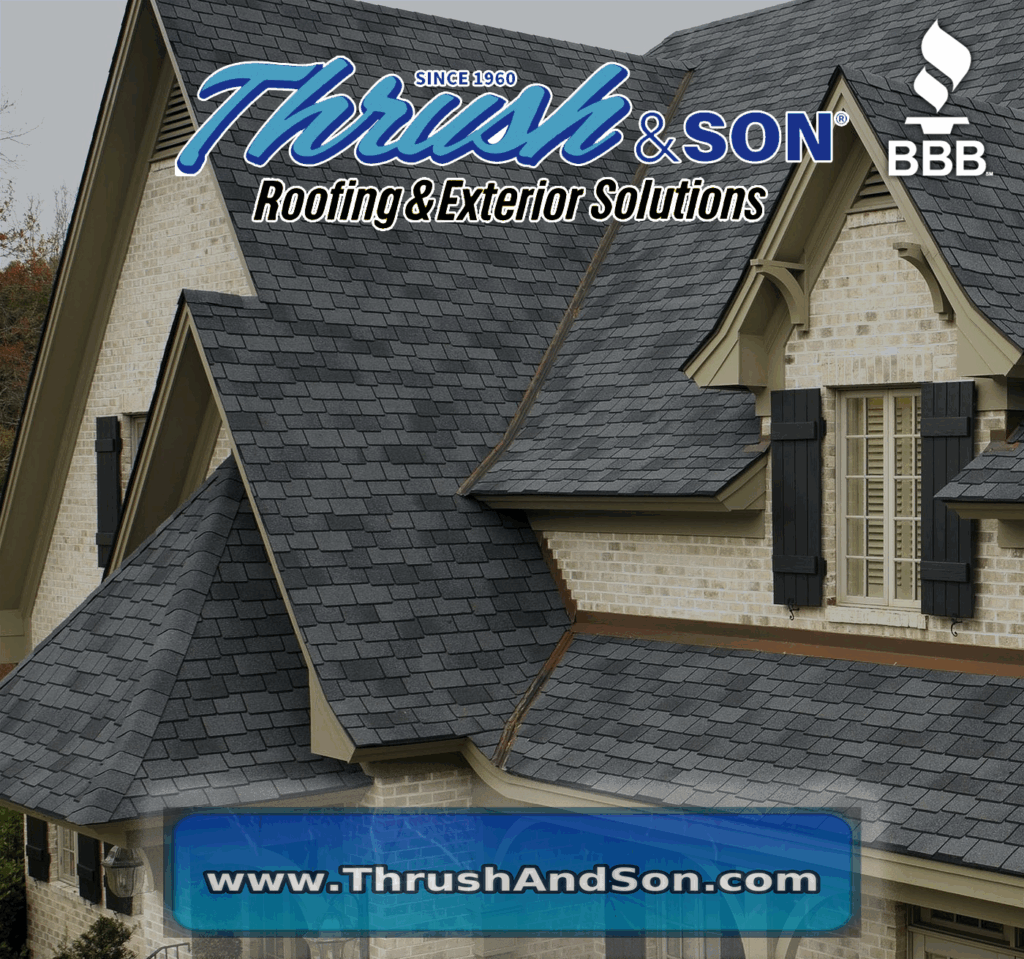
The Biggest Color Block
Architectural shingles add shadow lines and depth. Pick the roof color first, then build the rest of the palette around it. See our shingle selection guide.
The Focal Point
A contrasting door gives the eye a destination. Insulated steel and fiberglass doors also seal far better than older wood doors. Explore entry doors.
The Backdrop
A calm, consistent field color lets the door and trim stand out. Mixing in a board-and-batten gable adds texture. Read why vinyl leads in siding for your home.
The Eyes of the House
Consistent frame colors and grid patterns calm a busy front. New windows also cut drafts and fogging.
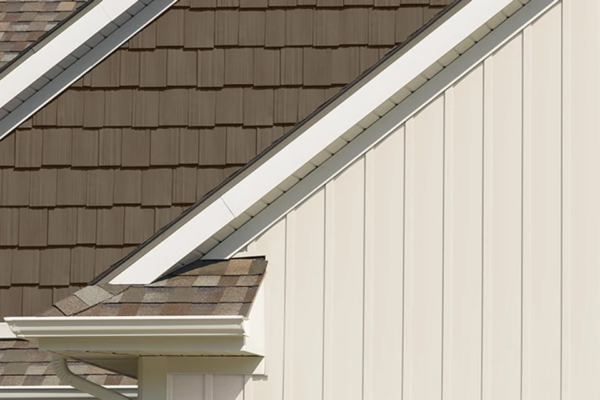
The Frame
Wider casings and crisp corners give siding a finished edge, and a stone base anchors the house. Ideas in our exterior trim article.

The Welcome
Fixtures scaled to the door, lit steps, a clear walk, and clean gutters finish the picture, day and night.
Refresh Your Home's Centerpiece at Any Budget
Not every front needs a full makeover. Here’s how we’d approach your home’s centerpiece at three levels, from a weekend to a full exterior plan.
Light, Paint, Plant
Swap the porch light for a fixture sized to the door, add path lights, refresh the house numbers and mailbox, and plant something in front of the foundation. Small changes, big difference after dark.
A New Front Door
If you change one thing, make it the entry. A new insulated door in an accent color reshapes your home’s centerpiece for the cost of a single project, and it’s the upgrade buyers notice first.
Roof, Siding, Windows, Trim
When the materials are aging out, plan them together so colors and profiles match. One coordinated plan turns your home’s centerpiece into a single design instead of a series of patches.
Cost recouped at resale, 2025 national averages
Source: 2025 Cost vs. Value report. Blue bars are projects Thrush & Son installs.The Front of the House Pays You Back
In the 2025 Cost vs. Value report, the three projects that returned the most at resale all sit on the front of the house: a new garage door, a steel entry door, and manufactured stone veneer. Buyers judge your home’s centerpiece in seconds, and these upgrades change that first impression for a modest cost.
The bigger projects, like siding, windows, and roofing, return a smaller share of their cost, but they protect everything behind them and make the smaller upgrades look their part. A new door in front of faded siding is still a new door in front of faded siding.
Our advice: fix anything that lets water in first, then spend on the pieces people see. When the two line up, like new siding and trim planned around a new door, you get protection and curb appeal from the same budget.
Centerpiece Questions We Hear Most
Short answers to what homeowners ask while planning your home’s centerpiece, from the first idea to the final walkthrough.
What is your home’s centerpiece?
For most houses, it’s the front elevation: the entry door, the roofline above it, the windows on either side, and the siding and trim that frame it all. It’s the view people see from the street and remember.
Where should I start if my budget is limited?
Start with the front door, lighting, and trim. In the 2025 Cost vs. Value report, a steel entry door replacement averaged $2,435 and recouped 216.4% of its cost at resale, one of the highest returns on the list.
How do I choose colors that work together?
Start with what isn’t changing, like the roof, brick, or stone. CertainTeed’s ColorCoach suggests a 60-30-10 split: one main color, a secondary color, and an accent, which is usually the door.
Should the front door match the shutters?
It doesn’t have to. A door that contrasts with the siding draws the eye, and shutters can either match it or blend with the trim. One accent color used in two or three places looks intentional.
Is a new entry door more energy efficient?
Usually. The U.S. Department of Energy notes that most steel and fiberglass-clad entry doors with a foam core reach about R-5 to R-6 without a window, and recommends checking the weatherstripping every year. See the Energy Saver guide to doors.
Can you help me see it before I commit?
Yes. Try combinations in our Design Center, then we’ll bring full-size samples to compare against your roof and brick in daylight.

Let’s Design Your Home’s Centerpiece Together
Bring your checkup results and a photo from the curb. We’ll walk the front with you, show full-size samples, and put the plan in a written, line-item quote, whether it’s just a door or the whole front. Ask about financing, or see finished homes in our project gallery.
Call 937-833-5136 · Office: Mon–Thu 9–4:30, Fri 9–2 · Michelle, our AI assistant, answers 24/7
