Table of Contents
- Why Your Shingle Choice Matters
- Types of Asphalt Shingles: 3-Tab vs. Architectural
- How to Choose a Shingle by the Numbers
- Style, Color & Neighborhood Harmony
- Warranty, Cost & Return on Investment
- Tips for Hiring a Shingle Contractor
- Schedule & Service
1. Why Your Shingle Choice Matters
Learning how to choose a shingle is one of the most valuable skills a homeowner can bring to a roof replacement — because your roof is far more than a protective cover. It is your home’s first line of defense against Ohio weather, and the shingle you select today decides how that roof will perform against wind, rain, hail, temperature swings, and twenty-plus years of wear.
Get the decision right, and you protect your home, lower energy costs, and strengthen resale value. Get it wrong, and the consequences hide for a while: a bargain shingle can look perfectly acceptable on day one, while weak wind resistance, poor granule adhesion, or a thin warranty quietly shortens the life of the entire roof.
Thrush & Son® has spent 66 years helping Dayton-area homeowners make this exact decision — thousands of roofs, every architectural style in the Miami Valley, and every kind of weather Ohio can invent. The difference between a good shingle and a great one comes down to a handful of factors, and by the end of this guide you’ll know how to evaluate every one of them.
2. Types of Asphalt Shingles: 3-Tab vs. Architectural

The first fork in the road when you choose a shingle is the one between 3-tab shingles and architectural (dimensional) shingles. They’re both asphalt — but they behave very differently on a roof.
3-tab shingles are the traditional flat option. Their appeal is straightforward: lower upfront cost, lighter weight, and simple installation. The trade-offs are just as straightforward — a flat, uniform appearance, a shorter lifespan, and wind ratings that typically top out around 60–70 mph. In a region that sees seasonal storms roll through the Miami Valley every spring, that ceiling matters. Typical warranties run 20–25 years.
Architectural shingles are thicker, layered, and dimensional — they create the depth and shadow lines you see on newer and upscale homes. That extra material buys real performance: wind ratings commonly between 110–130 mph, stronger resistance to curling and cracking, and warranties in the 30–50 year range, many of them lifetime-limited. The costs are a higher upfront investment and heavier material weight, which a properly built roof deck handles without issue.
Across most modern neighborhoods, architectural shingles have become the standard, and for good reason. A 3-tab roof remains a reasonable choice for tight budgets, rentals, or secondary buildings — but when longevity and curb appeal are the goals, dimensional shingles win the comparison in nearly every column that matters.
3. How to Choose a Shingle by the Numbers
Price is the easiest number to compare — and the least useful one. True roofing value lives in the performance specs, because those are the numbers that decide whether your roof shrugs off a June storm or ends up on an insurance claim. These five benchmarks separate entry-level products from shingles built for Midwest weather:
Here’s the math nobody puts on the estimate: the homeowner who skips these benchmarks to save money upfront usually pays it back with interest — in repairs, granule loss, and a roof replacement that arrives a decade early. Choose a shingle against these numbers instead of the price tag alone, and you’re buying decades of protection, not just a product.
4. Style, Color & Neighborhood Harmony
Durability wins the engineering argument — but you’ll look at this roof every day for twenty years, so appearance deserves a real seat at the table when choosing a shingle.
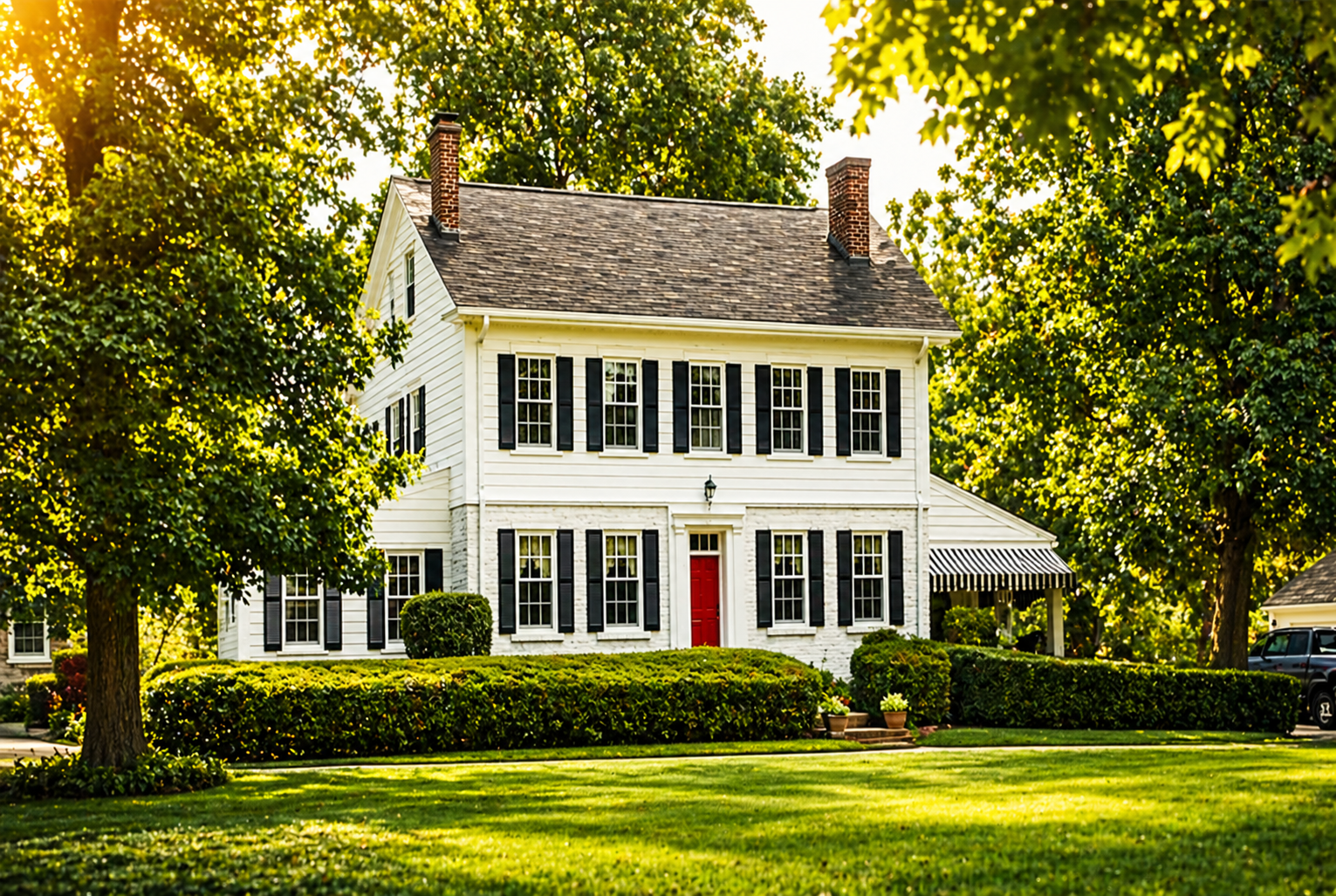
- Match your architectural style. Colonial, Cape Cod, and Craftsman homes benefit from dimensional shingles that create depth and shadow; a flat roof line can make a detailed facade feel unfinished.
- Create visual contrast. Roofing color should complement your siding, trim, and fascia without blending into them — contrast is what makes both the roof and the house pop.
- Respect the neighborhood. Homes in the same area tend to follow a consistent roofing palette, and a roof that fights the street rarely helps resale.
- Preview before you commit. Manufacturer visualizer tools let you see colors rendered on a photo of your actual home — five minutes there beats years of second-guessing.
5. Warranty, Cost & Return on Investment
Cost matters — but it only tells the truth when you read it alongside lifespan and protection.
- Upfront cost: Architectural shingles typically run 20–50% more than 3-tab products.
- Lifespan: Architectural roofs often deliver 30–50 years of service; many 3-tab roofs are done in 15–25. Divide cost by years and the “expensive” shingle is frequently the cheaper roof.
- Resale impact: Buyers notice a dimensional roof from the curb. A premium roofing system meaningfully raises perceived home value — and appraisers notice what buyers notice.
- Warranty protection: The strongest combination is a robust manufacturer warranty paired with certified professional installation — because most enhanced warranties require it, and because the labor is where most roof failures actually start.
6. Tips for Hiring a Shingle Contractor
Here’s the uncomfortable truth of this entire guide: the best shingle on the market cannot survive a bad installation. Before anyone climbs on your roof:
- Look for manufacturer certifications. GAF, CertainTeed, and Owens Corning credential programs indicate documented training — and they’re what unlock the strongest warranty tiers.
- Check local references. A reputable contractor can point to recent installations you can drive past.
- Request a full roof inspection. Decking, flashing, ventilation, and insulation all affect how your new shingles perform.
- Clarify tear-off requirements. Some roofs require complete removal of existing layers — get the answer before the contract, not after.
- Get everything documented. Materials, warranties, and cleanup procedures belong in writing. Every time.
And if you’ve ever wondered how much the smallest component matters, watch this — it’s two minutes on the hardware most homeowners never think to ask about:
Even the best shingle fails with poor fastening — see why roofing nails are critical to wind performance.
Your Roof Outlives the Decision — Make It a Good One
You now know more about choosing a shingle than most homeowners ever will — the wind ratings, the warranty tiers, the difference an installer makes. The only question left is what’s actually on your roof, and that one takes an inspection, not an article.
Ours are free, honest, and performed by local certified inspectors who’ve been climbing Miami Valley roofs since 1960 — from Kettering and Beavercreek to Miamisburg, Mason, Lebanon, and Northern Kentucky. If your roof has years left, we’ll tell you that too. That’s what 66 years in the same community buys you: a company with no reason to sell you a roof you don’t need.
📞 Call 937.833.5136 or schedule your free inspection here — before storm season decides for you.
Keep Learning
Leaning toward dimensional shingles after Section 2? Go deeper with Architectural Shingles: Elevating Curb Appeal & Protection — how premium materials earn back their price in durability and home value.
Want More Expert Insights?
Don’t miss our post on Architectural Shingles: Elevating Curb Appeal & Protection to see how premium roofing materials improve durability and home value.

🔗 Stay Connected
inConnect with W. Allen Thrush on LinkedIn for leadership and legacy insights.
inFollow Corey Thrush on LinkedIn for innovation and forward-thinking vision.
inVisit the Thrush & Son® LinkedIn Business Page for company news, awards, and opportunities.
fJoin the homeowner family on Facebook for real projects, real stories, and community updates.
◎Explore behind-the-scenes craftsmanship on Instagram.
◎Catch behind-the-scenes chaos and cuteness on BooBoo’s Instagram.
@Follow Thrush & Son® on Threads for stories, tips, and updates.