
Jesse’s Scary Experience, Part 2: What to Do When the Roof Leaks Mid-Storm
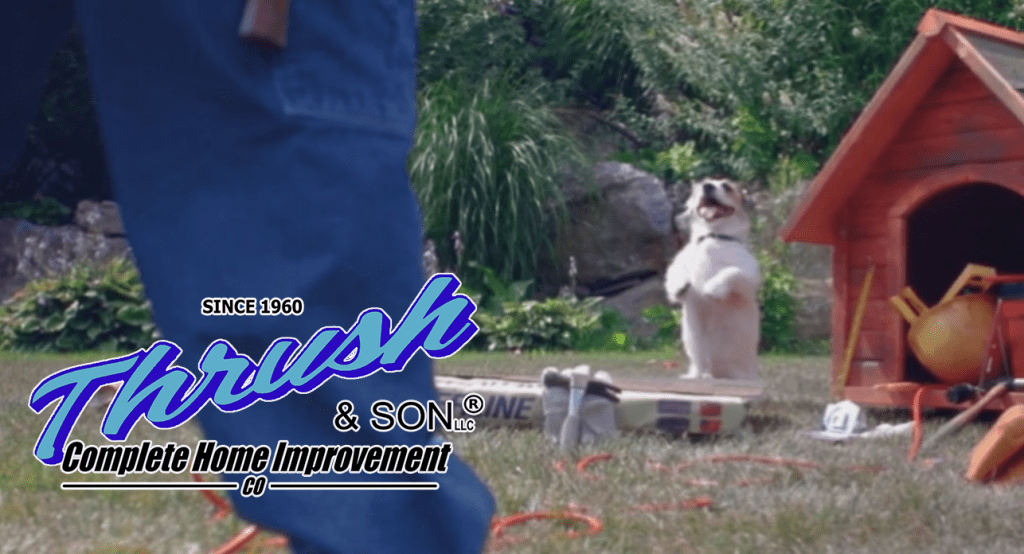
A roof leak during a storm is one of the scariest moments a homeowner can face. Thunder outside, a drip inside, and that sinking feeling as a stain spreads across the ceiling. Just ask Jesse, our nervous Jack Russell Terrier, who knows exactly how it feels.
The good news: the first hour matters most, and you don’t need a ladder or tools to handle it well. Here’s the calm, safe plan we give every Miami Valley homeowner who calls us in the middle of a storm.

Watch Jesse’s Scary Experience, Part 2
Jesse’s back, and the storm is too. Watch the commercial, then read on for what to do if a roof leak during a storm ever happens at your house. Missed Part 1? It’s in Jesse’s Scary Experience.
Roof Leak During a Storm? 6 Easy Steps, in Order
Think of this like the safety card in an airplane seat pocket, written for a roof leak during a storm. Read it now, so you don’t have to think when the drip starts.
Stay inside and off the roof
Never climb up during a storm. The National Weather Service says to stay indoors and wait at least 30 minutes after the last thunder. Wet shingles and wind make ladders dangerous long after the lightning stops. NWS lightning safety
Cut power near the leak
If water is near a light fixture, outlet, or ceiling fan, switch off that circuit at the breaker. When in doubt, shut it off. Never stand in water to reach the panel.
Catch the water
Buckets, pots, and towels under every drip. Put a towel in the bucket to stop splashing. Empty them before they overflow.
Ease a bulging ceiling
A sagging, water-filled bubble can give way. If it’s safe and the power is off, set a bucket under it and gently puncture the low point with a screwdriver so the water drains on your terms.
Move what matters
Electronics, furniture, rugs, and family photos out of the drip zone. Cover what can’t move with plastic sheeting.
Document everything
Photos and video of the leak, the ceiling, and any damage, plus the date and time. The Ohio Department of Insurance advises documenting losses right away and filing claims promptly. Ohio insurance tips
These steps come from the same playbook our crews use, backed by the National Weather Service on storm safety and the Ohio Department of Insurance on documenting damage. A roofing industry checklist recommends the same core moves: power off, catch the water, protect belongings, and photograph everything.
4 Mistakes That Make a Roof Leak During a Storm Worse
Good intentions can turn a small roof leak during a storm into a big bill. Tap each card to see why these common reactions backfire.
About that knock on the door: after big storms, door-to-door crews sometimes show up within hours. The FTC warns homeowners to be careful with anyone who shows up uninvited, pushes for a fast signature, or asks for a large payment up front. Our storm damage guide covers the warning signs.
After a Roof Leak During a Storm: Your Next Steps
Once the rain stops and everyone’s safe, a roof leak during a storm shifts from emergency to recovery. Here’s the order that keeps your claim, your home, and your sanity intact.
- First hourSafety, power, buckets, belongings, photos. Then breathe.
- First dayCall your insurance company and a local roofer you can verify. Ask for a written inspection with photos, and a temporary tarp if needed.
- First weekMeet the adjuster, compare the inspection to the claim scope, and keep a log of every call, name, and date.
- The fixA written estimate that names the products and scope, then a permanent fix that addresses the cause, not just the drip.
Keep every receipt from a roof leak during a storm: buckets, tarps, fans, and emergency service. The Ohio Department of Insurance notes that reasonable steps to prevent further damage are allowed, and insurers typically reimburse those costs through the claim.
A temporary patch buys time after a roof leak during a storm, but a lasting fix depends on finding where the water really got in, which is rarely right above the drip. That’s why our inspections include the attic, decking, flashing, and gutters, with photos you can share with your adjuster. Learn more about our storm damage services.
Where a Roof Leak During a Storm Usually Starts
Water travels, which makes a roof leak during a storm hard to trace. It can enter at a chimney and show up in a bedroom across the hall. Tap a suspect to see the six places we find leaks most often.
Flashing
Chimneys, walls, and skylights are classic entry points. See the #1 roof flashing mistake.
Valleys
Two roof planes funnel water into one channel, so small flaws become big leaks.
Pipe boots and vents
Rubber collars around plumbing vents crack with age and let water run down the pipe.
Missing or lifted shingles
Wind can lift or remove shingles. Our wind damage and hail guides explain what to look for.
Ice dams
In winter, meltwater backs up under shingles at the eaves. Learn more about ice damage.
Overflowing gutters
Clogged gutters push water behind fascia and into walls. See mind in the gutter.

Get Ready Before the Next Roof Leak During a Storm
Ten minutes of preparation now makes the next storm a lot less scary. Most of these cost nothing, and every one of them makes a roof leak during a storm easier to handle, or less likely to happen at all.
Jesse’s version is simpler: know where the blanket is. Yours should include a flashlight and a labeled breaker panel.
- ✓Clean gutters and downspouts before storm season.
- ✓Trim branches hanging over the roof.
- ✓Have flashing, pipe boots, and shingles inspected once a year.
- ✓Know where your electrical panel is, and label it.
- ✓Keep a leak kit: buckets, towels, plastic sheeting, a flashlight, and a screwdriver.
- ✓Save your insurer’s claim number and our number in your phone.
Peace of Mind, Not Scary Surprises
The best way to handle a roof leak during a storm is to never have one. A roof built as a complete system, with underlayment, leak barrier in the valleys and eaves, sealed flashing, sound pipe boots, and clean gutters, gives water nowhere to go. Our storm-proof your home guide and prevent water damage guide go deeper.
Since 1960, Thrush & Son® has been the call Miami Valley families make when they want peace of mind. We’re a GAF President’s Club Contractor, rated A+ by the BBB, and a Best of Dayton 2024 winner. Read why homeowners call us a trusted roofing contractor, or hear it straight from a homeowner in our real testimony.

Roof Leak During a Storm: FAQs
What should I do first if my roof leaks during a storm?
Stay inside, keep away from the roof, and turn off power to any area where water is near lights or outlets. Then catch the water, move your belongings, and take photos for your insurance company.
Should I go on the roof to stop a leak in the rain?
No. Wet shingles, wind, and lightning make it dangerous. The National Weather Service recommends staying indoors until at least 30 minutes after the last thunder. Let a professional inspect once it’s safe.
Is it safe to poke a hole in a bulging ceiling?
Only if the power to that area is off and you can reach it safely from the floor or a sturdy step stool. Put a bucket underneath and puncture the lowest point gently. If the ceiling is sagging badly, stay out of the room and call for help.
Will insurance cover a roof leak during a storm?
It depends on your policy and the cause. Sudden storm damage is often covered, while wear and tear usually isn’t. Document everything and file quickly, as the Ohio Department of Insurance advises. Our storm damage guide covers the claim process.
Can I put a tarp on my roof myself?
A tarp can prevent more damage, but only after the storm and only if it’s safe. Many homeowners have a roofer install it, since a tarp nailed or weighted wrong can blow off or cause new holes.
How can I prevent a roof leak during a storm next time?
Keep gutters clear, have flashing, boots, and shingles checked, and make sure the roof has leak barrier in valleys and at the eaves. Our storm-proof your home guide covers upgrades like GAF storm-rated shingles.
Where can I see Part 1 of Jesse’s story?
Watch it in Jesse’s Scary Experience, where Jesse learns why a trusted roofer matters.
Leak Today? Let’s Get You Covered
Once the storm passes, we’ll inspect your roof, document what we find with photos, and give you a written plan, with no pressure. Serving Miami, Montgomery, Greene, and Warren counties from Brookville, Troy, and Lebanon. See our roofing services and ask about financing.
Office: Mon–Thu 9–4, Fri 9–2 · Michelle, our AI assistant, answers 24/7 · Contact our office
