
The Homeowner’s Roof Algae Prevention Playbook
Roof algae prevention starts long before the first black streak shows up. Those stripes come from algae that thrive on damp, shaded shingles, and once they settle in, every cleaning is a trade-off between looks and granules.
This playbook covers what you can do on the roof you have today, what to do each season, and what to choose when it’s time to reroof. If you’re trying to identify what’s already on your roof, start with our algae field guide.

5 Roof Algae Prevention Moves
Pick your roof’s age. The roof algae prevention moves that make sense for your roof light up, so you know where to spend effort now and what to save for replacement day.
Open up the shade
Roof algae prevention starts with sunlight. Trim branches that hang over the roof so sun and wind can dry the shingles after rain and dew. Shade and lingering moisture are what algae needs most.
Recommended for your roofKeep water moving
Clean gutters and clear leaves and seeds out of valleys. Debris holds moisture against the shingles for days. Our Prevent Water Damage guide covers the full drainage path.
Recommended for your roofDry the deck from below
A balanced intake-and-exhaust system keeps attic moisture from warming and dampening the roof deck. See Is Attic Ventilation Important?
Recommended for your roofAdd a zinc strip at the ridge
Zinc strips installed along the ridge release zinc oxide when it rains, which slows new growth below them. They don’t kill existing growth, so the roof has to be cleaned first.
Recommended for your roofChoose algae resistant shingles
When it’s time to reroof, shingles with built-in algae protection are the long-term fix. GAF’s StainGuard Plus carries a 25-year algae protection limited warranty.
Recommended for your roofThe first three moves cost little and help any roof, because roof algae prevention is mostly moisture control. A zinc strip makes the most sense on a mid-life roof that’s starting to streak and still has years left. On a roof near the end, put the money toward a new system with protection built into every shingle.
Zinc Strips: Roof Algae Prevention for the Roof You Have
If your shingles have years left, a metal strip at the ridge is one of the few roof algae prevention steps that works from the roof itself. According to GAF’s zinc strip instructions:
- The exposed zinc oxidizes, and rain carries zinc oxide down the roof
- Strips go on both sides of the ridge, tucked no more than an inch under the ridge cap
- Only the area below a strip is protected; slopes longer than about 14 feet get a second strip partway down
- Existing growth must be cleaned off first, since the strip only slows regrowth
GAF also notes that algae or moss that keeps returning can point to another problem, like poor attic ventilation. That’s why our roof algae prevention checks look at the whole roof, not just the stain.
Your Four-Season Roof Algae Prevention Planner
Miami Valley humidity peaks in summer, but roof algae prevention is a year-round habit. Tap a season for a short checklist you can do from the ground.
Spring checklist
- Walk the yard and look at each slope from the ground; north faces first
- Clean gutters after the seed and pollen drop
- Schedule tree trimming before summer growth fills in
Summer checklist
- Watch for new dark streaks after humid stretches
- Check that attic vents aren’t blocked by insulation or nests
- Hose off pollen and debris gently, never with a pressure washer
Fall checklist
- Clear leaves from gutters and valleys, then do it again after the last drop
- Look for moss along shaded shingle edges
- Book a cleaning or inspection before winter if streaks have spread
Winter checklist
- Note where frost lingers longest; those slopes stay damp longest too
- Plan any reroof for spring and ask about algae protection
- Keep branches from rubbing the roof in winter winds
Gutters are the easiest place to start. Our seamless gutter team can add guards that keep leaves and seeds from piling up where moisture lingers.
Four Roof Algae Myths, Flipped
When it comes to roof algae prevention, bad advice causes more harm than algae does. Tap each card to see what the Asphalt Roofing Manufacturers Association and GAF actually say.
The Long-Term Fix: Protection Built Into Every Shingle
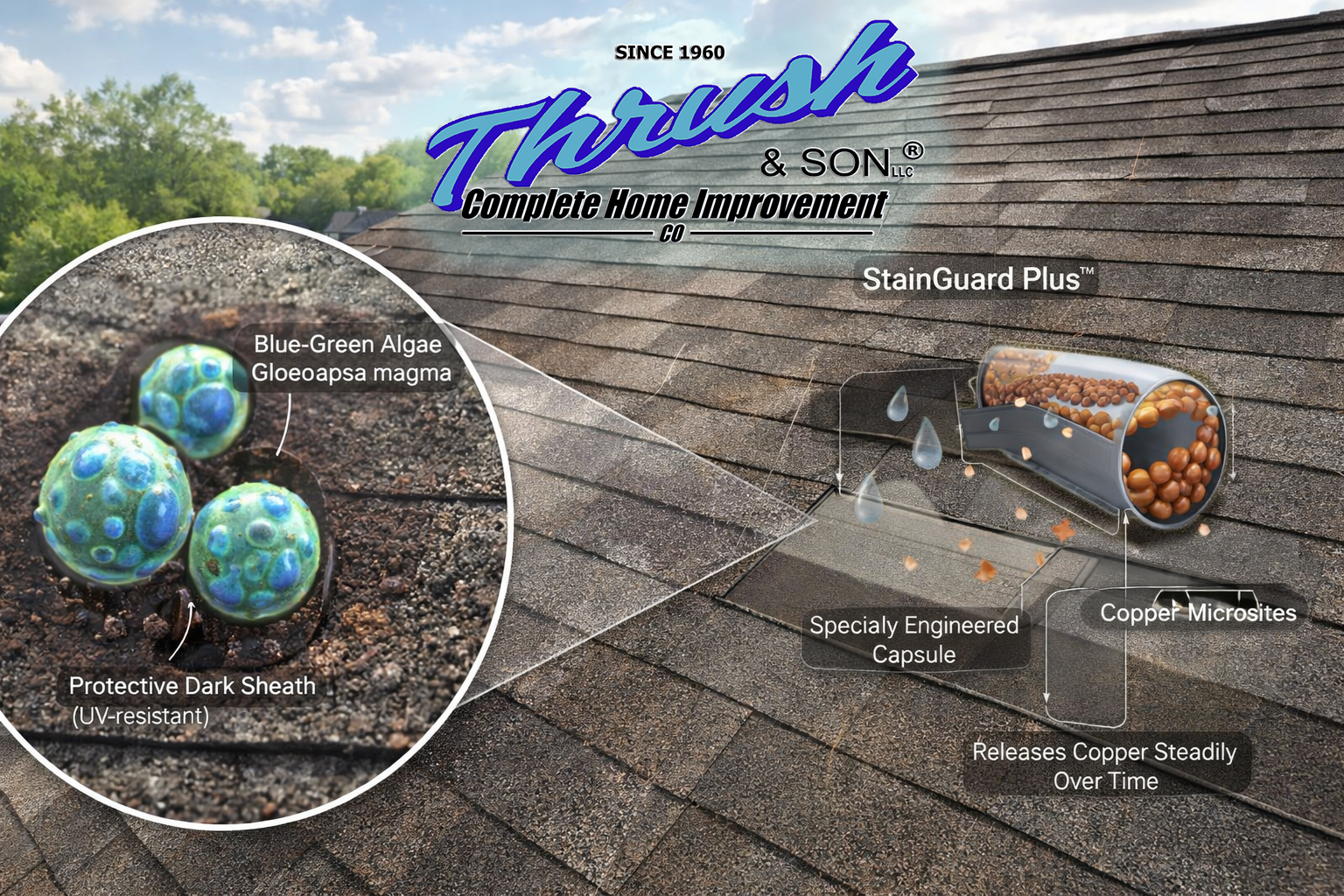
The most complete roof algae prevention comes with the roof itself. Older algae resistant shingles used copper-coated granules, which GAF says can eventually degrade and lose effectiveness. In 2022, GAF added time-release capsules to Timberline HDZ, each with thousands of copper microsites that release protection over time.
That technology is now standard on many GAF shingles, including ridge caps and starter strips, and comes with a 25-year StainGuard Plus Algae Protection Limited Warranty on products sold in packages with the StainGuard Plus logo. The science is on our StainGuard technology page, and the history is in Designing Spaces and the Fight Against Roof Algae.
Roofs Built to Stay Clean
Wilbur Thrush founded Thrush & Son in 1960. W. Allen Thrush owns the company today, and Corey Thrush is the third generation. More than 31,000 Miami Valley homeowners have trusted us, from our Brookville headquarters and offices in Troy and Lebanon.
As a GAF President’s Club Contractor, we install GAF Timberline shingles as a complete system with matching starter, ridge caps, and balanced ventilation, so roof algae prevention is built in from day one. Ask about the Golden Pledge warranty, compare quotes with our roofing estimates guide, and browse the project gallery and homeowner reviews.

Roof Algae Prevention Questions, Answered
What homeowners ask us most about roof algae prevention and keeping streaks off for good.
What is the most effective roof algae prevention?
For an existing roof, the strongest combination is less shade, good drainage, good attic ventilation, and a zinc strip at the ridge. For a new roof, algae resistant shingles with built-in protection, like GAF’s StainGuard Plus, are the long-term answer.
Do zinc strips really prevent roof algae?
They help slow new growth. GAF’s instructions explain that rain carries zinc oxide down the roof from strips installed on both sides of the ridge. They don’t remove existing algae, and on long slopes a second strip is added partway down.
How far down the roof does a zinc strip protect?
GAF’s instructions call for a second strip roughly halfway down when the roof runs more than about 14 feet from the ridge, since only the area below the strip benefits.
Can I prevent roof algae by cleaning it every year?
Cleaning removes growth but doesn’t stop it from returning. ARMA’s method uses diluted household bleach left on 15 to 20 minutes and a gentle rinse, and it encourages hiring professionals because the roof gets slippery.
Are algae resistant shingles worth it?
When you’re replacing the roof anyway, yes. GAF made its time-release StainGuard Plus technology standard on many shingles, including ridge caps and starter strips, so protection often comes with the system.
Will trimming trees really make a difference?
Yes. Sun and airflow help shingles dry after rain and dew, and drier shingles give algae less time to settle in. Trimming overhanging branches also keeps leaves out of gutters and valleys.
Want a Prevention Plan for Your Roof?
We’ll look at shade, drainage, ventilation, and the shingles themselves, then give you a written plan with no pressure, whether that’s a few simple fixes or a new roof. See our roofing services, and ask about financing.
Call 937-833-5136 · Office: Mon–Thu 9–4, Fri 9–2 · Michelle, our AI assistant, answers 24/7
