
A Homeowner’s Field Guide to Roof Streaks
Algae resistant shingles exist because of one stubborn organism. Those black stripes running down so many Miami Valley roofs aren’t dirt or soot. They’re alive, they spread on the wind, and they make a perfectly sound roof look a decade older.
This guide helps you name what’s on your roof, size up your risk, decide whether to clean, wait, or replace, and understand what algae resistant shingles actually promise.
What’s Growing on My Roof?
Five things get mistaken for each other from the driveway. Pick the one that matches your roof to see what it is and how serious it is.
Algae
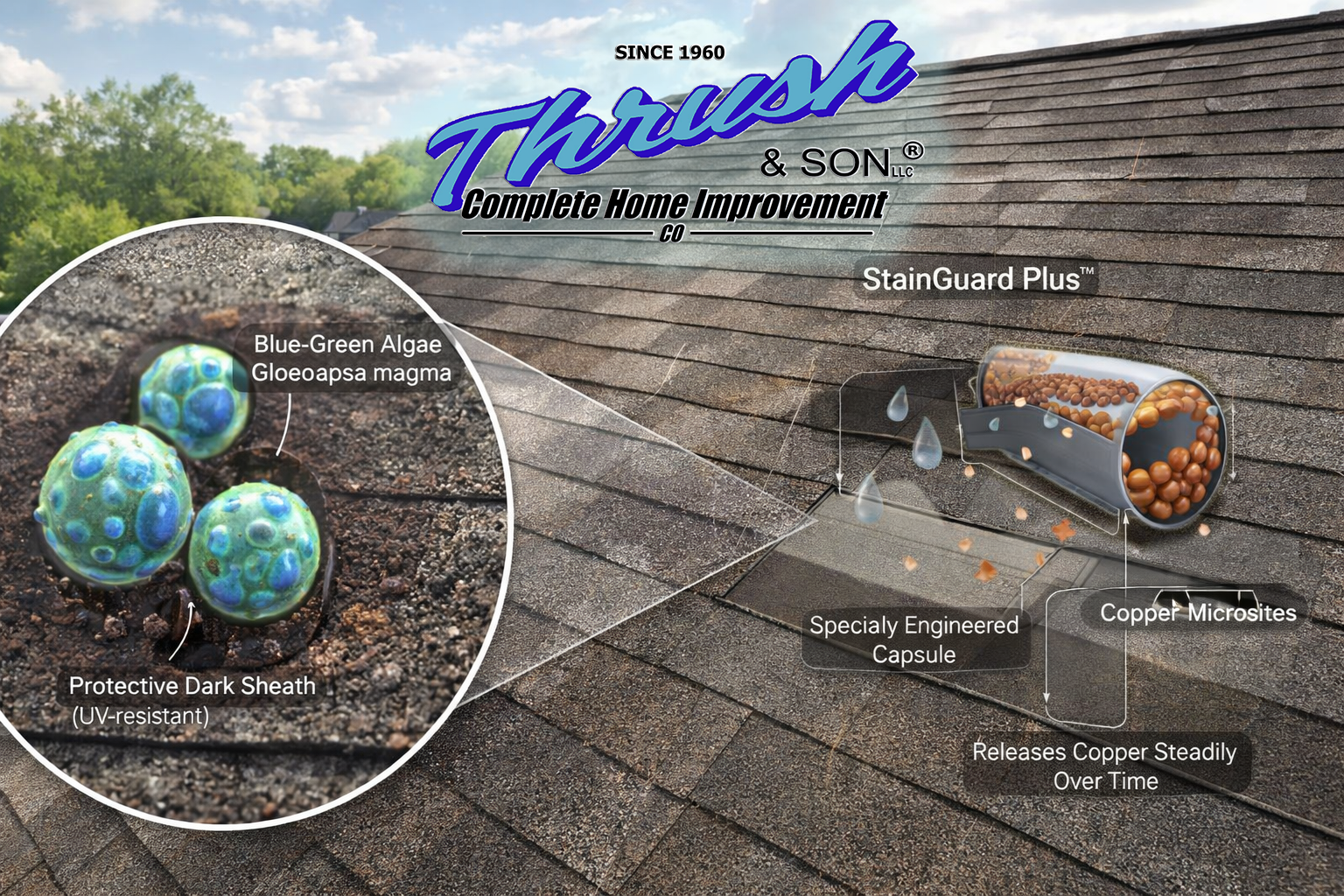
Gloeocapsa magma, a blue-green algae. It’s mostly cosmetic, but it makes a roof look years older. It can be cleaned gently, and algae resistant shingles keep it from coming back.
Moss
Moss holds water against the roof and can creep under shingle edges as it grows. It needs removal sooner than algae, and the shade or moisture feeding it should be addressed.
Lichen
Lichen grips the surface tightly, so scraping it off can pull granules with it. Treat it gently and talk to a roofer before trying to remove it.
Runoff or a leak
Stains that start at a penetration often come from rusting metal or water getting where it shouldn’t. Have the flashing checked.
The Asphalt Roofing Manufacturers Association names Gloeocapsa magma as the most common culprit behind roof discoloration and describes it as a staining problem rather than structural damage. That’s why algae resistant shingles focus on prevention: once the roof is streaked, every cleaning is a trade-off. If the streaks start at a chimney or vent instead, read The #1 Roof Flashing Mistake.
Do You Need Algae Resistant Shingles? Check Your Risk
Check everything that describes your house. The more boxes, the more streaks grow on the roof drawing, and the more algae resistant shingles matter on your next roof.
0–1 checked: low risk.
2–3: streaks likely within a few years.
4 or more: make algae protection a must on your next roof.
Shade and moisture are the common thread. Trimming branches and keeping gutters flowing help any roof, and a well-ventilated attic keeps the deck drier; see Is Attic Ventilation Important? and Prevent Water Damage.
Where Streaks Show Up First, and Why Color Matters
On almost every streaked roof we inspect, the pattern is the same. The north slope goes first because it dries last after rain and morning dew. Next come the sections under mature maples and oaks, valleys where debris collects, and the lower roof below a bigger one that drips onto it.
Color changes how fast you notice. Light gray, white, and tan shingles show black streaks almost immediately. Darker blends hide early growth longer, but the algae is still there and still spreading spores to the rest of the roof and the neighbors.
That’s why we treat algae resistant shingles as standard equipment rather than an upgrade. Pick the color you want, not the one that hides stains, and let the protection built into the shingle do the work. Our Exterior Design Center is a good place to compare roof colors with your siding.
Already Streaked? Clean, Watch, or Replace
Algae on a roof isn’t an emergency, so the right move depends on how much life the roof has left. When it’s time for a new one, algae resistant shingles keep the problem from coming back.
Clean it
The roof is in good shape and only streaked.Follow ARMA’s gentle method: diluted household bleach, left on 15 to 20 minutes, then a gentle rinse. No power washer, no brush. The roof gets slippery, so ARMA encourages hiring a pro.
Watch it
Light streaking on a roof with years left.Algae is mostly cosmetic. If it doesn’t bother you, keep gutters clear, trim back branches, and look again each spring.
Replace it
Streaks plus curling, granule loss, or leaks.When the roof is near the end anyway, replacing it with algae resistant shingles fixes the wear and stops the streaks from coming back.
One warning from ARMA: never use a power washer, brush, or broom on shingles. They strip granules, and granules are what protect the asphalt from the sun. If you’re weighing a new roof, our roofing estimates guide shows what a good quote should list, including whether the shingles carry algae protection.
How Today’s Algae Resistant Shingles Work
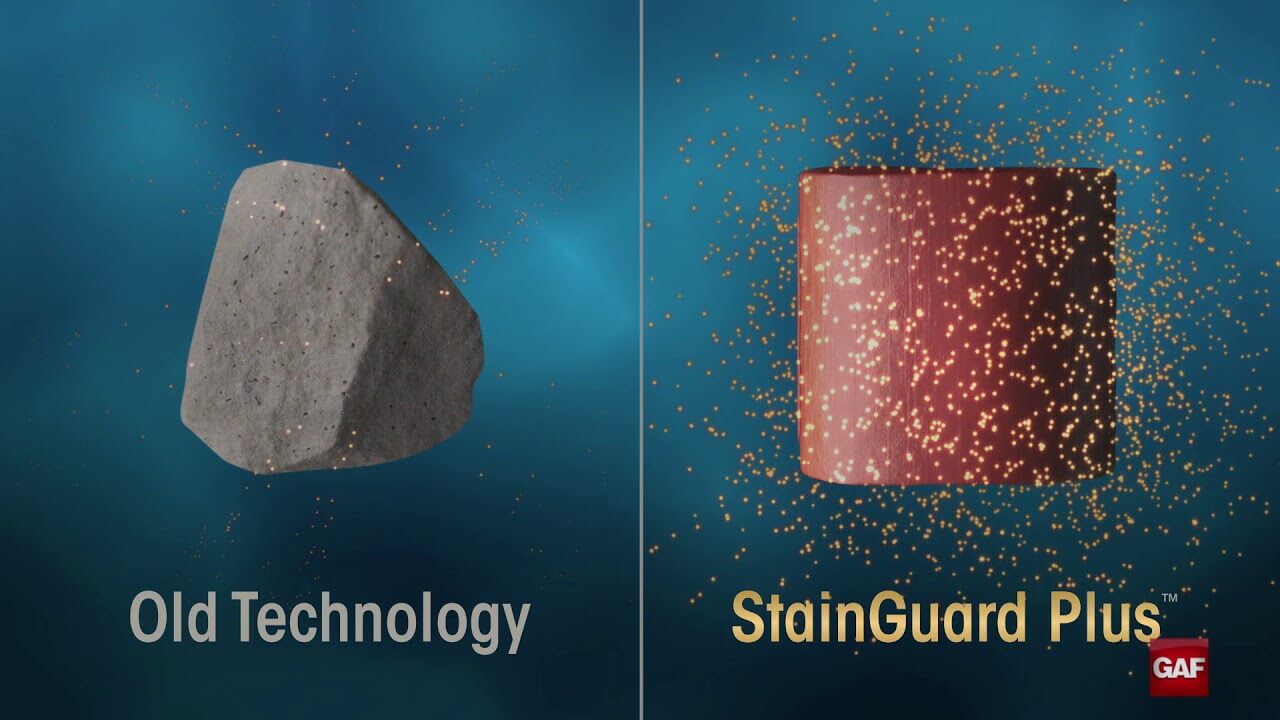
Older algae resistant shingles relied on copper coated onto the surface of the granules, which can wear down as the roof ages. In 2022, GAF added time-release StainGuard Plus technology to Timberline HDZ: specially engineered capsules, each with thousands of copper microsites, that release copper steadily over time.
- Now standard on many GAF shingles, plus matching ridge caps and starter strips
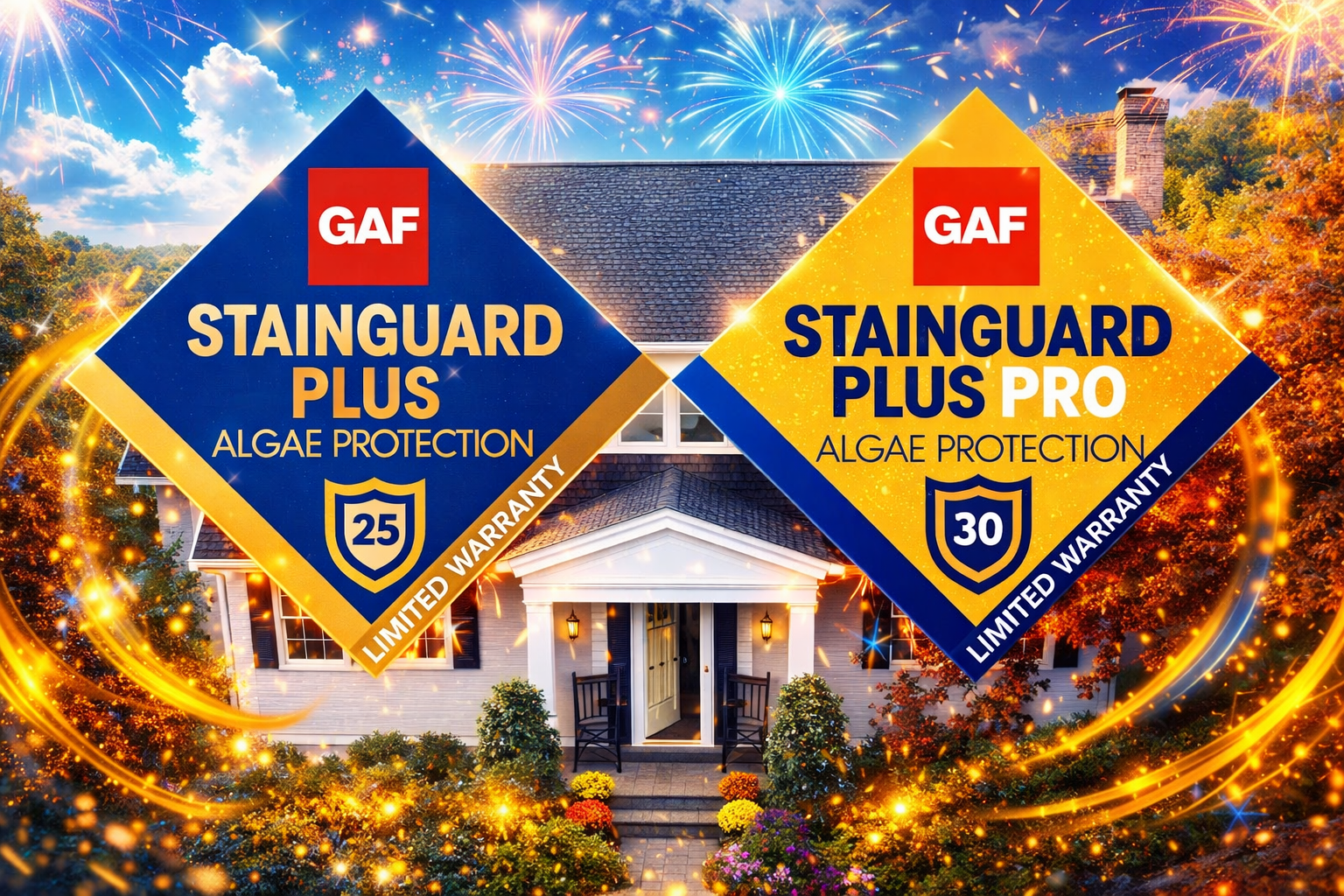
- 25-year StainGuard Plus Algae Protection Limited Warranty
- Coverage applies to products sold in packages with the StainGuard Plus logo
Want the full science? Our StainGuard technology page breaks down the capsules, the StainGuard Plus brochure has the details in writing, and Designing Spaces and the Fight Against Roof Algae shows how far algae protection has come since 2013.
Roofs That Stay the Color You Picked
Wilbur Thrush founded Thrush & Son in 1960. W. Allen Thrush owns the company today, and Corey Thrush is the third generation. More than 31,000 Miami Valley homeowners have trusted us, from our Brookville headquarters and offices in Troy and Lebanon.
As a GAF President’s Club Contractor, we install algae resistant shingles as part of a full roofing system with matching ridge caps and starter. We also check ventilation, flashing, and gutters on every roof, because a roof that dries quickly gives algae fewer places to start. See Timberline shingles, storm-rated shingles, the project gallery, and homeowner reviews.
Algae Resistant Shingles Questions, Answered
What homeowners ask us most about streaks and how to stop them.
Do algae resistant shingles really work?
Yes, as a preventive. They release copper over time that makes the surface a poor place for algae to grow. GAF’s StainGuard Plus uses time-release capsules and carries a 25-year algae protection limited warranty on products sold in packages with the StainGuard Plus logo.
Does roof algae damage shingles?
ARMA describes it as discoloration rather than structural damage. The bigger risk is how old it makes the roof look, and the damage done by harsh cleaning methods.
Can I pressure wash roof algae off?
No. ARMA says not to use a power washer, brush, or broom on the roof. They strip granules and can shorten the roof’s life.
Are algae resistant shingles more expensive?
Algae protection is now standard on many GAF shingles we install, including Timberline HDZ, so on a typical reroof it isn’t a separate upgrade. We’ll confirm the exact product and warranty on your written quote.
Do darker shingles hide algae better?
They hide early streaks longer, but the algae still grows and spreads. Algae resistant shingles stop the growth itself, so you can choose any color without worrying about streaks.
Will new algae resistant shingles stop the neighbor’s algae from spreading to my roof?
Spores will still land on your roof, but the copper makes it hard for them to take hold. That’s the point of building the protection into every shingle, including ridge caps.
Not Sure What’s on Your Roof?
We’ll take a look, tell you whether it’s algae, moss, or wear, and give you a written plan with no pressure. If a new roof makes sense, we’ll show you which shingles carry algae protection. See our roofing services, and ask about financing.
Call 937-833-5136 · Office: Mon–Thu 9–4:30, Fri 9–2 · Michelle, our AI assistant, answers 24/7
