
Designing Spaces and the fight against roof algae
Back in 2013, the TV show Designing Spaces aired a segment on Atlas shingles with Scotchgard Protector and the black streaks they were built to stop. More than a decade later, those streaks are still one of the first things homeowners ask us about.
Here is what the Designing Spaces segment taught, what causes roof algae, how copper granules keep it away, and what has changed in algae-resistant roofing since then.
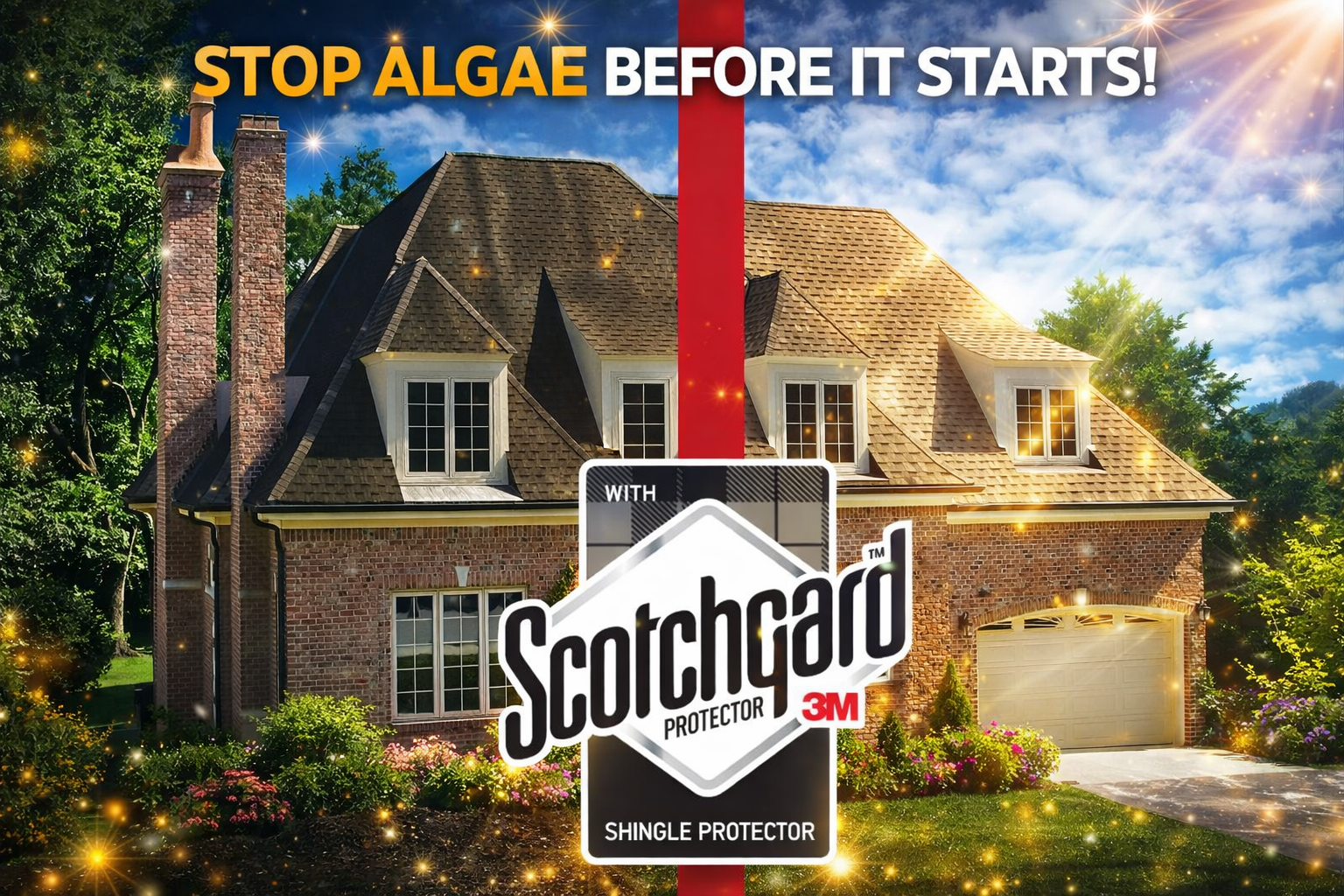
The Designing Spaces episode
Designing Spaces was a home and design series that showed real projects and the products behind them. This segment walks through how algae stains form and how Scotchgard Protector granules work to stop them.
It is a short watch, and it still explains the science better than most brochures.

Why roofs grow black streaks
Those dark stripes running down the roof are not dirt or mold. They are a hardy algae called Gloeocapsa magma, and they start on the slopes that stay damp the longest, usually the north side or anywhere trees block the sun.
Left alone, algae makes a newer roof look tired and can drag down curb appeal when it is time to sell. As the Designing Spaces segment pointed out, the fix is to stop algae before it starts.
Copper granules, explained simply
The idea Designing Spaces showcased, in four steps.
- 1
Spores arrive
Wind and birds carry algae spores from roof to roof. Gloeocapsa magma, the culprit, feeds on the limestone filler in asphalt shingles.
- 2
Shade and moisture
North-facing slopes and roofs under trees stay damp longest, so the streaks show up there first.
- 3
Copper steps in
Algae-resistant granules release tiny amounts of copper ions every time it rains, making the surface a poor place for algae to take hold.
- 4
Color stays true
No scrubbing, no bleach, no pressure washing. The roof keeps the color you picked for years longer.

Scotchgard Protector granules were developed with 3M, and Atlas carried the technology across the whole shingle, including hip and ridge caps, so the protection did not stop at the peak. Learn more about the science in our post on algae-resistant shingles, and see how a modern version works on our StainGuard technology page.
For the research behind copper and algae, the National Roofing Contractors Association is a good place to start.
What changed since Designing Spaces aired
Algae resistance went from upgrade to expectation.
- 2013Designing Spaces featured Atlas shingles with Scotchgard Protector, one of the first big pushes to make algae resistance a selling point.
- ThenAlgae resistance was a premium upgrade. Many homeowners in the Miami Valley still had three-tab roofs with no protection at all.
- TodayAlgae-resistant granules are standard on most major architectural shingle lines, each under its own brand name.
- For youAsk what algae protection your shingle carries and how long its algae warranty lasts. Terms vary by product.

What not to do
If your roof is already streaked, resist the urge to blast it clean. The wrong fix does more damage than the algae.
- Pressure washingBlasts protective granules off the shingle and shortens roof life.
- Chlorine scrubbingCan bleach the color and kill landscaping below the gutters.
- Walking the roofScuffs granules and voids some warranties. Leave it to a pro.
Most architectural shingles we install today carry built-in algae resistance. If your roof is near the end of its life, a roof replacement may be the cleaner answer. Want a second opinion? Check any roofer with the Better Business Bureau.
Algae, moss or worn-out shingles?
Not every dark spot is algae. Here is how to tell what you are looking at.
Algae streaks
Long black or gray stripes running down the slope, heaviest on the north side. Algae rarely harms the shingle by itself, but it ages the look of the whole house.
Moss
Green, fuzzy clumps that grow between shingles. Moss holds water against the roof and can lift shingle edges, which lets wind and water get underneath.
Granule loss
Bald, shiny patches and granules collecting in the gutters. That is a roof wearing out, and no cleaning will bring it back.
Not sure which one you have? Our crews will take photos from the roof and show you exactly what they find. You can also book a home maintenance plan so someone checks every year.
Roof algae questions, answered
What homeowners still ask us about streaks and algae-resistant shingles.
What was the Designing Spaces segment about?
The Designing Spaces segment showed how Atlas shingles with Scotchgard Protector use copper-coated granules to fight the black algae streaks that stain so many roofs.
What causes black streaks on a roof?
The streaks are a blue-green algae called Gloeocapsa magma. Its spores travel on the wind, and it grows best on shaded, damp slopes, especially those facing north.
How do algae-resistant shingles work?
Special granules release small amounts of copper ions when it rains. Copper makes the shingle surface hostile to algae, so streaks are far less likely to form.
Can I clean algae off my roof myself?
We do not recommend it. Pressure washing strips granules, and harsh chemicals can damage shingles and plants. A roofing pro can tell you whether cleaning or replacement makes more sense.
Do all new shingles resist algae?
Most major architectural shingle lines now include algae-resistant granules, but the protection and warranty length vary. Ask your roofer to show you the terms in writing.
Built on trust since 1960
Family-owned and Miami Valley proud, Thrush & Son® has been helping homeowners pick roofs that look good and stay that way since long before algae resistance came standard. Explore exterior home upgrades across the Miami Valley.
Schedule a free roof inspection