
Protecting Yourself, Line by Line How to read a scope of loss and get the roof your policy pays for.
Protecting yourself after a storm starts with one document most homeowners skim: the adjuster’s scope of loss. That itemized estimate decides what your insurer pays, and a single missing line can leave you paying for part of the roof yourself.
This guide walks through how to read a scope, the six lines we check on every storm claim, the timelines Ohio sets for insurers, and where to turn when a claim falls short. Worried about the contractor side instead? Read too good to be true.
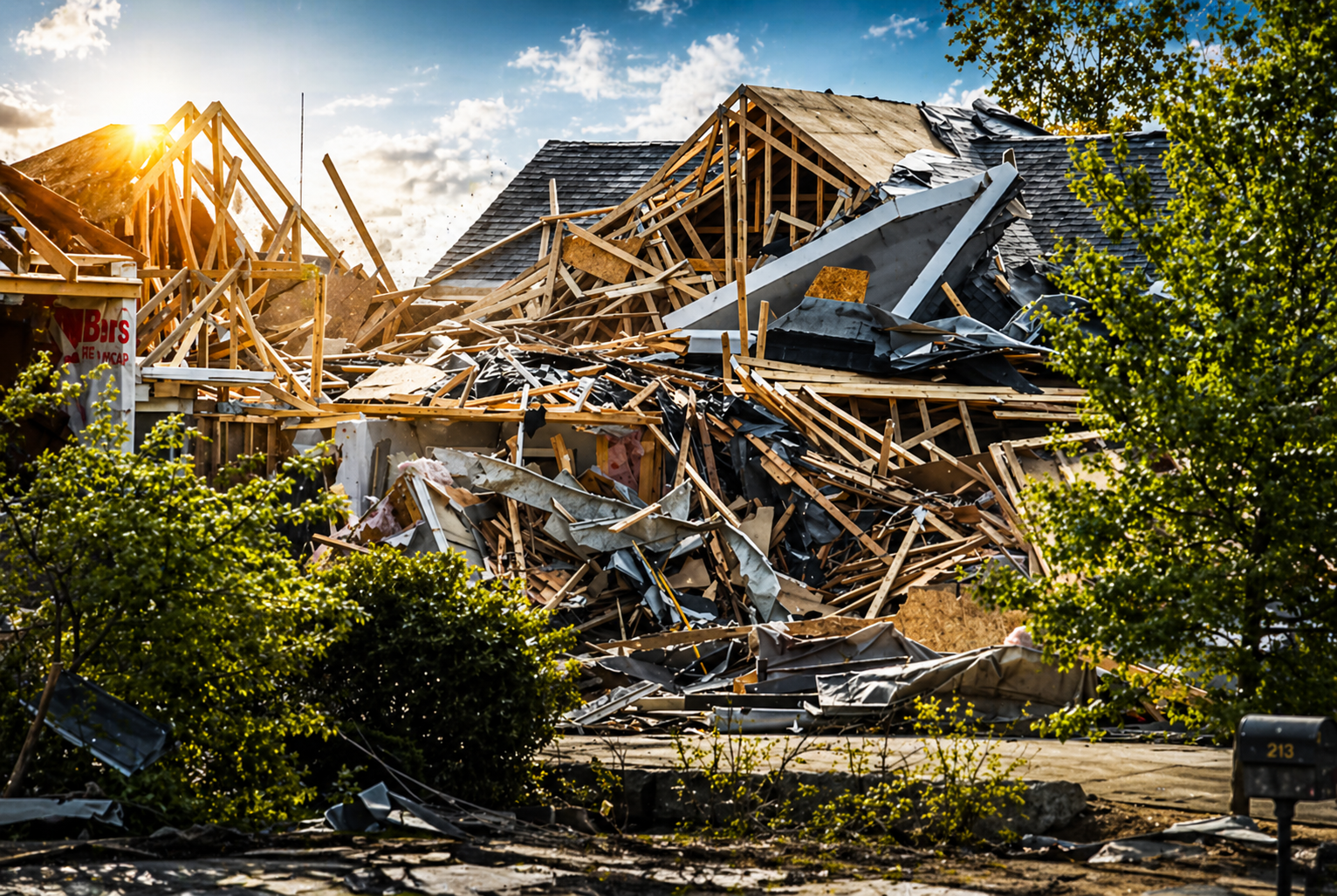
Protecting Yourself Starts Before the Inspection
A complete scope starts with good evidence. These four habits come straight from the Ohio Department of Insurance’s storm tips (Spectrum News), and each one makes protecting yourself easier later.
Photograph everything first
Take photos and video of the roof, gutters, siding, and any interior stains before anything is cleaned up or thrown away. Date-stamped pictures are hard to argue with.
Stop the water, keep receipts
Tarp or cover openings to prevent further damage, as long as it’s safe. Insurers typically reimburse reasonable temporary fixes, so keep every receipt.
File promptly
Most policies set deadlines for reporting damage. Call your agent or insurer as soon as you can, and write down the claim number.
Keep a claim log
Note the date, name, title, and contact information of everyone you speak with, and what was said. Protecting yourself is much easier with a paper trail.
One more habit we recommend: be home for the inspection, and have your roofer there too. Two people on the roof catch more than one, and questions get answered on the spot instead of by email weeks later.
What a Scope of Loss Actually Says
After you file a claim, your insurer sends an adjuster to inspect the damage. The adjuster’s report becomes the scope of loss: every item to be removed, replaced, or fixed, with a quantity and a price. Protecting yourself begins with knowing what each column means.
Most scopes are written in estimating software, so every line follows the same pattern. Once you can read one line, you can read the whole document, and protecting yourself gets a lot less intimidating.
| Description | Qty | RCV | Dep. | ACV |
|---|---|---|---|---|
| Hip / ridge cap1 | 66 LF2 | $3 | ($)4 | $5 |
- 1Description. What’s being installed or removed.
- 2Quantity. Squares, linear feet, or each.
- 3RCV. Replacement cost value, the full price.
- 4Depreciation. Value taken off for age and wear.
- 5ACV. Actual cash value, often the first check.
Protecting Yourself: Six Lines to Check
These six lines are the ones we see left off, shorted, or misunderstood most often. Hold your scope next to this list and tick each one as you find it. Protecting yourself doesn’t mean assuming bad faith. Gaps happen, and the fix is asking clear questions.
-
Starter is its own product and its own line. Sample estimates, like the one GAF publishes, list the starter course separately from the field shingles. If yours doesn’t, ask how waste was figured and whether starter was counted in it.
-
Look for a separate hip and ridge line with a linear-foot quantity. GAF notes that caps cut from 3-tab shingles carry a shorter warranty and lower wind coverage than factory-made ridge cap shingles (GAF).
-
The Residential Code of Ohio says asphalt shingles must be fastened to solidly sheathed decks (RCO 905.2.1). Spaced boards or sheathing too damaged to hold a nail must be covered or replaced (Kettering reroofing guide). Ask how decking will be handled once the old roof is off.
-
Where the code calls for it, the ice barrier runs from the eave edge to at least 24 inches inside the exterior wall line (Kettering). If the scope shows standard underlayment only, ask why.
-
New shingles can’t go over a roof that already has two or more layers (RCO 908.3.1.1). If your home has two layers, the scope should pay to remove both.
-
Ohio’s claim rule says that when replaced items don’t match in quality, color, or size, the insurer replaces enough to give a reasonably comparable appearance (OAC 3901-1-54(I)(1)(b)). A patch that sticks out on the front slope is worth a question.

A Roof Is a System, Not Just Shingles
A complete scope covers the whole roof system: drip edge, underlayment, flashing, vents, pipe boots, starter, field shingles, and ridge cap. When the scope reads like shingles and nothing else, protecting yourself means asking where the rest went. Our parts of a roof guide names every piece.
Want to compare the scope against a contractor’s bid? Line them up the way we explain in roofing estimates, item by item and quantity by quantity.
The Timelines Insurers Must Follow
Ohio sets deadlines for how quickly insurers handle a claim (OAC 3901-1-54). Knowing them is part of protecting yourself, because a claim that sits quietly for weeks may already be past the clock.
- 15DAYS
Acknowledge
The insurer must acknowledge your claim within 15 days of being notified.
- 21DAYS
Accept or deny
Within 21 days of a properly completed proof of loss, the insurer must decide.
- 10DAYS
Pay
Once a claim is accepted and the amount is undisputed, payment is due within 10 days.
The rule includes exceptions, such as when an insurer needs more time and tells you why in writing. We’re not attorneys; read the rule or ask your agent for specifics.
What Your Roofer Can, and Can’t, Do
A good roofing contractor is a big part of protecting yourself during a claim. We meet the adjuster on your roof, point out damage, photograph it, and explain which code and manufacturer requirements apply. That’s documentation, and it’s fair game.
The line in Ohio law
Ohio defines a public insurance adjuster as anyone who, for pay, helps an insured negotiate or settle a property claim, and that work requires a state license (ORC 3951.01). A contractor who promises to “handle your claim” or “negotiate with your insurer” is crossing it.

Five Steps, From First Call to Final Word
Protecting yourself when a scope comes up short is a climb, not a leap. Start at the bottom step. Most homeowners never need to go past the second.
- Step 1
Ask for a reinspection
Request a second look and ask that your contractor be on the roof at the same time. Most short scopes are settled right here, and protecting yourself rarely needs to go further.
- Step 2
Put it in writing
Send photos, measurements, and the code sections behind each missing line. Keep the date, name, and title of everyone you speak with.
- Step 3
Ask about appraisal
Many homeowners policies include an appraisal clause for disagreements about the amount of loss. Read yours and ask your agent how it works.
- Step 4
Call the state
The Ohio Department of Insurance Consumer Services Hotline is 1-800-686-1526. It takes complaints about claim delays and denials.
- Step 5
Get your own representation
An attorney, or a public adjuster licensed by the state, can represent you. A roofing contractor can’t.
Hotline from the Ohio Department of Insurance. Contractor trouble? Contact the Better Business Bureau.

We’ll Still Be Here After the Check Clears
This post first went up after the Memorial Day tornadoes of 2019, when families across the Miami Valley were still waiting on fair settlements months later. Protecting yourself was the message then, and it still is. Thrush & Son® has been family-owned since 1960, through every storm season since.
We’re a GAF President’s Club Contractor with an A+ BBB rating and homeowner reviews across the Miami Valley. Read the family story in family-owned.
Protecting Yourself FAQs
What does protecting yourself after a storm claim look like?
Read the full scope of loss, compare it line by line with your contractor’s estimate, ask about anything missing, and keep every conversation in writing. Most gaps are settled with a reinspection.
What is a scope of loss?
It’s the adjuster’s itemized estimate of storm damage. It lists each item with a quantity, a price, depreciation, and the actual cash value, and it drives how much the insurer pays.
Can my roofing contractor negotiate my insurance claim?
No. Ohio law treats anyone paid to help settle a property claim as a public insurance adjuster, which requires a state license. A contractor can document damage and code requirements, but can’t negotiate for you.
How long does an Ohio insurer have to respond to a claim?
Ohio’s rule gives insurers 15 days to acknowledge a claim, 21 days after a proper proof of loss to accept or deny it, and 10 days after acceptance to pay an undisputed amount, with some exceptions.
Where can I file a complaint about an insurance claim in Ohio?
Call the Ohio Department of Insurance Consumer Services Hotline at 1-800-686-1526. For a contractor complaint, contact the Better Business Bureau.
Something else on your mind? We have answers.
Have Us Read Your Scope
Send us your scope of loss and we’ll compare it with what your roof actually needs, line by line. Protecting yourself is easier with a second set of eyes. See storm damage help, what hail does to a roof, or roofing.
