
Roofing components that work as one system
Roofing components are every layer between the sky and your attic. Most homeowners picture shingles, but a roof that lasts depends on what sits underneath them and around every edge.
Here are the six essential roofing components, the parts of a roof that matter most, what each one does, the warning signs it is failing, and what to ask for on your next estimate.
- 6essential parts
- 1:300vent rule
- 1matched system
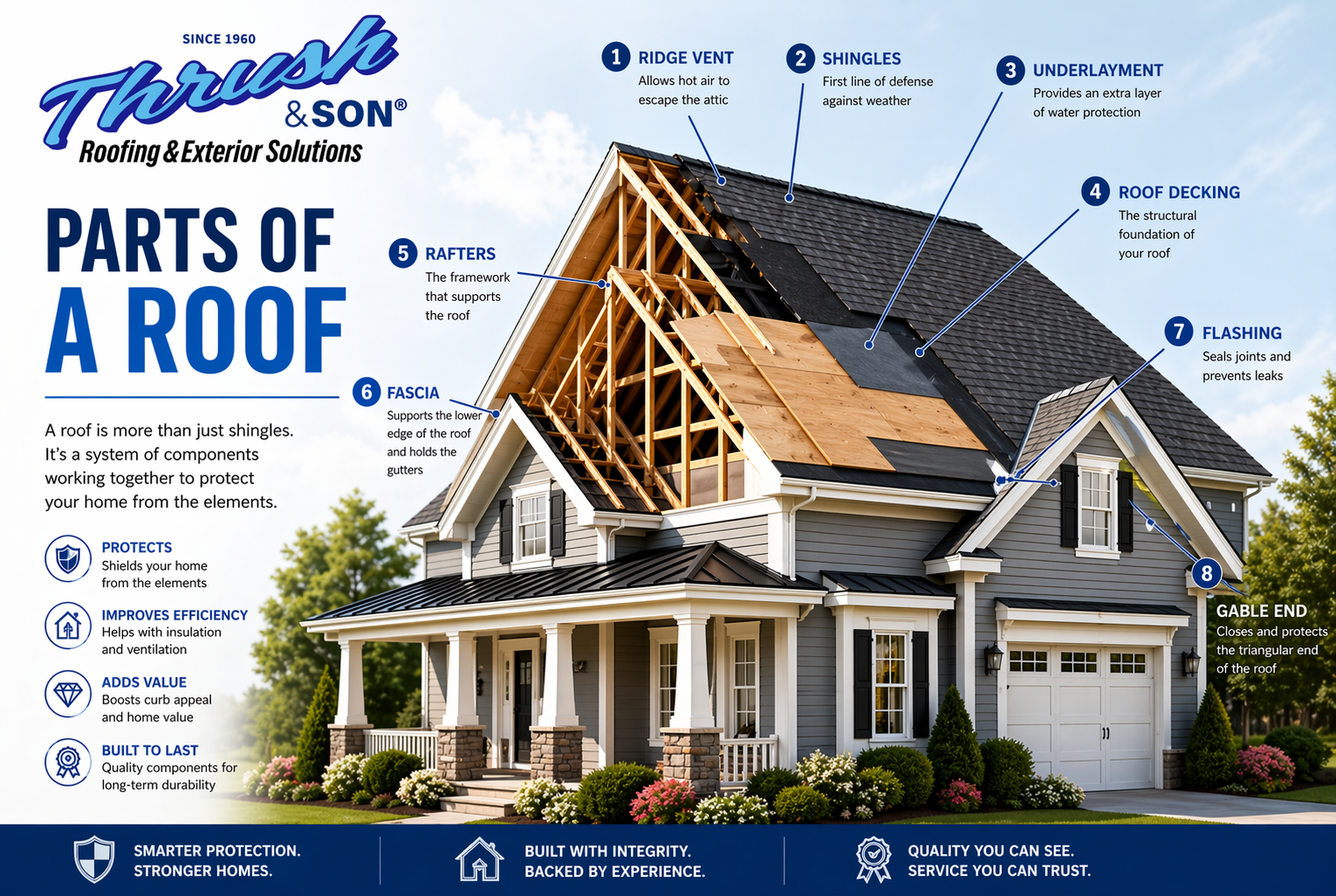
The roofing components that protect your home
What each part does, and how to spot trouble before it reaches the ceiling.
-
01The weather layer
Shingles
Shingles are the roofing components everyone sees, and the first line of defense against sun, rain, hail and wind. Modern architectural shingles are laminated in two layers for depth, strength and higher wind ratings than old three-tab.
Warning signsCurling edges, bald spots, granules in the gutters, or shingles lifting after a storm.Compare the shingles we install.
-
02The backup waterproofing
Underlayment
Of all the roofing components under the shingles, underlayment covers the most ground: the entire deck. If wind-driven rain gets past the top layer, this is what keeps it out of the wood. We use synthetic underlayment because it lies flat, resists tearing and sheds water far better than felt.
Warning signsStains on attic sheathing, or a deck that feels soft underfoot.Define any term in our roofing glossary.
-
03The leak barrier
Ice & water shield
A self-sealing membrane goes at eaves, valleys and every penetration. It seals around nails and stops ice dams from pushing meltwater back under the shingles, which is one of the most common winter leaks in the Miami Valley.
Warning signsIcicles on the gutters, or water stains on ceilings near outside walls.See how storm damage inspections work.
-
04The roof’s lungs
Ventilation
Intake vents at the soffit and exhaust at the ridge keep air moving through the attic. That airflow controls summer heat and winter moisture, two things that quietly shorten shingle life and feed mold and ice dams.
Warning signsA hot upstairs, frost on the attic nails, or a musty smell. -
05The detail work
Flashing & accessories
Metal flashing seals the joints where the roof meets walls, chimneys, skylights and valleys. Drip edge, starter strips and pipe boots finish the edges. Most leaks start at these roofing components, not in the open field of shingles.
Warning signsRusted or loose metal, cracked pipe boots, or caulk doing flashing’s job.Protect the edges with fascia and gutters that drain right.
-
06The finishing seal
Ridge cap shingles
Ridge caps are the last roofing components to go on, covering the peak and every hip where two roof slopes meet. Purpose-made ridge cap shingles are thicker and pre-bent to wrap the ridge without cracking. On most homes they sit right over the ridge vent, so they protect the attic exhaust too.
Warning signsCracked, split or missing caps along the peak, or caps lifting after a windstorm.Brush up on roofing terms before your estimate.
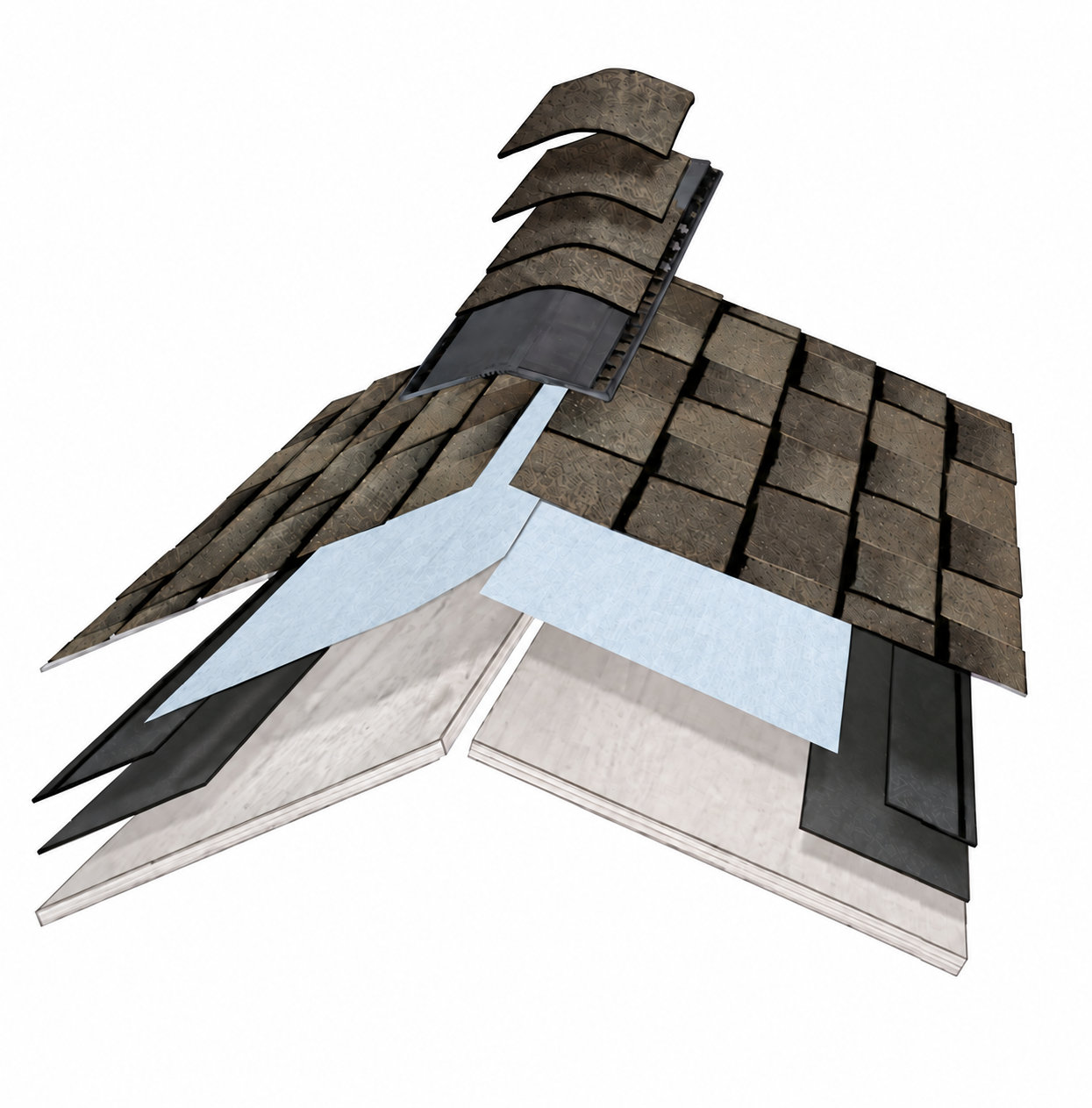
The six layers of a Thrush & Son roof
Tap a number to see what each layer does and what happens without it.
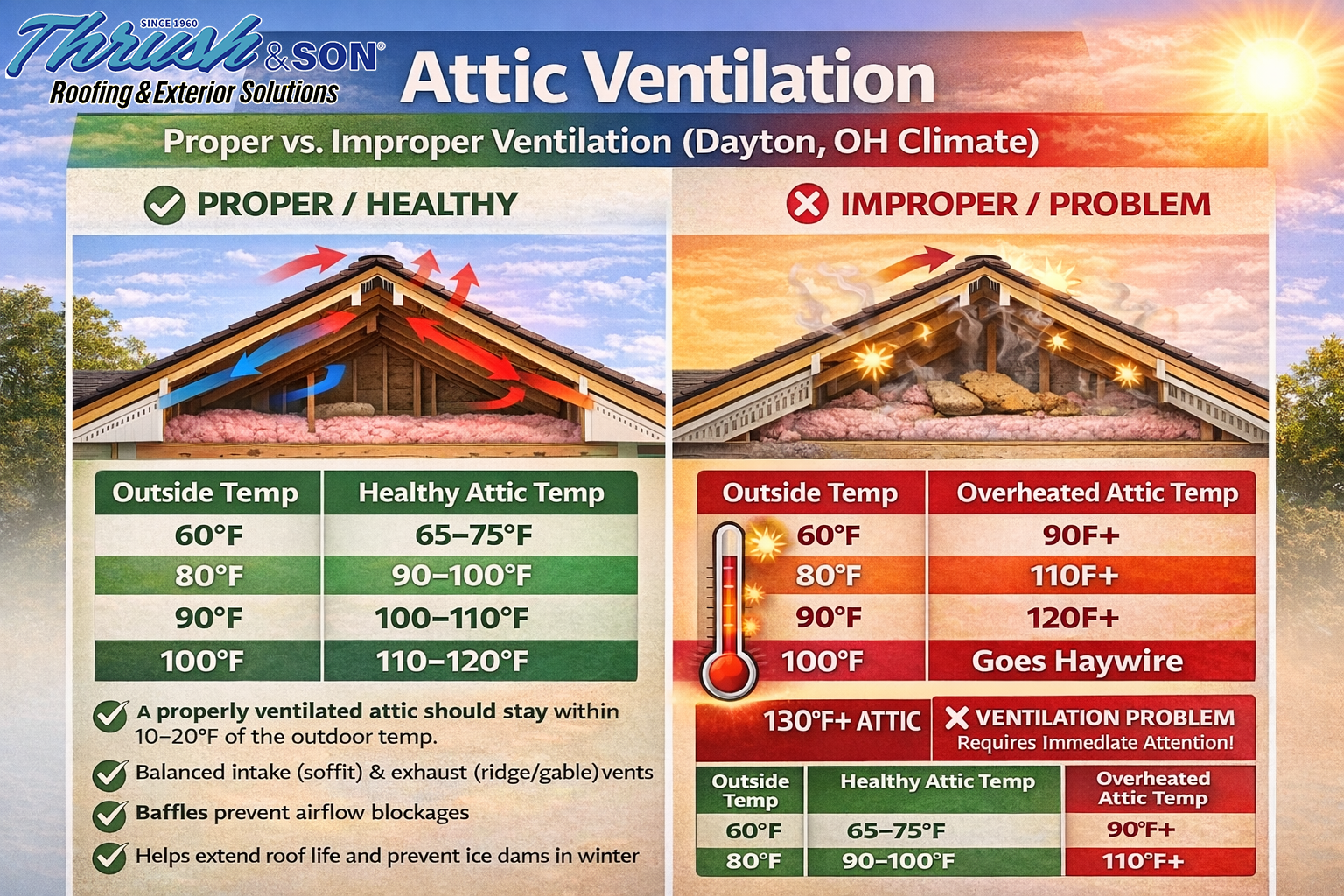
Ventilation is the part most roofs get wrong
Of all the roofing components, ventilation is the easiest to skip because you can’t see it from the street. On a summer afternoon an unvented attic can run far hotter than the air outside, baking the shingles from below.
The fix is balance. Open soffit intake pulls cool air in low, and ridge exhaust lets warm, moist air out high. The National Roofing Contractors Association treats ventilation as part of the roof system, not an add-on.
See the roofing components come together
This short overview walks through underlayment, ventilation, flashing, ridge caps and the details that help a shingle roof handle Ohio weather.
Watch it before your roof inspection so you know which roofing components to ask about.
What your roof estimate should list
Two quotes can both say “new roof” and include very different roofing components. The lower price often skips the parts you can’t see.
Hold every bid to this list. Manufacturers such as GAF design their accessories to work together, and skipping them can limit your warranty coverage.
Schedule a roof inspection- Every roofing component on the proposal by name, not just “shingles”
- Full tear-off down to the deck, with decking inspected
- Leak barrier at eaves, valleys and penetrations
- Synthetic underlayment over the rest of the deck
- Ventilation sized to your attic, intake and exhaust
- New flashing, drip edge, pipe boots and ridge cap
- Which warranty the roof qualifies for, in writing
Quick answers from our roofers
What homeowners ask us most about what goes into a roof.
What are the main roofing components?
The main roofing components are the shingles, underlayment, ice and water shield, attic ventilation, flashing and ridge caps, plus accessories like drip edge and starter strips. They work as one system to keep water out and let the attic breathe.
Which roofing component matters most?
No single part protects your home alone. Shingles take the weather, but most leaks start at flashing and valleys, and poor ventilation can shorten the life of an otherwise good roof. The system is only as strong as its weakest detail.
Do I need ice and water shield in Ohio?
Yes. Ohio winters bring freeze and thaw cycles that cause ice dams. A leak barrier at the eaves, valleys and penetrations stops meltwater from backing up under the shingles, and it is required by code in many cold-weather areas.
Can I replace just the shingles and keep the old components?
You can, but it rarely pays off. Old underlayment, worn flashing and undersized ventilation can cause leaks under brand-new shingles and may limit the warranty your roof can qualify for.
Does Thrush & Son install complete roofing systems near me?
Yes. We install complete roofing systems across Montgomery, Miami, Warren, Greene, Darke, Preble, Champaign and Clark counties in Ohio, plus Wayne County, Indiana.
More ways to protect your roof
Pick up where this post leaves off.
- BlogWarranty Coverage: 5 Costly MistakesThe fine print that quietly voids roofing, siding and door warranties.Read the post →
- BlogPeace of Mind: Choosing the Right RooferFive reasons the contractor matters as much as the shingles.Read the post →
- ServicesDayton RoofingComplete roof replacement across the Miami Valley, every component included.See our roofing →

Built on trust since 1960
Family-owned and Miami Valley proud, Thrush & Son® handles roofing, siding, windows, doors and seamless gutters with craftsmanship homeowners can rely on.
Every roof we build includes the full set of roofing components, installed by our own crews. Explore exterior home upgrades across the Miami Valley.
- GAF President’s Club
- Best of Dayton Winner 2024
- Best of Dayton Nominee 2025 & 2026
- Brookville Chamber Partner of the Year
- BBB Accredited A+
