
Energy-Efficient Home Upgrades: How Windows, Siding, Roofing, and Shade Work Together
Energy-efficient home upgrades do more than freshen up the curb. Done right, they change how your house feels every day: fewer drafts in January, cooler bedrooms in July, and utility bills that stop climbing.
From drafty windows and tired siding to a baking attic and a patio too hot to sit on, every part of the exterior affects comfort. Ohio’s hot summers and cold winters make planning matter, so below you’ll see how four upgrades work as one system, test them in our Envelope Lab, and find the right order for your home.
 WindowsInsulated sidingRoof & atticCovered patio
The Envelope Lab
Your home’s envelope is everything between you and the weather. Pick a season, then switch on energy-efficient home upgrades one at a time and watch the leaks close.
4 Energy-Efficient Home Upgrades, One System
Each of these energy-efficient home upgrades helps on its own. Together they form a high-performance envelope tuned for Ohio’s climate.
Replacement Windows
According to the U.S. Department of Energy, heat gained and lost through windows accounts for 25 to 30 percent of residential heating and cooling energy use. Modern Low-E, gas-filled glass keeps the inside pane closer to room temperature, blocks UV that fades floors, and quiets street noise.
Compare glass packages in our guide to ENERGY STAR 7.0 windows, or see our replacement windows.
Insulated Siding
Wood studs make up a big share of every exterior wall, and each one is a path for heat to slip past the insulation. Insulated siding adds a continuous foam backing behind the panels, so the whole wall performs more evenly, and it stiffens the siding against dents and wind.
See how it works in our insulated siding breakdown and our siding options.
Roof & Ventilation
The Department of Energy notes a reflective roof can stay more than 50°F cooler on a sunny afternoon, but it also points out that in colder climates a cool roof can raise winter heating costs. In the Miami Valley, the bigger win is a balanced attic: proper intake and exhaust vents plus insulation, with a lighter shingle color if your attic runs hot.
Start with our post on attic ventilation, then explore Dayton roofing.
Covered Patio
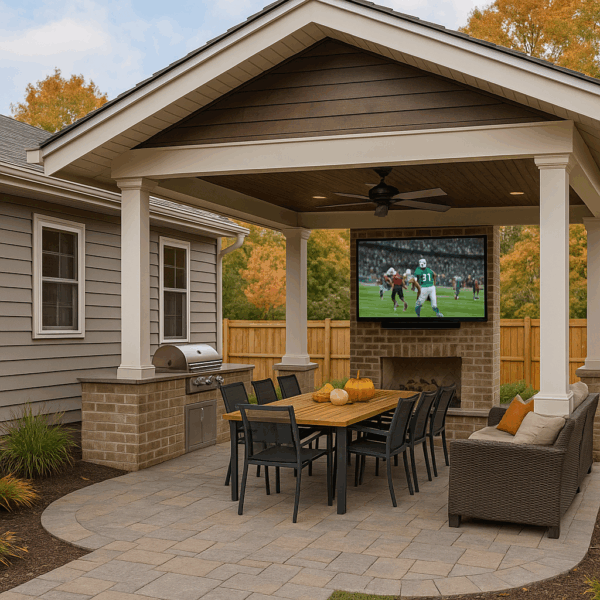
An open patio on the south or west side soaks up afternoon sun and throws heat at the back windows. A covered patio shades both, gives you a dry place to sit through spring rain, and turns the backyard into a room you’ll actually use from April to October.
Get ideas from our posts on outdoor space and composite decks.


Why They Work Better Together
Think of the house as a jacket. New windows with old, leaky walls are like zipping up a coat with a torn sleeve: you feel the cold where the weak spot is. When windows, walls, and the roof are all upgraded, heat has no easy way out in winter and no easy way in during summer, so the furnace and air conditioner run shorter, quieter cycles.
Coordinated energy-efficient home upgrades also save work. When siding comes off, window trim can be done in the same pass. When the roof is replaced, soffit and ridge vents get balanced at the same time. Fewer separate projects mean fewer setups, fewer dumpsters, and one crew that understands the whole house.
That’s why we plan energy-efficient home upgrades as a package, even when you build it one season at a time. The goal is a house that feels the same in every room, all year, with materials and warranties that last.
Which Upgrade Comes First?
Most homeowners spread energy-efficient home upgrades over a few seasons. Pick what bothers you most and we’ll show the order we usually recommend.
- 1WindowsOld glass is the biggest hole in the envelope; start where you feel the cold.
- 2Insulated sidingA continuous insulated layer slows heat leaking through the studs.
- 3Roof & ventilationBalanced vents and attic insulation keep heat where it belongs.
- 4Covered patioLast on this list: shade matters most in summer.
- 1Roof & ventilationAttic heat bakes the rooms below; vents and a lighter shingle color help.
- 2WindowsLow-E glass blocks solar heat on west and south walls.
- 3Covered patioShade keeps sun off the back windows and the patio itself.
- 4Insulated sidingSteadier walls round out the package.
- 1Roof & ventilationProtect everything else first. A new roof is the umbrella over the whole plan.
- 2WindowsPair with the roof season or the next one.
- 3Insulated sidingSiding and trim go on after the roof edge is finished.
- 4Covered patioTie the patio roof into the main roof while crews are there.
- 1Insulated sidingFix the look and the comfort at the same time.
- 2WindowsNew windows are easiest to trim out while siding is off.
- 3Roof & ventilationCheck the roof and soffit vents during the siding project.
- 4Covered patioFinish with outdoor living space.
- 1Covered patioShade turns a sun-baked slab into a usable room.
- 2WindowsLow-E glass on the patio side keeps the kitchen cooler.
- 3Roof & ventilationA cooler attic helps the whole house in July.
- 4Insulated sidingComplete the envelope when the budget allows.
What Happened to the Tax Credit?
If you’ve read older articles about energy-efficient home upgrades, you’ve probably seen the federal tax credit for windows, doors, and insulation. That credit is gone: the IRS confirms the Energy Efficient Home Improvement Credit isn’t allowed for property placed in service after December 31, 2025.
The good news is that the reasons to upgrade never depended on a rebate: steadier rooms, a quieter house, and lower monthly bills. For more on what’s left, read our guide to home improvement incentives, and see how financing can spread the cost.

Questions That Fit Together
Each answer is one piece of the bigger picture on energy-efficient home upgrades.
1What are the most energy-efficient home upgrades for an Ohio house?
For most Miami Valley homes, the order is windows, insulated siding, and the roof and attic, because those three make up the envelope that holds heat in winter and keeps it out in summer. Shade, like a covered patio, adds summer comfort on sunny sides of the house.
2Is there still a federal tax credit for energy-efficient home upgrades?
No. According to the IRS, the Energy Efficient Home Improvement Credit (25C) isn’t allowed for property placed in service after December 31, 2025. Plan these upgrades for comfort and lower bills, not a federal credit.
3Is a cool roof a good idea in Dayton?
It depends on your attic. A lighter, reflective shingle helps a hot attic in summer, but in a heating climate it can cost a little more in winter. For most homes here, balanced ventilation and attic insulation do more than color alone.
4Should I do all four energy-efficient home upgrades at once?
You don’t have to. Many homeowners spread them over a few seasons, starting with whatever bothers them most. Bundling two, such as siding and windows, can save labor because the trim work happens once. Financing can help either way.
5How long does a full exterior upgrade take?
Each piece usually takes days, not weeks. Most roofs are finished in one to three days, and window and siding timelines depend on the size of the house. We schedule the projects so crews aren’t working on top of each other and give you the full timeline up front.
6Do energy-efficient home upgrades raise resale value?
They help in two ways: buyers see newer windows, siding, and roofs as fewer future expenses, and lower utility bills make the house easier to sell. The exact return depends on the project and the market.
The Pieces Behind Every Project
For more than six decades, Thrush & Son® has fit energy-efficient home upgrades together for Miami Valley families, from our headquarters in Brookville and offices in Troy and Lebanon. See finished work in our project gallery.
Find Your Missing Piece
We’ll walk the house with you, check the windows, walls, roof, and attic, and show you which energy-efficient home upgrades will make the biggest difference first. Written quotes, with financing available. Call 937-833-5136.
Michelle, our AI assistant, answers 24/7 · Office: Mon–Thu 9–4, Fri 9–2
Connect the Pieces
Follow the Thrush family, our crews, and BooBoo for project photos and seasonal tips.
