
Exterior Home Trim: The Detail That Makes a Home Look Finished
Exterior home trim is the difference between a house that looks “done” and one that looks like it’s still missing something. Trim frames your windows and doors, sharpens corners, defines rooflines, and creates the contrast that makes your siding look intentional instead of flat.

Whether you want subtle clean lines or a bold pop that turns heads, the right exterior home trim brings out your home’s strongest features and lifts curb appeal the day it goes on. But trim isn’t just decoration. It’s a protective system that covers transitions, seals edges, and defends the spots where moisture and wind like to sneak in.
- Sharper curb appealCrisp lines, stronger contrast, more depth.
- Better protectionClean transitions at openings and corners.
- A custom lookThe right profiles add character and style.
- Less upkeepModern materials cut repainting to zero.

The Anatomy of Exterior Home Trim
Most homeowners can name their siding color but not the seven trim pieces framing it. Tap a piece to light it up on the house, see what it protects, and see what we’d install there.
Fascia
The board along the roof edge that carries your gutters and closes the ends of the rafters. Rot here loosens gutters and invites water and pests into the attic.
Frieze board
A wide band under the eaves that closes the gap between siding and soffit. It gives the top of the wall a finished, architectural edge.
Corner boards
Vertical boards that cover the cut ends of siding where two walls meet. On many houses they’re the most visible exterior home trim, and wider corners make a plain house look more substantial.
Window casing
Casing and head trim frame each window and cover the flashing underneath. The head piece sheds water past the top of the opening.
Door surround
The exterior home trim that frames your entry. It’s the first thing guests notice and the biggest curb appeal lever you have . It’s also the first place a cheap install shows its gaps.
Band board
A horizontal board where the first and second floors meet. It breaks up a tall wall and gives siding a clean place to stop and start.
Skirt board
Trim at the base of the siding that protects the lowest course from splash-back, mulch, and mower strikes.
See Trim Frame Every Siding Color
Trim color only makes sense next to the siding it frames. Tap any of the 18 CertainTeed CedarBoards colors to recolor the siding on this real home. The roof, stone, and exterior home trim stay exactly as they are, so you can watch how one trim color reads against light, gray, earth, and bold walls.
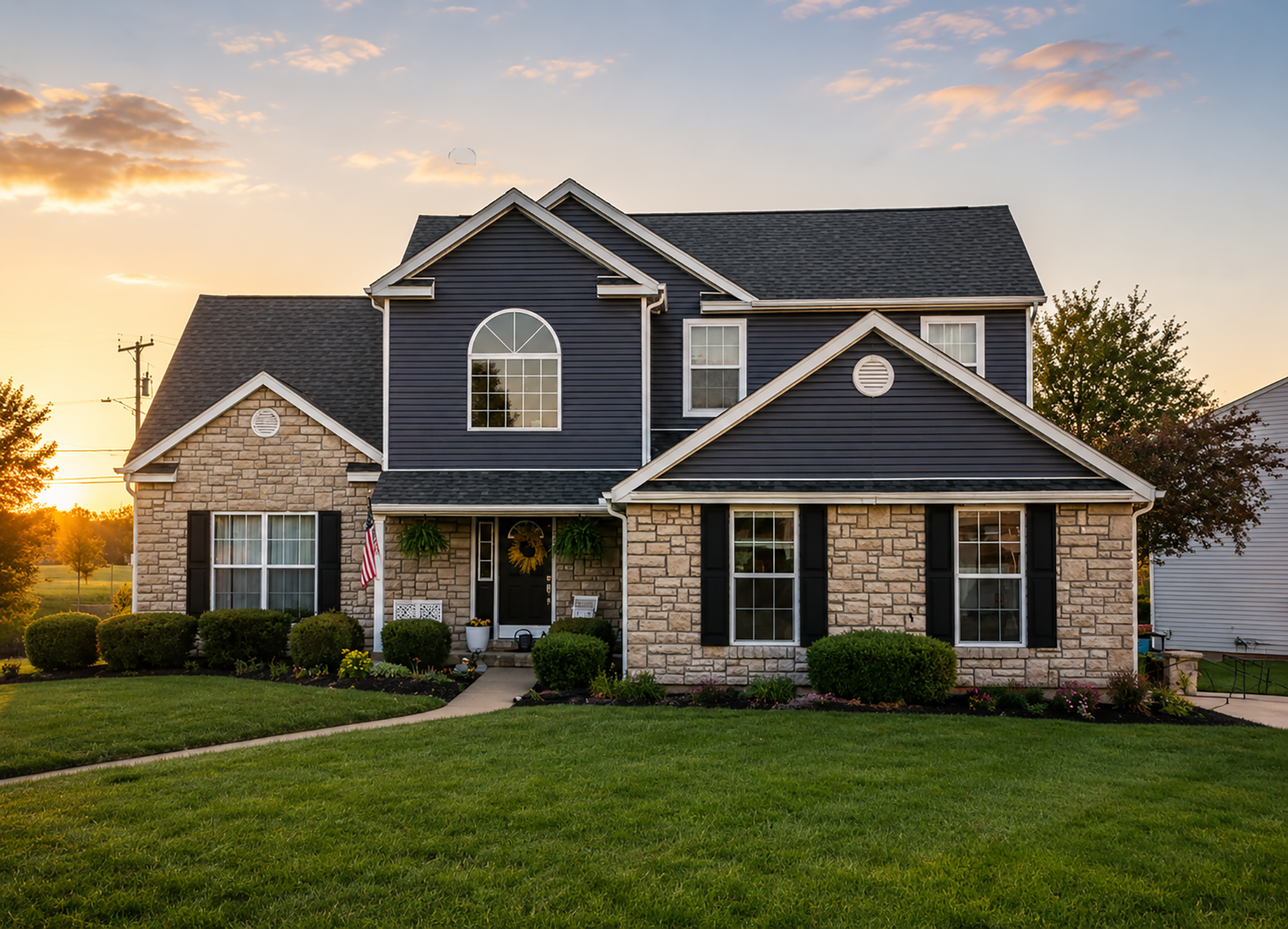
Colors are approximate. We bring full-size samples to every estimate.
Notice how the same trim color stands out against some siding colors and blends into others. That’s the contrast decision in action. This is CedarBoards insulated siding from our insulated vinyl siding page, and we bring full-size siding and trim samples so you can judge the pairing in daylight on your own wall.
5 Rules for Trim That Looks Built-In
- 01
Match the trim to the architecture
Not every trim style fits every home. Start with your architecture, whether that’s traditional, farmhouse, craftsman, modern, or colonial, and choose profiles that support it. Wider corner boards make a home feel more substantial. Clean, square profiles sharpen a modern exterior. Decorative crowns and built-up surrounds add personality, but the key is consistency: exterior home trim should look deliberate, never random.
- 02
Use color like a pro
Trim can blend in or stand out, and both can be the right move. For a timeless look, pick a trim color a step lighter or darker than the siding. For bold curb appeal, choose strong contrast that spotlights windows, doors, and gables. Consider the whole palette, too: siding, roof, stone, gutters, and garage doors should all work together. Try it on the color visualizer above.

- 03
Respect the water control details
Great trim only looks great if the wood behind it stays dry. Water management matters most along fascia, roof edges, and openings, exactly where exterior home trim lives. Pair trim decisions with drainage: properly sized seamless gutters and guards, flashing above every head trim, and solid fascia to hang them on.
- 04
Pick materials that fit your life
Some homeowners want a classic painted look; others want durability above all else. The right exterior home trim material depends on your goals, our Ohio climate, and how much upkeep you’re willing to do. Good trim should hold its color, resist warping, and stay stable through seasonal temperature swings. The material guide below makes the trade-offs plain.

- 05
The pro finish comes from consistency
The fastest way to make an exterior look high-end is consistency: matching trim widths, matching corner treatments, one color logic, and clean transitions. This is where experienced installers separate themselves, because exterior home trim is detail work. When corners are tight, lines are straight, and edges are clean, the entire home looks more expensive.
Exterior Home Trim Materials, Side by Side
The look gets you noticed. The material decides whether you’re scraping and painting in five years. Here’s how the four common exterior home trim options compare on a Miami Valley house.
Painted wood
- Classic look and easy to mill
- Needs scraping and repainting
- Can rot where water sits
- Feeds insects once softened
Aluminum trim coil
- Custom-bent over sound boards
- Never needs paint
- Can dent from ladders or hail
- Only as good as the wood inside
Vinyl Carpentry™
- Color-matched to CertainTeed vinyl siding
- Never needs paint
- Won’t rot or absorb water
- Pre-formed profiles
Restoration Millwork®
- Cuts and mills like top-grade lumber
- Won’t rot or feed insects
- 25-year limited warranty
- Moves with temperature; needs glued joints
We install CertainTeed exterior home trim in two families: Vinyl Carpentry, color-matched to CertainTeed siding, and Restoration Millwork cellular PVC trimboard, which mills like wood but won’t rot. PVC grows and shrinks with temperature more than wood does, so we glue long joints and follow the fastening pattern; Fine Homebuilding explains why PVC trim moves. See every option on our exterior trim page.
6 Signs Your Trim Is Asking for Help
Exterior home trim fails quietly, then all at once. Walk around your house this weekend and look for these. Two or more usually means it’s time for a closer look.
Catching these early keeps a trim job small. Left alone, soft trim lets water into the wall and roof edge, and that’s when a weekend fix turns into replacing sheathing. If you spot trouble at the roofline, start with our fascia replacement page; for everything else, our crews check the wood behind every board before new exterior home trim goes on.

Built on Trust, Down to the Last Board
Wilbur Thrush founded Thrush & Son® in 1960, and three generations later we’re still family-owned and still obsessed with the details that separate good from great. We help Miami Valley homeowners choose exterior home trim that looks sharp, performs in real weather, and stays beautiful for the long haul.
That’s why we tell every homeowner the same thing: make your trim decision with the whole exterior in mind, never as a last-minute add-on. Planning siding too? Compare the long-term math in Rust Bucket vs. Vinyl Siding, then see what keeps panels straight in vinyl siding durability.
- President’s Club Contractor
- Best of Dayton 2024 Winner · 2025 & 2026 Finalist
- BBB Accredited A+
Frame Your Home the Right Way
We’ll walk your exterior, check the wood behind every board, and show you trim profiles and colors against your actual siding. Then you get a written plan for exterior home trim that finishes the house and keeps it dry. Call 937-833-5136 or schedule online.
Michelle, our AI assistant, answers 24/7
Office: Mon–Thu 9–4, Fri 9–2
