
Tall Lines, Barn Roots: The Board and Batten Story
Board and batten siding is the rare look that’s both old and new. Wide vertical boards with narrow battens over the seams once dressed country cottages and barns. Today the same pattern, in vinyl and steel, is one of the most requested exteriors on Miami Valley homes.
Below: where the style came from, a profile studio to compare widths and colors up close, a color visualizer on a real Ohio home, and how wood, vinyl, and steel stack up.

Where Board and Batten Siding Came From
Board and batten siding started as the simplest way to close in a wall: nail up wide boards, then cover the gaps. Architects turned that simplicity into a style.
- 1840s
The cottage era
Gothic Revival design reached America in the 1840s, and pattern books spread it fast. Andrew Jackson Downing’s Cottage Residences appeared in 1842, and Downing championed vertical battens as a true expression of the framing beneath, as Fine Homebuilding recounts.
- Mid-1800s
Carpenter Gothic
Steep gables, pointed windows, jigsawn trim, and vertical board-and-batten walls became the look of the American country cottage.
- Late 1800s
Stick style and the farm
The pattern came back in late-Victorian Stick style homes, and it never left the barn, where wide boards and battens were simple to build and easy to fix.
- Today
Modern farmhouse
Clean white or dark walls, black windows, and a metal roof turned a barn detail into one of the most requested looks we install, now in vinyl and steel.
Compare Board and Batten Siding Profiles Up Close
Width and depth change the whole feel of a wall. Pick a profile and a color to see the shadow lines change on a close-up section of wall.
Board & Batten 7″
CertainTeed vinyl, .052″ thickA tighter rhythm with more battens per wall. Reads traditional and works well on smaller walls and gables.
Board & Batten 8″
CertainTeed vinyl, .048″ thickWider boards and fewer battens. Calmer and more modern on a big wall or a whole house.
Reverse Board & Batten
Recessed channel, flat boardsThe narrow strip sits recessed between wide flat boards. Crisp and contemporary, especially with dark trim.
Steel batten panel
Raised batten, factory finishSteel throws a sharp shadow line and holds it. It won’t crack in a hard freeze, though large hail can dent it.
Our vinyl board and batten siding comes from CertainTeed, whose Board & Batten line includes a 7-inch profile at .052 inch thick and an 8-inch profile at .048 inch thick, with a Class 1(A) fire rating and a lifetime limited warranty. Want more stiffness and insulation? Ask about insulated vinyl in a board and batten profile, or see every option on our vertical vinyl siding page.
Spacing matters as much as width. On traditional wood walls, battens were nailed to the studs, which set them about 16 inches apart; some architects prefer closer to 12 inches for a finer look, which takes extra blocking, according to Fine Homebuilding. Modern vinyl and steel panels fix the rhythm in the profile itself, so the choice comes down to which width suits your wall.
See Board and Batten Siding in 30 CertainTeed Colors
This is a real board and batten home in Piqua, Ohio. Tap any of the 30 CertainTeed Board & Batten vinyl colors to recolor the siding; the roof, trim, and timber stay exactly as they are.
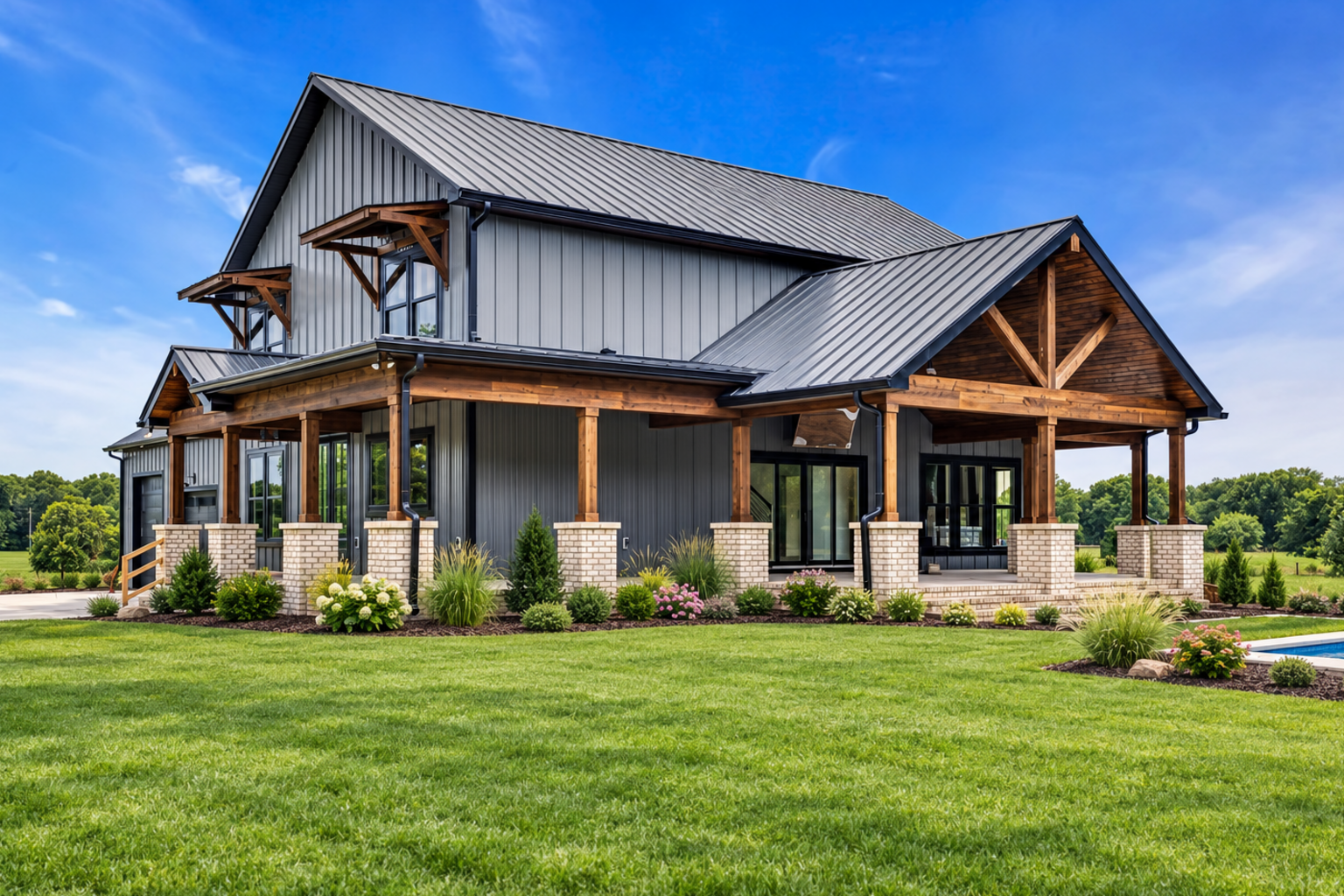
CertainTeed offers Board & Batten in 15 standard and 15 deluxe colors, all with PermaColor fade protection and a lifetime limited warranty. Prefer metal? See our steel siding and metal siding pages, and pair either one with a metal roof for the full modern farmhouse look.
3 Smart Places for Board and Batten Siding
Most of the board and batten siding we install lands in one of these spots, and plenty of homes mix two. Light colors keep it classic and airy; dark grays, blacks, and deep greens give it a crisp, modern edge.

The whole house
Full coverage gives the modern farmhouse look. A light wall with dark windows and trim is the cleanest contrast.

Gables and entries
Board and batten siding over horizontal lap breaks up a big wall and pulls the eye to the roofline or front door.

Barns and garages
The original home of the look. Vinyl or steel keeps the barn style without rot or repainting.
Board and batten siding draws the eye up, so it makes a one-story ranch look taller and breaks up a long, flat wall. For pairing ideas, see Designing Your Home Exterior, browse every profile in vinyl siding styles, or build a full spec in Dayton Ohio Siding Replacement.
Wood, Vinyl, or Steel Board and Batten Siding?
The look is the same idea in all three. What changes is the upkeep, the reaction to Ohio weather, and the budget.
| Wood | Vinyl | Steel | |
|---|---|---|---|
| Upkeep | Scrape and repaint every several years | Rinse with a hose; color is in the panel | Rinse with a hose; factory finish |
| Moisture | Can rot, swell, and cup | Doesn’t absorb water | Doesn’t absorb water |
| Cold & impact | Can split along the grain | Can crack under a hard hit in deep cold | Won’t crack in the cold; large hail can dent |
| Fire | Combustible | CertainTeed Board & Batten: Class 1(A) rating | Noncombustible |
| Look | Real grain, real shadow lines | 7″ or 8″ boards, wood-grain texture | Sharp, crisp batten lines |

How Board and Batten Siding Should Be Installed
Vertical panels hang differently than lap siding, and the mistakes show from the street. Here’s what a good install includes:
- Solid backing. Furring strips or blocking so every fastener lands in solid wood, not just sheathing.
- A dry wall first. A water-resistive barrier and flashing at every window, door, and penetration before any panel goes up.
- A starter at the bottom. So water sheds off the base instead of wicking back in.
- Plumb lines and clean trim. Corners and openings set dead straight so the battens read true from foundation to soffit.
Trim is half the look; see Exterior Home Trim and our trim services. A dry wall matters too, which is why Prevent Water Damage and Window Condensation in Ohio are worth a read before any siding project.
Straight Lines From a Family That Measures Twice
Wilbur Thrush founded Thrush & Son in 1960. W. Allen Thrush owns the company today, and Corey Thrush is the third generation. More than 31,000 Miami Valley homeowners have trusted us, from our Brookville headquarters and offices in Troy and Lebanon.
Our own crews hang every vertical panel we sell, plus the trim, soffit, and gutters around it. See the project gallery and read homeowner reviews.

Board and Batten Siding Questions, Answered
What homeowners ask us most before going vertical.
What is board and batten siding?
Board and batten siding is a vertical pattern of wide boards with narrow strips, called battens, covering the seams. It started as a simple way to build walls and barns and is now one of the most popular exterior looks.
Is board and batten siding more expensive than lap siding?
It usually costs a little more to install because vertical panels need extra blocking or furring so every fastener lands in solid wood, plus careful trim to keep the lines plumb. We price it line by line in a written quote.
Can board and batten be mixed with horizontal siding?
Yes, and it’s one of the most common combinations: lap siding on the walls with board and batten in the gables or at the entry. See Designing Your Home Exterior for more pairing ideas.
Does board and batten siding make a house look taller?
Yes. The vertical lines draw the eye up, which helps a ranch or one-story home look taller and helps break up a long, flat wall.
Should I choose vinyl or steel board and batten?
Vinyl offers more texture and an insulated option and costs less. Steel holds a sharper line, is noncombustible, and won’t crack in the cold, but it can dent in large hail. We bring both to the consultation.
Ready to Go Vertical?
We’ll bring vinyl and steel samples, hold them against your house in daylight, and give you a written, line-item quote with no pressure. Try colors in our Exterior Design Center, and ask about financing.
Call 937-833-5136 · Office: Mon–Thu 9–4, Fri 9–2 · Michelle, our AI assistant, answers 24/7
