
Make It Look Like Home: A Mood Board for Your Exterior
Designing your home exterior can feel overwhelming. There are dozens of profiles, hundreds of colors, and a neighborhood full of opinions. The good news is that the sharpest houses on any street follow a few simple rules, and nearly all of them start with the shape of the house you already have.
Below, match your house style to a tested design recipe, try 18 real siding colors on a real home, and pin the six rules we use when designing your home exterior with Miami Valley homeowners.
Designing Your Home Exterior Around Its Style
Designing your home exterior is easier when you start from the shape of the house. Pick the house that looks most like yours. Each style gets a recipe: the main profile, an accent, a color plan, and a trim approach that suit its shape.
Designing a Ranch exterior
- Main profile
- Horizontal lap, or vertical board and batten to add height
- Accent
- Stone wainscot or a board-and-batten entry wall
- Color plan
- Mid-tone body with a darker accent to break up the long wall
- Trim
- Wide corner boards and window trim to add scale
Horizontal siding stretches a ranch even longer. Adding vertical lines or a stone base gives it height and weight.
Designing a Colonial exterior
- Main profile
- Classic horizontal lap across the whole facade
- Accent
- Shutters and a framed entry door
- Color plan
- One body color, crisp white trim, deep shutter color
- Trim
- Crown-style window heads and full corner boards
Symmetry is the style. Keep one main material so the front reads as a single, calm block.
Designing a Cape Cod exterior
- Main profile
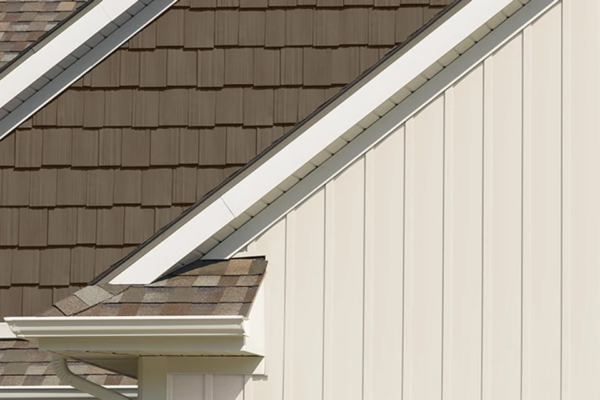
- Lap or cedar-look shakes
- Accent
- Shakes or vertical siding in the gables
- Color plan
- Soft grays, blues, or whites with white trim
- Trim
- Simple, clean window casing
Small footprint, big roof. A texture change in the gables adds charm without crowding the front.
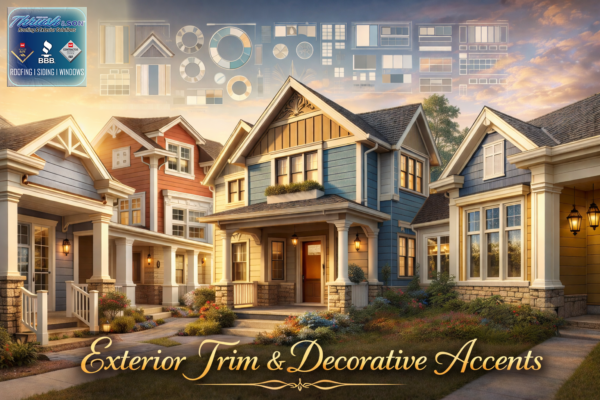
Designing a Craftsman exterior
- Main profile
- Horizontal lap on the body
- Accent
- Shakes in the gables, stone at the porch columns
- Color plan
- Earthy greens, browns, or tans with a contrasting trim
- Trim
- Thick, flat trim and decorative gable brackets
Craftsman homes are built on detail. Trim and texture carry the look more than color does.
Designing a Farmhouse exterior
- Main profile
- Vertical board and batten
- Accent
- A dark metal roof or porch roof
- Color plan
- White or light gray body with black windows and roof
- Trim
- Minimal, color-matched or black
High contrast is the signature. Keep the palette to two or three colors and let the lines do the work.
Designing a Split-Level exterior
- Main profile
- Lap siding on the upper level
- Accent
- Stone or a darker siding on the lower level
- Color plan
- One color family top to bottom so the levels connect
- Trim
- A continuous band at the level change
The challenge is tying staggered levels together. One color family and a deliberate material change make it look planned.
See 18 Colors Before Designing Your Home Exterior
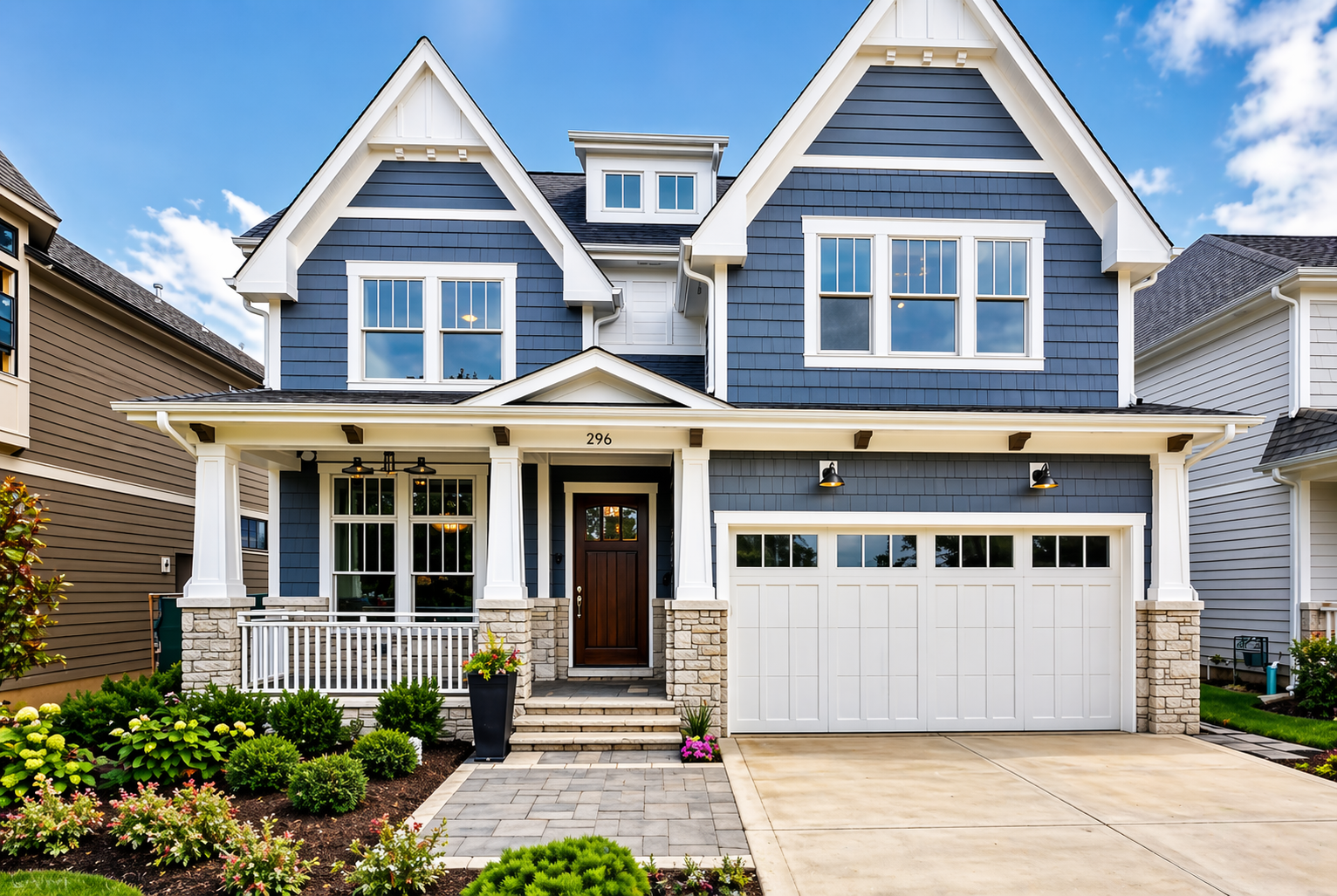
Tap any of the 18 CertainTeed CedarBoards colors to recolor the siding on this real home. The roof, stone, and trim stay exactly as they are, so you can see how each color plays with them. It’s the fastest way to narrow down choices when designing your home exterior.
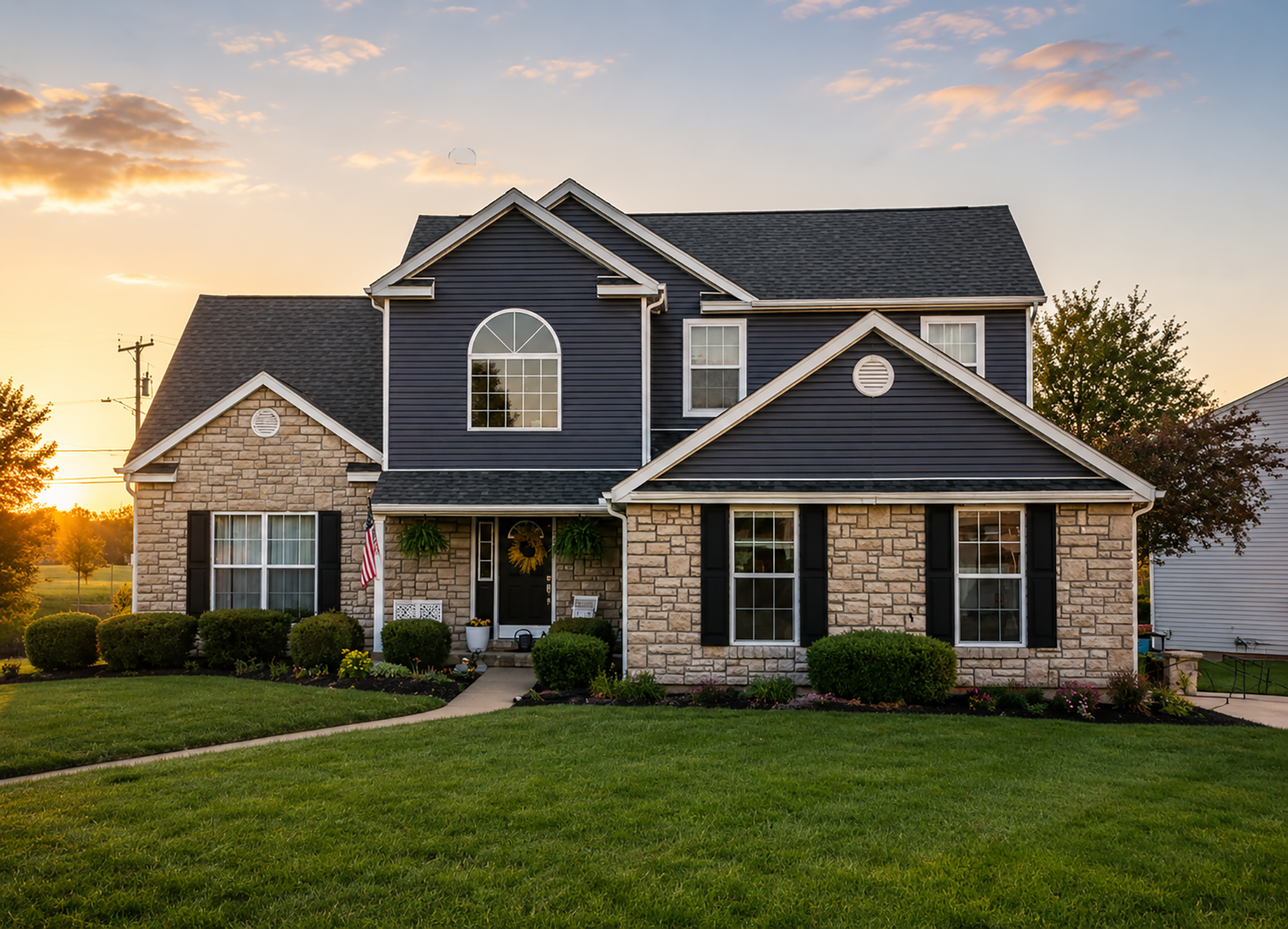
Colors are approximate. We bring full-size samples to every estimate.
Notice how some colors make the stone look warmer and others make it fade. That’s why designing your home exterior starts with the parts that stay. CertainTeed’s ColorCoach uses a 60-30-10 rule: one color for about 60% of the house, a second for 30%, and an accent for the last 10%. This home is wrapped in insulated vinyl siding; see more on our vinyl siding page.
6 Rules for Designing Your Home Exterior
These are the principles we come back to on almost every consultation. Follow them, and designing your home exterior gets a lot less stressful.
Let the architecture lead
The house already has a shape. Choose profiles and colors that fit it instead of fighting it. A farmhouse look on a colonial rarely feels right.
Two or three materials, one color family
Mixing materials adds depth, but more than three starts to look busy. Keep them in the same family of tones so the house reads as one design.
Use lines to change proportions
Vertical siding draws the eye up and helps a low house look taller. Horizontal lines widen a narrow one. Narrower exposures cast more shadow lines and add texture.
Anchor the base
Stone or a darker material on the lower few feet grounds a house, especially a ranch or split-level, and adds a custom look.
Warm up anything modern
Black windows and metal accents look sharp, but use a warm texture or wood-look color nearby so the front doesn’t feel cold.
Test color in real light
Small swatches lie. Look at large samples on the actual wall in morning and afternoon light before you commit. North-facing walls read cooler, and full sun washes colors out.
Most Ohio homes start from vinyl. In the East North Central region, vinyl was the main wall material on 69% of new homes started in 2024, according to NAHB’s analysis of Census data. That’s a big reason designing your home exterior today is about mixing profiles and colors within vinyl, then adding stone or steel where it counts. Our vinyl siding styles guide shows every profile.
Designing Your Home Exterior to Last
A good design has to survive Ohio weather. Before you finalize anything, read what the warranties cover in Warranty Coverage, and pair the new look with a roof that holds up, like the storm-rated shingles we install. A great facade on top of a tired roof won’t feel finished for long, so designing your home exterior should include the roof, gutters, and windows in the same plan.
Trim is where a design looks crisp or sloppy. Exterior Home Trim covers wrapped trim, cellular PVC, and how much contrast to use, and our trim services handle the install. If the front door is part of the plan, see Your Home’s Centerpiece and our entry doors.
Ready to take designing your home exterior into a full spec? Our Dayton Ohio Siding Replacement post has a spec sheet builder, and Siding for Your Home compares the options side by side. Keeping it fresh afterward is easy with our vinyl siding cleaning guide.

Design Help From People Who Install It
Wilbur Thrush founded Thrush & Son in 1960. W. Allen Thrush owns the company today, and Corey Thrush is the third generation. More than 31,000 Miami Valley homeowners have trusted us, from our Brookville headquarters and offices in Troy and Lebanon.
Because we install what we design, we only recommend combinations we know will look right and last. Designing your home exterior with the people who build it means fewer surprises on install day. Browse the project gallery for ideas and read homeowner reviews.
Designing Your Home Exterior: Your Questions
What homeowners ask us most when they start designing your home exterior with us, from first idea to final color.
Where do I start when designing my home exterior?
Start with what isn’t changing, usually the roof, brick, or stone, and with the style of the house. Pick the main siding profile next, then the body color, then trim and accents. Our Exterior Design Center is a good place to try options.
How many siding materials should one house have?
Usually two, sometimes three. One main material, one accent, and possibly stone at the base. More than that tends to look busy.
What colors are popular for Ohio homes?
Grays, blues, and warm whites with white or black trim are common, and darker body colors have grown. Color works when it suits the house and the street, not just the trend. Try the 18-color visualizer above.
Does vertical siding work on a whole house?
It can, especially on farmhouse and modern designs. On traditional homes it often works as an accent in gables, entries, or a single wall.
Can I see my house before I choose?
Yes. Use our Design Center visualizer to preview options, and we’ll bring physical samples to your consultation so you can see them in your own light.
Bring Your Mood Board. We’ll Bring the Samples.
We’ll look at your home in person, talk through the style and colors you like, and give you a written plan and quote with no pressure. Designing your home exterior should feel exciting, not overwhelming. Start in our Exterior Design Center, and ask about financing for bigger projects.
Call 937-833-5136 · Office: Mon–Thu 9–4:30, Fri 9–2 · Michelle, our AI assistant, answers 24/7
