
Before the Arctic Blast Hits: Your Home’s Cold-Snap Field Guide
An arctic blast can turn a normal Ohio week into single digits, howling wind, and wind chills well below zero. Homes that aren’t ready pay for it with frozen pipes, ice dams, drafts, and big heating bills.
We’ve been getting Miami Valley homes through cold snaps since 1960. Pack this field guide before the next one hits.
Pip’s field noteThe time to prepare is before the forecast turns blue. Once the ground is frozen, most exterior work has to wait.
 Cold alert
Watch: The Arctic Blast Is Coming
Corey’s video briefing on what extreme cold does to a house, and what to do before it arrives.
Why an Arctic Blast Is Brutal on Ohio Homes
Wind chill is how cold it feels on exposed skin, and the National Weather Service warns frostbite can set in within 30 minutes or less at extreme wind chills. Your house feels that same wind. Every gap in the shell becomes a draft, and every weak spot gets tested at once.
How an Arctic Blast Builds an Ice Dam
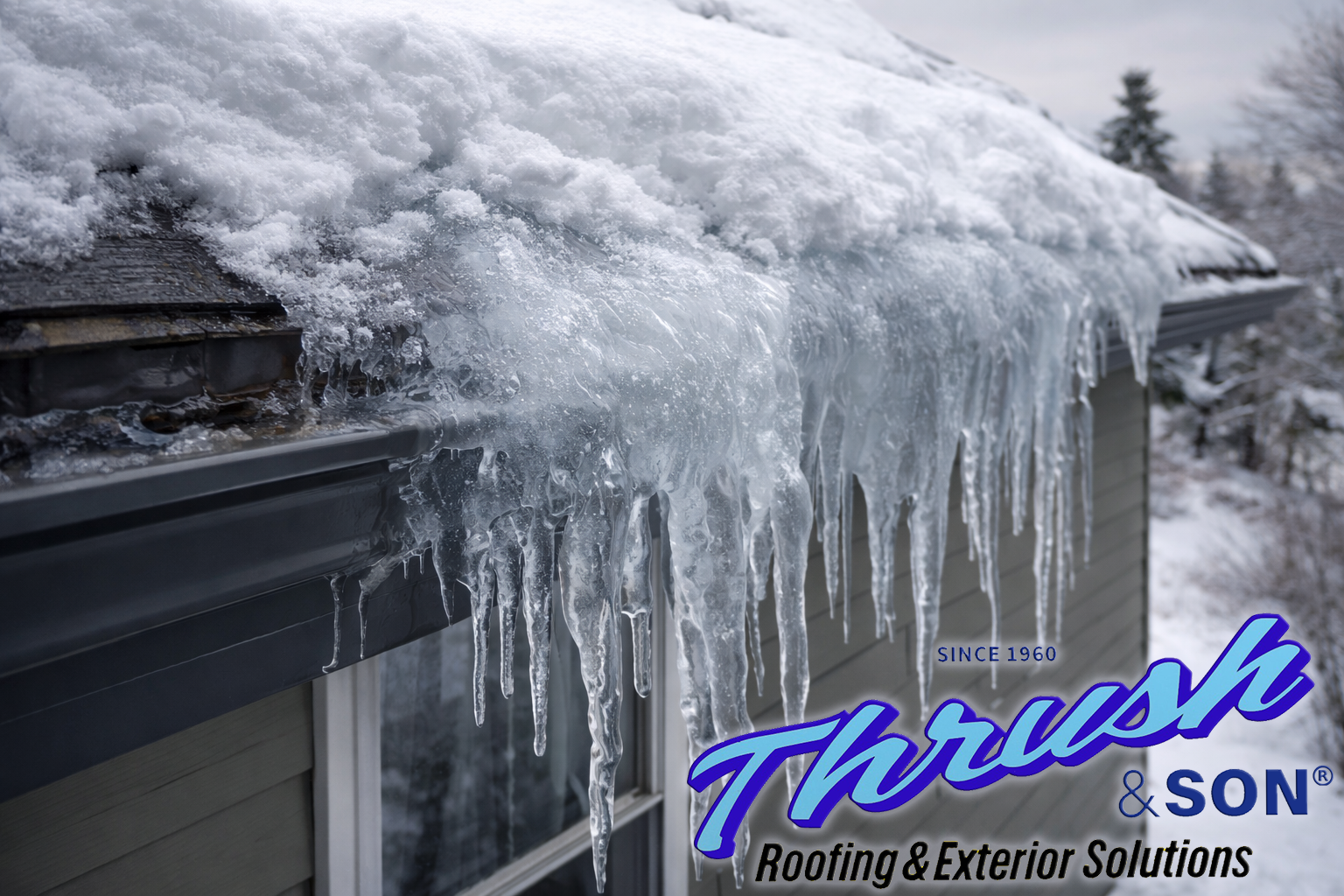
Ice dams don’t start on the roof; they start in the attic. Switch between a leaky attic and a sealed one to see what changes. As Green Building Advisor puts it, they form when escaping heat warms the roof sheathing and melts the underside of the snow.
- Heat escapesWarm household air leaks through the ceiling into the attic.
- Deck warmsThe roof deck warms and melts the snow from underneath.
- Melt refreezesMeltwater runs down to the cold eave and freezes into a dam.
- Water backs upMore melt pools behind the dam and works under the shingles.
- Heat stays inAir sealing and a thick insulation blanket keep heat in the living space.
- Deck stays coldSoffit intake and ridge exhaust keep the roof deck close to outdoor temperature.
- Snow melts evenlyWithout heat from below, snow melts from the sun instead of the attic.
- Backup at the eaveA leak barrier under the shingles at the eave adds a second line of defense.
A leak barrier such as GAF WeatherWatch at the eaves adds protection, but the real cure is keeping heat out of the attic. See ice dam prevention and parts of a roof.
6 Ways to Get Ready for an Arctic Blast
Check off each item your home already has covered and watch the readiness meter climb.
Seal gaps around lights, pipes, and the attic hatch, then add insulation. For our climate zone, ENERGY STAR recommends R49 when you have 3–4 inches today, and R60 for an empty attic.
Soffit intake and ridge exhaust keep the roof deck cold so snow doesn’t melt from below. Compare setups in our ventilation options guide.
During an arctic blast, clogged gutters hold water that freezes and feeds ice at the eave. Seamless gutters with guards keep the path open; see gutter protection systems.
Know where your main shut-off valve is, open sink cabinets on outside walls, and let faucets drip. The American Red Cross tips are summarized here.
Weatherstrip and caulk now. If the glass fogs or frosts every winter, it may be time for new windows; see our ENERGY STAR guide below.
Insulated siding adds a layer of foam behind the panels that blocks wind and slows heat loss. Learn more about insulated siding.
Nothing packed yet. Start with the attic; it does the most work.
Good progress. Each item you add closes another gap the cold can find.
Fully packed. Your home is ready for the next arctic blast.

Windows, Siding, and Gutters That Stand Up to the Cold
Upgrades work all winter, not just during an arctic blast. ENERGY STAR windows with low-E glass and gas fills cut drafts and condensation; see what the ENERGY STAR 7.0 windows standard means for Ohio.
CertainTeed insulated vinyl siding adds a contoured foam backing that slows heat loss through the walls. And seamless gutters with guards keep meltwater moving away from the foundation.
Before, During, and After the Arctic Blast
A simple plan for the days around the deep freeze. For a longer list, see is your home ready.
Before
- Clear gutters and downspouts.
- Find the water shut-off and test it.
- Seal obvious drafts at doors and windows.
- Stock salt, a shovel, and batteries.
During
- Keep the heat at 55°F or higher, even if you leave.
- Open cabinets on outside walls and drip faucets.
- Stay off the roof; never chip at ice dams.
- Limit time outside when wind chills plunge.
After
- Look for ceiling stains and wet insulation.
- Check gutters for sagging or pulled fasteners.
- Watch for icicles and ice along the eaves.
- Take photos of any damage before cleanup.
Pip’s field noteNever climb an icy roof or chip at an ice dam. Call us and we’ll take a look once it’s safe.

Guiding Miami Valley Homes Through Winter Since 1960
Wilbur Thrush founded Thrush & Son in 1960. W. Allen Thrush owns the company today, and Corey Thrush is the third generation. More than 31,000 Miami Valley homeowners have trusted us, from our Brookville headquarters and offices in Troy and Lebanon.
As a GAF President’s Club Contractor, we install complete roofing systems built for Ohio winters. See our roofing services, the project gallery, and homeowner reviews.
Arctic Blast Questions, Answered
What Miami Valley homeowners ask us when the forecast turns frigid.
What is an arctic blast?
It’s a surge of frigid air from the far north that drops temperatures well below normal for days at a time, often with strong winds and dangerous wind chills.
How do I stop ice dams before an arctic blast?
Keep heat out of the attic. Air sealing and insulation do most of the work, with soffit and ridge ventilation keeping the roof deck cold. Our ice dam prevention guide goes deeper.
How much attic insulation do I need in the Miami Valley?
For our climate zone, ENERGY STAR recommends R49 when you already have 3–4 inches, and R60 for an uninsulated attic.
How do I keep pipes from freezing during an arctic blast?
Keep the heat at 55°F or higher, open cabinets on outside walls, let faucets drip, and seal air leaks near pipes. Know where your main shut-off valve is before the cold arrives.
Should I chip ice dams off my roof?
No. Chipping or prying ice can damage shingles and gutters, and climbing an icy roof is dangerous. Call a roofer and fix the heat loss that caused it.
Who do I call if the cold damages my roof?
Call 937-833-5136, or reach Michelle, our AI assistant, any time, 24/7. See our storm damage page for what to expect.
Get Your Home Ready for the Next Arctic Blast
We’ll check your roof, attic ventilation, gutters, windows, and siding, then give you a written estimate with no pressure. Visit our Exterior Design Center, and ask about financing.
Call 937-833-5136 · Office: Mon–Thu 9–4, Fri 9–2 · Michelle, our AI assistant, answers 24/7
Follow Along
Winter tips, crew life, and BooBoo, who prefers the couch to the cold. Meet the family here.
