
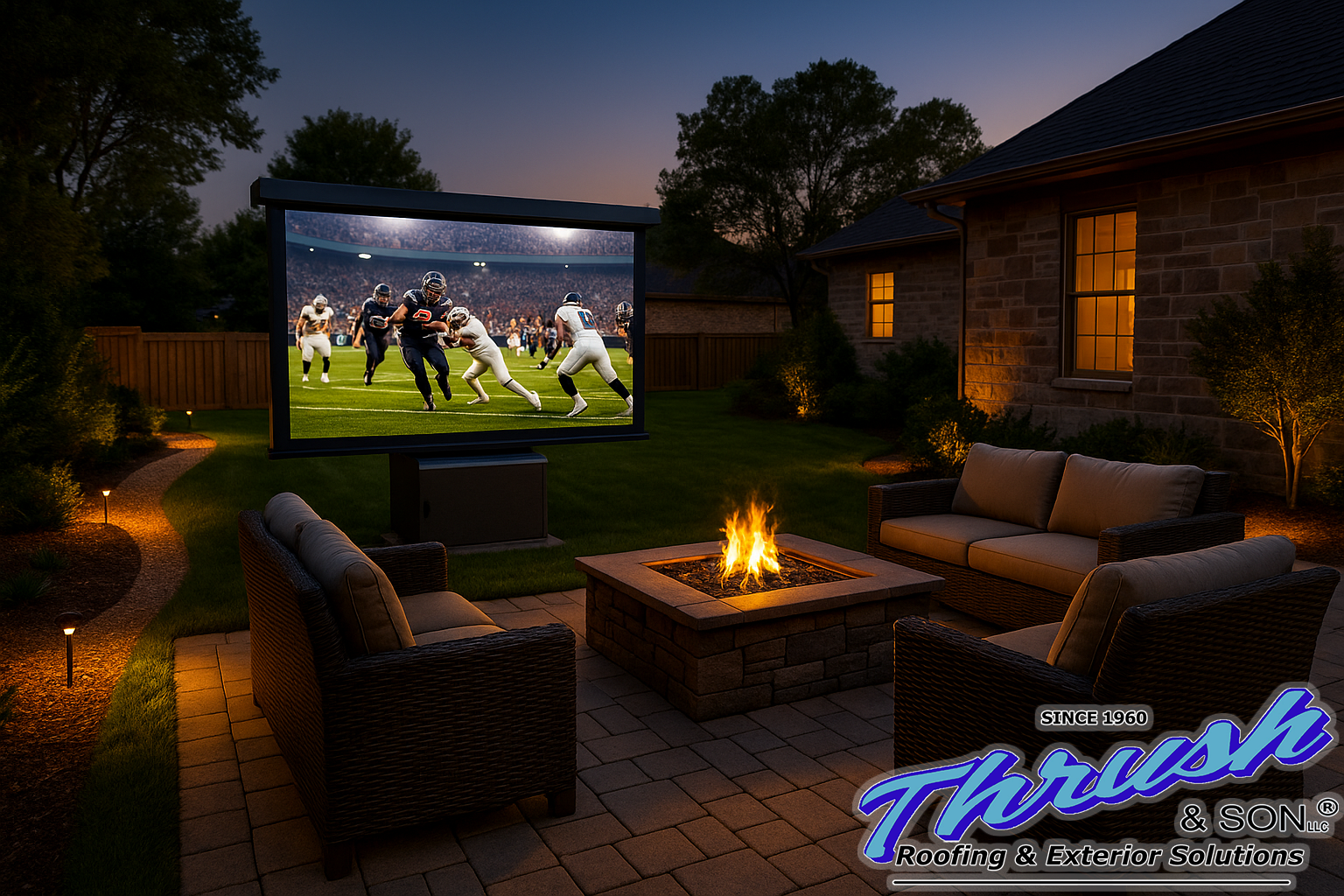
Outdoor Space Upgrades: Build a Backyard You’ll Actually Use
An outdoor space works best when it’s planned like a room, not decorated like a yard. The backyards people use every week have a roof over part of them, a door that makes the trip outside easy, light for after dark, and no puddle where the chairs should be. The ones that sit empty are usually missing one of those.
We come at this from the house out. Thrush & Son® works on roofs, siding, windows, doors, and gutters, which happen to be the walls, ceiling, and plumbing of your outdoor room. Here’s how to plan the space around how you’ll use it, and the seven upgrades that make the biggest difference, with the pro details most guides skip.
Plan the Zones Before the Furniture
Every good outdoor space is a set of zones: somewhere to cook, somewhere to eat, somewhere to sit, and safe paths between them. Pick how you’ll use the yard most, and the plan will light up the zones that matter.
- Put the screen or TV under cover, facing away from the afternoon sun.
- Plan weather-resistant, GFCI-protected outlets with in-use covers where the TV, speakers, and slow cooker go.
- Keep the grill well away from the house and out of the walkway between the door and the seating.
- Set the table within a few steps of the kitchen door; a wide patio door makes every trip easier.
- Cover the dining zone so a passing shower doesn’t end the meal.
- Light the table and the path back inside, not the whole yard.
- Place the screen so the setting sun is behind it, not shining on it.
- Give the projector a ventilated, weatherproof box and its own outlet.
- Use low, shielded path lights so people can move without washing out the picture.
- Tuck the lounge zone against the house or a privacy screen to block wind and sightlines.
- Choose warm 2700–3000K bulbs on a dimmer for a softer glow.
- Make sure no downspout drains toward the seating; standing water draws mosquitoes.
7 Outdoor Space Upgrades Worth Doing Right
Add cover with a patio roof or pergola
Cover is what turns a patio into a room, and the single biggest upgrade most outdoor space plans can make. A pergola filters sun; a solid patio roof stops rain, protects furniture and electronics, and keeps the space usable from April through October. Motorized louvered pergolas split the difference, opening for sun and closing for a shower.
Pro detailWhere a patio roof meets the house, the details are roofing details. The ledger board needs to be flashed into the wall so water can’t run behind the siding, and the roof needs enough pitch for its material: asphalt shingles need at least 2-in-12, and anything flatter needs a low-slope membrane.

Open the house to the yard with a better patio door
Every trip to the outdoor space starts at a door. A wider sliding door or a hinged French door makes carrying plates, coolers, and kids’ gear easier, and lets the indoor and outdoor rooms read as one. Modern units seal far tighter than the drafty sliders of the 1990s.
Pro detailSee our patio door options, and don’t forget the front: a new entry door sets the tone before guests ever reach the backyard.
Light it in layers
Good lighting doubles the hours you get out of an outdoor space. It has three jobs: path lights for safe footing, task light over the grill and table, and soft ambient light for the mood. Warm 2700–3000K bulbs feel like an evening, not a parking lot, and shielded fixtures keep light on the ground instead of in your neighbors’ eyes.
Pro detailPlan power while you plan the light. Outdoor receptacles must be GFCI-protected and weather-resistant, with in-use covers wherever something stays plugged in.

Treat the siding as the backdrop
The back wall of the house is the biggest surface in your outdoor space. Faded or wavy siding drags the whole space down, and new siding or a contrasting vertical accent wall can make a patio feel designed. Our vertical vinyl siding page shows what an accent can do.
Pro detailOne caution we see every summer: vinyl siding can warp from a grill’s radiant heat. Keep the grill well away from the house, eaves, and railings, as the National Fire Protection Association advises.
Frame the view with the right windows
The windows that face the yard decide how much of it you enjoy from inside. A large picture window flanked by casements gives a wide view and real airflow when the grill’s going. Read our guide to casement windows for how hinge side catches the breeze.
Pro detailLarge panes near doors and walking surfaces must use safety glass under the residential code, so plan that into any window wall that looks out on a busy patio.
Control the water before it reaches the patio
A downspout that empties onto a patio leaves puddles in July and a sheet of ice in January. Seamless gutters with guards, and downspouts routed underground or well past the hardscape, keep the outdoor space dry and safe year round.
Pro detailPatios themselves should slope away from the house, typically about a quarter inch per foot. Our storm-proof guide covers grading and drainage in more depth, and our gutter systems page shows the options.
Finish with landscaping and hardscaping
Plants and paths pull the zones of an outdoor space together. Pavers or stamped concrete define where people gather, a seat wall adds seating without furniture, and evergreen screening gives privacy all year. Synthetic turf handles heavy game-day foot traffic where grass would wear out.
Pro detailKeep plantings and mulch a few inches below the siding and away from the foundation so they don’t hold moisture against the house. For more design ideas, browse Better Homes & Gardens’ outdoor living ideas.

Where to Start at Every Budget
You don’t have to do all seven at once. Most families build an outdoor space in stages, and the order matters: fix what protects the house first, then add comfort.
Extend or reroute the downspout that floods the patio, clean the gutters, and add a few path and task lights. Small money, immediate difference.
Replace a drafty patio door, add seamless gutters with guards, and refresh the caulk and trim that face the yard. These protect the house as much as they improve the outdoor space.
A covered patio tied properly into the roof, new siding or an accent wall, and hardscaping. Plan these together so the roofline, trim, and drainage are detailed once.

Built on Trust Since 1960
Since 1960, Thrush & Son® has been family owned and committed to craftsmanship, integrity, and results that endure. Founded by Wilbur Thrush and now in its third generation, we serve homeowners across Dayton and the Miami Valley with roofing, siding, windows, doors, and gutters, the parts of the house that make an outdoor space work through every season.
Planning a bigger project? Our exterior home upgrades guide and home exterior checklist help you sequence the work.
Outdoor Space Questions We Hear Most
What’s the first upgrade for an outdoor space on a budget?
Start with drainage and light. Fixing a downspout that floods the patio and adding a few path and task lights cost far less than a pergola, and they make the space usable right away.
Can a covered patio tie into my existing roof?
Usually, yes. It needs a properly flashed ledger, enough pitch for the roofing material, and a check that the new roof won’t dump water onto a walkway or against the house. That’s roofing work, not just carpentry.
How far should the grill be from vinyl siding?
Follow your grill manufacturer’s clearance, and err on the side of more. Radiant heat can warp vinyl well before anything catches fire, so keep the grill well away from walls, eaves, and railings.
Do outdoor space upgrades add home value?
Some do more than others. Upgrades that also protect the house, like new siding, a patio door, and seamless gutters, tend to hold value at resale, while highly personal features are mostly for your own enjoyment.
Start Your Outdoor Room at the House
We’ll look at the doors, windows, siding, gutters, and roofline that frame your outdoor space, and show you which upgrades will make the yard work harder, in order and in writing.
- GAF President’s Club Contractor
- Best of Dayton 2024 Winner · 2025 & 2026 Finalist
- BBB Accredited A+
Michelle, our AI assistant, answers 24/7
Office: Mon–Thu 9–4, Fri 9–2
