
November Roof Inspection: Is Your Roof Winter Ready?
A November roof inspection answers the question Ohio homeowners ask the day the furnace kicks on: will my roof make it through another winter? The answer isn’t the age on an old invoice. It’s what the shingles, flashing, gutters and attic are doing right now.
Picture a gray November afternoon. Cold rain is on the way, and you notice a shingle edge standing up along the roofline. The gutter spills at the same corner every storm. And that faint stain on the bedroom ceiling has never quite stopped bothering you.
Those questions deserve answers before snow hides the evidence. Our family has looked after Miami Valley roofs since 1960, so we built this page like the sheet on our own clipboard. Seven points, three colors, one clear result.
A November roof inspection starts from the ground and from inside. Check seven things: shingles, flashing, valleys, gutters, ceilings, the attic and your roof’s track record. Then sort what you find into three piles: fix now, plan a replacement, or watch and document.

- Read time: 8 minutes
- 7 points to check
- 0 ladders needed
- Since 1960
Your November Roof Inspection Report
- Why November is the right momentnotes
- The 7-point winter roof checkmark it up
- Why flashing gets a second lookphoto
- The attic half of the storycarbon copy
- Fix it now, plan it, or watch it?3 tags
- Three things to ask forsign-off
- November roof inspection FAQ5 answers
- Get a clear answer before winterschedule
Why a November Roof Inspection Makes Sense
Late fall is the clearest view you’ll get all year. The storms are behind you, the leaves are down, and there’s still time to act before freezing weather makes roof work harder to schedule.
Winter doesn’t turn every small flaw into an emergency. But a spot that lets rain in today won’t get more dependable under snow and ice. A November roof inspection separates what’s only cosmetic from what needs attention soon.
Ground Rule: Stay on the Ground
Use binoculars or your phone’s zoom, and check the ceilings inside. Leave ladders and roof walking to a crew with the right equipment.
Savings estimate: ENERGY STAR.
7 November Roof Inspection Warning Signs
Your part of a November roof inspection takes ten minutes and one lap around the house. You’re not diagnosing anything. You’re collecting clues, the way you’d tell a doctor where it hurts.
Read each point, then mark it green, yellow or red. The sheet keeps count and tells you where you stand. Photograph anything that looks different from the rest of the roof, and note when you first saw it.
- Green: looks fine
- Yellow: not sure
- Red: I see it
Missing, Cracked or Lifted Shingles
What you’ll see: a break in the roof’s pattern, like a missing tab, a raised edge or a dark patch where the granules have worn away.
What it means: one lifted shingle after a windy night is usually a small fix. The same damage on several slopes points to wider wear. Some granules in the gutter are normal; bald spots are not.
Next step: photograph it from the ground. Don’t bend a shingle back to test it.
Flashing Around Chimneys and Pipes
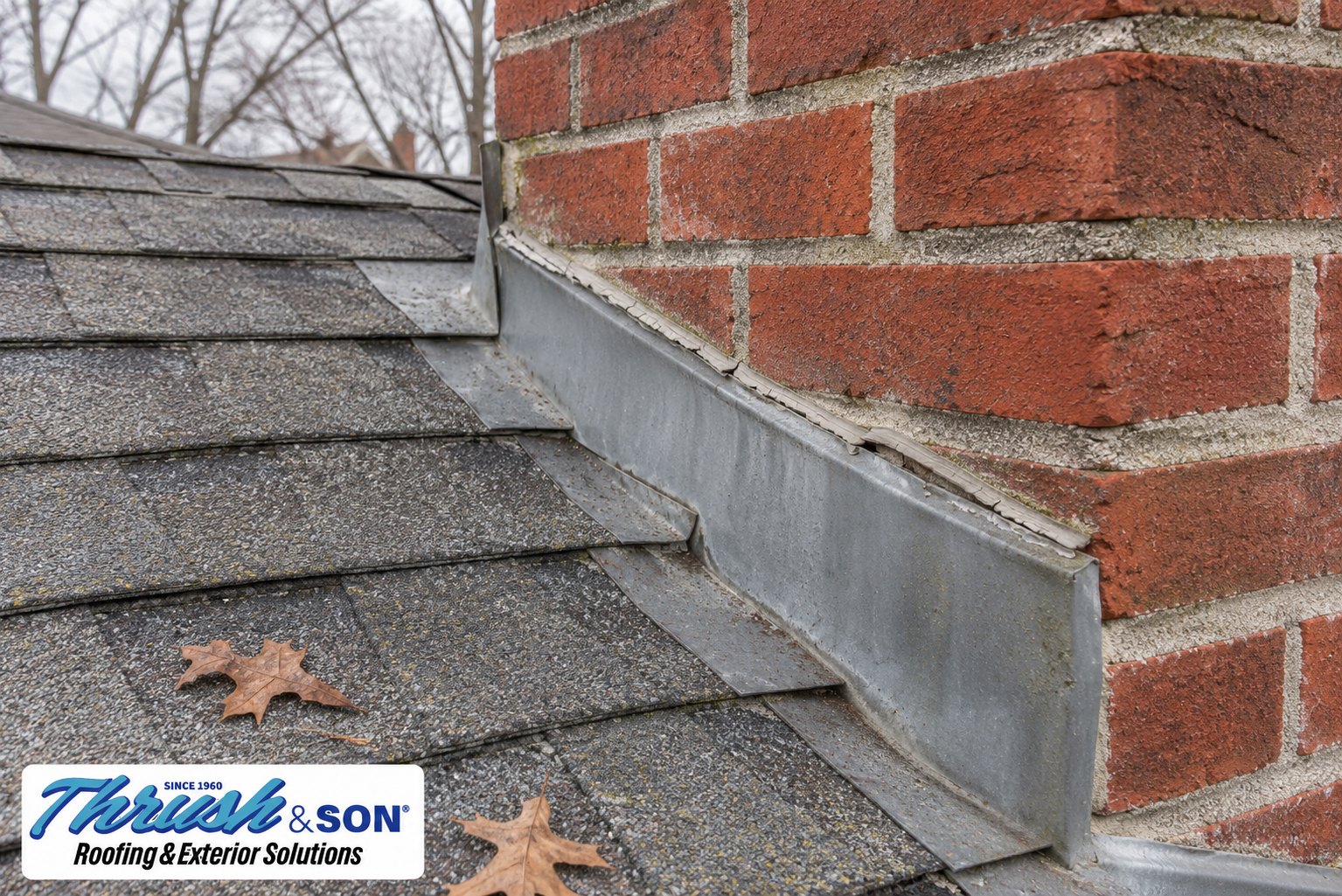
What you’ll see: cracked sealant, rusted or loose metal, or a rubber pipe boot that has split.
What it means: flashing seals the places where shingles meet a chimney, wall or vent. The shingles can look fine while one tired connection lets water in.
Next step: at your November roof inspection, say when it leaks: steady rain, wind-driven rain or snowmelt.
Leaves and Debris in Roof Valleys
What you’ll see: leaves and twigs piled where two roof slopes meet.
What it means: valleys carry more water than any other part of the roof. Debris slows that water, holds moisture against the shingles and hides damage.
Next step: don’t scrape or pressure wash. Have valleys cleared and checked during your November roof inspection.
Gutters, Downspouts and Roof Edges
What you’ll see: water pouring over the front lip, dripping from a joint or running behind the gutter.
What it means: a clog, a bad slope or a loose section. In winter, those drips become ice on your walk.
Next step: our leaky gutters guide shows the five places to look.
Ceiling Stains and Old Leaks
What you’ll see: a yellow or brown ring on a ceiling, often near a chimney, skylight or outside wall.
What it means: a stain is a clue, not a diagnosis. It could be the roof, plumbing or condensation.
Next step: take a dated photo and note whether it grows after rain. Active dripping or a sagging ceiling needs a call today.
Attic Moisture and Insulation
What you’ll see: damp or matted insulation, dark stains on the wood, or frost on the nail tips on a cold morning.
What it means: warm, moist house air is reaching the attic, or water is getting in from above.
Next step: look from the hatch only, and ask whether your November roof inspection includes the attic.
The Same Fix, Twice
What you’ll see: a folder of invoices for the same leak, or patches on more than one slope.
What it means: one fix on a sound roof is routine. A pattern suggests the roof is wearing out as a system, whatever its age.
Next step: gather the install date, past invoices and warranty papers before your November roof inspection.
Your Result Shows Up Here
Mark all seven points to see where your roof stands.
All Green: Ready From the Ground
Nothing you can see needs attention. Take dated photos today and walk the same lap in spring.
Yellow on the Sheet: Get a Second Set of Eyes
A professional look before the first snow will tell you whether it’s a small fix or part of a pattern.
Red on the Sheet: Don’t Wait for Spring
Something you can see needs a professional now. Schedule a visit and bring your photos.
Why Flashing Gets a Second Look
If we could send every homeowner one photo from a November roof inspection, it would be the chimney. Brick, metal and shingles all meet there, and a bead of old sealant is often all that stands between rain and your living room.
A thick smear of fresh caulk isn’t proof the connection is sound. Chimney leaks can also come from the brick, the mortar or the crown, so a good inspector explains which part is letting water in before recommending anything.
Ask for a photo of the problem and a plain explanation of the fix. Our roof flashing guide shows what a proper flashing job looks like.
The Attic Half of a November Roof Inspection
Clean Gutters Alone Won’t Stop Ice Dams
Ice dams start with heat, not leaves. University of Minnesota Extension explains that uneven roof temperatures cause them: heat escaping from the house melts snow up high, and the water refreezes at the cold eaves.
Their long-term answer comes in order. First, seal the air leaks in the ceiling so warm, moist air can’t reach the attic. Then add insulation.
That’s why a thorough November roof inspection looks under the roof as well as on top of it. If ice has been a yearly visitor, read our ice dam prevention guide next.
Fix It Now, Plan It, or Watch It?
The real value of a November roof inspection is a clear order of priorities. Everything you find should leave with one of three tags on it.
Before Anyone Signs Off
Before your November roof inspection wraps up, ask for three things:
- Photos of what they found. You should see what they saw.
- A written description of the work. What gets done, where and with what materials.
- An explanation of timing. What can’t wait, and what can.
A single flashing problem doesn’t mean you need a new roof. And a low price on a patch is no bargain if the same leak keeps coming back.
“You don’t have to predict the next Ohio winter. You just have to know the roof you have before it arrives.”
Know someone with a ceiling stain or a gutter that overflows? Send them this November roof inspection checklist.
November Roof Inspection FAQ
Is November too late for a roof inspection in Ohio?
No. A November roof inspection is useful any day the roof is clear and safe to access. Snow, frost or heavy rain can limit what’s visible, so ask whether any area needs a return visit.
Does one lifted shingle mean I need a new roof?
No. What matters is the cause, how far the damage spreads and the condition of the shingles around it. One lifted shingle on a sound roof is usually a small fix.
Can I inspect my own roof?
You can do the first half of a November roof inspection: walk the yard with binoculars, watch the gutters in the rain and check your ceilings. Leave the roof itself to a professional.
Should I clean my gutters before the inspection?
You don’t need to. Overflow and debris are useful clues for a November roof inspection. Never climb a ladder in wet or icy weather to get ready for a visit.
What should I have ready for the appointment?
The roof’s install date if you know it, past invoices, warranty papers, dated photos and a short history of any leaks or ice. Ask whether the attic is part of the visit.
Schedule Your November Roof Inspection
Thrush & Son® — Trusted exterior pros since 1960. Proudly serving Dayton and the Miami Valley with roofing, siding, windows and doors.
Don’t carry a roof worry into another winter. Schedule a no-obligation November roof inspection, and we’ll show you photos of what we find, explain what it means and help you choose the next step.
Prefer to talk it through? Call (937) 833-5136 · 115 Jefferson St, Brookville, OH 45309
Further Reading
Want to protect your roof investment? Read our post on roof warranties, then pull another file.
