
Cool Home Exterior: Stop the Heat Before It Gets Inside
A cool home exterior is your first defense on a 95° day. The AC is working overtime and the bill keeps climbing, but most of that heat isn’t coming from inside. It’s coming through the roof, the attic, the west-facing windows, and the walls the sun has been baking since noon.
What if your home could fight the heat before it ever got inside? These seven upgrades do exactly that, from cool roofing and Low-E windows to a few shade tricks that cost far less. Tap around the house below to see where the heat really gets in.

Where the Heat Gets In
A cool home exterior blocks heat at six points. Tap a hot spot on the house to see what’s happening there and the fix.
The roof takes the first hit
A standard roof can reach 150°F or more in the summer sun, per the U.S. Department of Energy. That heat soaks straight into the attic.
The attic turns into an oven
Trapped attic heat radiates down through the ceiling all afternoon and evening, long after the sun moves.
Afternoon sun pours in
Old glass and tired seals let heat in and cooled air out, so the AC fights the same battle all day.
Walls soak up the day
Sun-baked walls store heat and release it indoors, especially through the studs where there’s no insulation.
The AC bakes in the sun
An outdoor unit sitting in full sun works harder to dump heat from your house.
Blacktop and bare ground
Paved, unshaded areas around the house heat up and radiate it back at your walls and windows.
7 Upgrades for a Cool Home Exterior
The first three are the big projects. The last four are the shade tricks that make a cool home exterior work even harder for very little money.
Energy-efficient windows
Older glass and worn seals let summer heat pour in while cooled air slips out. Windows are the front line of a cool home exterior: Low-E coatings and double- or triple-pane glass reflect heat, block UV, and steady the temperature room to room. Replacing single-pane windows with certified ones lowers bills by an average of up to 13%, per ENERGY STAR.
Cool roofing
A cool roof reflects sunlight instead of storing it, which makes it the cornerstone of a cool home exterior. White or cool-color roofs can reflect up to 90% of the sunlight that hits them, and cool asphalt shingles cost about the same as conventional ones, according to DOE’s cool roofs guide. Savings are biggest in hot climates, so in Ohio think comfort first.
Insulated siding
Siding with a layer of rigid foam behind it slows heat moving through the walls, especially at the studs. It also stiffens the panels and quiets the house, rounding out a cool home exterior. Fiber cement is another durable option when you want a different look.
Attic ventilation and insulation
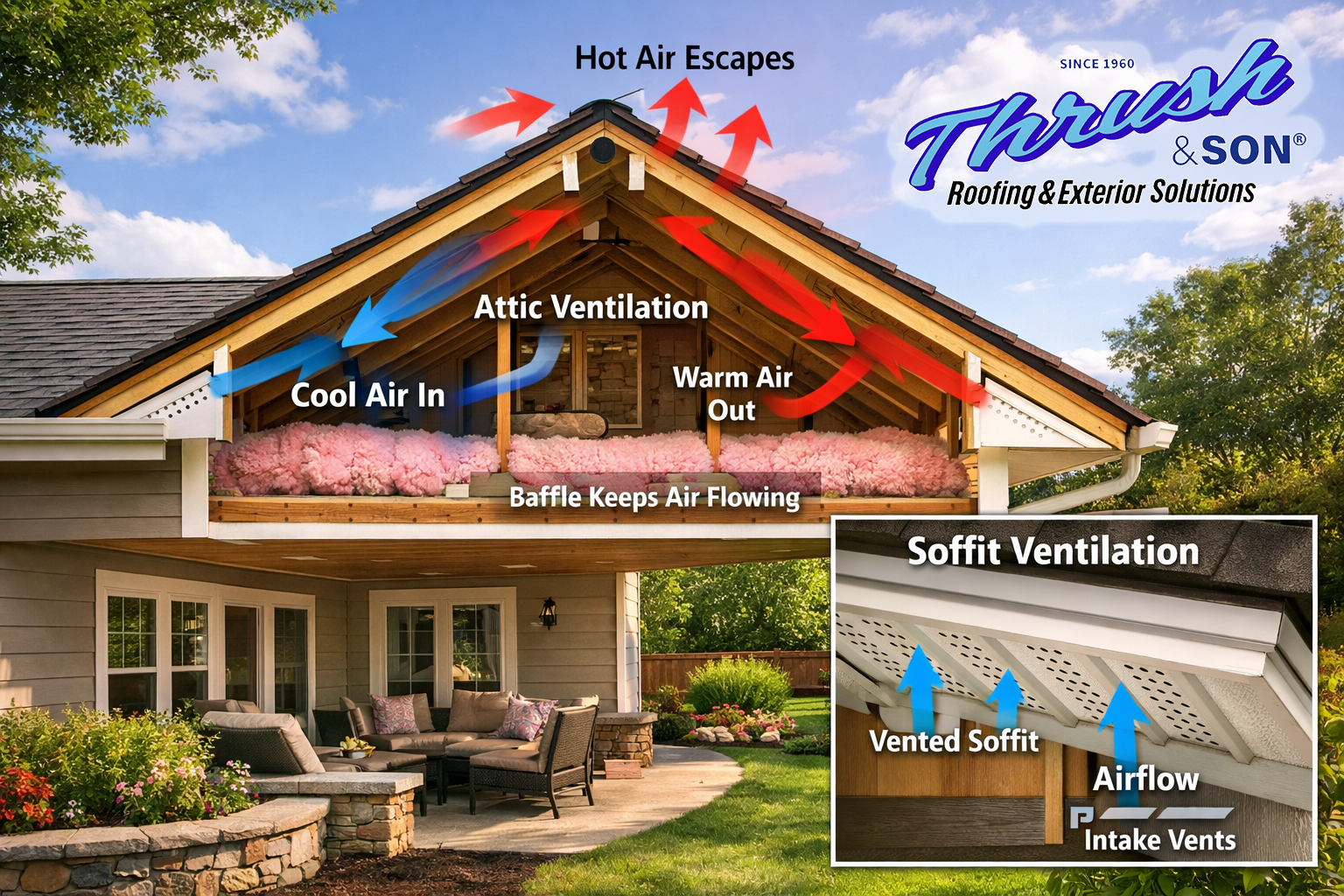
Soffit vents pull in cooler air, ridge vents let hot air out, and insulation on the attic floor keeps the rest from reaching your ceiling. If the attic is roasting by late afternoon, start here; no cool home exterior works with an oven overhead.
Awnings and solar screens
Exterior shade stops heat before it reaches the glass. DOE recommends awnings on south- and west-facing windows. Solar screens cut heat and glare while keeping the view, an easy add to any cool home exterior.
Shade trees
Tall deciduous trees on the south side shade the roof in summer and let winter sun through after the leaves drop. Trees with low branches on the west side block the harsh afternoon sun. It’s the slowest cool home exterior upgrade, and the one that keeps getting better.
Shade the AC unit
An outdoor unit in full afternoon sun works harder. Shading it with plantings or a structure, while keeping the airflow clear, can raise its efficiency by as much as 10%, per DOE.
Start in the Attic
If the attic is roasting by late day, that heat is sitting right on top of your bedrooms. A standard roof can hit 150°F in summer sun, per the DOE Energy Saver Guide, and without airflow the attic stores it like an oven.
Balanced intake at the soffits and exhaust at the ridge keeps air moving, and insulation on the attic floor keeps the rest from reaching the ceiling. It’s the least visible part of a cool home exterior and often the cheapest place to start. Our attic ventilation guide walks through it.
Which Side Bakes the Most?
Every house has a hot side. Pick the side that bakes at your place to see where shade and glass will do the most for your cool home exterior.
Midday sun all summer
- Tall deciduous trees to shade the roof
- Fixed awnings over windows
- Low-E glass on every window
The hottest afternoon sun
- Low-branch trees or tall shrubs
- Solar screens or awnings
- Lower solar-heat-gain glass for this side
Bright morning sun
- Shade trees to soften early heat
- Blinds or light-filtering shades
- Usually less urgent than west
Little direct sun
- Your coolest side; focus on air sealing
- Good spot for the AC unit if you can choose
- Keep windows tight for winter
Tree placement guidance from DOE’s energy-efficient landscaping fact sheet.
Is Your Home Running Hot?
Check everything that’s true at your house this summer. We’ll count it up and tell you where to start.
Your home is handling the heat. Keep an eye on the attic and the AC unit, and enjoy the summer.
Your home is working harder than it should. Start with the cheapest wins: attic ventilation, shade for the AC, and awnings on the west side.
Several parts of the exterior are letting heat in at once. A full look at windows, roof, and siding together will show where the biggest savings are.
Walls Count Too
Siding is the biggest surface on most homes, and in the afternoon it’s soaking up sun. Insulated siding puts a continuous layer of foam over the studs, so less of that heat makes it through. It’s one more layer in a cool home exterior that also pays you back in winter.
Pair it with windows that keep heat out. Our guides to ENERGY STAR replacement windows and replacement windows in Dayton cover the glass, and energy-efficient home upgrades shows how it all fits together.

Questions on Ice
What homeowners ask us most when they’re planning a cool home exterior.
Do cool roofs work in Ohio?
Yes, though the savings are smaller than in hot climates. DOE says cool-color roofs cut cooling costs by at least 5 to 20%, with the largest savings where summers are hottest. In Ohio, the bigger win is often a cooler attic and steadier upstairs rooms.
Will a light roof make my house colder in winter?
A little more heat can reach a dark roof in winter sun, but in Ohio winters the sun is low and the days are short. For most homes, attic insulation matters far more for winter comfort than roof color.
What should I upgrade first?
Start a cool home exterior where heat enters fastest: the attic and the west-facing windows. Shade for the AC unit and awnings are inexpensive. Windows, roofing, and siding are bigger projects that pay off together.
Does insulated siding really help in summer?
It adds a continuous layer of foam over the studs, which slows heat moving through the walls. Our insulated siding guide covers how it works and what it looks like.
Which windows do the most to keep heat out?
Low-E glass with a solar heat gain rating suited to the side of the house. Our ENERGY STAR replacement windows guide shows how to read the label.
Is there a tax credit for these upgrades?
Not for new installs. The IRS confirms the Energy Efficient Home Improvement Credit isn’t allowed for property placed in service after December 31, 2025.
Cool Under Pressure Since 1960
Thrush & Son® has helped Miami Valley families stay comfortable through more than 65 summers, from our Brookville headquarters and offices in Troy and Lebanon. We handle roofing, siding, windows, and gutters, so your whole cool home exterior comes from one team.
See finished work in our project gallery.
Cool Things Down Before the Next Heat Wave
We’ll look at your windows, roof, attic, and siding, and lay out a cool home exterior plan to lower cooling bills, starting with the changes that do the most. Written quotes, with financing available. Call 937-833-5136.
Michelle, our AI assistant, answers 24/7 · Office: Mon–Thu 9–4:30, Fri 9–2
