
The Roof Owner’s Manual What every homeowner should know about their roof, chapter by chapter.

Most homeowners learn about their roof only when something goes wrong. Every car comes with an owner’s manual, but houses don’t. The roof protects everything under it, so it deserves a manual of its own.
Here it is: seven short chapters on what to know about their roof, written the way we explain it at kitchen tables across the Miami Valley. Jump to any chapter.
Know the Specs About Their Roof
Car owners know the year, make, and model. Homeowners should know the same seven facts about their roof. Fill these in once, keep them with your house papers, and you’ll have answers ready for any inspector, buyer, or insurance adjuster.
| Spec | Why it matters | Where to find it |
|---|---|---|
| Install date | Age is the first thing an inspector, buyer, or insurer asks. | Closing papers, permits, or your contractor’s invoice |
| Shingle brand and line | Tells you the rated performance and which warranty applies. | A leftover bundle wrapper in the garage, or the contract |
| Number of layers | Two layers means both come off at replacement. | Look at the roof edge, or ask during an inspection |
| Ventilation type | Intake and exhaust working together protect shingles and decking. | Soffit vents below, ridge or box vents above |
| Underlayment and ice barrier | The layers beneath the shingles stop wind-driven water and ice dams. | Your contractor’s scope of work |
| Warranty and registration | Coverage depends on what was registered, and whether it transfers. | Warranty certificate or the manufacturer’s registration |
| Installer | Workmanship coverage comes from the company that did the work. | Contract, invoice, or a sticker in the attic |
How Long Shingles Really Last
The first thing to know about their roof is that age matters more than looks. A roof can look fine from the driveway and still be brittle and shedding granules up close. Write the install date down; it’s the number every conversation about their roof starts with.
- Ventilation. A hot, damp attic ages shingles from underneath.
- Installation. Nailing, flashing, and underlayment details decide how a roof handles wind and water.
- Weather. Ohio roofs see hail, heat, and freeze-thaw cycles every year. See how hail affects roofing.
Estimated life: InterNACHI life-expectancy chart. A warranty term is not the same as a lifespan.
The Roof Breathes From Below
Few homeowners think about their roof from the attic side, but that’s where a lot of aging happens. In summer, a vented attic moves super-heated air out. In winter, outside air keeps the attic cold, which reduces ice dams (ENERGY STAR).
GAF recommends at least 1 square foot of ventilation for every 300 square feet of attic floor, split evenly between intake low and exhaust high (GAF). Never bury soffit vents under insulation. Learn more in is attic ventilation important and ice dam prevention.
Six Warning Lights About Their Roof
A car flashes a light when something needs attention. A roof gives signs too, if you know where to look. Tap a light to see what it means and what to do.
Granules in the gutters
Shingles shed some granules early on. Heavy, steady loss on an older roof means the protective surface is wearing thin.
What to do: Ask for an inspection and check the roof’s age.
Curling or cupping shingles
Edges that lift or dish usually point to age, heat, or poor attic ventilation.
What to do: Have the attic and ventilation checked along with the roof.
Missing shingles
Wind can break the seal strips and pull shingles off, exposing the layers underneath.
What to do: Cover the spot if it’s safe and schedule a look soon.
Ceiling or wall stains
Water has already made it inside. The leak may start far from where the stain shows up.
What to do: Call promptly. Small leaks get bigger with every rain.
Daylight in the attic
If you can see daylight through the roof boards, water can get through too.
What to do: Look on a sunny day and note where it shows.
Ice dams at the eaves
Ridges of ice form when attic heat melts snow that refreezes at the cold edge.
What to do: Check insulation and ventilation before next winter.
A Four-Season Care Schedule
Cars get oil changes. Roofs get a few minutes of attention each season. Most of this is done from the ground or the attic, and none of it requires a ladder. Homeowners who check on their roof this way catch small issues early. For a deeper look, see spring roof inspection.
- Spring
After the snow melts
Walk the yard and look for missing shingles, lifted flashing, and granules at downspouts. Clean gutters once the trees finish dropping seeds.
- Summer
When the heat peaks
Peek into the attic on a hot afternoon. Stale, stifling air points to weak ventilation, which ages shingles from below.
- Fall
Before the leaves finish
Clear gutters and downspouts so autumn rain and winter melt can drain. Trim branches that rub or overhang the roof.
- Winter
During cold snaps
Watch the eaves for ice dams and the attic for frost on nails or sheathing. Both point to escaping heat.
Homeowners who keep a simple notebook about their roof, with dates and photos from each season, spot changes faster and have proof ready if a storm claim ever comes up.
Two Warranties, One Installer
A great shingle installed poorly won’t perform like a good shingle installed right. That’s why homeowners should know two things about their roof’s coverage: what the manufacturer covers and what the installer covers. Read more in understanding warranties.
Manufacturer coverage
Covers defects in the materials. Enhanced warranties depend on using the manufacturer’s matched system components and on registration.
Workmanship coverage
Covers installation errors. It comes from the installer, so it’s only as good as the company standing behind it.
Transfer rules
Some warranties transfer once when the home sells, some don’t. Check the certificate before you list the house.
Before you sign, ask the installer to put three facts about their roof’s coverage in writing: which warranty is being registered, how long workmanship is covered, and whether either one transfers. Homeowners who keep that page with the spec sheet never have to dig for it later.
What Buyers Ask About Their Roof
When a house goes on the market, buyers and their inspectors ask the same questions about their roof that this manual covers: How old is it? Are there layers underneath? Is there a warranty, and does it transfer?
Sellers with clear answers and paperwork make those conversations easy. A worn roof, on the other hand, often turns into a negotiation over price. Knowing the facts about their roof early gives homeowners time to plan instead of react.
Planning ahead? Explore financing options and the parts of a roof guide.
The Parts Diagram
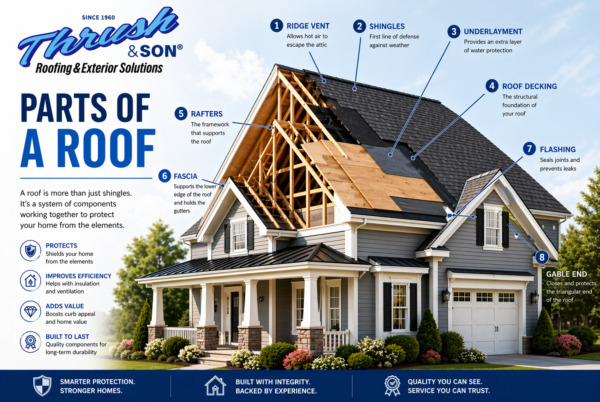
Every good manual has a parts diagram. Drip edge, underlayment, ice barrier, starter, field shingles, flashing, vents, and ridge cap all work together. When one piece is missing, the rest work harder. Homeowners who can name the parts have faster, clearer conversations about their roof with any contractor.
Ask any roofer to point to each one on your estimate. A complete system lists them all.

Teaching Homeowners Since 1960
Thrush & Son® has been family-owned since 1960, and the conversation hasn’t changed much: help homeowners understand their roof before they spend a dollar on it. Read the family story in family-owned.
We’re a GAF President’s Club Contractor with an A+ BBB rating and homeowner reviews across the Miami Valley.
Questions Homeowners Ask About Their Roof
What should every homeowner know about their roof?
Its age, the shingle brand and line, how many layers it has, how it’s ventilated, what warranty covers it, and who installed it. Those six facts answer most questions an inspector, buyer, or insurer will ask.
How long does an asphalt shingle roof last?
InterNACHI’s life-expectancy chart lists about 20 years for 3-tab asphalt shingles and about 30 years for architectural shingles. Ventilation, storms, and installation quality move those numbers up or down.
How often should a roof be inspected?
A look from the ground each spring and fall, plus a closer inspection after any major hail or wind storm, catches most problems early.
Why does attic ventilation matter to the roof?
Ventilation moves hot air out in summer and keeps the attic cold in winter, which protects shingles and reduces ice dams. GAF recommends at least 1 square foot of ventilation for every 300 square feet of attic floor, split between intake and exhaust.
What warning signs should homeowners know about their roof?
Granules piling up in the gutters, curling or missing shingles, stains on ceilings or walls, daylight in the attic, and ice dams at the eaves. Any one of them is a reason to schedule an inspection.
Is a roof warranty the same as the roof’s lifespan?
No. A warranty describes what the manufacturer or installer will cover and for how long. Real lifespan depends on installation, ventilation, and weather.
Something else on your mind? We have answers.
Fill In Your Spec Sheet With Us
We’ll inspect your roof, photograph what we find, and fill in the specs with you. Explore roofing and other exterior services.
