
Understanding warranties means reading the fine print
A warranty is not a promise that everything is covered. It is a contract, with exclusions, conditions and responsibilities on both sides. When a claim goes sideways, it usually comes down to one question: whose problem is this?
This final part of our series is about understanding warranties before you need one: the language that matters, the gray areas, and the records that make a claim go smoothly. New here? Start with Part 1: the costly mistakes that void coverage.
Series complete: this is the final part of Understanding Warranties.
Understanding warranties, one phrase at a time
Tap the gold phrases in this sample warranty to see the plain-English meaning.
LIMITED WARRANTY. Subject to the terms below, this is extended to the of the product and covers that appear within the warranty period.
This warranty does not cover damage caused by , acts of nature, or failure of components not supplied by the manufacturer.
After the initial period, coverage is based on the years of service. The sole remedy is , at the manufacturer’s option.
The owner must provide and present proof of purchase with any claim.
Sample wording for illustration. Every manufacturer’s terms are different.Defect or workmanship: who pays?
Understanding warranties starts with asking what’s excluded. Most claims land on one side of this line.
Material defects
Usually covered- Shingles that fail to seal or blister from a factory flaw
- Cracking or granule loss beyond the product standard
- Window seal failure inside the glass term
- A siding or trim finish that peels or fades beyond spec
Installation issues
Often excluded- Leaks at chimney, wall and step flashing
- Blow-offs traced to nailing or missing starter
- Water at a window from flashing or caulk
- Damage from poor ventilation or clogged gutters
Flashing at chimneys, walls and step transitions is the biggest source of roofing claim disputes. Some warranties approve the roof but still exclude flashing replacement, leaving you to pay for the most leak-prone detail out of pocket.
Understanding warranties at this level is what separates a covered leak from an expensive one. See how flashing fits the system in our post on roofing components, then ask before work starts which parts are excluded and who pays for them.
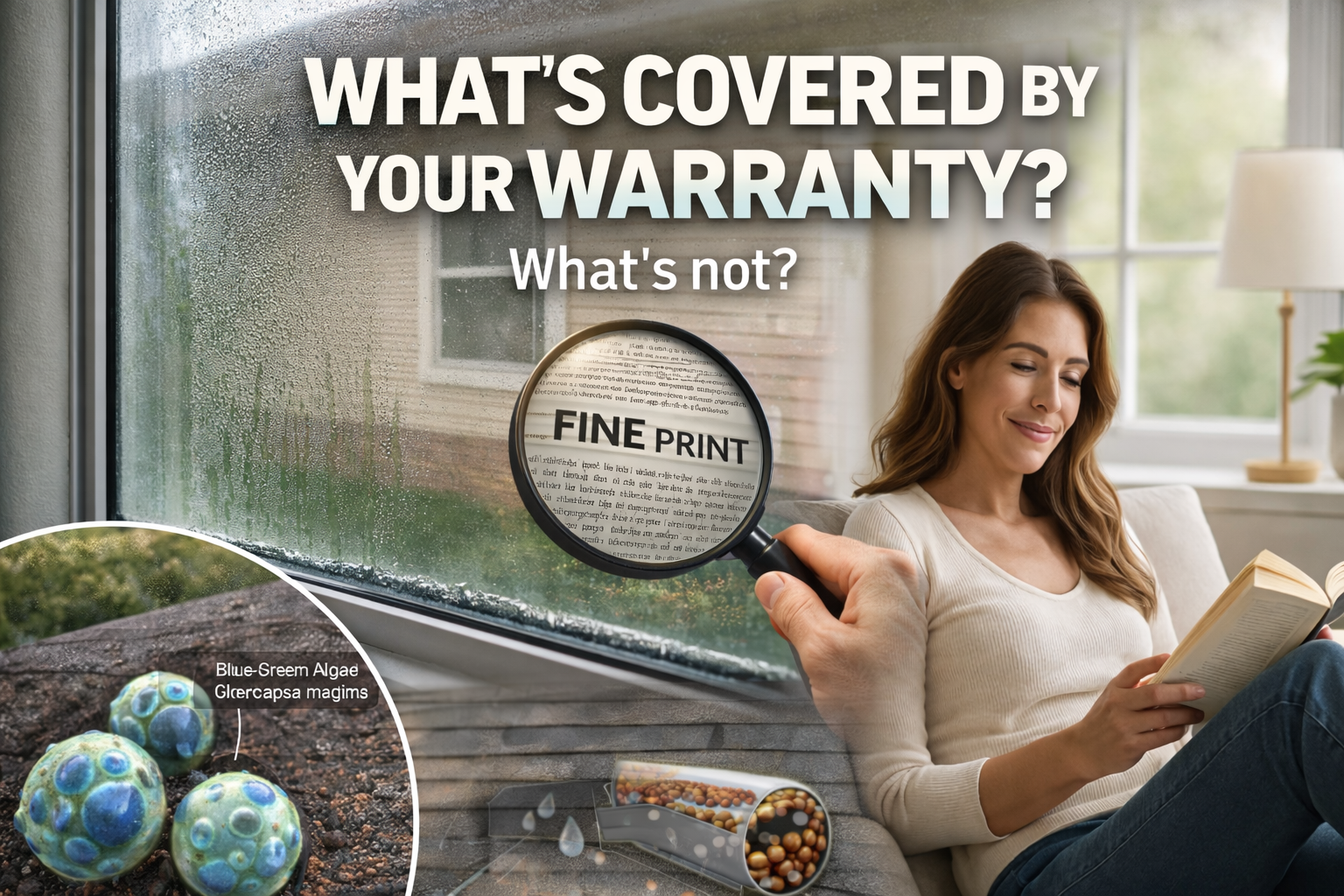
Foggy glass and seal failure
Seal failure shows up as haze between the panes that no amount of cleaning removes. The perimeter seals of the insulated glass unit hold insulating gas in and moisture out. Age, big temperature swings and constant moisture wear them down, and occasionally it’s a manufacturing defect.
For windows, glass coverage often runs on a different clock than the frame and sash. Understanding warranties before you buy replacement windows comes down to five answers.
- Q1How long is seal failure covered?Ten years is common. Some run longer, and terms can change with the glass package.
- Q2Is the warranty transferable?A transferable warranty can help when you sell, but it may need registration.
- Q3Is glass breakage included?Accidental breakage is often excluded unless you buy extra coverage.
- Q4Does it cover labor?Some cover parts only, others cover labor for a few years. Labor is often the big cost.
- Q5What upkeep is required?Finishes and hardware can carry care rules. Know them before you need them.
Three files that make claims go smoothly
Understanding warranties won’t help without proof. Claims can come up 5 to 15 years later.
Proof of purchase
Your signed contract, the final invoice and the exact product names, colors and series. A claim starts with proving what you bought and when.
Installation records
Photos during the job, the completion paperwork, any permit, and the warranty registration confirmation from your installer.
Maintenance log
Dates you cleaned gutters, had the roof checked or serviced windows. A few lines a year can answer the “neglect” question for you.

Four assumptions that cost homeowners
Understanding warranties means questioning what everyone assumes is included.
- Assumed
Flashing is part of the roof warranty.RealityIt is often treated as installation. Ask who covers it. - Assumed
Labor is included.RealityMany warranties ship material only after year one or two. - Assumed
It transfers to the next owner.RealityOnly if the terms allow it and someone registers it. - Assumed
Foggy glass is covered forever.RealitySeal coverage has its own clock, often ten years.
Understanding warranties takes the surprise out of a claim. Read the exclusions, get the workmanship terms in writing, and register everything. That habit is the heart of understanding warranties. The FTC’s plain-language guide, what you need to know about warranties, is worth a few minutes, and you can check any contractor with the Better Business Bureau.
Understanding warranties is easier with real examples. Compare the coverage levels we offer on our warranties page, including our siding warranty guide.
Understanding warranties: your questions
Straight answers to the questions about understanding warranties we hear most.
What does understanding warranties actually involve?
It means knowing what a warranty covers, what it excludes, how long each part lasts, and what you must do to keep it valid. Most surprises come from exclusions and conditions, not the headline number.
What is the difference between a manufacturer warranty and a workmanship warranty?
A manufacturer warranty covers defects in the product itself. A workmanship warranty comes from your installer and covers mistakes in how it was put on. You want both in writing.
Why are roof flashing leaks often denied?
Flashing is usually installed and shaped on site, so manufacturers often treat flashing leaks as an installation issue rather than a product defect.
Is foggy window glass covered by warranty?
Often, if it happens within the seal failure term, which is commonly ten years. Glass coverage can follow different rules than the frame and sash.
What records should I keep for a warranty claim?
Keep proof of purchase, installation records including photos and registration, and a simple log of maintenance. Store them where you can find them 5 to 15 years from now.

Built on trust since 1960
Family-owned and Miami Valley proud, Thrush & Son® handles roofing, siding, windows, doors and seamless gutters, and puts every warranty we offer in writing, because understanding warranties should never fall on the homeowner alone.
Planning a project this year? Browse exterior home upgrades or see our Dayton roofing work.
- Best of Dayton Winner 2024
- Nominee 2025 & 2026
- GAF President’s Club
- Brookville Chamber Partner of the Year
- BBB A+
