
Is Your Home Ready for Winter? The Countdown to the First Freeze
Is your home ready for the first freeze? Getting there is a lot easier in October than in January. Ohio winters swing from mild to ice storm in a week, and every small gap, clog, and loose shingle gets found the hard way.
This guide counts down to Dayton’s first freeze week by week, lets you score how ready your home is, and points out the five weak spots winter finds first, plus the upgrades that fix them for good.
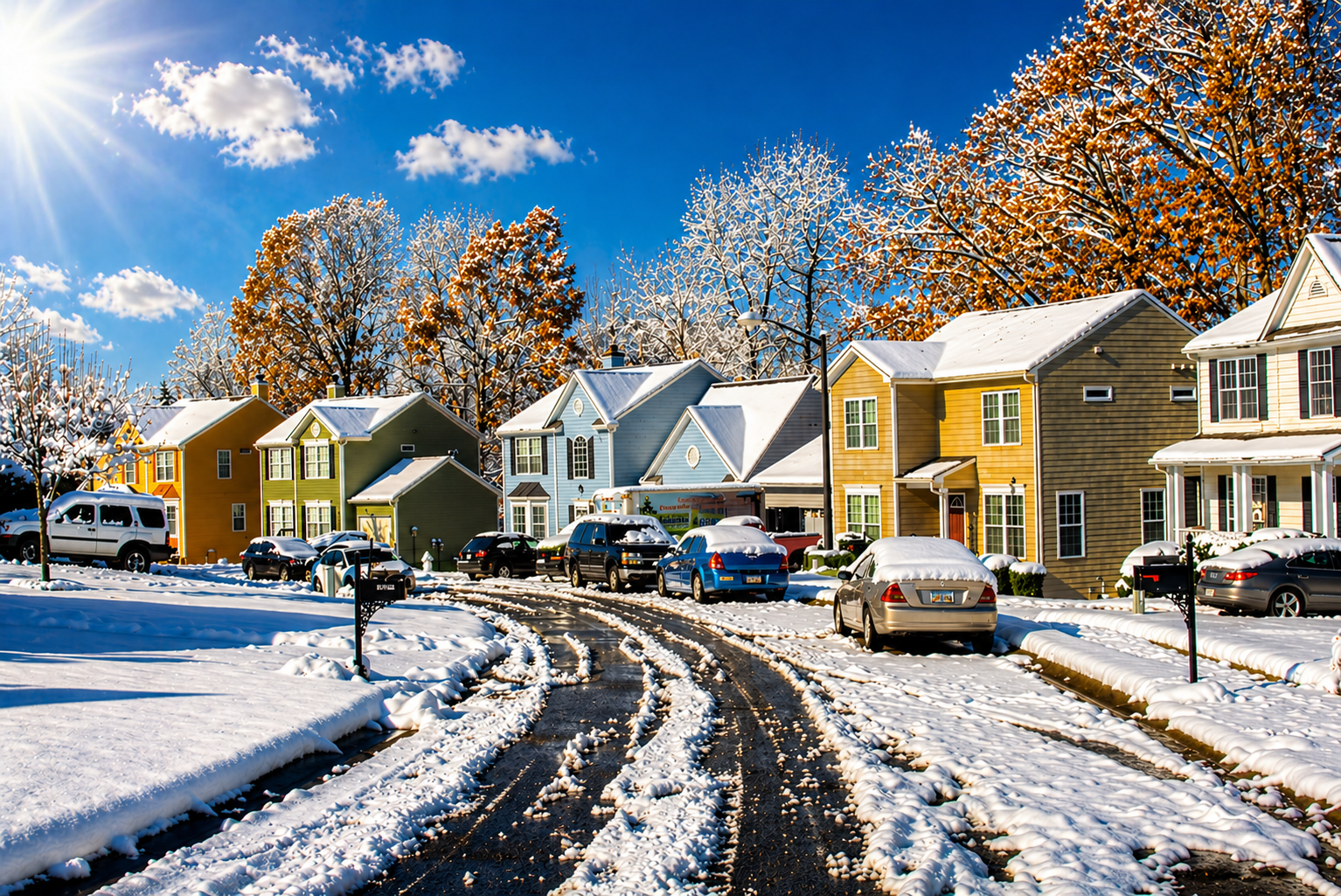
Is Your Home Ready? Your Four-Week Countdown to the First Freeze
Dayton’s normal first fall freeze is October 25, according to the National Weather Service in Wilmington. Tap a week to see what to do, starting about a month out, so the answer to “is your home ready?” is yes by freeze day.
Walk the exterior
Look at the roofline, siding seams, window frames, and door thresholds while it’s still comfortable outside.
Book any exterior work
Roofing, siding, and gutter crews fill up fast in fall. Get on the calendar before the cold does.
Trim trees and shrubs
Cut back limbs over the roof and shrubs touching siding. Ice-loaded branches snap and scrape.
Check the chimney
NFPA 211, as quoted by the Chimney Safety Institute, calls for chimneys, fireplaces, and vents to be inspected at least once a year.
Clean the gutters
After most leaves drop, clear gutters and downspouts so meltwater has somewhere to go.
Seal the small gaps
Recaulk around windows, doors, and trim. Small gaps in October become drafts in January.
Shut off outdoor faucets
Disconnect hoses, drain the lines, and close interior shutoff valves to outdoor spigots.
Store the patio
Cushions, furniture, and grills go into the garage or under breathable covers.
Watch the forecast
The National Weather Service lists October 25 as Dayton’s normal first fall freeze (1991–2020).
Walk it once more
After the first hard frost, check the attic and the roof edge for anything you missed.
Some years the freeze comes early, some years late. Starting a month out leaves room for both, and it gives you time to book help for anything bigger than a weekend job, like gutter replacement or a roof section that needs attention before snow covers it. For a full exterior walk-through any time of year, use our home exterior checklist.
Score Your Winter Readiness in 8 Checks
Check each item that’s already done. The thermometer climbs with each check, so you can see at a glance: is your home ready, or still chilly? Eight checks means you can enjoy the first snow from the couch.
The 5 Weak Spots Winter Finds First
Every Ohio winter tests the same places. To answer “is your home ready?”, start by making sure these five are tight.
Gutters
Clogs back meltwater up under the roof edge, where it can freeze into ice dams.
See fall gutter protection →Siding seams
Loose panels and open seams let cold air and moisture behind the wall.
See energy efficient siding →Windows & doors
Worn weatherstripping and cracked caulk turn into drafts and higher bills.
See entry doors →Spigots & downspouts
Water left in a hose bib can freeze and split the pipe; downspouts dumping by the house freeze into ice sheets.
See prevent water damage →4 Winter Prep Myths That Leave Homes in the Cold
Plenty of winter prep advice sounds right but costs homeowners later. Ask “is your home ready?” on a Miami Valley roof, and these four myths come up every fall.
“A new roof doesn’t need checking.”
Even new roofs collect leaves in valleys and gutters. A quick look from the ground each fall keeps a new roof ready for winter, too.
“Icicles are just pretty.”
Big icicles usually mean heat is escaping and meltwater is refreezing at the edge. That’s the start of an ice dam; see ice damage.
“Frost-proof spigots can stay hooked up.”
A hose left attached traps water in the valve and can still split the pipe. Disconnect every hose, every fall.
“Caulk can wait until spring.”
Most caulk needs mild temperatures to cure. Seal gaps in early fall, while the weather still cooperates.
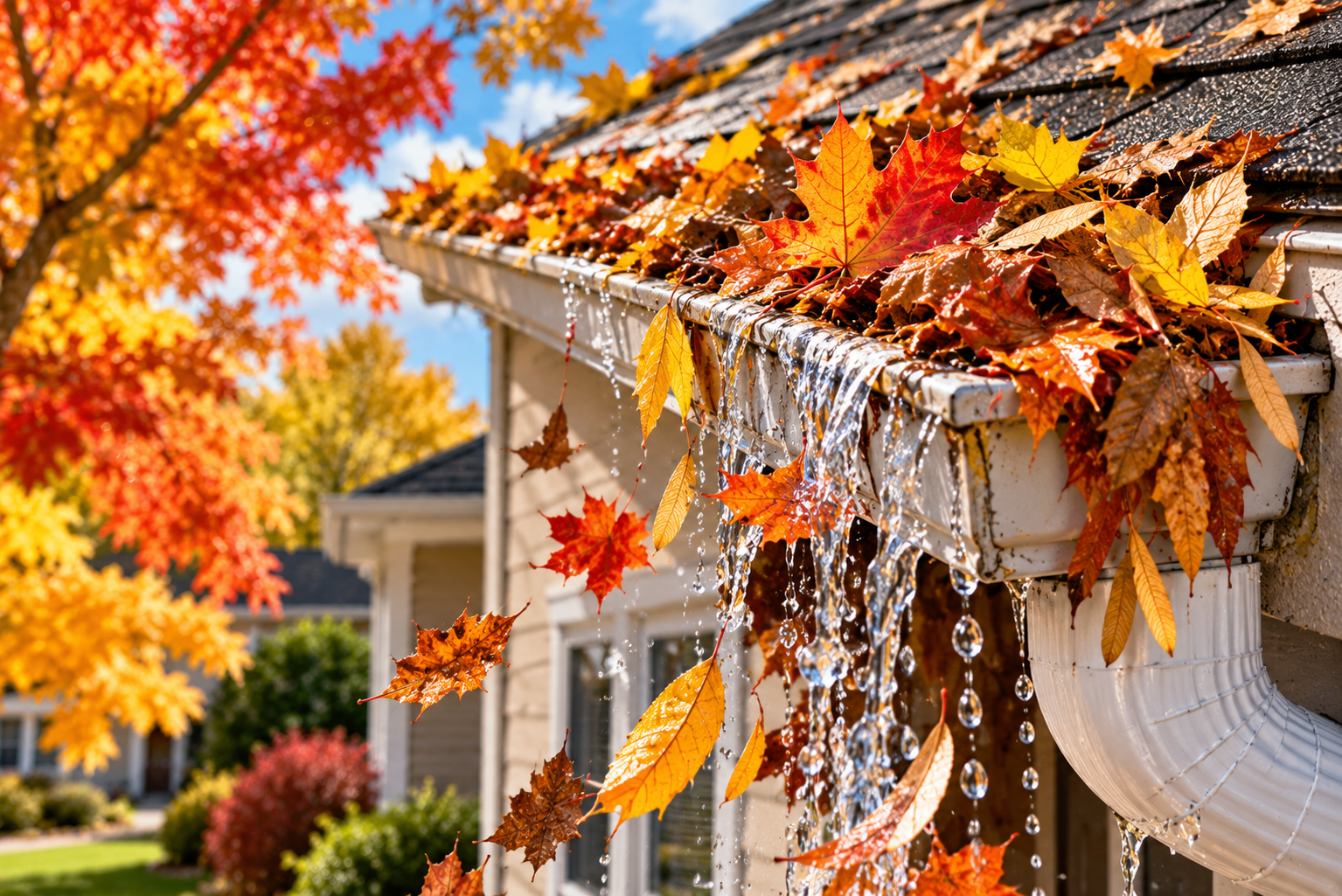
Is Your Home Ready? Start With the Gutters
If you only do one thing this fall, clean the gutters. When leaves and seeds clog them, melting snow has nowhere to go. It sits at the roof edge, refreezes, and can back up under the shingles, which is how ice damage starts.
Make sure downspouts carry water well away from the foundation, too. Water dumped next to the house freezes into slick sheets on walks and soaks the soil against basement walls. Our seamless gutter team can add guards so fall cleanup isn’t a ladder job every year, and ice dam prevention explains what happens on the roof above.
Upgrades That Answer “Is Your Home Ready?” Every Year
Checklists handle this year. These projects settle the question “is your home ready?” for the next twenty winters. They’re the reason some homes sail through January while the house next door fights drafts and leaks.
- Insulated siding. A foam backer behind each panel helps slow heat loss through the walls. See insulated vinyl siding.
- A sealed, tight roof. Leak barrier at the edges and balanced attic ventilation keep ice from becoming a leak.
- New entry doors. A modern insulated entry door seals better than an old door with tired weatherstripping.
- Replacement windows. Insulated glass and fresh seals end the drafty-window shuffle. See our windows.
- Gutter guards. Fewer clogs mean fewer ice dams and no fall ladder climb.


Sixty-Six Ohio Winters and Counting
Wilbur Thrush founded Thrush & Son in 1960. W. Allen Thrush owns the company today, and Corey Thrush is the third generation. More than 31,000 Miami Valley homeowners have trusted us, from our Brookville headquarters and offices in Troy and Lebanon.
As a GAF President’s Club Contractor, we install roofs, CertainTeed siding, Nobility windows, doors, and gutters, so the answer to “is your home ready?” stays yes year after year. Browse the project gallery and homeowner reviews.
Is Your Home Ready? Winter Questions, Answered
What homeowners ask us most every fall when they wonder, “is your home ready?”
When should my home be ready for winter?
In the Dayton area, aim to finish outdoor prep by late October. The National Weather Service lists October 25 as Dayton’s normal first fall freeze, based on 1991–2020 data. If you’re still asking “is your home ready?” in mid-October, start with the gutters.
What’s the most important winter prep task?
Clean gutters and downspouts. When they clog, meltwater backs up at the roof edge, freezes, and can force water under the shingles. It’s cheap, fast, and prevents the most expensive winter problems.
How often should a chimney be inspected?
NFPA 211 calls for chimneys, fireplaces, and vents to be inspected at least once a year, with cleaning and maintenance done as needed.
Should I shut off outdoor faucets?
Yes. Disconnect hoses, close the interior shutoff valve to each outdoor spigot if you have one, and open the outside tap to drain it, so water left in the line can’t freeze and split the pipe.
Does insulated siding help in winter?
Insulated siding adds a foam backer behind the panel, which helps reduce heat loss through the walls and stiffens the siding. See our insulated vinyl siding page.
Can Thrush & Son check my home before winter?
Yes. If you’re asking “is your home ready?”, we can answer it on site. We inspect roofs, gutters, siding, windows, and doors, then give you a written plan with prices. Many fall projects can be finished before the first freeze if you book early.
Beat the First Freeze
We’ll walk your roof, gutters, siding, windows, and doors, answer “is your home ready?” in plain terms, and give you a written plan with no pressure. See our roofing services, and ask about financing.
Call 937-833-5136 · Office: Mon–Thu 9–4:30, Fri 9–2 · Michelle, our AI assistant, answers 24/7
Follow Along
Fall projects, winter tips, and BooBoo in her favorite sweater. Meet the family here.
