
Fall Gutter Protection: Stop the Leaves Before Winter Stops Your Gutters
Fall gutter protection is one of the smartest exterior upgrades you can make before the leaves come down. Gutters look simple, but they decide where every gallon of rain goes, and once they clog, the damage spreads fast.
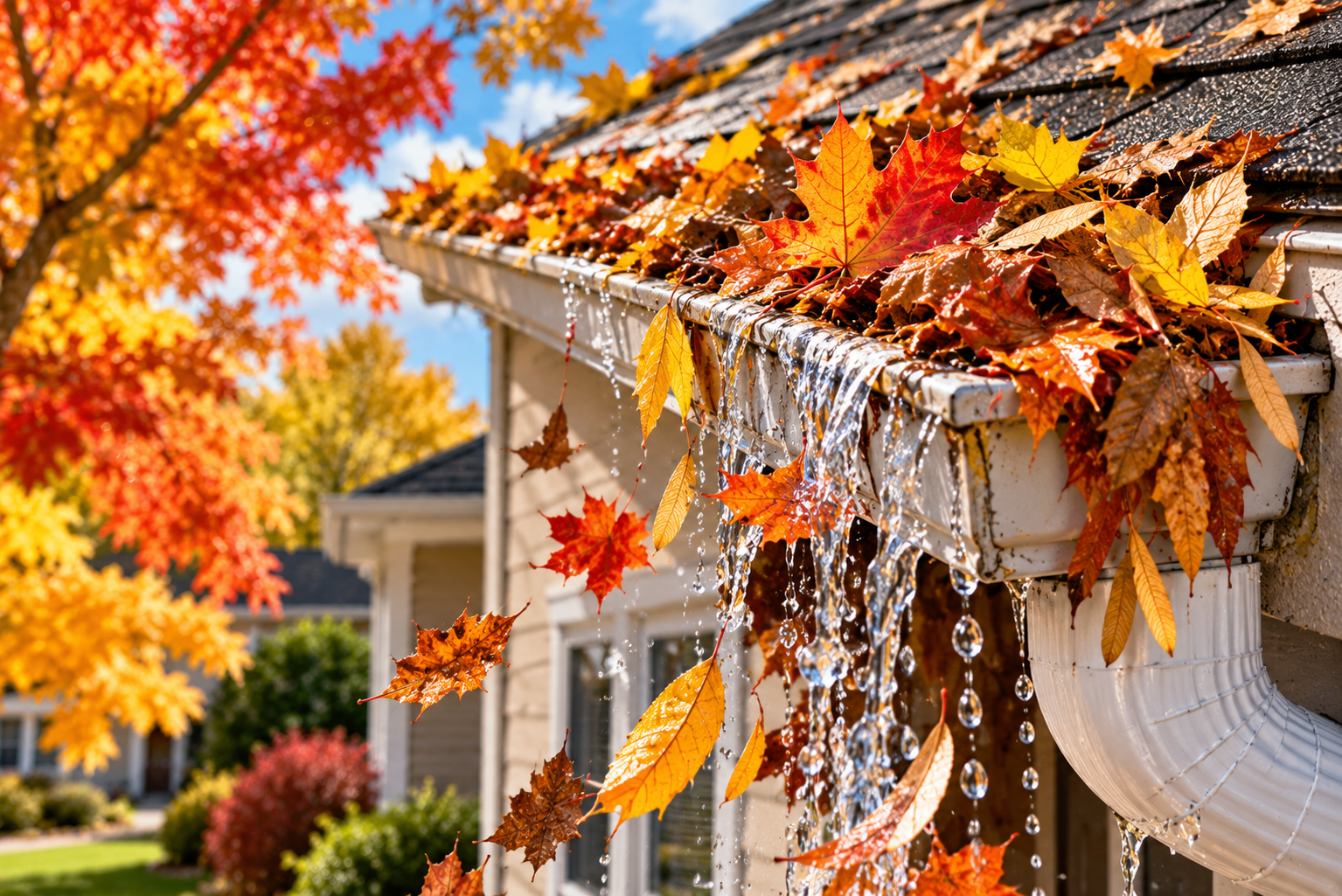
Every autumn, leaves, pine needles, and roof grit settle into the gutter channel. Water can’t drain, it spills over, and it lands exactly where you don’t want it: along the foundation, behind the fascia, and beside the basement walls. The good news is that stopping it doesn’t take a ladder every weekend.
From Leaf Drop to Spring Thaw
Fall is the hardest season on gutters, and it sets up winter. Step through five stages to compare an open gutter with one that has fall gutter protection.
A few leaves and seed pods land, and nobody notices. A light layer starts to form in the corners.
Debris lands on the guard surface and dries out. Wind clears most of it before it ever matters.
Leaves pour in by the bucket. Wet leaves mat over the outlets and the gutter fills from the bottom up.
Leaves pile on top of the mesh, not inside the trough. Rain still drops straight through to the outlet.
A heavy rain hits a packed gutter. Water sheets over the front edge, soaks the fascia, and dumps beside the foundation.
Water drains through the mesh and out the downspouts, carried away from the house the way it was designed to be.
Wet debris and standing water freeze solid. The gutter turns into an ice tray and adds weight to the hangers.
With no standing water or packed leaves inside, there’s far less to freeze. Meltwater has an open path.
Melting snow can’t drain through the frozen clog. It backs up at the roof edge and spills down the walls.
Snowmelt runs off the roof, through the guard, and down the spouts, ready for spring rain.
3 Effortless Ways to Add Fall Gutter Protection
Fall gutter protection keeps your whole drainage system working the way it was designed, from the roof edge to the ground. Here’s where to start.
Stop debris before it builds up
The first job of fall gutter protection is keeping leaves, pine needles, and shingle grit out of the trough. A quality guard blocks debris at the surface while rain drops straight through, so clogs never get a chance to form.
Manage runoff to protect the foundation
When gutters overflow, water dumps beside the house, saturating soil and pushing moisture toward the basement. Clear gutters carry it to the downspouts instead, and DOE’s Building America Solution Center recommends downspouts end at least 5 feet from the foundation.
Choose a rigid system that handles heavy rain
Fall brings downpours as well as leaves. A rigid, properly installed guard holds its shape through storms, snow load, and seasonal expansion, so it keeps working in the weather that actually tests it.
- Fewer gutter cleanings each fall
- Leaves, needles, and grit kept out of the trough
- Siding, fascia, and soffits protected from overflow
- Runoff kept away from the foundation and basement
- Better drainage in heavy storms
- An exterior that’s ready for winter

Why Fall Sets Up Winter
Clogged gutters in October become frozen gutters in December. Standing water and wet leaves freeze solid at the roof edge, add weight to the hangers, and leave nowhere for snowmelt to go when the thaw comes.
That’s why fall gutter protection is really winter protection, too. Ice dams start with heat escaping into the attic, and our ice dam prevention guide covers that side, but open, flowing gutters give meltwater a way off the roof instead of back under it.
When Should You Install It?
There’s a right time for fall gutter protection, and a plan for every other time. Pick where you are on the calendar, and we’ll show you what happens next.
September
Install now. Guards go on clean gutters before the first leaves fall, so the whole season is covered from day one.
Early October
Get on the schedule now. We’ll clean and tune up the gutters, then install the guard ahead of peak leaf drop.
November
Leaves are falling, so we clean everything out first, then install. You’ll still beat the late-fall storms and the first hard freeze.
December to February
If the weather allows, installation can still happen. If not, we’ll inspect, clear what we can, and book you for the first good stretch of weather.
Spring
Spring seeds and blossoms are their own clog. Installing now covers spring, summer storms, and next fall all at once.
Our Pick: WaterLock® Pro
The guard we install is WaterLock® Pro: stainless steel micromesh in a formed aluminum frame, rigid enough for heavy rain and fine enough to stop needles and shingle grit. Compare it with other styles in our guide to gutter protection systems.
Before any guard goes on, our crew checks the pitch of every run, tightens loose hangers, and makes sure each downspout drains freely. A guard on a sagging or leaking gutter only hides the problem, so that groundwork is part of every fall gutter protection job we do.
Not sure your gutters are ready for a guard? Start with our fall check-up in Mind in the Gutter, or see which trees cause the most trouble in Clogging Your Gutters.

Cozy Answers for Cold Weather
What homeowners ask us most when they’re planning fall gutter protection.
When is the right time to install fall gutter protection?
Ideally in September or early October, before peak leaf drop. That way the guard goes onto clean gutters and covers the whole season. Later in fall still works; we simply clean everything out first.
Will gutter guards handle ice and snow?
A rigid guard keeps leaves and standing water out of the trough, which leaves far less to freeze. It won’t stop every icicle, since ice dams start with heat escaping into the attic, but it keeps meltwater flowing when the thaw comes.
Do I still need to clean my gutters with a guard?
Much less often. Plan on a quick look each fall and an occasional rinse or brush of the guard surface, especially under pines. That’s a long way from scooping wet leaves off a ladder in November.
Can you install guards on my existing gutters?
Usually, if they’re sound, pitched correctly, and attached tightly. If they sag or leak, new seamless gutters and the guard together often make more sense. Our gutter team checks before recommending either.
How much water does my roof shed in a fall storm?
More than most people guess. The USGS puts one inch of rain over an acre at about 27,154 gallons, so a 2,000-square-foot roof sheds roughly 1,250 gallons in a one-inch storm. All of it has to fit through your gutters and downspouts, which is why a clog matters so much.
Is cleaning gutters off a ladder really that risky?
It can be. The CDC reports that ladder falls cause thousands of injuries every year, and wet leaves, cold hands, and early dark make fall the worst time to be up there. Fall gutter protection takes most of those ladder trips off your list.
What should I do about downspouts this fall?
Make sure they’re clear and that they empty well away from the house. The EPA suggests directing downspouts toward lawns or gardens where water can soak in, rather than against the foundation or onto pavement.
Planted Here in 1960
Thrush & Son® has protected Miami Valley homes through more than 60 falls, from our headquarters in Brookville and offices in Troy and Lebanon. Our crews install every seamless gutter and guard themselves, and they treat your home the way they’d want their own parents’ home treated.
See finished work in our project gallery, or check the fascia behind your gutters before winter.
Beat the First Freeze to Your Gutters
Gutter trouble rarely shows up at a convenient time. It shows up in storms, cold snaps, and the weeks nobody wants to climb a ladder. We’ll check your gutters, downspouts, and fascia, then install fall gutter protection before peak leaf drop. Written quotes, with financing available. Call 937-833-5136.
Michelle, our AI assistant, answers 24/7 · Office: Mon–Thu 9–4, Fri 9–2
Bundle Up and Follow Along
Stay warm with the Thrush family, our crews, and BooBoo all season long.
