
Casement Windows Explained: The Crank, the Seal, and the Breeze
Casement windows swing outward on a side hinge, like a door, instead of sliding up or sideways. That one difference changes how much air a window moves, how tightly it seals, and where it belongs in your home.
Homeowners usually come to us knowing they like the look. What they want to know is whether casement windows are right for a specific room, and what they give up to get the benefits. Here’s the full picture, trade-offs included, so you can decide with confidence.
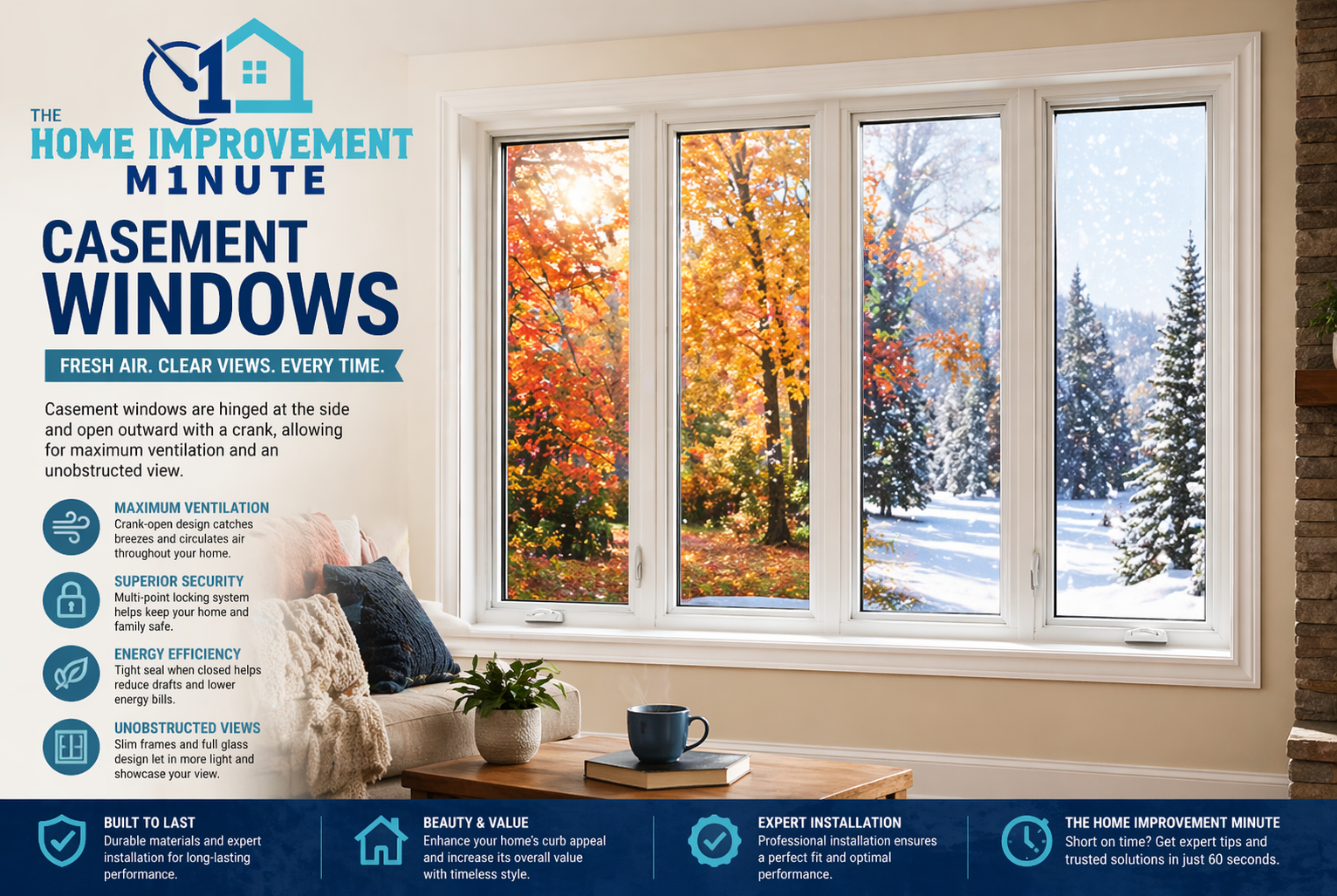
- 1Crank operatorA geared handle at the sill swings the sash out and pulls it back in. No lifting, which is why casements go where reaching is awkward.
- 2Hinge armsHinges on one side let the sash open nearly 90 degrees, so the whole opening moves air, not half of it.
- 3Compression sealClosing and locking pulls the sash tight against the weatherstrip on all four sides, the way a car door seals.
5 Benefits of Casement Windows
- 01Full-opening airflowThe entire sash opens, roughly twice the ventilating area of a double-hung or slider the same size, which moves only one half at a time.
- 02A tighter air sealCompression weatherstripping and multi-point locks make casements among the least leaky operable windows you can buy. Compare the air leakage rating on the NFRC label.
- 03Clear, unbroken viewsNo meeting rail across the middle. One pane of glass from frame to frame, which is why casements often flank a picture window.
- 04Easy reachA crank turns where a sash won’t lift: over a kitchen sink, behind a deep counter, above a tub.
- 05Cleaning from insideWith enough clearance on the hinge side, you can reach the outside glass through the opening on most units. Ask about wash-mode hinges if it matters to you.
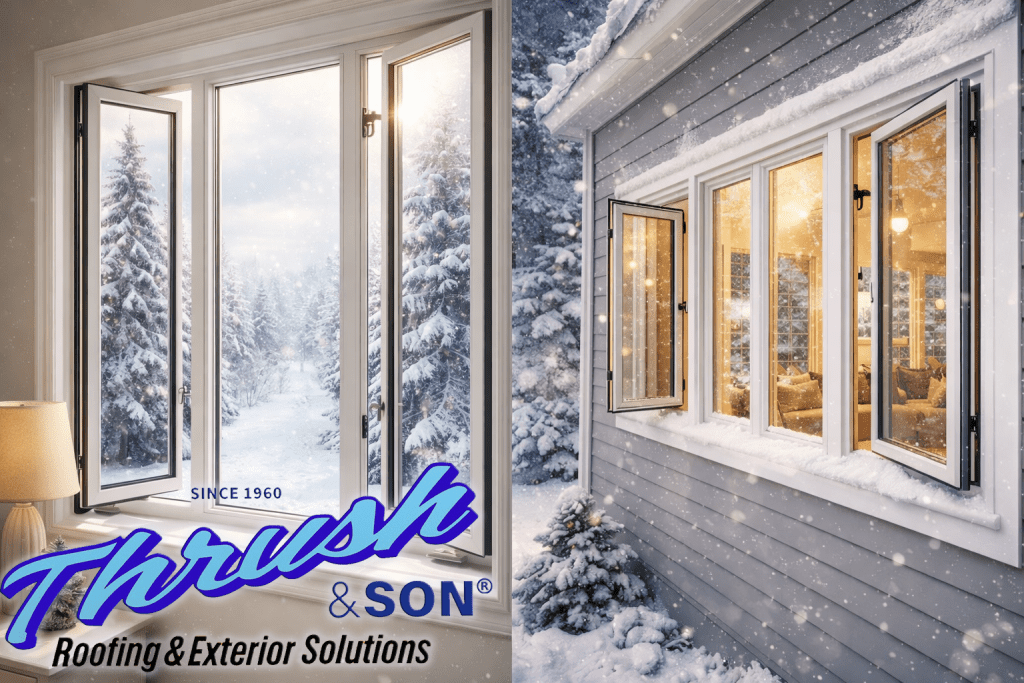
Efficiency comes from the whole package, not the style alone. Look for casement windows with low-E glass, argon fill, and a warm-edge spacer, then check the U-factor and air leakage on the NFRC label. Certified models are listed by ENERGY STAR, and our guide to argon gas in windows explains what’s sealed between the panes.
Hinge It Right and It Catches the Breeze
An open casement sash works like a scoop, catching wind that slides along the wall and turning it into the room. Which side the hinge goes on decides whether casement windows scoop air in or block it. Choose where your breeze comes from.
The sash opens toward the oncoming air, so the glass catches the breeze and turns it inside. Hinged on the left, the same sash would shield the opening.
In most of the Miami Valley, summer breezes tend to come from the south and southwest. Stand outside the window, face the house, and note which side that is.
Mirror the rule: put the hinge on the side the breeze is heading toward, so the open sash faces into the wind and funnels it through.
On a pair of casements, hinging them away from each other (French style) catches wind from either direction.
Left and right are as you stand outside facing the house. The gold dot marks the hinge. Confirm handing with your installer before ordering.
Casement vs. Double-Hung vs. Slider
Casement windows aren’t the right answer for every opening. Here’s how they compare with the two styles we install most often, followed by the trade-offs worth weighing before you order.
| Casement | Double-hung | Slider | |
|---|---|---|---|
| Ventilating area | Nearly the full opening | About half | About half |
| Air seal when locked | Compression, very tight | Sliding seal | Sliding seal |
| View | One clear pane | Meeting rail across the middle | Center rail |
| Reach over counters | Crank, easy | Lift, hard | Slide, moderate |
| Screen location | Inside | Outside | Outside |
The trade-offs worth weighing
None of these is a reason to avoid casement windows. They’re reasons to plan where they go. We see the same three surprises most often on jobs where the style was chosen from a catalog instead of from the house itself.
- Swing spaceThe open sash projects outward. Near a deck, walkway, or patio, it can be a head-height hazard.
- Screens go insideThe screen sits on the room side, so it’s visible from indoors. No window air conditioners either.
- Moving partsOperators and hinges are hardware that wears. They last for decades with care, and can be swapped without replacing the window.
One more consideration is size. Because the whole sash hangs from one side, very wide casement windows put a lot of weight on the hinges. Past a certain width, an awning unit (hinged at the top) or a pair of casements flanking a picture window is the stronger design, and it usually looks better too.

Where Casement Windows Earn Their Place
Over a kitchen sink, beside a picture window, in a bathroom where you want air without opening a big sash, and anywhere a breeze runs along the house. Bedrooms work too, as long as the clear opening meets egress code. See how each room compares in our replacement window buying guide.
Keep the crank turning
Once a year, open each sash, wipe the track, and put a drop of silicone lubricant on the hinge arms and operator gear. Never force a stiff crank; that’s how gears strip. On most casement windows, the hardware can be replaced on its own, so a worn operator is a part, not a new window.
Family-Owned and Installing Since 1960
Thrush & Son® has installed casement windows, roofing, siding, and doors on Miami Valley homes for three generations. We measure every opening, plan hinge sides with you, and stand behind the work long after the crew leaves. See our full replacement windows lineup.

See Casements on Your Own Walls Before You Decide
We’ll walk your home, check each opening and the way breezes move around it, and show you where casement windows fit and where another style does the job better.
- GAF President’s Club Contractor
- Best of Dayton 2024 Winner · 2025 & 2026 Finalist
- BBB Accredited A+
Michelle, our AI assistant, answers 24/7
Office: Mon–Thu 9–4, Fri 9–2
