
Ice Dams Start in Your Attic, Not on Your Roof
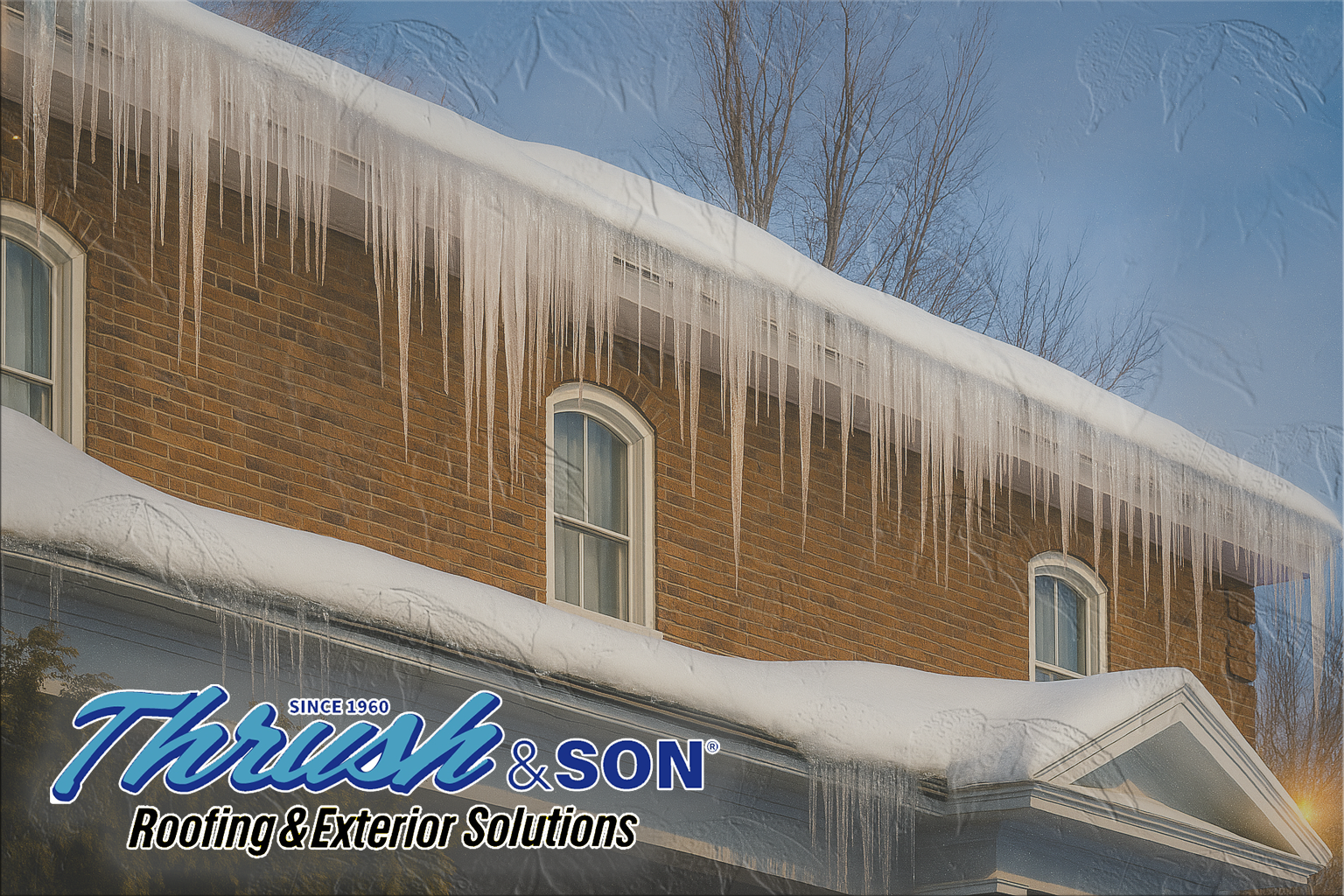
Real ice dam prevention starts with an uncomfortable truth: the icicles hanging off your gutters are a symptom, and the problem is inside the house. Warm air leaking into the attic heats the roof deck, melts the snow above it, and sends that water down to the cold overhang, where it freezes into a dam.
Most ice dam advice treats the ice: heat cables, roof chipping, gutter guards. We’ve walked Miami Valley attics since 1960, and we’re going to show you how to stop the ice from forming at all. That’s ice dam prevention that lasts. Here’s the science, the risk, and the cause-first plan.
The Ice Dam Risk Lab
You can’t control the weather. You can control the attic. Pick an attic condition and a Miami Valley winter to see how the roof deck warms, how the ice builds, and what ice dam prevention move matters most.
Escaping heat melts the bottom of even a thin snow layer. Expect icicles and a small ridge at the eaves.
Top move: Start air sealing now; it’s the cheapest, biggest fix.
Heat from below plus sun from above produces steady meltwater that refreezes overnight at the cold overhang.
Top move: Rake the lower few feet of snow and plan attic work before next winter.
Weeks of melt and refreeze build a thick dam. Water backs up under shingles and into walls and ceilings.
Top move: Watch ceilings near outside walls and call a pro at the first stain.
Insulation slows conducted heat enough that light snow rarely melts from below.
Top move: Air seal the attic floor to finish the job.
Air leaking through the insulation still warms spots on the deck, especially above bathrooms and lights.
Top move: Target the leaks: lights, bath fans, top plates, and the hatch.
Long cold spells expose every leak. Small warm spots become ice ridges over weeks.
Top move: Seal the leaks, and make sure a leak barrier is under the shingles.
The roof deck stays close to outdoor temperature, so snow melts only from the sun.
Top move: Keep gutters and downspouts clear.
Sun-driven melt runs off a cold, even roof instead of refreezing behind a ridge.
Top move: Nothing to fix. Clear downspouts after storms.
Even a well-built roof can see some ice in extreme winters. The leak barrier is the backstop.
Top move: Rake heavy snow from the eaves and let the ice dam prevention system do its job.
Illustration of typical outcomes. Roof pitch, sun exposure, and shading change results on any given house.
7 Ice Dam Prevention Moves, Ranked by What Matters
Most guides list ice dam prevention tips as equals. They aren’t. The University of Minnesota Extension identifies air leakage as the leading cause of ice dams, so the plan starts there.
Stop heat from reaching the roof deck
- 1Air seal the attic floorAir leakage is the leading cause of ice dams. Seal around lights, wires, plumbing stacks, top plates, and the attic hatch before anything else. It’s the foundation of ice dam prevention.
- 2Insulate to the targetIn Dayton’s climate zone, ENERGY STAR recommends R49 to R60 in the attic. Once leaks are sealed, insulation slows the heat that’s left.
- 3Balance the ventilationSoffit intake and ridge exhaust keep the deck close to outdoor temperature. With heat loss controlled, only modest ventilation is needed.
- 4Kill the hidden heat sourcesBath fans venting into the attic, leaky ductwork, and gaps around chimneys all warm the deck in spots.
Keep water out if ice forms anyway
- 5Leak barrier at the eavesSelf-adhering membrane under the shingles from the roof edge to at least 24 inches inside the exterior wall, as the residential code requires where ice damming is a known risk.
- 6Clear gutters and downspoutsClogged gutters don’t cause ice dams, but they hold ice at the edge and make a bad dam worse.
Find problems while they’re cheap
- 7Get a cold-season inspectionMelt patterns on a snowy morning, frost on attic nails, and stains near outside walls tell a trained eye exactly where heat is escaping, so ice dam prevention targets the right spots.
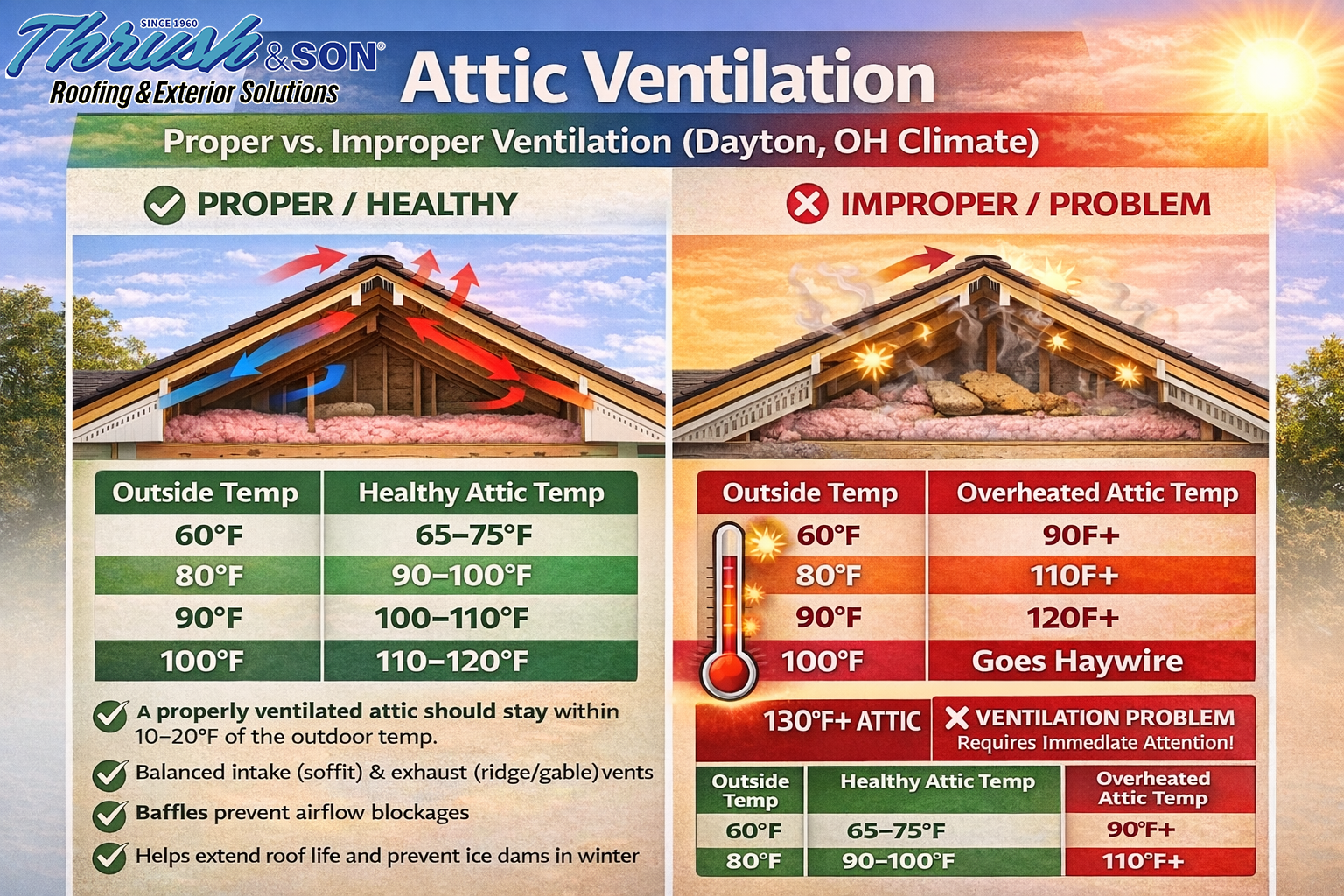
Notice what’s on top of the list: none of it happens on the roof. Ice dam prevention is attic work first. Sealing gaps where warm house air escapes is usually the least expensive step and the one with the biggest payoff, and it makes every inch of insulation work harder.
Go deeper with our guides to attic ventilation and cellulose insulation, including how burying soffit vents without baffles can make ice dams worse. The Department of Energy’s Energy Saver covers air sealing and insulation for the whole house.
5 Ice Dam Myths We Hear Every Winter
Bad advice costs Dayton homeowners every January. Here’s what ice dam prevention really requires, and what doesn’t work.
Already Have an Ice Dam?
Ice dam prevention is a summer-and-fall project, but if a dam has already formed, the goal is to get water off the roof without wrecking the shingles. Here’s how to handle it safely.
Do
- Rake snow off the lower few feet of roof from the ground
- On a mild day, run tap water from a hose to open a drain channel, working up from the lower edge
- Catch drips inside and photograph any stains
- Call a roofer if water is coming in
Don’t
- Chip or hammer the ice
- Climb an icy ladder or roof
- Use rock salt, which harms shingles, metal, and plants
- Assume it’s fixed when the ice melts

If ice dams keep coming back, the leak barrier and drip edge at your eaves are your last line of defense. When it’s time to reroof, we install self-adhering leak barrier from the roof edge to at least 24 inches inside the exterior wall, then fix the attic so it rarely has to work. See our Dayton roofing services.
Ice Dam Questions, Answered
What is the best way to prevent ice dams?
Effective ice dam prevention keeps the roof deck cold and even. That means air sealing the attic floor first, insulating to R49 to R60, and balancing soffit and ridge ventilation, with a leak barrier at the eaves as a backstop.
Do gutter guards or heat cables stop ice dams?
No. They can help water move at the edge, but neither addresses the heat escaping from your house, which is what creates the meltwater in the first place.
Should I chip ice off my roof?
No. Chipping and hammering damage shingles and gutters. Rake snow from the lower roof from the ground, and if water is leaking inside, call a professional. For lasting ice dam prevention, fix the attic after the season.
Will a new roof stop ice dams?
Only if the attic is fixed too. A new roof is the ideal time to add a leak barrier and ridge vent, but the air sealing and insulation below decide whether ice forms, so pair any reroof with ice dam prevention in the attic.
Does homeowners insurance cover ice dam damage?
Many policies cover sudden interior water damage from ice dams but not the ice itself or long-term neglect. Check your policy and document damage right away.

Winter-Tested Since 1960
Wilbur Thrush founded Thrush & Son® in 1960, and three generations later we still read a snowy roof the way a doctor reads an X-ray. Melt lines show where heat escapes; icicles show where it pools. Ice dam prevention is how we keep roofs dry long after winter ends.
Stop Next Winter’s Ice Dams Before the First Snow
We’ll inspect your attic for air leaks, insulation depth, and ventilation balance, check the eaves for leak barrier, and give you a written ice dam prevention plan in order of payoff.
- GAF President’s Club Contractor
- Best of Dayton 2024 Winner · 2025 & 2026 Finalist
- BBB Accredited A+
Michelle, our AI assistant, answers 24/7
Office: Mon–Thu 9–4, Fri 9–2
