
You Finally Bought a House… What Improvements Come First?
Bought a house? Congratulations. The big day finally came. Whether your new place is move-in ready or a fixer-upper, one thing is always true: every home needs improvements sooner or later. Some are urgent and some can wait, but it’s never too early to plan.
A little strategy now saves money later and makes your home more comfortable every season. Below, run the New-Owner Check-Up to sort your list, then see the six upgrades we recommend in the order they usually belong.

The New-Owner Check-Up
Grab your inspection report, or just walk the house. Check anything you’ve noticed, and watch your to-do list sort itself from “protect it now” to “enjoy it when you’re ready.” It’s how we’d triage any house you just bought.
Move-In Ready or Fixer-Upper?
How you plan depends on what kind of house you bought. A house that just sold as move-in ready still has a to-do list; it’s just a longer runway.
Protect what’s working
- Find out the age of the roof, windows, and siding so nothing surprises you.
- Keep gutters clean and downspouts pointed away from the foundation.
- Budget a little each year toward the next big item, usually the roof.
- Live in it for a season before changing anything cosmetic.
Fix the envelope first
- Stop water before anything else: roof, flashing, gutters, and siding gaps.
- Seal the drafts next: windows, doors, and attic insulation.
- Finish the outside before the inside, so new paint and floors stay protected.
- Phase the work so each project protects the one after it.
6 Upgrades to Consider After You Bought a House
These are the improvements that protect the structure, boost everyday comfort, and lift curb appeal, listed in the order they usually belong. Each one carries a tag that matches its row in the check-up.
 Now
Roofing
Your home may not need a new roof right away, but once you’ve bought a house you need to know the roof’s age, condition, and remaining life. It’s the system that protects everything else; if it fails, everything underneath is at risk.
Architectural shingles with algae resistance and strong wind warranties are a reliable choice for most homes. Not sure where yours stands? Our roofing team will walk it and tell you plainly what you have and how long it should last.
 This year
Windows
If you’ve bought a house with older windows, replacing them is one of the fastest ways to improve comfort. Modern vinyl replacement windows cut drafts, quiet outside noise, and keep temperatures steadier, with features like insulated frames, gas-filled glass, and better weatherstripping.
If the whole house isn’t in this year’s budget, start with the rooms you use most and the sides that take the most sun and wind. They lift curb appeal fast, too, with interior and exterior color and woodgrain options. The U.S. Department of Energy explains how window efficiency works, and the ENERGY STAR label is the quickest way to compare. See our replacement windows.
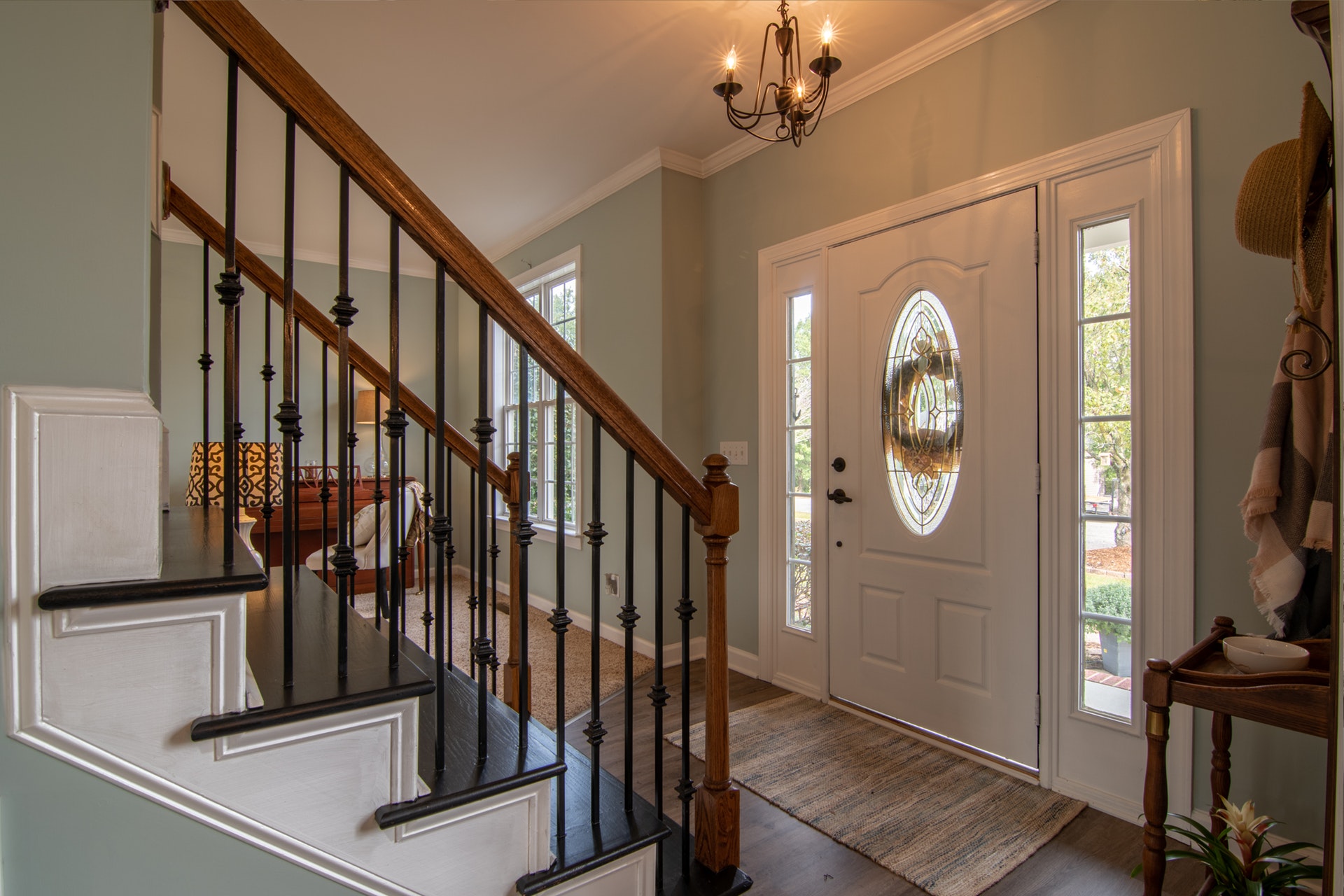 This year
Front entry door
The entry door is your first impression and a major security and efficiency point. If you bought a house with a worn, drafty, or dated door, a fiberglass entry system adds strength, insulation, and curb appeal in one move.
Quality fiberglass doors resist dents and hold their finish in sun and weather far better than wood. It’s an upgrade that feels worth it every single time you walk up to the house. Explore our entry doors.
 1–3 years
Vinyl siding
Bought a house with peeling paint or a never-ending maintenance list? Vinyl siding replaces the repaint cycle with a clean, consistent exterior that only needs an occasional rinse.
For homeowners who bought a house and want it to look new without a yearly to-do list, siding is one of the most satisfying upgrades. Compare the looks in our guide to vinyl siding styles, then see our siding replacement options.
 When ready
Decking
Once you’ve bought a house with a backyard, a deck is where weekends happen: cookouts, quiet mornings, and long summer evenings. Material choice matters most, because upkeep and lifespan vary widely.
Composite decking and vinyl railings cut maintenance and stay sharp longer than bare wood. Read our take on composite decking before you pick.
 When ready
Patio covers and shade
Shade changes everything. A patio cover or awning makes outdoor space usable on the hottest days and protects furniture from harsh sun.
It’s a simple way for anyone who just bought a house to create a backyard destination without a major remodel. For more ideas, see our guide to outdoor living spaces.
Your First Season, Step by Step
Not every smart move costs money. These four steps help anyone who just bought a house learn it before spending a dime on it, and they make every future quote easier to judge.
- Day 1
Change the locks and find the shutoffs
Know where the main water valve, gas shutoff, and electrical panel are before you need them.
- Week 1
Reread the inspection report
Sort every note into “now,” “this year,” and “someday.” Our check-up above does the same.
- Month 1
Gather the paperwork
Ask the seller for roof, siding, and window warranties and receipts. Some manufacturer warranties transfer to a new owner, often with a registration deadline.
- Season 1
Watch the house in the weather
After the first big rain, check gutters, downspouts, the attic, and the basement. The house will tell you what it needs.
Want help keeping up with it all? Our home maintenance plans put the seasonal checks on a schedule, and our gutter team can make sure that first big rain goes where it should.
Keys to the Common Questions
What people ask us most in the first year after they bought a house.
What should I fix first after buying a house?
Once you’ve bought a house, start with anything that lets water in or threatens the structure, which usually means the roof, gutters, and flashing. Then tackle comfort and security items like windows and doors, and save cosmetic and outdoor projects for later.
Should I replace the roof before I move in?
Only if it’s leaking or near the end of its life. Many roofs have years left. Get it inspected, learn its age, and plan the replacement on your schedule instead of after a storm.
How can I find out how old my roof is?
Start with the seller’s disclosure and your inspection report. Old receipts, warranty paperwork, or building permit records often show the install date. If none of that exists, a roofer can usually estimate the age and remaining life from the shingles, flashing, and decking.
Do roof and siding warranties transfer to a new owner?
Sometimes. It depends on the manufacturer and the warranty, and many require the transfer to be registered within a set time after the sale. Ask the seller for every warranty document at closing.
Can I finance improvements on a home I just bought?
Yes. Our home improvement financing starts with a soft credit check that won’t affect your score, so you can see real monthly options before you decide what to tackle first.
Your New Neighbors Since 1960
Wilbur Thrush started Thrush & Son® in 1960, and three generations later we’ve helped more than 31,000 homeowners across Dayton and the Miami Valley. If you just bought a house here, chances are we’ve worked on your street. Browse the project gallery, and before you hire anyone, read how to keep your home improvement dream from turning into a nightmare.
- President’s Club Contractor
- Best of Dayton 2024 Winner
- 2025 & 2026 Finalist
- BBB Accredited A+
Our Housewarming Gift to You
Just closed? We’ll walk the roof, gutters, windows, doors, and siding, then hand you a written rundown of what’s solid, what to watch, and what to plan for. No pressure, just a clear picture of the house you just bought. Ask about financing with a soft credit check. Call 937-833-5136.
Schedule Your Check-UpSee Roofing OptionsMichelle, our AI assistant, answers 24/7 · Office: Mon–Thu 9–4, Fri 9–2
