
Cozy All Winter: Choosing Siding That Stands Up to Ohio Cold
Choosing siding for cold climates starts with one question: what happens to your walls when it’s 5°F outside and 70°F in the living room? In the Miami Valley, that isn’t a rare event. It’s January.
The right siding keeps heat in, shrugs off a frozen snowball, handles freeze-and-thaw cycles, and still looks great when the snow melts. Below, we put the options through five winter tests, compare materials, and show where cold really gets into a house.
Is Dayton a Cold Climate? Yes, and It Matters for Siding
Building codes divide the country into climate zones. According to OpenEI, all four counties we serve sit in IECC climate zone 5A:
The Department of Energy’s Building America program defines a cold climate as 5,400 to 9,000 heating degree days and matches it to IECC zones 5 and 6. So when we talk about siding for cold climates, we’re talking about your house: long heating seasons, hard freezes, and plenty of freeze-thaw days in between.
6 Signs Your Siding Lost the Winter Battle
Before shopping for siding for cold climates, take a spring walk around the house. Winter leaves clues, and these are the ones we look for first.
Two or three of these on an older home usually means it’s time to talk about replacement with siding for cold climates. One isolated crack may just need a panel swapped. Either way, a straight answer beats guessing, and we’re glad to take a look.
5 Easy Winter Tests for Siding for Cold Climates
Every exterior in Ohio gets the same five-part exam each winter, and siding for cold climates has to pass all five. Tap a mitten to see what each test does to your walls, and what passes it.
Notice a pattern? Three of the five tests are decided by what’s behind and around the panels: insulation, house wrap, flashing, gaps, and clearances. That’s why siding for cold climates is as much about installation as it is about the product on the truck.
Comparing Siding for Cold Climates, Material by Material
Here’s how the common options handle an Ohio winter. No single product wins every category, but some make far better siding for cold climates than others. Pick a sled to compare.
Insulated vinyl
- Insulation
- About R-2 and up to R-3 or R-4, per the Polymeric Exterior Products Association. Certified products must test at R-2.0 or higher.
- Cold impact
- Foam backing supports the panel and adds impact resistance.
- Upkeep
- Color is built in, so there is no repainting schedule.
Standard vinyl
- Insulation
- Many siding materials, hollow vinyl included, rate below R-1.
- Cold impact
- Hollow panels can crack when struck in deep cold; thicker panels help.
- Upkeep
- Low: an annual rinse and a look at the bottom course.
Fiber cement
- Insulation
- Rated low on its own; it needs insulation behind it.
- Cold climates
- Manufacturers make cold-climate versions. James Hardie’s HZ5 line is built for freezing temperatures, seasonal swings, snow, and ice.
- Upkeep
- A painted finish that will eventually need attention.
Steel
- Insulation
- Thin on its own, like most cladding; plan insulation separately.
- Cold impact
- Doesn’t get brittle in the cold, though hail can dent it.
- Upkeep
- Factory finish. See our steel siding options.
Why do we lean toward insulated vinyl? Because it’s the only option on this list that adds insulation itself, and the Polymeric Exterior Products Association guide explains how that layer counts toward a home’s whole-wall performance. It’s also why we built the energy efficient siding guide around it. Want to see the panels up close? Visit our insulated vinyl siding page.
Before and After: Real Miami Valley Siding Projects
Charts and specs only go so far. Here’s what new siding looks like on real homes in our area. Look from left to right: same house, same lot, a completely different first impression, and walls that are ready for the next January. That’s the real promise of siding for cold climates: it looks better and works harder.
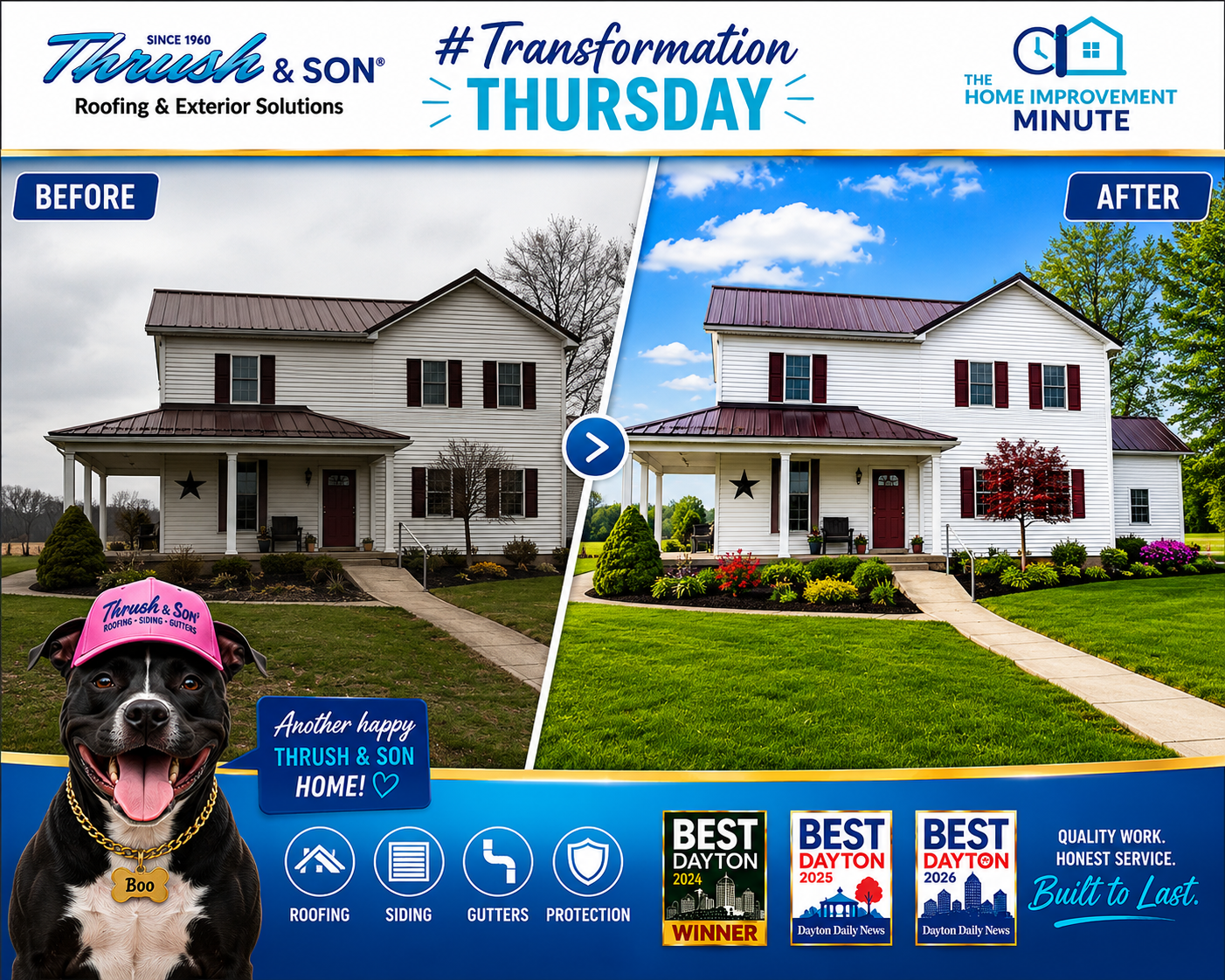
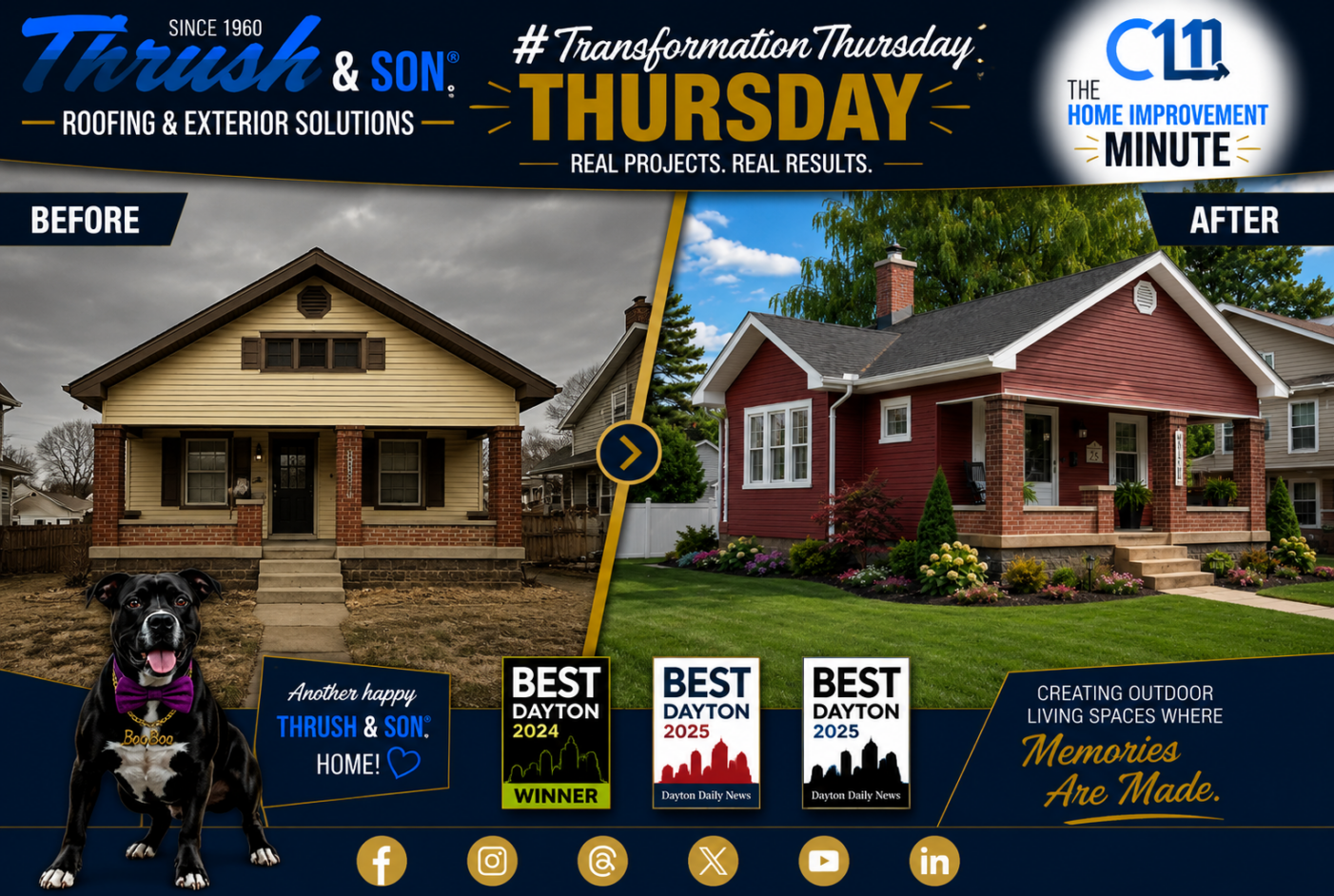
Want more siding for cold climates inspiration? See more in our project gallery, and follow along on Thursdays for new transformations on our social channels below.
Where the Cold Gets In
Even the right siding for cold climates is one piece of a warm house. Tap a snowflake to see the five places winter sneaks inside, and what fixes each one.
Walls
Studs bridge heat straight outside. Continuous insulation, like insulated siding, wraps the whole wall instead of just the cavities. Read more in our insulated siding guide.
Attic
Warm air rises and leaks out up top. ENERGY STAR estimates an average 15% savings on heating and cooling by air sealing and adding insulation in attics, crawl spaces, and basements. It also helps you prevent ice dams.
Windows
Old glass and worn seals turn windows into cold panels. See which ENERGY STAR 7.0 windows fit our northern zone.
Doors
Gaps around an old entry door can feel like an open window. New entry doors with good weatherstripping close that draft.
Foundation band
The rim joist where the house meets the foundation is a classic leak point. Sealing it from inside pairs well with new siding outside.
The takeaway: siding for cold climates works best as part of a plan. Pair it with attic air sealing, tight windows, and a well-sealed door, and the whole house gets warmer, not just one wall.
Can You Install Siding for Cold Climates in Winter?
Yes. Siding for cold climates goes up year-round in Ohio, but cold weather changes the installation rules. Panels are stiffer, they shrink in the cold, and they’ll grow again in July.
Even premium siding for cold climates fails when these details are wrong. The problems show up months later as buckling, waves, and loose laps. Our guides to vinyl siding installation problems and vinyl siding durability show what to look for.
Your Siding for Cold Climates Shopping Checklist
Bring this list to every estimate. Good answers to all eight mean you’re buying siding for cold climates that will actually perform like it, not just a panel with a nice brochure.
- ✓Ask whether the product is certified insulated siding for cold climates with a tested R-value.
- ✓Ask how the installer handles gaps and nailing in cold weather.
- ✓Confirm house wrap and window flashing are included, not optional extras.
- ✓Ask about clearance at the bottom course and where gutters drain.
- ✓Get the panel thickness and warranty in writing.
- ✓See the color in daylight, on a real wall, before you choose.
- ✓Ask how trim, soffit, and fascia tie into the new siding.
- ✓Check the contractor’s track record, reviews, and insurance.
The checklist works for any contractor, including us. If you want help comparing estimates side by side, read how we approach roofing and siding quotes: products by name, scope in writing, and no high-pressure sales.
Comfort You Can Feel, Siding You Can Trust
The payoff from siding for cold climates isn’t only on the energy bill. It’s the bedroom over the garage that finally stays warm, the living room without a chilly wall, and an exterior that looks fresh in every season. Pick a look in our siding colors guide.
Thrush & Son® has sided Miami Valley homes since Wilbur Thrush started the company in 1960. Today we install CertainTeed siding, including CertainTeed insulated siding, and back every job with a family name. Check our BBB profile, read homeowner reviews, and meet us in who we are.
Siding for Cold Climates: Your Questions, Answered
What is the right siding for cold climates?
For most homes in our area, insulated vinyl siding is the strongest all-around choice for cold climates. It adds continuous insulation over the studs, resists impact better than hollow vinyl, and never needs paint. Fiber cement and steel can also work when they are installed with proper insulation behind them.
Is Dayton considered a cold climate?
Yes. Montgomery, Miami, Greene, and Warren counties are all in IECC climate zone 5A, according to OpenEI. The Department of Energy’s Building America program treats zones 5 and 6 as its cold climate.
Can vinyl siding crack in the winter?
It can. In intense cold, standard vinyl gets brittle and a hard hit can crack it. Foam-backed insulated siding and thicker panels hold up better. Our vinyl siding durability post explains why.
Can siding be installed in the winter?
Yes, with adjustments. Installers leave a 3/8 inch gap at joints below 40°F instead of 1/4 inch, per the Vinyl Siding Institute, and take care cutting stiffer cold panels. Mistakes here cause the installation problems homeowners notice in summer.
How much does insulated siding add in R-value?
Industry testing puts insulated vinyl at about R-2 and up to R-3 or R-4, and certified products must reach at least R-2.0. That layer covers the studs, which cavity insulation can’t.
Will new siding lower my heating bill?
Siding for cold climates can help, especially on older homes with little wall insulation. The biggest savings usually come from treating the whole house: attic, air sealing, windows, doors, and walls together.
Which siding do you install?
We install CertainTeed siding, including CertainTeed insulated siding, along with steel siding. Compare colors and profiles in person at our Exterior Design Center.
Get Your Home Ready for Next Winter
We’ll walk your home, check the walls, attic, windows, and doors, and give you a written estimate with the products, scope, and warranty spelled out. No pressure. See samples in our Exterior Design Center and ask about financing.
Call 937-833-5136 · Office: Mon–Thu 9–4, Fri 9–2 · Michelle, our AI assistant, answers 24/7
