
Wavy, Buckled, or Loose? A Vinyl Siding Inspection Guide
Vinyl siding installation problems are the reason so many homeowners think vinyl looks cheap. Ripples in the afternoon sun, panels bulging at the corners, nail heads showing on the face: none of that is how vinyl is supposed to look.
In almost every case we’re called to look at, the product isn’t the problem. Vinyl siding installation problems are workmanship problems. This guide shows how vinyl moves, what a bad install looks like, and the numbers a good installer follows on every wall.
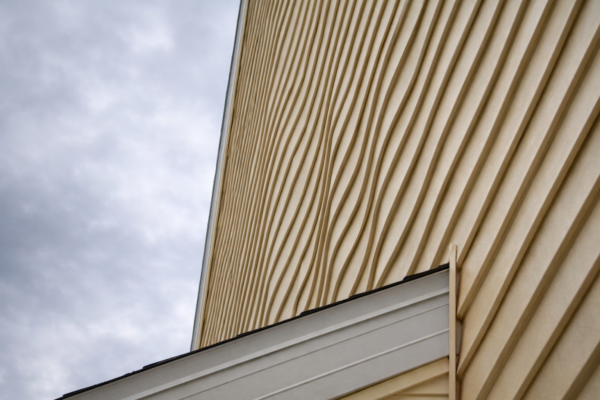
 Item 1: Panel face rippling in raking light. Cause: restricted movement.
The Expansion Lab: Why Nails Make or Break Vinyl
Vinyl grows in the heat and shrinks in the cold. The Polymeric Exterior Products Association says a 12-foot-6-inch panel can move 1/2 inch or more. Pick a nail and a season to see how vinyl siding installation problems hide on a cool day and show up in July.
Lies flat
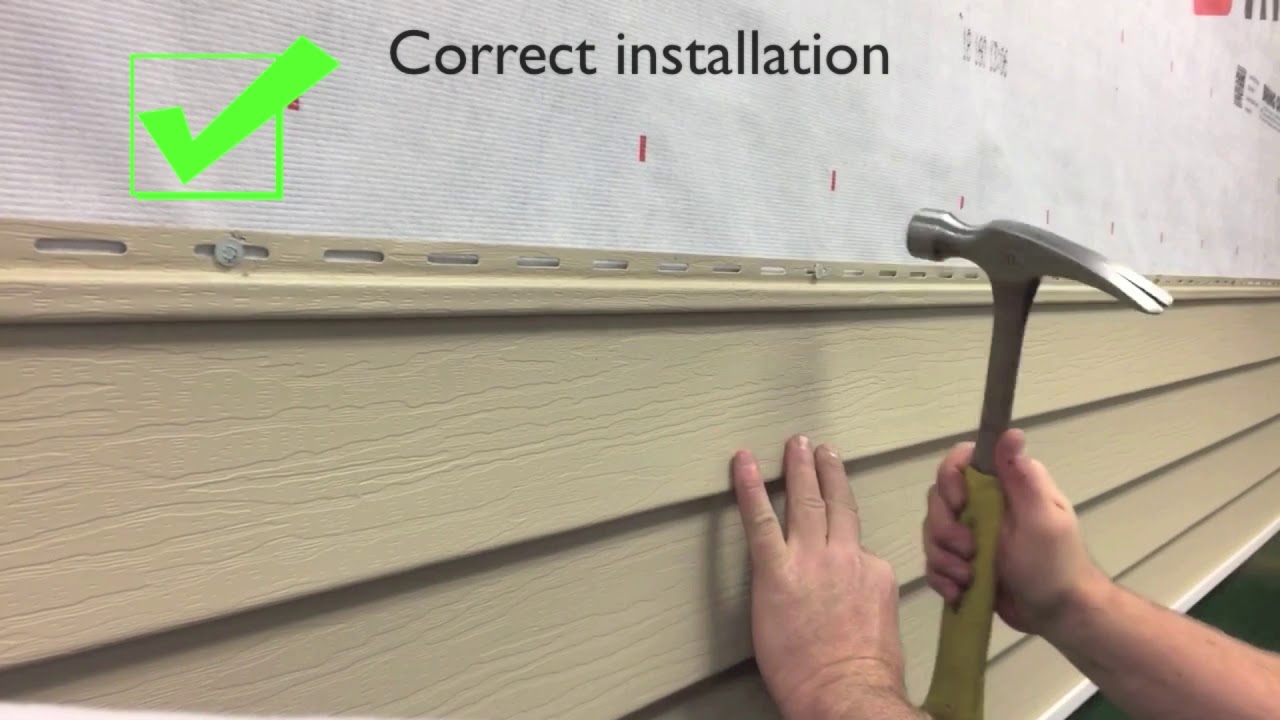
The panel hangs on the nails like a curtain on a rod. It’s ready to move when the weather changes.
Still flat
The panel grows in the heat and slides along its slots into the 1/4″ gap left at each end. You’d never notice.
Looks fine, for now
Tight nails don’t show on a cool day. That’s why this mistake passes a quick walk-through at the end of the job.
Waves and ripples
The panel tries to grow but can’t slide, so it bows out between nails. That shimmer in the afternoon sun is oil canning.
Visible nail heads
Face nails are easy to spot and give water a path behind the siding, even before the heat arrives.
Buckling and cracking
A face nail locks the panel in place. In heat it buckles; in cold it can crack around the nail.
Oil Canning: The Most Visible Vinyl Siding Installation Problem
Oil canning is the wavy, rippled look across a run of siding, worst in low, raking sunlight. It isn’t unique to vinyl; metal panels do it too. On vinyl, it nearly always traces back to one of three vinyl siding installation problems.
First, tight nails that stop the panel from sliding. Second, an uneven wall underneath. The industry’s own guidance is blunt: siding is only as straight as what lies under it, and residing over a wavy wall may require strapping or removing the old siding first. Third, thin panels with nothing to stiffen them, which telegraph every flaw. Fixing any of these vinyl siding installation problems after the fact means pulling panels, so it pays to get it right the first time.
Your 5-Point Walk-Around Inspection
Grab a coffee and walk your house in the late afternoon, when low sun shows every flaw. Check anything you spot. A single check means it’s worth a call, because these vinyl siding installation problems rarely fix themselves.
The Specs That Prevent Vinyl Siding Installation Problems
These come from the Vinyl Siding Institute’s Installation Quick Tips. None of them are hard. They just take patience, and skipping them is how most vinyl siding installation problems start.
VSI also says panels should be fully locked into the course below but never stretched tight, and that installers should check alignment with a level every five or six courses. Every manufacturer publishes its own instructions too, and those win if they differ. Ignoring them can also put the product warranty at risk, which turns vinyl siding installation problems into a paperwork problem as well.
Does Panel Thickness Matter?
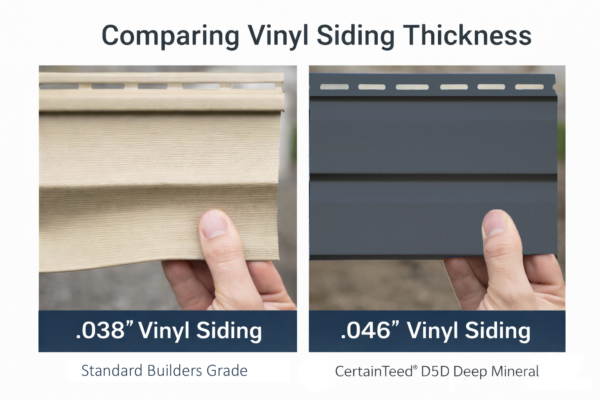
Yes, but it can’t prevent vinyl siding installation problems on its own. Industry certification allows panels as thin as .035 inch, and manufacturers describe thicker panels as more rigid with a smoother finish. Thicker, stiffer panels hide small wall flaws and resist wind and impact better.
Insulated siding goes further: a contoured foam backer supports the whole panel, which helps keep the face flat. See our insulated vinyl siding page and vinyl siding durability guide.
How We Keep Vinyl Siding Installation Problems Off Your House
Good siding starts before the first panel goes up, and so do most vinyl siding installation problems. This is the order we work in on every CertainTeed siding job.
Check the wall
We look for loose sheathing, soft spots, and wavy old siding, and we fur or strap the wall when it isn’t flat.
Wrap and flash
Weather-resistive barrier and flashing go on first, because siding sheds water but isn’t a waterproof skin.
Hang it loose
Nails centered in the slots with a dime’s space, gaps at every channel, and seams staggered by the book.
Walk it with you
We check the walls in raking light and walk the job with you before we call it done.
Siding Installed the Way the Manufacturer Intended
Wilbur Thrush founded Thrush & Son in 1960. W. Allen Thrush owns the company today, and Corey Thrush is the third generation. More than 31,000 Miami Valley homeowners have trusted us, from our Brookville headquarters and offices in Troy and Lebanon.
We install CertainTeed vinyl, insulated vinyl, and engineered siding. Explore vinyl siding in Dayton, our siding warranty guide, Dayton Ohio siding replacement, and energy efficient siding. Weighing the investment? Our home improvement ROI guide covers which projects pay back, and how to clean vinyl siding keeps it looking new.

Vinyl Siding Installation Problems: Questions, Answered
What homeowners ask us most about wavy, buckled, and loose siding, and how to avoid vinyl siding installation problems in the first place.
What causes vinyl siding installation problems?
Most come down to fastening and wall prep: nails driven tight or through the face, missing expansion gaps at trim, seams that line up, and walls that weren’t flattened before siding went on.
What is oil canning on vinyl siding?
Oil canning is a wavy or rippled look across the face of the panels, most noticeable in low, raking sunlight. On vinyl, it usually means the panels can’t move as they expand in the heat.
Can wavy vinyl siding be fixed?
Sometimes. If tight nails are the cause, an installer can remove and refasten the affected panels. If the wall underneath is uneven, the fix means taking the siding off, flattening the wall, and reinstalling it.
Is thicker vinyl siding worth it?
Thicker panels are stiffer and more forgiving, and insulated siding is stiffer still thanks to its foam backer. Thickness can’t make up for bad fastening, though, so installation still decides how it looks.
How much does vinyl siding expand?
The Vinyl Siding Institute’s guidance says vinyl can move 1/2 inch or more over a 12-foot-6-inch length as temperatures change, which is why every nail and trim gap matters.
How do I avoid vinyl siding installation problems on my house?
Hire an installer who follows the manufacturer’s instructions, asks about the condition of your walls before quoting, and puts the siding line and thickness in writing.
Not Sure If Your Siding Was Installed Right?
We’ll walk your walls, tell you whether it’s fastening, the wall underneath, or the panels themselves, and give you a written plan with no pressure, whether the fix is a few panels or a full reinstall. See our siding replacement services, and ask about financing.
Call 937-833-5136 · Office: Mon–Thu 9–4:30, Fri 9–2 · Michelle, our AI assistant, answers 24/7
Follow Along
Finished siding projects, crew life, and BooBoo, who inspects every job site. Meet the family here.
