
The West Central Ohio Roof Almanac
When to replace your roof, season by seasonWest Central Ohio roofs work hard. From Greenville to Wapakoneta, a single year brings spring hail, summer heat, fall downpours, and a long stretch of freeze and thaw, and every one of those seasons takes something out of your shingles, flashing, and decking.
The hardest part for most homeowners isn’t spotting a problem. It’s knowing whether that problem needs a quick fix or a new roof. This almanac walks through what each season does to a roof, the five facts that decide the answer, and a simple age gauge to see where yours stands. Need someone to look at it now? Start with our roof replacement page.

What Each West Central Ohio Season Does to a Roof
Pick a season on the wheel to see what it does to a roof and what to check.
Spring storms are when most hail and wind damage happens. Hail can bruise shingles and knock off granules without leaving a leak you can see; wind can break the seal strips that hold shingle tabs down.
Check after every big storm: granules collecting at downspouts, lifted or missing tabs, dents in gutters and vents.
The Dayton area averages 11 days a year above 90°F. An attic without enough ventilation can run far hotter than that, cooking the shingles from underneath and speeding up granule loss.
Check: curling or cupping shingles on the sunny slopes, a hot upstairs, and blocked soffit vents.
Fall brings steady rain and falling leaves. Clogged gutters back water up under the roof edge, and wet debris in valleys holds moisture against the shingles.
Check: clean gutters and valleys, look for stains on the fascia, and make sure downspouts carry water away from the foundation.
Dayton averages 105 days a year below freezing. Water that seeps into small gaps freezes, expands, and pries them wider, and ice dams at the eaves push meltwater up under the shingles.
Check: icicles and ice ridges at the eaves, ceiling stains near outside walls, and frost on attic nails.
Dayton-area climate figures: GLISA Dayton climatology (University of Michigan / NOAA).
Five Facts for West Central Ohio Homeowners
Whether to fix or replace usually comes down to five things. Read them in order; most homeowners know their answer by entry four.
- I
Age matters more than it looks
Shingles wear out from the top down. InterNACHI’s life-expectancy chart puts 3-tab asphalt shingles at about 20 years and architectural shingles at about 30. In West Central Ohio, where roofs face hail, heat, and freeze-thaw every year, a roof that looks fine from the driveway can still be brittle, curling, and shedding granules up close.
- II
Patches only go so far
Fixing a few wind-damaged shingles or one bad flashing joint makes sense. When the patches start showing up in different places every year, the roof is telling you the whole system is wearing out, and replacement usually costs less than chasing leaks.
- III
Storm damage hides
Hail bruises and broken seal strips rarely leak right away. That’s why, after a major West Central Ohio storm, an inspection is worth it even with dry ceilings: documenting damage early protects both the roof and any insurance claim.
- IV
Ventilation and flashing decide roof life
A roof is a system, not just shingles. Poor attic ventilation bakes shingles in summer and helps form ice dams in winter. Tired flashing at chimneys, walls, and valleys leaks long before the field shingles fail.
- V
A plan protects the investment
The right replacement starts with a full inspection and a written scope: decking, underlayment, ventilation, flashing, and drainage, not just a shingle color. Clarity up front means no surprises on install day.
Shingle life expectancy: InterNACHI estimated life chart.
Where Does Your Roof Stand?
Pick your roof’s age to see where it sits. Age is only one input; storm history and how the roof was installed can move the needle either way, which is why an inspection beats a guess.
Plenty of life left
Keep up with inspections after big storms and keep gutters clean. Small fixes are usually all a young roof needs.
Mid-life checkup
A good time for a full inspection: flashing, sealants, vents, and granule loss. Catching small problems now adds years.
Start planning
3-tab roofs are nearing the end of their typical life. Get a written assessment and start budgeting, so replacement happens on your schedule, not the weather’s.
Replacement window
Most 3-tab roofs are past their typical life, and older architectural roofs are getting close. If you see curling, bald spots, or repeat leaks, it’s time.
A Ten-Minute West Central Ohio Roof Check
You don’t need a ladder for this. Walk around the house on a clear afternoon with a pair of binoculars, then step into the attic with a flashlight. If you find two or more of these, it’s time for a professional look.
- Curling or cuppingShingle edges lifting or bowling up, usually on the sunniest slopes first.
- Bald spotsDark patches where the protective granules have washed away; check the downspout splash areas too.
- Missing or creased tabsWind lifts tabs and breaks the seal strips; a creased tab rarely lies flat again.
- Sagging linesA ridge or roof plane that dips can mean wet, weakened decking underneath.
- Stains in the atticDark rings on the underside of the decking or wet insulation around chimneys and vents.
- Daylight through the boardsLight where there shouldn’t be any means water can follow.
Choosing Shingles for West Central Ohio Weather
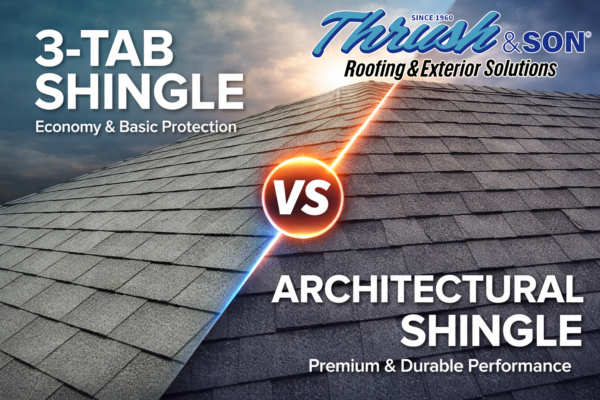
Most roofs we replace today use architectural shingles. They’re thicker than 3-tab, carry stronger wind ratings and warranties, and their layered look adds depth to the house. See how they’re built in architectural shingles, or compare options in choose a shingle.
Want something that sheds snow fast and shrugs off wind? Metal roofing is the other option we price side by side. And whatever goes on top, we start with a full tear-off down to the bare wood, so we can see and replace soft decking before the new roof goes on.
Where We Work in West Central Ohio
Thrush & Son® serves homeowners across West Central Ohio and the Miami Valley, from our home base in Brookville. See our Troy and Lima pages for more nearby towns.
- Darke CountyVersailles, Ansonia, Greenville, Arcanum
- Shelby CountySidney
- Auglaize CountyWapakoneta
- Mercer CountyCelina
- Miami CountyTroy, West Milton
- Montgomery CountyBrookville, Farmersville
A West Central Ohio Roofer Since 1960
We’re a family-owned company that has been roofing West Central Ohio homes for three generations. Every replacement starts with a written scope: decking, underlayment, ventilation, flashing, and drainage, so you know exactly what you’re getting.
We’re a GAF President’s Club Contractor, hold an A+ BBB rating, and have homeowner reviews from across the region.
Not Sure Yet? Start With an Inspection
If your West Central Ohio roof is in the 15-to-20-year range, just came through a big storm, or keeps springing small leaks, an inspection gives you facts instead of guesses. We’ll walk the roof, photograph what we find, and explain whether a fix will hold or it’s time to plan a replacement. Read how to compare bids in roofing estimates.

West Central Ohio Roof FAQs
When should I replace my roof in West Central Ohio?
Usually when age, condition, and fix history line up: 3-tab shingles near 20 years or architectural shingles near 30, widespread curling or granule loss, or leaks that keep coming back in different spots.
How long do asphalt shingles last?
InterNACHI’s life-expectancy chart lists about 20 years for 3-tab asphalt shingles and about 30 years for architectural shingles. Ventilation, storms, and installation quality move those numbers up or down.
Should I get my roof inspected after a storm even if it doesn’t leak?
Yes. Hail bruises and broken seal strips often don’t leak right away. An inspection documents damage early, which helps both the roof and any insurance claim.
Is it better to fix my roof or replace it?
A few damaged shingles or one flashing problem can be fixed. When fixes keep appearing in different places, or the roof is near the end of its typical life, replacement usually costs less over time.
What areas of West Central Ohio do you serve?
We serve Versailles, Ansonia, Greenville, and Arcanum in Darke County, plus Sidney, Wapakoneta, Celina, Troy, West Milton, Brookville, Farmersville, and the surrounding Miami Valley.
What does a roof replacement plan include?
A full inspection and a written scope covering decking, underlayment, ventilation, flashing, drainage, and the shingle system, so you know exactly what you’re getting before work starts.
Something else on your mind? We have answers.
Get Your Roof Checked
From Celina to Brookville and everywhere in West Central Ohio between, we’ll inspect your roof, show you photos of what we find, and put a clear plan in writing. Explore roofing, storm damage, or financing options.
