
Built for Sun, Storms & Fastballs: What Really Makes Vinyl Siding Last
Vinyl siding durability gets tested at the worst moments: a July afternoon when the south wall bakes, a spring squall line pushing hard gusts, a January fastball from the kid next door. The panel on your wall has to survive all three. Whether it lasts 40 years or starts rattling in 4 comes down to details most homeowners never see.
We’ve been siding Miami Valley homes since 1960. This is what decides vinyl siding durability on a real house, starting with the one movement every panel makes, every single day.
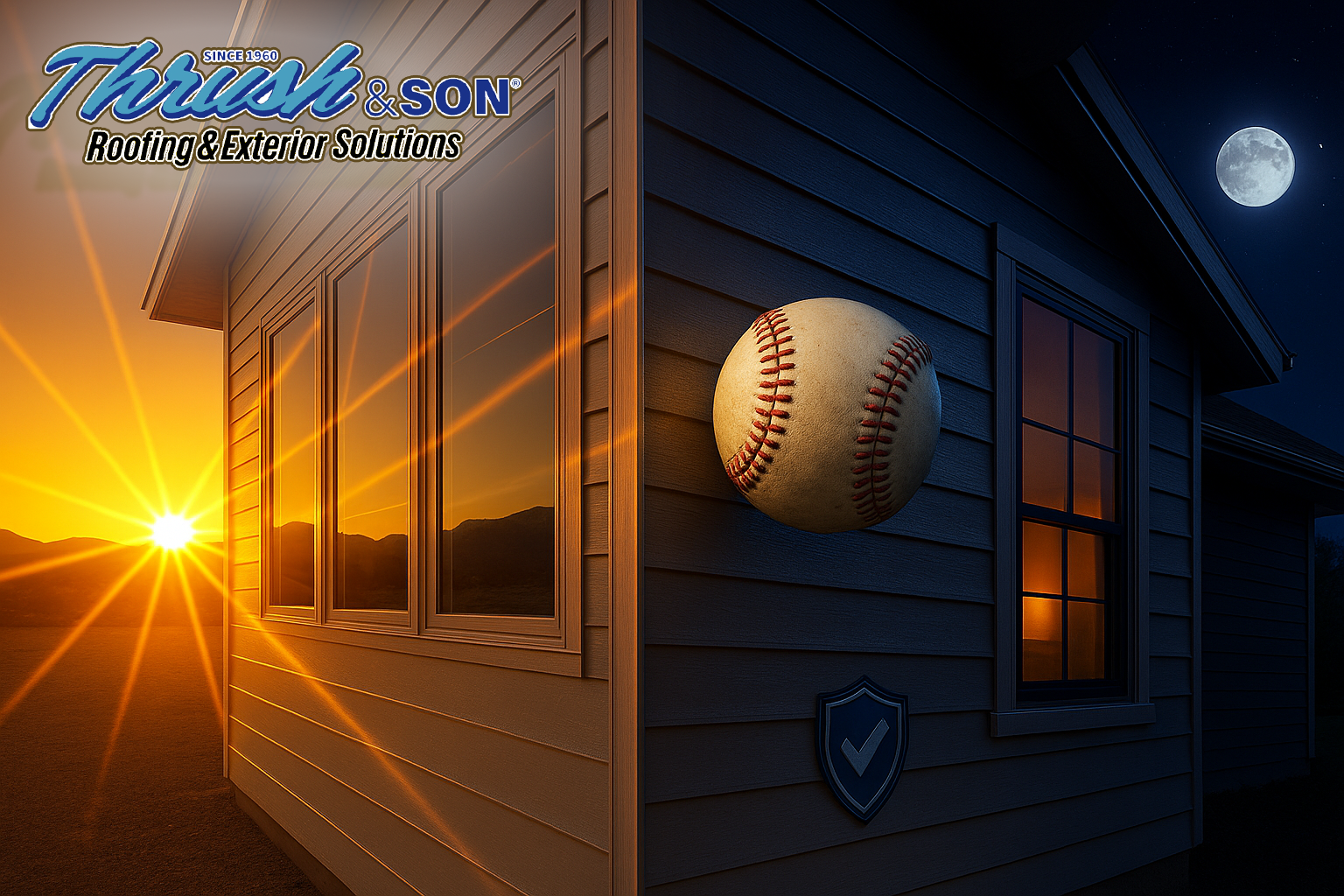
The Panel That Moves Every Day
Vinyl expands and contracts with temperature more than any other popular siding. Vinyl siding durability depends on letting it move. Pick how the panel is nailed and a Dayton day, then watch what the wall does.
The panel slides through its nailing slots and pulls back from the trim. The end gaps widen, but the J-channel still hides them, so nothing shows from the yard.
This is the day it was hung. Gaps match at both ends, and the nails hold the panel to the wall without pinching it.
The panel stretches into the space left at each end. Because the nails aren’t clamping it, the courses stay straight and the laps stay tight.
The panel tries to shrink but can’t slide. Force piles up at each nail hole, which can tear or crack, and cold vinyl is at its most brittle.
On install day you can’t tell the difference, which is exactly why the shortcut gets taken. The trouble starts with the first change in weather.
With nowhere to go, the growing panel bows off the wall. That wavy look gets blamed on cheap vinyl, when the real culprit was the hammer.
Movement shown is approximate for a standard 12-foot panel; color, length, and sun exposure change it. The rules behind the lab, including 1/4-inch gaps at trim and loose nail heads, come from the industry’s Vinyl Siding Installation Manual.
Sun, Storms & Fastballs: Three Tests Every Wall Faces
Every Miami Valley wall sits the same exam. Here’s how vinyl siding durability holds up in each subject, split between what the panel brings and what the installer decides.
UV, Heat, and Reflected Glare
Modern panels carry UV inhibitors, and manufacturers can certify individual colors for fade resistance under ASTM D6864 or D7251. Ask whether your color is on that list. Heat is a bigger threat to vinyl siding durability than fading.
Low-E glass on a nearby window, especially a double-pane unit that has bowed inward, can focus sunlight like a magnifying glass and distort panels of any color. The industry’s own research on concentrated sunlight points to shading, screens, and landscaping as the fix.
- UV inhibitors in the vinyl
- Certified color options
- Color that runs through the panel
- Gaps sized for summer growth
- Spotting glare from neighboring windows
- Grills and fire pits kept off the wall
Wind, Rain, and the Water Behind the Wall
Vinyl siding certified to ASTM D3679, the standard the residential code requires, is built to handle winds of at least 110 mph, and certified makers face unannounced third-party inspections twice a year. That rating assumes nails into framing no more than 16 inches apart, sunk at least 3/4 inch.
Rain is the quieter threat. Vinyl is a rainscreen, not a raincoat: some water always gets behind it. So vinyl siding durability in a storm depends on the weather-resistant barrier and the flashing underneath, details you never see once the job is done.
- Wind-tested locking hems
- A profile that sheds most water
- Weep holes that let it drain
- Fastener spacing and depth
- House wrap lapped shingle-style
- Flashing at every window, door, and roofline
Impacts in July and January
Vinyl flexes when it’s warm. In a hard freeze it stiffens, and as the Journal of Light Construction puts it, intense cold can leave vinyl brittle enough for an icy snowball to crack it. That’s the real trade-off in vinyl siding durability, and it’s why thickness matters.
Certification allows panels as thin as .035 inch. We recommend .042 or heavier. Insulated vinyl siding adds a contoured foam backer that stiffens the panel and absorbs the hit, which is why we steer it toward driveways, play areas, and the side of the house the mower lives on.
- Panel thickness
- A reinforced nailing hem
- Optional foam backing
- Heavier panels on high-traffic walls
- Flat wall prep, so panels never bridge gaps
- Spare panels saved for future swaps
How Long Does Vinyl Siding Really Last?
With certified panels, a correct install, and simple care, 40 years or more is a realistic target in Ohio. Siding rarely wears out from age alone. Vinyl siding durability gets cut short by the moments on this timeline, and most of them take minutes to handle.
- Year 1The first full cycleOne summer and one winter reveal any nailing shortcut as waves, rattles, or loose laps. Call your installer while workmanship coverage is fresh.
- Every springA gentle rinseGarden hose and a soft brush, mild soap for marks. Skip close-range pressure washing, which drives water up behind the laps.
- After stormsA five-minute walkLook for cracked or loose panels, hail dents, and gaps at corners. Catching one panel early beats chasing water later.
- Years 10–20Check the edgesSealant at trim and wall penetrations, landscaping rubbing the wall, and any warped spots from reflected heat.
- Years 20–40+Hold the lineCertified colors keep their look, and a saved panel can swap in for a damaged one without re-siding the wall.
Nails driven tight. Missing flashing. Thin, low-grade panels. Concentrated heat from window glare or a grill parked against the wall. Repeated hits from mowers and string trimmers. Every one of these is a choice that trims vinyl siding durability, and none of them is the panel’s fault.
Read Your Siding Quote Like an Installer
Two quotes can list the same panel and deliver very different vinyl siding durability. Check off what your quote answers in writing.
Every quote we write answers all seven, because vinyl siding durability is decided long before the last panel snaps into place. See how we handle horizontal vinyl siding installation, or compare profiles and materials across all of our siding options.
Weighing siding against another coat of paint? Read why vinyl siding beats another repaint. Hail season on your mind? Our breakdown of what hail does to a roof covers the same storms your walls face.
Vinyl Siding Durability Questions, Answered
Is vinyl siding durable enough for Ohio weather?
Yes. Vinyl siding durability is built for Ohio’s freeze-and-thaw swings, summer heat, and storm winds when certified panels are installed with room to move, correct fastening, and flashing and a weather-resistant barrier behind them.
How long does vinyl siding last?
With quality panels, a correct installation, and basic care, vinyl siding commonly lasts for decades, and 40 years or more is a realistic target.
What ruins vinyl siding durability the fastest?
Nails driven tight, missing flashing, thin low-grade panels, concentrated heat from window reflections or grills, and repeated hits from mowers and trimmers.
Can vinyl siding crack in cold weather?
It can. Vinyl stiffens in hard cold, so a sharp impact in January does more than the same hit in July. Thicker panels and insulated vinyl siding resist it most.
Does vinyl siding need much maintenance?
No. Rinse it once or twice a year, use mild soap for marks, avoid close-range pressure washing, and keep shrubs from rubbing the wall. Simple care protects vinyl siding durability for decades.
Is insulated vinyl siding more durable?
Usually, yes. Insulated panels raise vinyl siding durability: the foam backer stiffens the panel and absorbs impacts, and it adds comfort and a straighter look on the wall.
Hung Right Since 1960
Wilbur Thrush founded Thrush & Son® in 1960, and three generations later we still judge a siding job the way he did: by how it looks after the tenth winter, not the first week. Loose nails, tight laps, and dry walls are what vinyl siding durability looks like from the inside.
Every crew we send knows the difference between a panel that’s fastened and one that’s pinned. That difference in vinyl siding durability is invisible on install day and obvious by the second summer.
Siding That Still Looks Right in 2066
We’ll walk your exterior, check what’s behind the current siding, and give you a written plan with the panel, thickness, barrier, and fastening spelled out, so vinyl siding durability is in writing. Call 937-833-5136 or schedule online.
- GAF President’s Club Contractor
- Best of Dayton 2024 Winner · 2025 & 2026 Finalist
- BBB Accredited A+
Michelle, our AI assistant, answers 24/7
Office: Mon–Thu 9–4:30, Fri 9–2
