
The siding waving at you on the highway is not the product's fault
You have seen it: a row of new builds where the walls ripple in afternoon light. That is thin panel and fast installation, not vinyl.
Vinyl siding earned a bad reputation honestly. Builder-grade panel runs around .035 inches thick, gets hung tight to the wall by crews paid per square, and then Ohio does what Ohio does. The panel expands in July, contracts in January, and has nowhere to go. That is where the waving comes from.
Vinyl siding in Dayton has to survive something most of the country never asks of it: a winter that crosses the freezing line back and forth dozens of times instead of settling below it. Every one of those crossings is a small expansion and contraction cycle. Thin panel fails that test. Heavy panel, hung correctly, does not.
We install CertainTeed, and we hang it the way the manufacturer specifies: fastened to allow roughly the thickness of a dime between the nail head and the flange, so the panel can move. It is a small detail that decides how your house looks in ten years.
Thrush & Son® has worked across the Miami Valley since 1960, three generations in. Compare the rest of the siding replacement range, or see how insulated vinyl siding compares.
Six profiles, six different houses
Every one of these is a CertainTeed line we install. The right one depends on your architecture, not on what is on the truck.
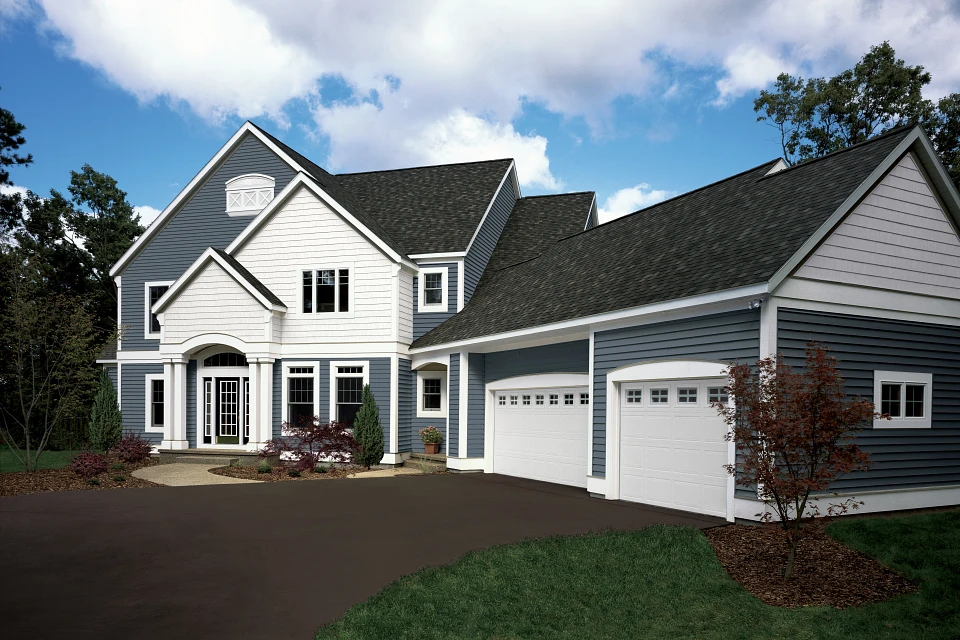
Monogram®
The heavyweight at .046 inches, with RigidForm™ reinforcement and an authentic cedar grain. If you want the panel least likely to ever wave, this is it.
See the product details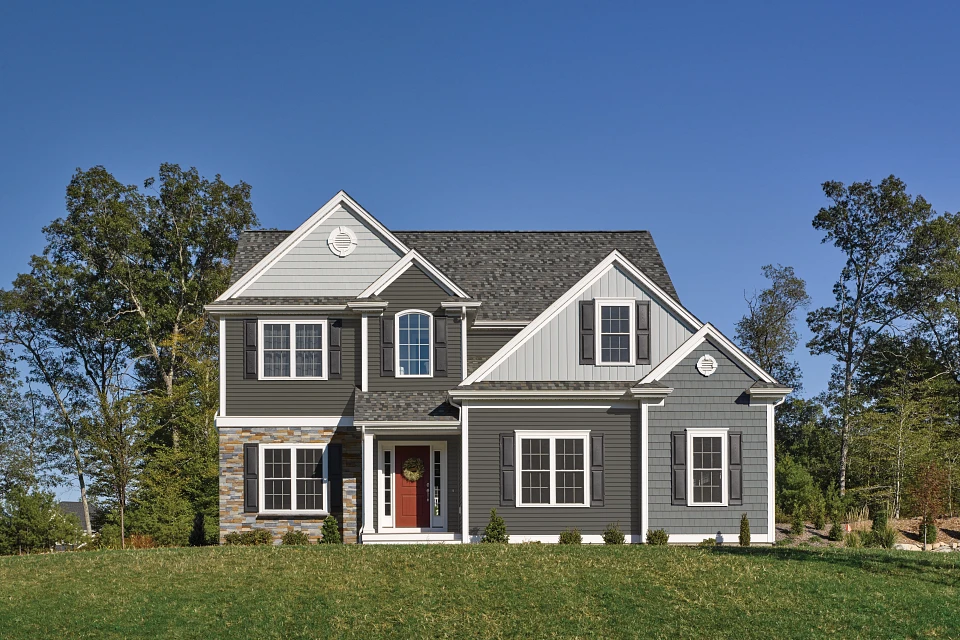
Restoration Classic™
Timeless woodgrain with a secure lock and lasting color. Suits a colonial or a center-hall two-story without pretending to be something newer.
See the product details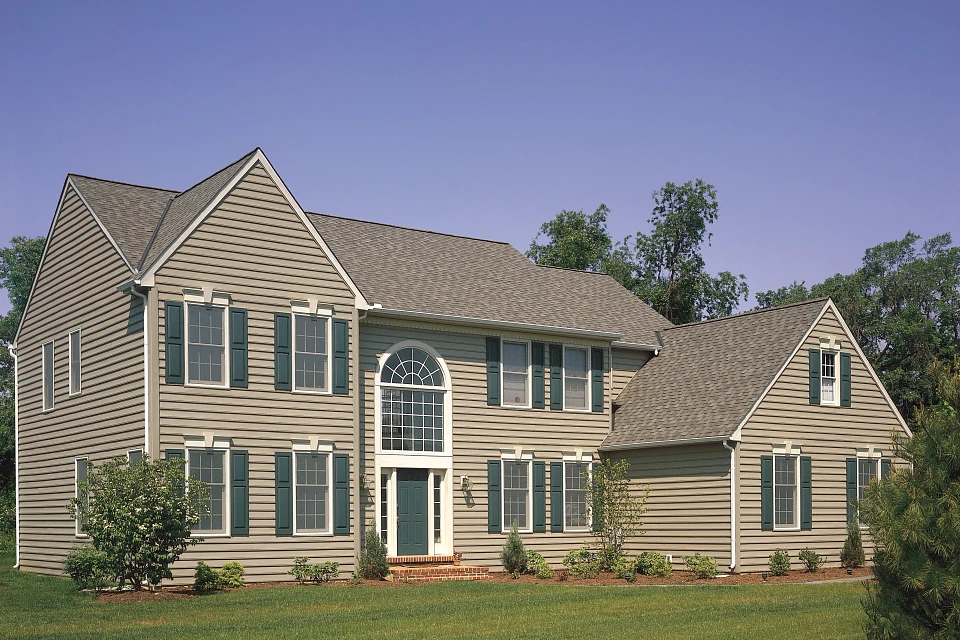
Carolina Beaded™
The bead at the bottom of each course throws a deep shadow line. Older homes and cottages wear this well, and it reads as detail rather than siding.
See the product details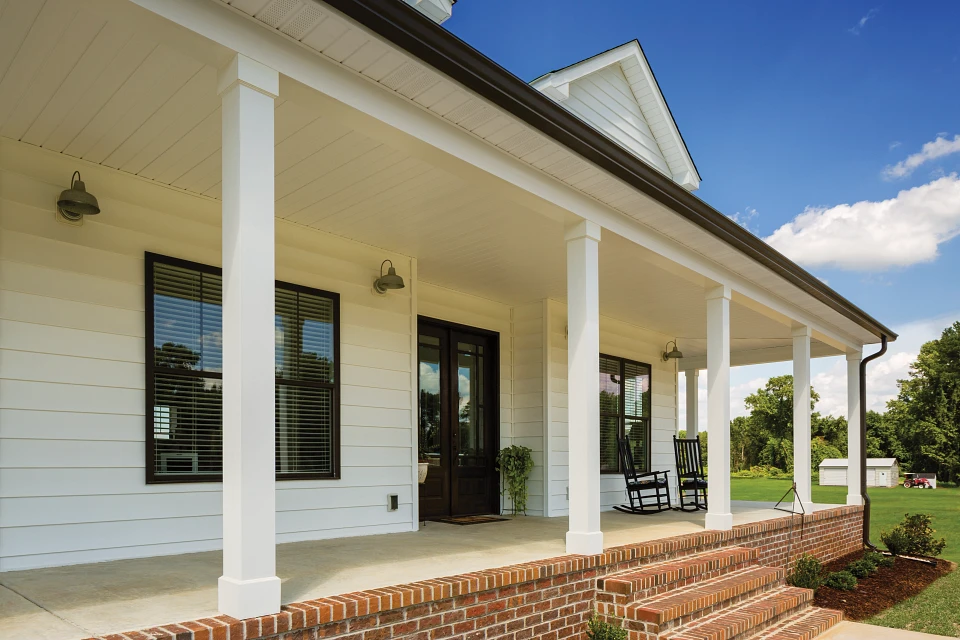
MainStreet™
A wide color range and a wood-look finish at the friendliest price in the CertainTeed lineup. The sensible choice when the budget has to stretch across the whole house.
See the product details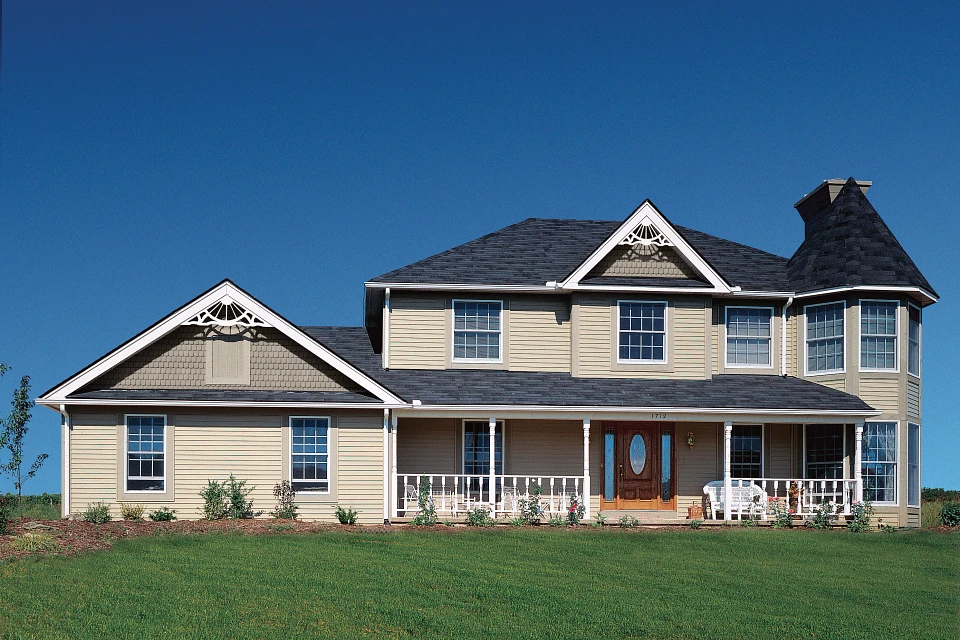
Encore™
Straightforward clapboard with dependable color protection and a tight fit. Nothing showy, which is exactly right on a lot of Miami Valley homes.
See the product details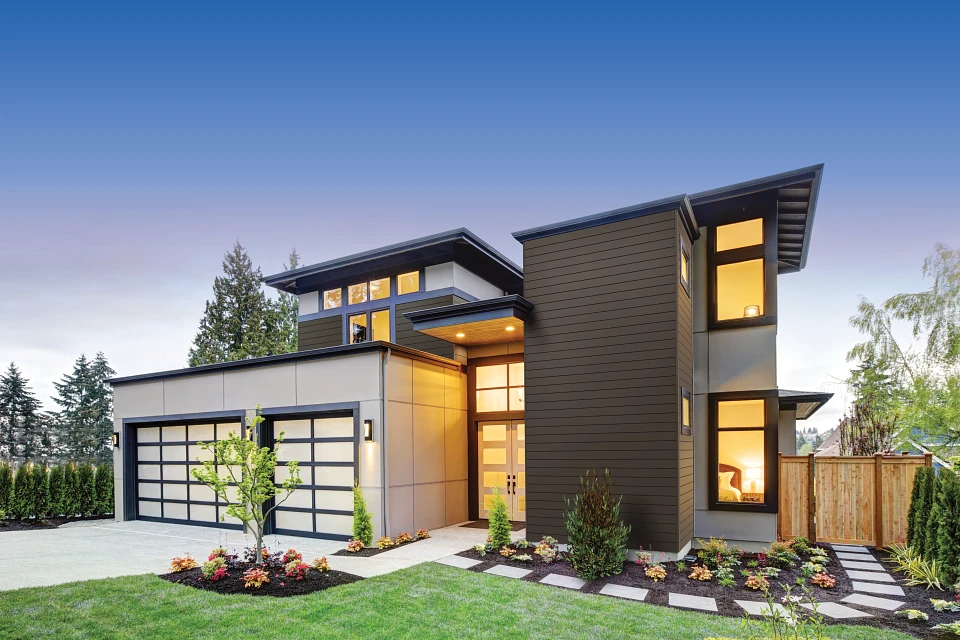
Urban Reserve™
Not vinyl. Aluminum, in a flat modern profile with crisp lines and no woodgrain at all. For a contemporary elevation where vinyl would look like it was pretending.
See the product detailsTry any profile and color on a photo of your own home in the design center, or browse the full CertainTeed siding collection. We bring physical samples to every estimate.
Same panel, two crews, very different houses
Every siding failure we get called out to look at traces back to one of these four things.
-
Room to move
Panels are fastened so they can expand and contract. Nailed tight, vinyl has nowhere to go but out, and that is the wave you see from the road.
-
What's behind it
We check the sheathing and the water management before anything new goes up. Siding hung over a soft wall is a problem you paid to hide.
-
Corners and transitions
Where siding meets brick, trim, a roofline or another material is where a job reads as professional or doesn't. It is also where water gets in.
-
Starter strip and flashing
The first course sets every course above it. Get the starter out of level and the whole elevation carries the error up the wall.
Vinyl siding questions, answered straight
The reputation, the weather, the warranty, and what it actually costs to keep.
Why does vinyl siding have such a bad reputation?
Because a lot of it was installed badly on thin panel. The industry minimum is .035 inches, which is what goes on most new construction, and it is hung fast by crews paid by the square.
The waving you see on new subdivisions is called oil canning, and it happens when panel cannot expand. It is a thickness problem and an installation problem, not a vinyl problem. Premium panel hung correctly looks flat in year fifteen.
How thick should the panel actually be?
Thicker than the minimum. CertainTeed Monogram® runs .046 inches, roughly a third heavier than builder grade, and that extra rigidity is most of what keeps a long wall looking straight.
It also changes how the siding sounds and feels. Thin panel rattles in wind. Heavy panel does not.
Will it hold up to Ohio weather?
The Miami Valley is harder on siding than most of the country, because our winters cross the freezing line repeatedly instead of staying below it. Every crossing is another expansion and contraction cycle.
CertainTeed's premium lines are engineered for exactly that, and the reinforced profiles resist the impacts, dents and cracking that show up in cheaper panel. Installed properly, you are looking at decades.
What about high wind?
Premium lines with RigidForm™ reinforcement are tested to roughly 210 mph. That number only means something if the panels are fastened and locked correctly, which is the part we control.
Storms find bad installation long before they find bad material.
Does the color fade?
Far less than it used to. The color runs through the panel rather than sitting on the surface, and CertainTeed's PermaColor™ technology carries a Lifetime Fade Protection warranty.
Darker colors on a south or west elevation are always the hardest test. We will tell you honestly how a color you like is likely to hold up on your particular house.
What maintenance does it need?
A rinse with a hose and a soft brush once a year. No scraping, no repainting, nothing on a ladder.
Two things to avoid: aggressive pressure washing, which can drive water behind the panel, and letting landscaping grow against the siding.
Can you side over what is already there?
Sometimes, but we usually recommend against it. Going over old siding hides whatever is happening underneath, and if there is moisture damage in the sheathing you have just sealed it in.
We tear off, look at the wall, fix what needs fixing, and then side. It costs more up front and it is the reason our work is still flat in year twenty.
How do I get a price?
Use the form below or call (937) 833-5136. We walk your home, measure every elevation, look at what is behind the existing siding, and give you a written price before anything starts.
Let’s look at what's behind your siding
We walk every elevation, check what is under the old siding, and give you a written price before anything starts.
