
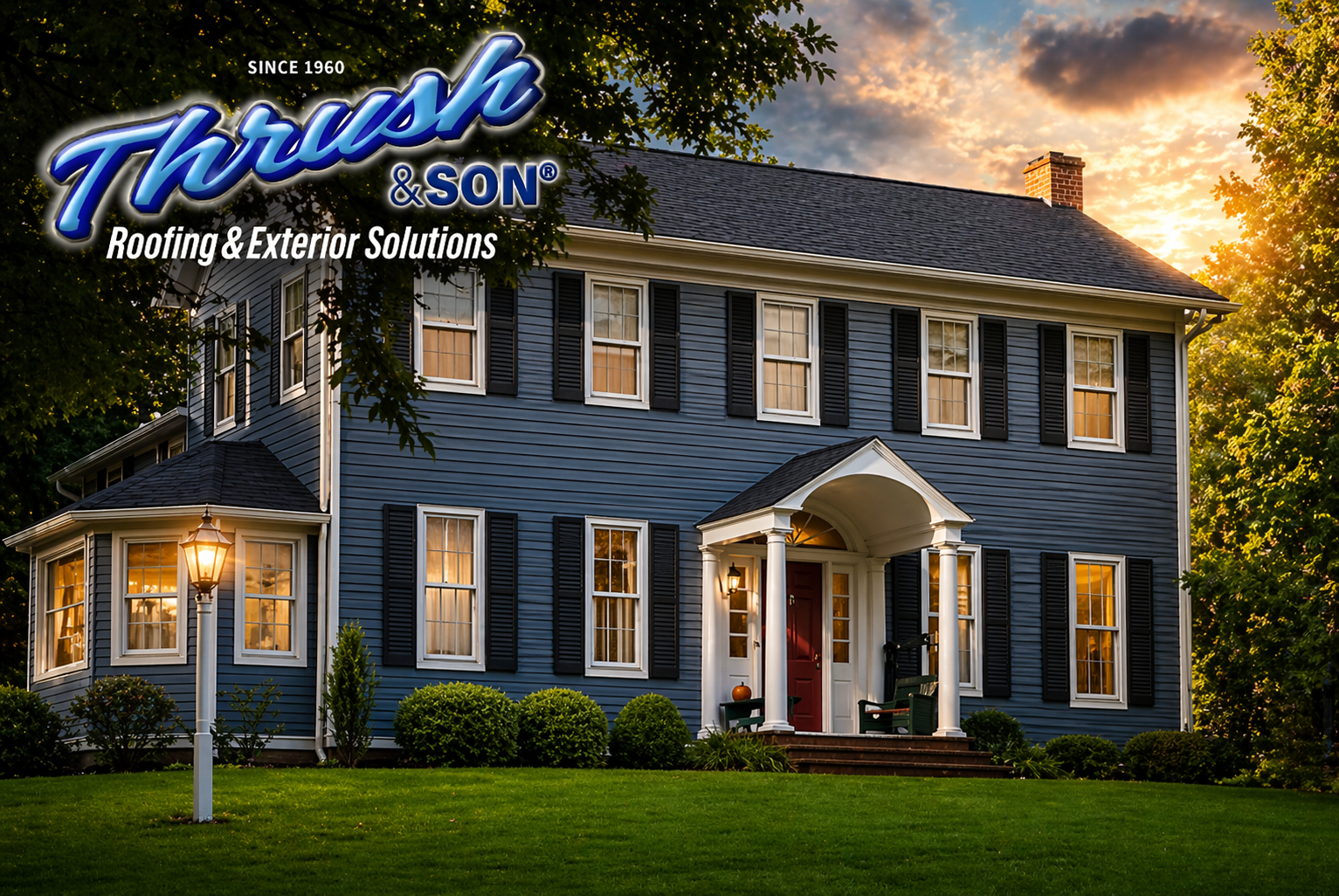
Your Walls Are Leaking Heat Through the Studs: 4 Benefits of Insulated Siding
Insulated siding is one of the smartest exterior upgrades you can make when comfort, efficiency, and durability all matter. Most people shop siding for curb appeal. The real payoff shows up inside: rooms that finally feel the same, fewer drafts, and quieter evenings.
Think of it this way: ordinary siding is a protective shell. Add a built-in layer of rigid foam and your cladding becomes part of the thermal envelope, slowing heat transfer and steadying indoor temperatures. Below, run the Thermal X-Ray to see where your walls lose heat, then walk through the four benefits, what’s inside the panel, and the five questions to ask before you sign a quote.
A Skin or a System? Why Insulated Siding Feels Different
You can have a beautiful exterior and still feel uncomfortable inside. Air leaks, uneven wall performance, and thermal bridging create micro-climates from room to room, and that’s the problem a foam-backed panel was built to solve.
A skin
Keeps rain off and looks good from the street, but adds almost nothing to how the wall handles heat. Every stud behind it stays a shortcut for heat to escape in winter and pour in all summer.
Part of the system
Adds continuous foam across the whole wall, covering the studs that cavity insulation can’t reach. It doesn’t replace attic insulation or air sealing, but it’s the most practical way to upgrade walls without tearing out drywall.
The Thermal X-Ray
This is roughly how a thermal camera sees an exterior wall. Switch between standard and insulated siding, then flip the season, and watch where the heat goes.
4 Benefits of Insulated Siding
Each one is something you feel or hear in the house, not just a line on a spec sheet. Together they explain why it’s the upgrade homeowners notice most in their first winter.
Temperature control you can actually feel
Ever notice how one bedroom feels like a sauna in July while another stays chilly in January? That’s usually a mix of sun exposure, wall performance, and airflow. The foam backer adds a layer of resistance on the outside of the wall, so outdoor temperatures have less pull on the rooms inside.
The goal isn’t perfection; it’s consistency. A more even wall helps your furnace and air conditioner cycle predictably, and that one room you avoid becomes a room you use.
Energy efficiency that supports your monthly budget
No single product is a magic fix. Windows, doors, attic insulation, and air sealing all work together. But walls are the biggest surface of your house, and a foam-backed exterior works across all of it, slowing heat loss in winter and heat gain in summer.
Certified products carry a tested rating: ASTM standards set insulated vinyl siding as an energy-saving product with a minimum R-2.0 value. Not sure what R-value means for your house? Our guide to R-value vs. U-factor breaks it down.
Quieter rooms and less street noise
Comfort isn’t only temperature. Hollow siding can drum in the wind and amplify rain, traffic, and neighborhood noise. The foam backing fills that gap behind the panel and helps dampen the vibration.
Is it the same as new windows? No. But as part of an exterior plan, it’s a benefit homeowners mention again and again, especially on busy streets and wind-exposed lots.
Tougher, flatter walls in harsh weather
Siding isn’t a submarine. A good wall sheds bulk water, drains what gets behind the panel, and dries out. Foam-backed systems are built to work with a weather barrier and proper flashing, and installation quality decides whether they do.
The foam also stiffens each panel, so long walls stay flatter, resist wind pressure better, and shrug off the bumps that dent hollow siding. Pair it with the right exterior trim and the whole house reads crisp and finished.
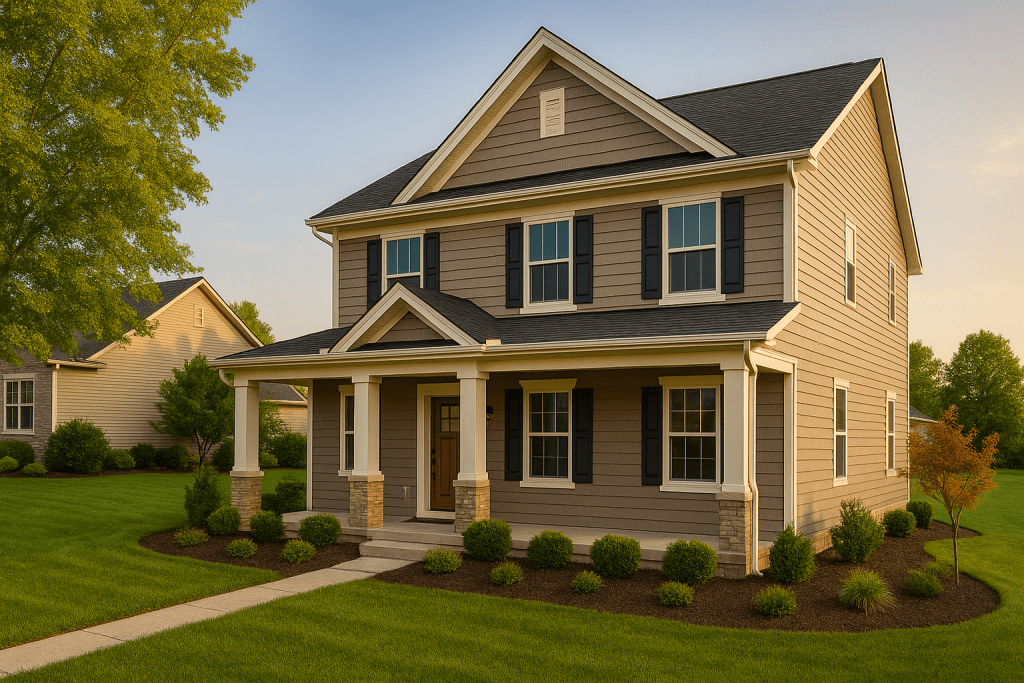
Anatomy of Insulated Siding
From the street it looks like any lap siding. Cut one open and you’ll find a contoured foam backer fused to the panel, shaped to fill the hollow space that makes ordinary siding sound and feel thin. We install CertainTeed CedarBoards insulated siding, one of the most established lines in the category.
- Vinyl face. Color runs through the material, so there is nothing to peel or repaint.
- Contoured foam backer. Fills the gap behind the panel, covers the studs, and stiffens the board.
- Weather barrier and flashing. The drainage plane behind it all, detailed at every window and door.
- Sheathing and framing. Inspected when the old siding comes off, and fixed before anything covers it.
Industry guidance from the Polymeric Exterior Products Association notes that insulated siding was added to ENERGY STAR Qualified Homes because of its ability to reduce thermal bridging.
5 Questions to Ask Before You Sign
Evaluate the whole system, not just the panel color. Tap each question once you’ve asked it, and bring this list to every siding quote you compare.
Ask Corey: Insulated Siding Questions
The four questions homeowners ask us most often before they choose insulated siding.
Hi, I’m Corey. Tap any question below and I’ll answer it.
Is insulated siding the same as insulating my walls?
Not exactly. Insulated siding adds a continuous layer of foam on the outside of the wall, covering the studs that cavity insulation can’t. It doesn’t replace attic insulation or air sealing; it works alongside them.
What R-value does insulated siding have?
It varies by product. ASTM standards require certified insulated vinyl siding to deliver at least R-2.0, tested as an installed wall assembly. Ask your contractor for the tested rating of the exact panel on your quote.
Will insulated siding trap moisture in my walls?
Not when it’s installed as a system. A weather-resistant barrier, proper flashing, and correct fastening let water drain and the wall dry. Installation quality matters as much as the panel itself.
Can I put insulated siding on part of the house?
Yes. If the whole house isn’t in the budget, start with the long, exposed walls of the rooms you use most, often the north and west sides, and match the color on the rest.
Installed by a Name You Can Look Up
Homeowners don’t need a sales pitch. They need results that hold up after the first storm, the first heat wave, and the first hard freeze. That’s been the standard at Thrush & Son® since 1960, and every job still goes on with the same care.
From roofing to siding, windows, doors, and seamless gutters, we serve homeowners across Dayton and the Miami Valley. Browse finished projects in our project gallery, compare insulated siding with other options on our insulated vinyl siding page, or see how insulation in the attic completes the picture in our cellulose insulation guide.
One Setting. Every Room.
We’ll walk your house, find the walls that are working against your thermostat, and price the upgrade where it does the most good. Ask about financing with a soft credit check that won’t touch your score. Call 937-833-5136 or schedule online.
Michelle, our AI assistant, answers 24/7
Office: Mon–Thu 9–4, Fri 9–2
Stay Connected, One Course at a Time
Projects, tips, and the occasional BooBoo appearance. For more ideas, explore exterior home upgrades across the Miami Valley and our guide to the benefits of vinyl siding.
