
Shingles get the attention. Underlayment does the work.
Roof underlayment is the water-resistant layer that goes down over the wooden roof deck before a single shingle is nailed. Once the roof is finished you will never see it again, which is exactly why so many homeowners never ask about it, and why some roofers cut corners on it.
Shingles shed most of the weather. Roof underlayment is the backup for everything that gets past them: wind-driven rain, water backing up behind an ice dam, and the surprise storm that rolls in while the roof is half done. This guide shows where it sits, what it does, and which GAF products we trust on Miami Valley homes.

Roof underlayment is layer two of six
Click a number to see what each layer does. We opened it on deck protection.
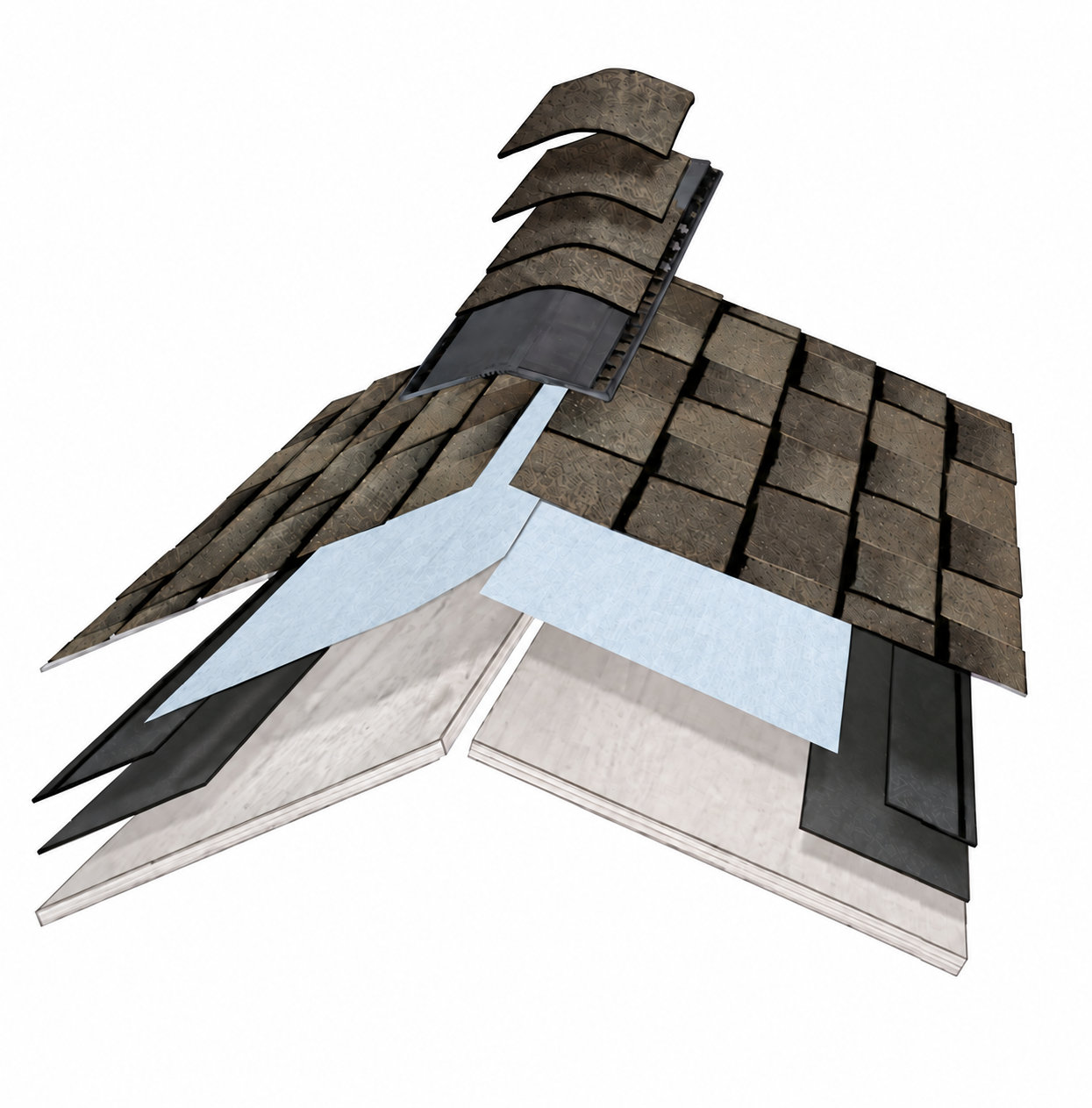
What roof underlayment actually does
It is not just paper under the shingles. It has three jobs, and a roof needs all of them.
- 01
Catches what gets past
Wind drives rain sideways and ice dams push water uphill. When water slips under a shingle, the roof underlayment sends it back down the roof instead of into the wood.
- 02
Protects the open roof
Between tear-off and the last shingle, the deck is exposed. A properly fastened roof underlayment keeps a surprise shower from soaking the sheathing.
- 03
Gives shingles a flat bed
A smooth, wrinkle-free layer lets each course lie flat and seal properly, which is part of how a roof keeps its wind rating.
Building codes treat it as essential: the residential code published by the International Code Council requires roof underlayment under asphalt shingles, and the National Roofing Contractors Association recommends it on every steep-slope roof.
Old-school felt or modern synthetic?
Asphalt-saturated felt was the standard for decades. Synthetic roof underlayment has taken over for good reason.
| Compare | Traditional felt | Synthetic |
|---|---|---|
| Weight per roll | Heavy and bulky | Light, more coverage per roll |
| Tear resistance | Tears under boots and wind | Woven or spunbond, hard to tear |
| Moisture | Absorbs water, then wrinkles | Does not absorb water |
| Walking surface | Slick when wet | Textured for traction |
| Exposure before shingling | Short | Longer UV tolerance |
Five types of roof underlayment we know by name
Each one fits a different roof, budget and goal. We will recommend one at your estimate.
Deck-Armor™
Premium synthetic- Breathable
- Steep-slope
Lets trapped moisture escape while blocking wind-driven rain, which helps prevent mold and deck rot. Lightweight with a slip-resistant surface.
Tiger Paw™
Synthetic- UV-stabilized
- Walkable
Built for moisture control and long-term resilience, resisting buckling and brittleness. Works under asphalt shingles, slate and metal.
FeltBuster®
Value synthetic- Polypropylene
- Lays flat
Resists tearing and does not soak up water like felt, so it stays flat and keeps performing. Our everyday upgrade over traditional felt.
Shingle-Mate®
Fiberglass-reinforced felt- Felt
- Reinforced
Fiberglass reinforcement keeps it from bubbling and wrinkling when it gets wet, so the finished roof looks smoother than with plain felt.
VersaShield®
Fire-resistant underlayment- Fire-resistant
- Fiberglass
Helps roofing systems reach higher UL fire ratings while still shedding water. A smart choice where fire resistance matters.
Underlayment and leak barrier are not the same thing
Both go under the shingles. They protect different parts of the roof.
Roof underlayment
Mechanically fastened across every square foot of the roof. It sheds water down the slope and protects the deck from the eaves to the ridge.
Read the FeltBuster sell sheet for a closer look.
Leak barrier (ice and water shield)
A self-adhering membrane that seals around nails. We add it at the eaves, in valleys and around chimneys, skylights and pipes, where ice dams and heavy water collect.
See the WeatherWatch leak barrier sell sheet.
The best product fails if it goes on wrong
Roof underlayment only works when it is installed the way the manufacturer intends. It is also part of the system behind your warranty: GAF roof deck protection is one of the four qualifying accessories for the WindProven limited wind warranty on Timberline shingles with LayerLock Technology.
Want to see how every layer fits together? Read our guide to roofing components, or watch GAF put a finished roof through wind, fire and water in Shingles Engineered to Endure.
- Inspect and replace damaged decking before anything goes down.
- Leak barrier first at eaves, valleys and every penetration.
- Roof underlayment laid flat and unwrinkled, cap-fastened at 9 inches on center.
- Shingled the same day it goes down, so it never sits exposed.
- Matched GAF components so the full system qualifies for coverage.
Roof underlayment, answered
What homeowners ask us before a roof replacement.
What is roof underlayment?
Roof underlayment is a water-resistant layer installed over the roof deck before the shingles. It sheds water that gets past the shingles and protects the wood while the roof is being built.
Is synthetic underlayment better than felt?
For most homes, yes. Synthetic underlayment is lighter, harder to tear and does not absorb water, so it stays flat. Fiberglass-reinforced felt like Shingle-Mate is a step up from plain felt when a felt product is preferred.
Is underlayment the same as ice and water shield?
No. Underlayment covers the whole deck. A leak barrier is a self-adhering membrane we add at eaves, valleys and around chimneys and pipes, where ice dams and heavy water collect.
Does roof underlayment affect my warranty?
It can. GAF roof deck protection is one of the qualifying accessories for the WindProven limited wind warranty on Timberline shingles with LayerLock Technology.
How do I know what is under my roof?
Usually only when the shingles come off. If you are planning a replacement, call (937) 833-5136. Michelle, our virtual assistant, answers 24/7 and can schedule an inspection.
