
Siding Matchmaker: Find the Style Your House Was Made For
To choose a siding style that looks right for decades, start with the house, not the brochure. Every home has an architecture with its own lines and proportions, and the right siding profile works with them instead of fighting them.
Meet five siding profiles, find your house’s match, and learn the rules for mixing styles. When you’re ready for product details, see vinyl siding styles.

Five Profiles to Know Before You Choose a Siding Style
Before you choose a siding style, get to know its personality. Tap a profile to see its texture, what kind of house it’s looking for, and its deal breaker.
Clapboard
“Classic, tidy, gets along with everyone.”
Looking forColonials, ranches, and almost any house that wants a timeless look.
Deal breakerCan feel plain on a big, flat wall with no trim or accents.
Dutch lap
“A little more shadow, a little more charm.”
Looking forTraditional homes where you want the walls to show more texture from the street.
Deal breakerMixing it with clapboard on the same wall. Pick one.
Board & batten
“Tall, crisp, and a little bit farmhouse.”
Looking forFarmhouses, gables, and modern homes that want height.
Deal breakerCovering every wall on a small, low house; it can feel busy.
Shakes
“Warm, rustic, full of texture.”
Looking forCraftsman and Cape Cod homes, gables, and dormers.
Deal breakerToo much of it. Shakes shine as an accent or on a cottage.
Scallops
“Playful, Victorian, and a born show-off.”
Looking forA single gable peak on a Victorian or cottage.
Deal breakerAnywhere but a small accent area.
A profile is only half the story. Panel thickness, the depth of the shadow line, and how straight the wall is all change how a style looks from the curb. That’s why it pays to choose a siding style with real panels in hand rather than from a photo, and to look at them from the street, not from arm’s length.
The textures above are simple drawings to show how each profile catches light. Real panels have wood grain and deeper shadows, so judge them in person at our Exterior Design Center. For vertical siding in depth, read board and batten siding.
Choose a Siding Style by House Type
Pick the house that looks most like yours. The matchmaker suggests a main style and an accent that suit its architecture.
Symmetry is the whole point of a Colonial. Straight clapboard keeps the lines clean; if you add an accent, keep it small and centered, like a gable over the entry.
Long, low walls can feel flat. A lap profile with real shadow lines adds depth, and vertical accents on the gables give the house some height.
Craftsman homes were built on texture. Shakes in the gables and clapboard below is the classic recipe.
Vertical siding gives a farmhouse its height and character. Mixing in lap siding on lower or secondary walls keeps it from feeling like a barn.
Capes are compact cottages. Shakes everywhere feel cozy and coastal; clapboard with shake dormers feels a little more formal.
Modern homes favor long, clean lines. Vertical panels or a wide, smooth lap paired with a color change does more than mixing textures.
These are our design team’s starting points, not rules. Lots of great houses break them on purpose.
Historic homes deserve extra care: match the original profile and exposure as closely as you can, because the siding is part of what makes the house look like its era. If you want to choose a siding style that changes the character of the house, like a ranch with a modern farmhouse feel, see the modern farmhouse look.
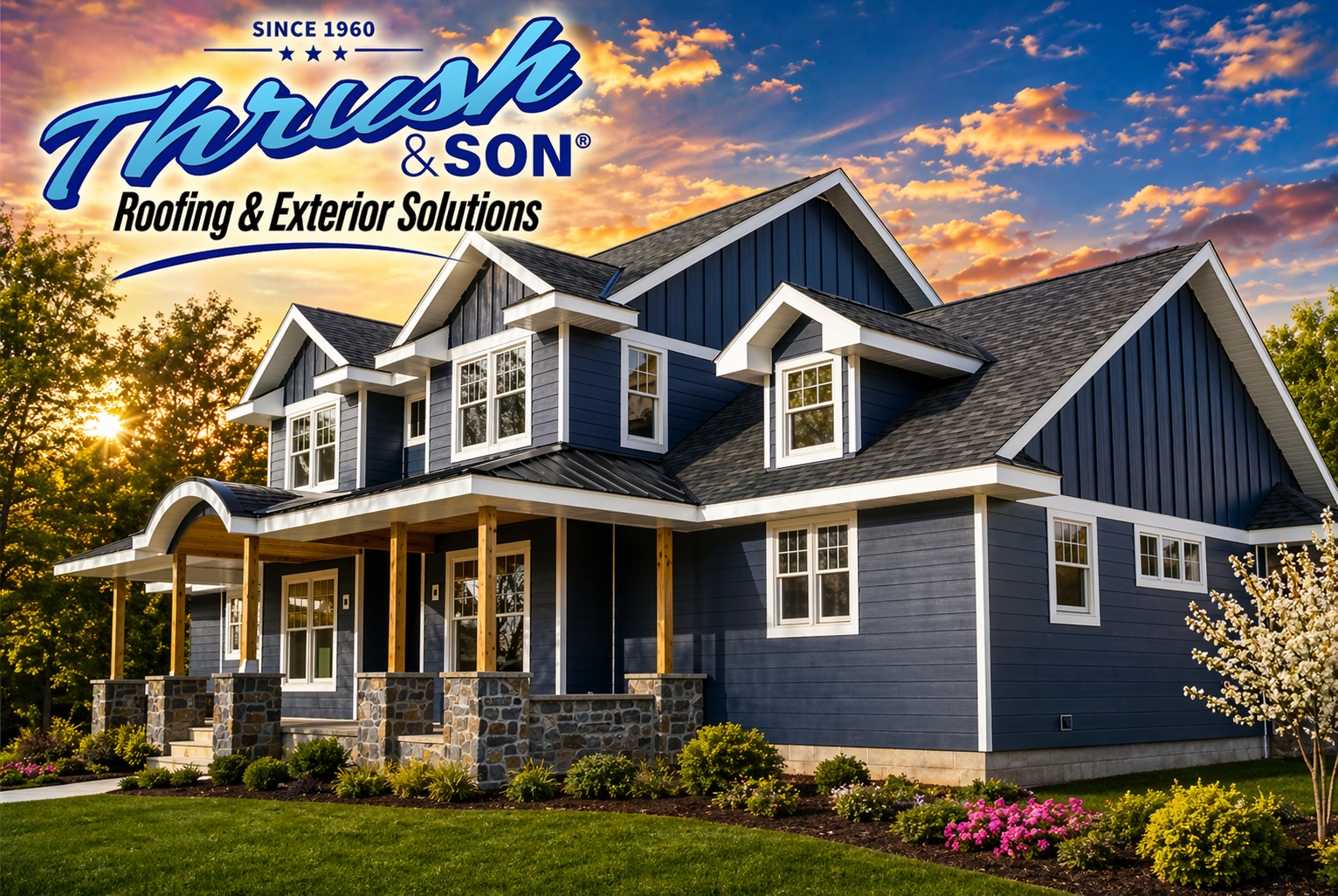
Four Rules for Mixing Siding Styles
Most good-looking houses don’t choose a siding style; they choose two. A mix done well looks custom. A mix done badly looks like two different jobs.
- One main, one accentTwo siding styles look designed. Three start to look like a patch job.
- Change where the house changesSwitch styles at a gable, a dormer, a porch, or a bump-out, never in the middle of a flat wall.
- Let trim make the breakA trim board or frieze where two styles meet looks finished and handles the water.
- Keep colors relatedA mixed-style house reads cleanest when the two colors share an undertone, or the accent is a deeper shade of the main color.
Trim does a lot of the work here; see exterior home trim. And because texture changes color, pick the style and the siding colors together.
Practical Questions Before You Choose a Siding Style
How flat are the walls? Older walls are rarely perfectly straight. Insulated siding like CertainTeed CedarBoards, with foam bonded to the back, stiffens the panel so it lies flatter, and it adds insulation.
Will it be the whole house or a facelift? If you choose a siding style for only part of the house, plan how it meets the walls you’re keeping. A new style on one side of a corner rarely looks intentional.
How much upkeep do you want? Vinyl styles don’t need painting, which is a big part of why homeowners choose them; read the benefits of vinyl.
Where will accents go? Gables, dormers, and porches are natural accent spots. Our vertical vinyl siding page shows board and batten up close, and CertainTeed’s board and batten line lists the colors.
Matchmakers Since 1960
Wilbur Thrush founded Thrush & Son in 1960. W. Allen Thrush owns the company today, and Corey Thrush is the third generation. More than 31,000 Miami Valley homeowners have trusted us, from our Brookville headquarters and offices in Troy and Lebanon.
We install CertainTeed siding in every style on this page, plus the trim that ties them together, so we can help you choose a siding style with the installation in mind. See finished homes in the project gallery and read homeowner reviews.
Choose a Siding Style: Your Questions, Answered
What homeowners ask us most when they sit down to choose a siding style for their house.
What is the most popular siding style?
Horizontal lap siding, in clapboard or Dutch lap, is the style we install most often because it suits so many kinds of houses. Board and batten and shakes are popular as accents and on farmhouse and Craftsman homes.
How do I choose a siding style for my house?
Start with the architecture, then think about how you want the house to feel. Use the matchmaker above as a starting point, then look at real samples on your walls.
Can I mix siding styles?
Yes. When you choose a siding style for the main walls, a second style for accents often looks better. Use one main style and one accent, switch where the house changes shape, and separate the two with trim.
Does siding style affect energy efficiency?
The profile itself doesn’t change much, but the product does. Insulated siding like CertainTeed CedarBoards bonds foam to the back of the panel. See our insulated vinyl siding page.
Is vertical siding only for modern homes?
No. Board and batten has deep farmhouse roots and works on traditional homes, especially on gables. CertainTeed’s board and batten line comes in a range of colors.
Do I need to choose a siding style and color at the same time?
It helps. Texture changes how a color reads, so look at the style and color together. Our siding colors guide has a visualizer to start with.
Let’s Find Your House’s Match
We’ll bring real siding samples to your house, hold them against your roof and trim, and help you choose a siding style that fits. Then you get a written estimate with no pressure. Ask about financing.
Call 937-833-5136 · Office: Mon–Thu 9–4, Fri 9–2 · Michelle, our AI assistant, answers 24/7
Follow Along
New siding matches every week, crew life, and BooBoo, who approves of every style. Meet the family here.
