
If It Sounds Too Good to Be True, It Might Be
Too good to be true is the phrase every homeowner should keep by the front door after a storm. A truck pulls up, a friendly rep knocks, and the offer sounds like relief: a new roof, no deductible, no hassle. Corey Thrush wrote the first version of this post in early 2020, months after the Memorial Day tornadoes tore through the Miami Valley. The lesson hasn’t changed.
This is the 2026 rewrite. You’ll find the eight doorstep lines that sound too good to be true, the deductible math, what a contractor can and can’t do with your insurance claim under Ohio law, and a short scorecard to run before you sign. If you’re dealing with fresh damage now, start with our storm damage guide.
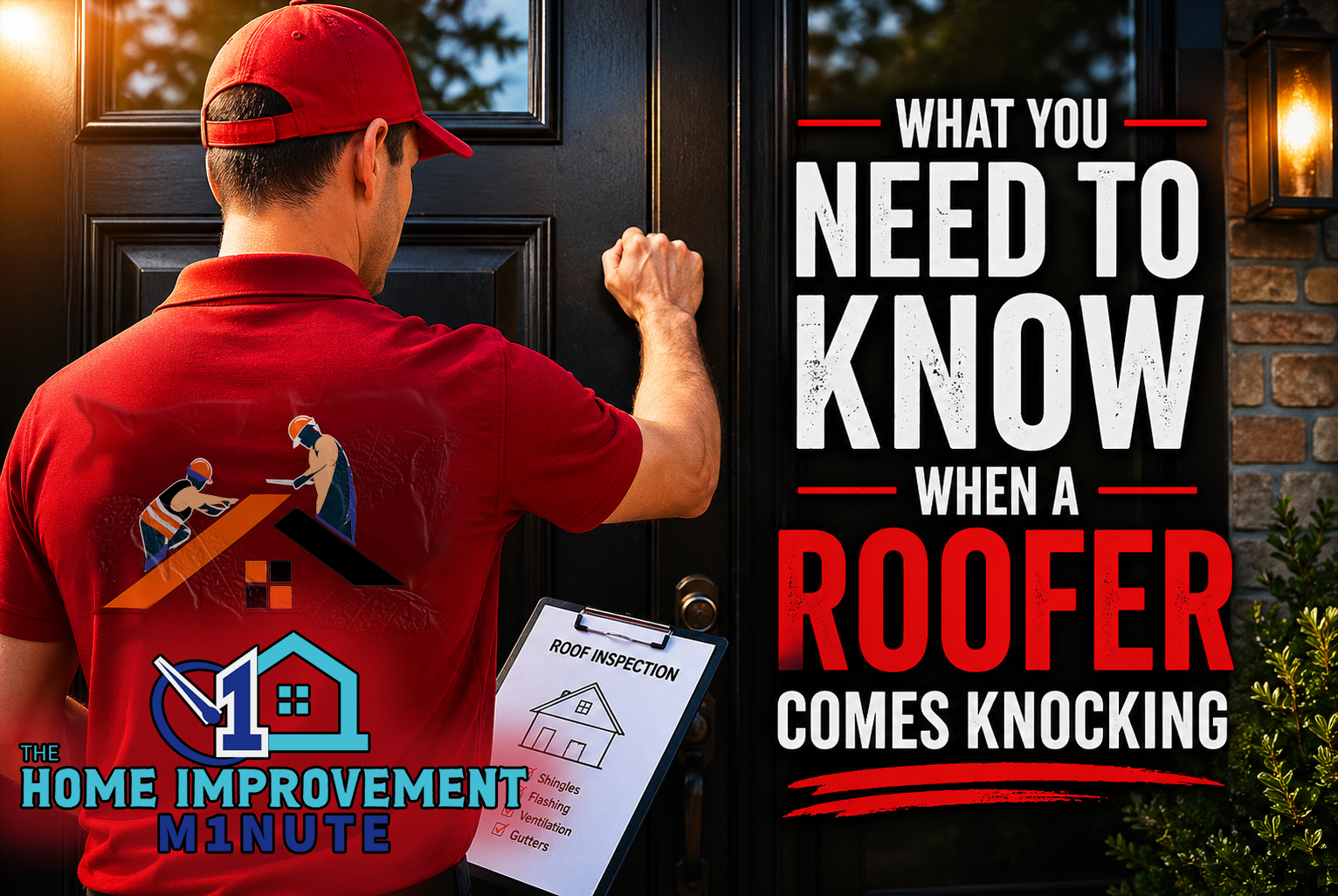
Eight Lines That Sound Too Good to Be True
Storm chasers tend to use the same handful of lines. Each one below is printed the way you’ll hear it. Tap a card to flip it and see why each too good to be true promise falls apart, with the Ohio law or official guidance behind it.
Where a Too Good to Be True Deductible Goes
Here’s a simple example. Hail damages a roof. The insurer approves $12,000 for a replacement, and the policy has a $1,000 deductible. Toggle between the two receipts to see what happens when a too good to be true contractor promises to “take care of” that $1,000.
That too good to be true thousand dollars doesn’t disappear. It comes out of the insurer through a padded invoice, or out of your roof through thinner materials, skipped underlayment, or reused flashing. Either way, you’re the one who signed the claim. Learn what a clean, line-by-line bid looks like in our roofing estimates post.
Example figures for illustration only. Your policy, deductible, and claim will differ.
Roof Replacement · Claim
- Approved replacement cost
- $12,000
- Insurer pays
- $11,000
- Homeowner deductible
- $1,000
- Invoice to insurer
- $12,000
Every dollar on the invoice matches work done on your home. You pay your share, the insurer pays theirs, and the paperwork holds up if anyone ever asks.
Roof Replacement · Claim
- Work actually performed
- $11,000
- Invoice to insurer
- $12,000
- Homeowner deductible
- $0*
- Gap someone has to explain
- $1,000
*The insurer was billed for $1,000 of work that didn’t happen, or the roof was built $1,000 cheaper. Ohio’s insurance fraud statute, ORC 2913.47, covers false or misleading statements to an insurer.
Contractor or Adjuster? Ohio Draws the Line
The old version of this post called it UPPA: the unlicensed practice of public adjusting. Under Ohio Revised Code 3951.02, no person or company may act as a public insurance adjuster in Ohio without a license from the state. A roofer who offers to “handle your claim from start to finish” is making a too good to be true offer and stepping into that lane.
Your roofing contractor can
- Inspect the roof and photograph the damage
- Meet your insurance adjuster on site and point out what they found
- Give you a written, itemized estimate for the work
- Explain code items, materials, and installation details
Only a licensed public adjuster can
- Represent you to the insurer for pay
- Negotiate or settle the claim on your behalf
- Act as your “insurance claims specialist” for the settlement
- Hold a certificate of authority from the state of Ohio
Why does it matter to you? A contractor negotiating your claim has a stake in the size of the check. That’s a conflict, and it can put your settlement at risk if the insurer questions the work. If a claims pitch sounds too good to be true, ask for the person’s public adjuster license. Want to know what our side of the job looks like? We cover it in the right contractor.
Memorial Day, 2019
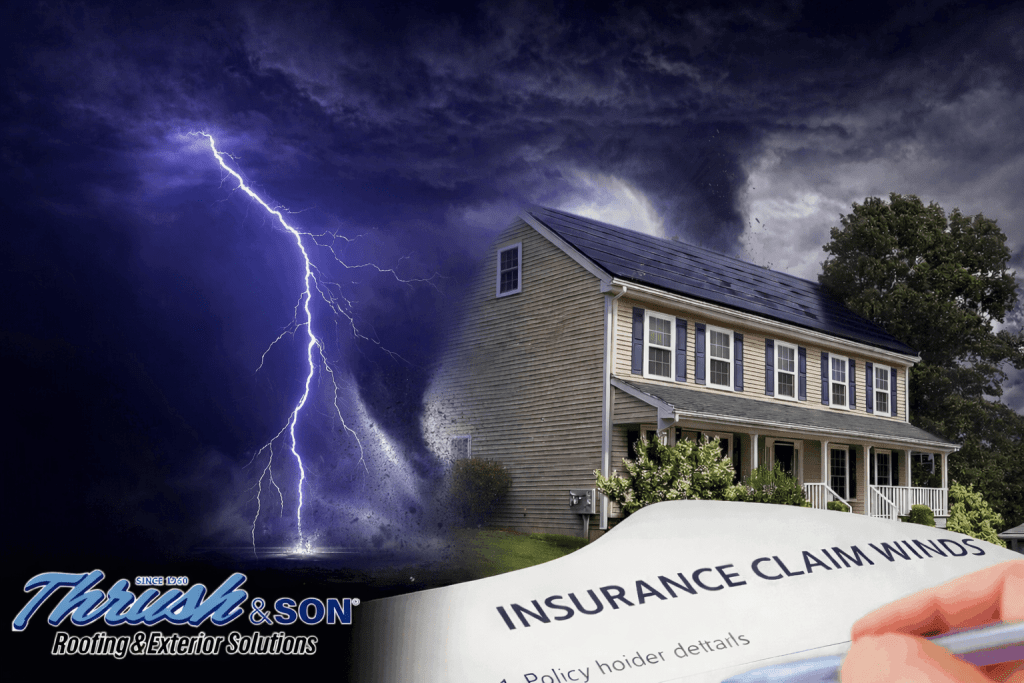
On the night of May 27, 2019, the National Weather Service in Wilmington logged 19 tornadoes across its forecast area. The worst ran through Trotwood and north Dayton as a low-end EF4, according to the 2019 Dayton tornado record, with peak winds near 170 mph and nearly 3,000 homes damaged along an 18-mile path.
I’m Brookville-raised, and 937 runs through my blood. Seeing what that storm did to family, friends, neighbors, and strangers was one of the hardest stretches of my life. Those folks just wanted their homes back and to be treated with respect.
Corey A. Thrush, Thrush & Son®In the weeks after, trucks with out-of-state plates lined the neighborhoods. Some did good work. Others made too good to be true promises, took deposits, and disappeared before the shingles arrived.
The Doorstep Scorecard
The antidote to a too good to be true pitch is a short list of facts you can verify. Check off each one the contractor can show you. A company that clears all eight has nothing to hide. For the full field guide, read our off the roof post too.
out of 8
Anything under 8? Ask why before you sign.
About that ten-year line: the U.S. Bureau of Labor Statistics found that only 40.1 percent of construction establishments that opened in 2013 were still operating in 2023. A long track record under one name isn’t a guarantee, but it means there’s a history you can check, and someone around to honor the warranty.
Taken by a Too Good to Be True Deal? Do This
If a deal that seemed too good to be true has already cost you, whether you paid for work that never happened, received shoddy work, or watched a crew vanish with your deposit, you’re not stuck. The Ohio Attorney General takes complaints about home improvement contractors and storm chasers. Here’s the order we’d follow.
- 1
Write it all down
Save the contract, receipts, texts, business cards, and photos of the work. Note dates and names.
- 2
Call the Ohio Attorney General
Report unfair sales practices at OhioProtects.org or 800-282-0515. The office takes consumer complaints about contractors.
- 3
File with the BBB
A complaint adds to the public record other homeowners read before they hire.
- 4
Contact the Ohio Department of Insurance
If the trouble involves your claim, an adjuster, or a suspected fraud scheme, the Ohio Department of Insurance is the state office to call.
- 5
Tell your insurance company
Your insurer needs to know if a contractor misrepresented anything on your claim.

Built on Trust Since 1960
Thrush & Son® has been family-owned since 1960, three generations working out of the same Miami Valley we live in. We’ll meet your adjuster, document the damage, and give you a written estimate. We won’t make promises that are too good to be true: we won’t negotiate your claim, and we won’t pay your deductible.
We’re a GAF President’s Club Contractor with an A+ BBB profile and a stack of homeowner reviews you can read tonight.

Too Good to Be True FAQs
Is it legal for a roofer to pay my insurance deductible?
Paying or hiding a deductible usually means the insurer is told the job cost more than it did, or the work is cut to make up the difference. Ohio law (ORC 2913.47) makes false or misleading statements to an insurer a crime, and the homeowner who signs the claim can be pulled into it.
Can my roofing contractor talk to my insurance adjuster?
Yes. A contractor can meet the adjuster, point out damage, and provide a written estimate. In Ohio, negotiating or settling the claim on your behalf for pay is the work of a licensed public insurance adjuster (ORC 3951.02).
How long do I have to cancel a door-to-door roofing contract in Ohio?
Ohio’s Home Solicitation Sales Act generally gives you three business days to cancel a contract signed at your home, and the seller should give you written notice of that right.
How do I check a roofer before I sign?
Look the company up with the Ohio Attorney General and the BBB, read reviews, ask for proof of workers’ comp and liability insurance, confirm a local address, and get three written estimates.
What should I do if an offer feels too good to be true?
When an offer feels too good to be true, slow down. Take the contract, ask for the company’s details in writing, and check them before you sign. Anyone legit will still be there tomorrow.
Where do I report a storm chaser in Ohio?
If a storm chaser’s offer turned out too good to be true, report unfair sales practices to the Ohio Attorney General at OhioProtects.org or 800-282-0515, file with the BBB, and contact the Ohio Department of Insurance about claim-related concerns.
Still unsure whether an offer is too good to be true? Send it to us. We have answers, and a second opinion costs you a phone call.
Get a Straight Answer Before You Sign
Had a knock on the door with an offer that seemed too good to be true? We’ll inspect your roof, show you what we find, and put it in writing. No pressure, no deadline. Explore Dayton roofing or financing options.
