
You Want a New Door. Here’s the Whole Trip.
A new door usually starts with a moment on the porch: the paint is peeling, the lock fights back, or you just want the house to look better from the street. Corey Thrush wrote the first version of this post years ago for exactly that homeowner, and the question hasn’t changed: where do you start?
This version walks the whole trip, from the signs it’s time to what happens on install day and the first season after. If you’re still choosing between fiberglass and steel or reading the fine print on a quote, start with our door guide; this post picks up from there.

Six Signs It’s Time for a New Door
Tap a plaque to see what each sign means. One of them on its own might be a quick fix; two or three together usually means the frame and sill are done, not just the slab.
-
If you can see light around the slab or under the sill, air and water can get through too. Weatherstripping helps for a while; a tired frame keeps losing the fight.
-
A door that rubs, sags, or needs a shoulder to lock usually means the frame has shifted or the hinges have worked loose from soft wood.
-
Press a screwdriver into the sill and the bottom of the frame. If it sinks in, water has been getting behind the trim, and the rot rarely stops at what you can see.
-
A wood door that won’t hold paint, or a steel door with rust creeping from a dent, has lost the finish that protects it.
-
Condensation trapped between panes of a door lite means the seal on that glass unit has failed.
-
That counts. The front door is the handshake of the house, and a new door is one of the quickest ways to change how the whole place looks from the street.
Fix it or replace it? New weatherstripping, a hinge adjustment, or a fresh coat of paint can buy a sound door a few more years. When the sill is soft, the frame is out of square, or the slab itself is warped or rusting, a patch only moves the problem around. That’s when we recommend replacing the whole unit, frame and sill included, instead of hanging a new slab in a tired opening.
Four Keys to a New Door
Every new door project runs through the same four steps. Pick a key to see what happens at each one and what you should expect from us.
Pick the door, not just the color
Most front doors we install are fiberglass, because it won’t rot, warp, or rust and a wood-grain skin can be stained. Steel costs less and feels solid, but it can dent. Our door guide compares the two side by side and decodes the terms on a quote.
Then the fun part: glass, sidelites, hardware, and color. Bring a photo of a door you like; it’s the fastest way to narrow the choices.
We measure the opening, not the old door
The old door tells us very little. We measure the rough opening, check whether the walls are plumb, and look at the sill and framing for rot before anything is ordered.
Your new door is built to that measurement, so we give you the order and install dates in writing when we place the order, instead of guessing at the kitchen table.
One day, start to finish, for most doors
Most entry doors go in within a day, and your house is closed up before we leave. Doors with new sidelites, transoms, or rotted framing can take longer, and we’ll tell you that up front.
The full step-by-step is on our entry doors page; the short version is in the timeline below.
Live with it, then let us fine-tune it
New sills and weatherstripping settle as the seasons change. If the latch feels stiff in January or you see light at a corner, call us; small adjustments are part of the job.
Thinking about a storm door in front of your new door? Check the warranty first; a full-glass storm door on a sunny entry can trap heat against the door. More in steel storm doors.
What Install Day Looks Like
For a standard entry door, the whole job fits in one day. Here’s how that day usually runs, so nothing about it is a surprise.
- Morning
Protect and remove
Drop cloths go down inside, the old door, frame, and sill come out, and we look at what’s underneath.
- Late morning
Fix what we find
Soft subfloor or rotted framing under the old sill is replaced before anything new goes in.
- Midday
Pan and flash
A sill pan and flashing tape turn water back outside. It’s the step rushed installs skip.
- Afternoon
Set it square
The new door is shimmed plumb, level, and square, then insulated around the frame.
- Before we leave
Adjust, trim, clean
We tune the latch, sill, and seals, finish the trim, clean up, and walk you through the locks.
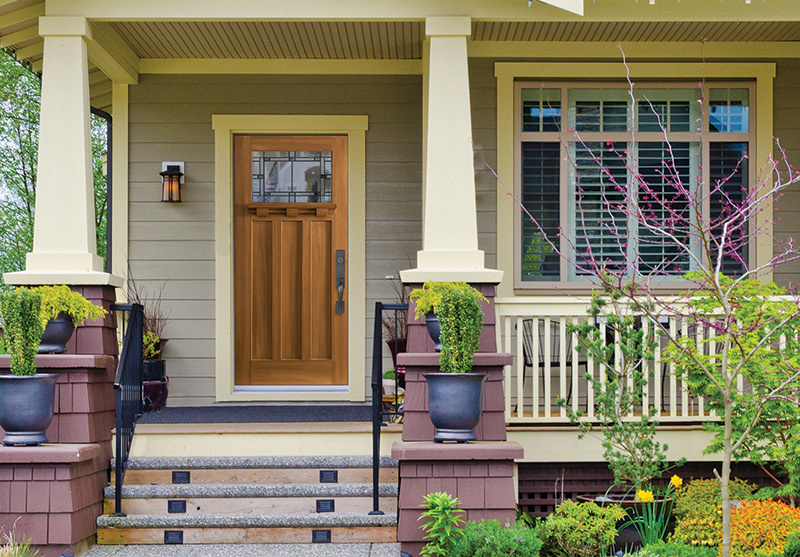
Why a Front Door Pays You Back
Few projects return more at resale than a new front door. Most of the doors we install are Masonite fiberglass, built as a system so the frame and seals work with the slab. See all the options on our entry doors page.
- BellevilleSmooth and wood-grain fiberglass in classic panel and glass designs.
- HeritageCraftsman-inspired detailing that suits older Miami Valley homes.
- BarringtonDeep wood-grain fiberglass for a stained, high-end look.
Glass changes the whole feel of an entry. Decorative or textured glass lets light into a dark foyer while keeping privacy, and sidelites or a transom can make a narrow entry feel twice as wide. Multi-point locks latch the door at several points along the frame for a tighter seal and a stronger lock.
The seal is the system
Masonite’s Performance Door System pairs a square-edge fiberglass door with a self-adjusting sill, adaptive weatherstripping, and enhanced corner pads to protect against air and water (Window & Door).

Five Things to Settle Before Your New Door Arrives
Corey’s original list still holds up. Settle these and install day runs smoothly.
- The start dateConfirm the day, the arrival window, and anything you need to move inside.
- Pets and kidsAn open doorway for a few hours is an escape route; plan a room for the dog.
- Parking and deliveryWhere the truck, the new door, and the old door will sit.
- One contactWho to call during the install, and who walks the finished door with you.
- Everything in writingScope, materials, timeline, cleanup, and how warranty adjustments work.
Still choosing who will install it? Read the right company before you sign anything.
Who Hangs It Matters
Thrush & Son® has installed doors across the Miami Valley since 1960. We replace the whole unit, flash the sill, and adjust the door before we leave, then come back if the first season needs a tweak. See finished entries in our project gallery.
We hold an A+ BBB rating, we’re a GAF President’s Club Contractor on the roofing side, and you can read our homeowner reviews.

New Door FAQs
How do I know it’s time for a new door?
Daylight around the edges, a door that sticks or won’t latch, soft wood at the sill, peeling or rust, and fog between the glass are the common signs. Wanting a new look counts too.
How long does it take to install a new door?
Most entry doors are installed in one day. Doors with new sidelites, transoms, or rotted framing underneath can take longer, and we’ll tell you before the job starts.
Should I replace the frame or just the door?
Almost always the whole unit. Most drafts and leaks come from a worn frame, sill, or weatherstripping, so a complete door system fixes all of it at once.
Is replacing a front door worth the money?
The Cost vs. Value report lists steel entry door replacement as recouping about 216% of its cost at resale nationally, one of the highest returns of any project it tracks.
Fiberglass or steel for a new door?
Fiberglass suits most front doors because it won’t rot or rust and can be stained. Steel costs less and is very secure but can dent. Our door guide compares them.
Can I put a storm door in front of my new door?
Often yes, but read the entry door warranty first. A full-glass storm door on a sunny entry can trap heat against the door; a vented or screened storm door is safer.
Something else on your mind? We have answers.
Start Your New Door
We’ll measure the opening, check the sill and framing, and put the door, the price, and the dates in writing. Explore entry doors, patio doors, or financing options.
