
Leaky Gutters Build Ice Right Where You Walk
Leaky gutters do their worst work in winter, and most homeowners never see it happen. A seam that drips a little in October can lay down a sheet of clear ice on your front steps by January, then hang a row of icicles over the door you use every day.
Picture a Saturday morning in late January. The snow stopped two days ago, the sun is out, and you step onto the porch to grab the paper. The walk looks wet. It isn’t. It’s black ice, fed all week by one quiet drip from the corner of the gutter above.
Our family has been looking up at Miami Valley gutters since 1960. Here’s how leaky gutters turn into ice, and how to stop the drip for good.
A leaky gutter drips meltwater onto concrete that sits in the shade. At sundown it refreezes into black ice and icicles. Find the drip on a rainy day, seal or replace the leaking part, keep the gutter clean, and send every downspout away from walkways.
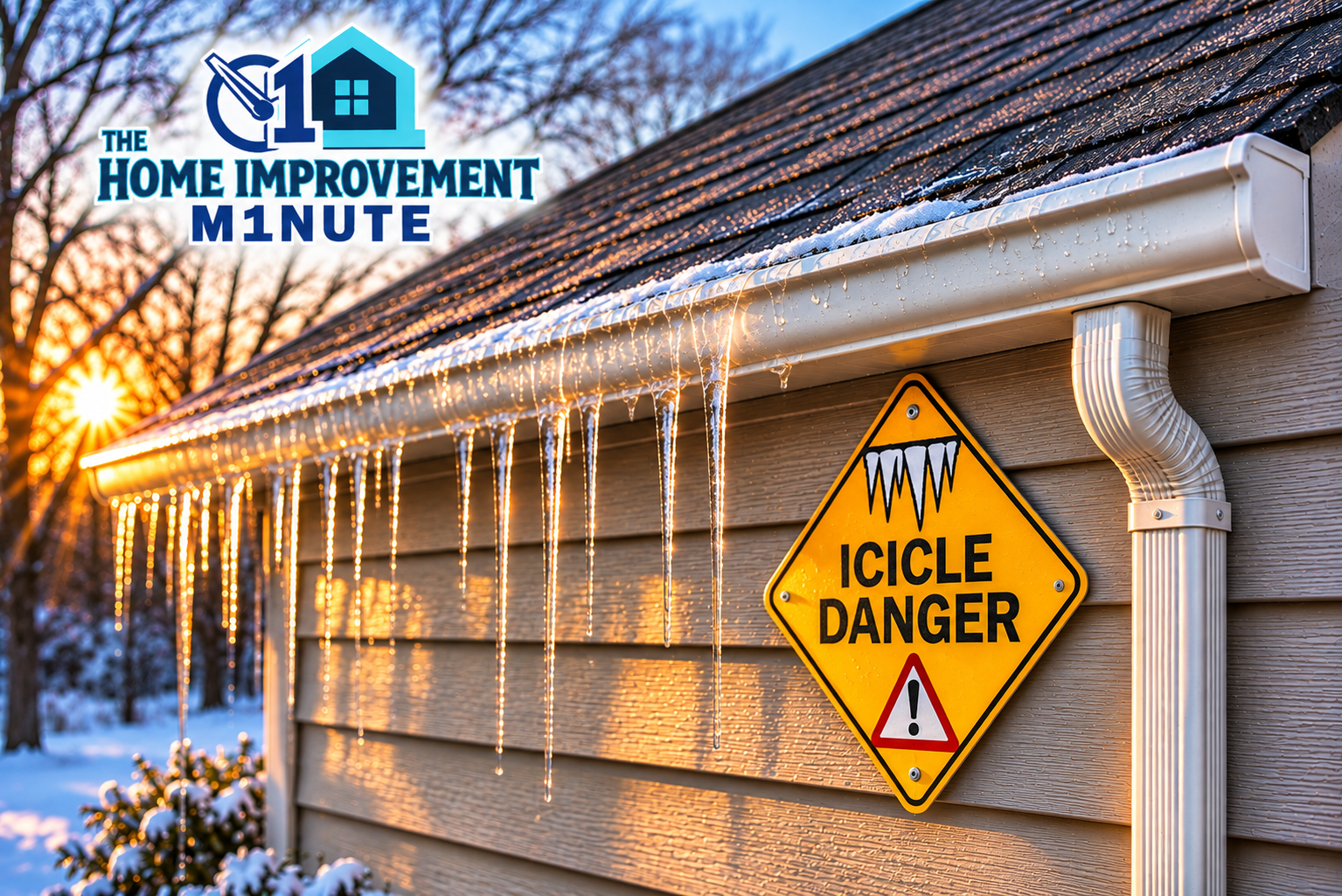
Your Leaky Gutters Game Plan
How Leaky Gutters Turn Into Black Ice
Leaky gutters don’t need rain to make ice. A sunny afternoon after a snowfall is enough, because sunlight and attic heat melt roof snow even when the air is below freezing.
- Afternoon meltSun warms the shingles and the snow starts to run, even on a 28° day.
- The gutter fillsWater moves along the trough toward the downspout, and it finds every open seam on the way.
- The dripIt slips out of a seam, an end cap or a cracked elbow and falls onto the step, walk or driveway below.
- Dusk refreezeThe sun drops, the shady concrete freezes first, and you get clear black ice by morning.
Runoff math: 1 inch of water over 1 square foot is 144 cubic inches, or 0.623 gallons. Fall figures: National Safety Council Injury Facts.
Find the Drip Before It Finds You
Leaky Gutters at the Seams
What you’ll see: drip lines or rust streaks on the fascia every 10 to 20 feet, right where two gutter sections meet. Sectional gutters have a joint at every piece.
What it does in winter: a steady drip in the same spot, which builds a lump of ice on the ground and a thick icicle above it.
The fix: clean and dry the joint, then reseal it with gutter sealant made for the metal. If seams keep failing, seamless gutters remove the joints along the run entirely.
End Caps That Weep
What you’ll see: water running out of the gutter’s corner, often right above a step or the garage. Leaky gutters hide here in plain sight.
What it does in winter: it drips at the house corners, the shadiest, coldest spots on the lot.
The fix: reseal the cap from the inside, or replace a bent cap so it seats tight against the gutter.
Outlets, Elbows and Downspouts
What you’ll see: water spraying out of a crushed elbow, a loose outlet, or a downspout that dumps beside the front walk.
What it does in winter: all of the runoff gathers here, so leaky gutters at the outlet do the most damage. A downspout that empties onto a sidewalk can coat it in one evening.
The fix: replace damaged elbows, fasten loose sections, and extend or reroute downspouts so water lands in the lawn, away from walkways, the driveway and the foundation.
Clogged Gutters That Overflow
What you’ll see: water sheeting over the front lip in a downpour, with leaves sticking up out of the trough.
What it does in winter: the clog freezes solid, the gutter becomes an ice tray, and meltwater spills over the full length of the run.
The fix: clean the gutters after the last leaves fall, flush every downspout with a hose, and consider a micromesh gutter guard so the clog never forms.
Sagging Gutters With the Wrong Pitch
What you’ll see: standing water in the trough a day after rain, or a gutter that dips between hangers.
What it does in winter: still water freezes first, adds weight, and pulls the gutter farther away from the fascia, opening the seams even more.
The fix: rehang the run with hidden hangers and the right slope toward the downspout, or replace the section if the metal is bent.
Tap each leak spot to see what it looks like, what it does in winter and how it’s fixed.
What Your Icicles Are Telling You
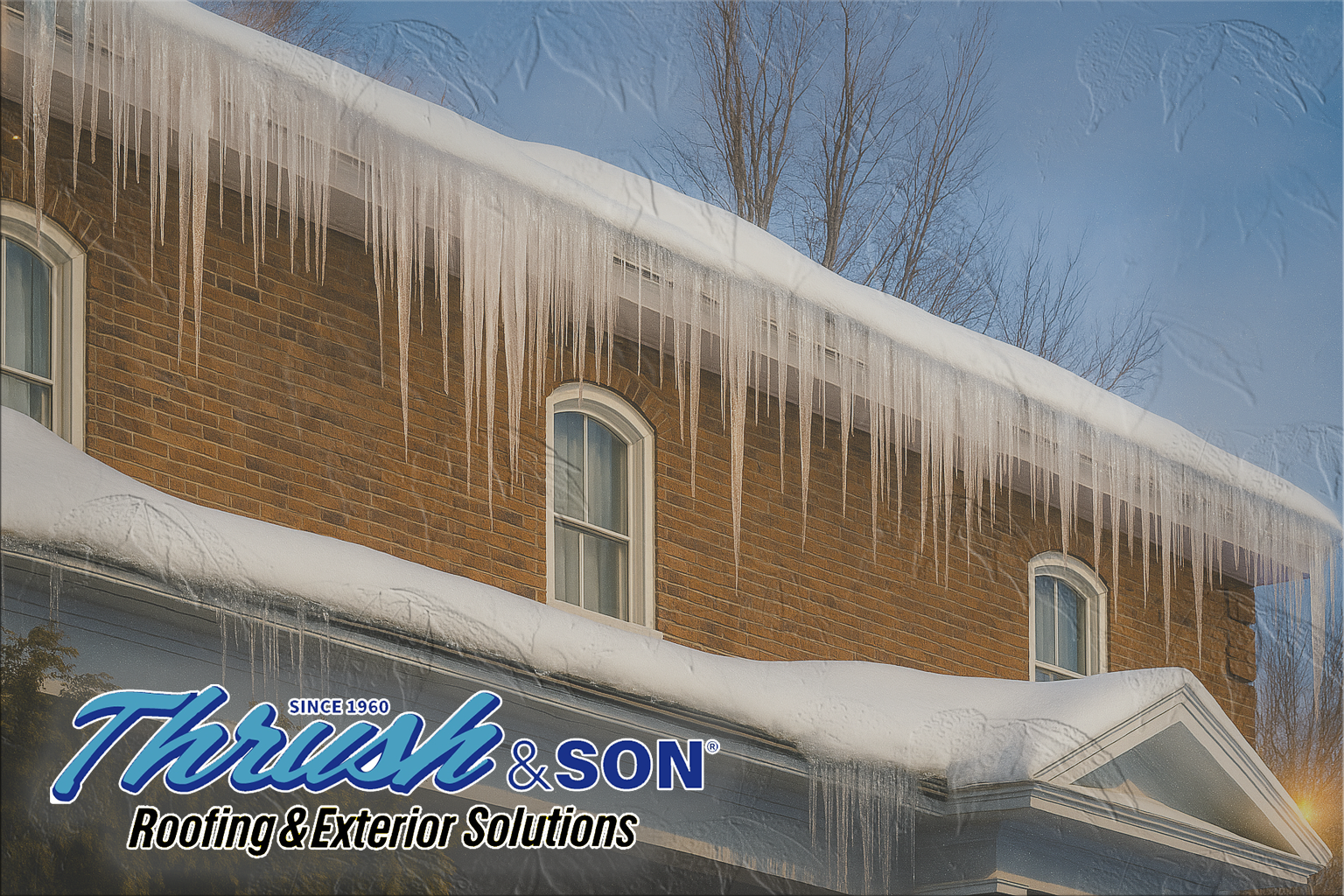
Icicles are heavy, they fall without warning, and they always point to a water problem above. Where they hang tells you whether you’re dealing with leaky gutters, a clog or an ice dam.
After a cold snap, look up, then look straight down at the concrete under each one.
One Big Icicle
A single spot means a single leak: a seam, an end cap or an elbow. Leaky gutters almost always start here.
A Curtain Along the Run
Icicles along the whole gutter mean it’s overflowing. Look for a clog, a frozen downspout or a run that has lost its pitch.
Ice Ridged at the Eave
A thick ridge of ice on the shingles above the gutter is an ice dam. That starts in the attic, and our ice dam prevention guide walks through the cause-first fix.
The Ohio Liability Twist on Leaky Gutters
Ohio courts generally follow what’s called the natural accumulation rule. Ice that forms from ordinary snow and weather usually isn’t the property owner’s fault.
Ice from leaky gutters can be a different story. As a Dayton attorney explained to the Dayton Daily News, ice forming from a leaking gutter can be treated as an unnatural accumulation, and the homeowner could be held responsible if someone is hurt.
Think of the mail carrier, the neighbor with cookies and the grandkids running up the steps. Sealing leaky gutters costs far less than a fall.
This is general information, not legal advice. Talk with an attorney or your insurance agent about your situation.Your 20-Minute Rainy-Day Walk-Around
A steady rain is the easiest time to spot leaky gutters, and you can do it from the ground with an umbrella. Stay off ladders in wet or icy weather.
- Walk the whole house. Watch every seam, corner and end cap for drips or spray.
- Follow each downspout. Make sure water comes out the bottom, not out of a joint halfway down.
- Check where the water lands. It should end up in the lawn, never on a step, walk or driveway.
- Look for overflow. Water sheeting over the front lip means a clog or a bad pitch.
- Mark the spots. Photograph each drip so it’s easy to find on a dry day.
- Check the fascia. Dark streaks or soft wood mean leaky gutters have been at work for a while.

“A gutter that drips in November builds an ice rink by January.”
Leaky gutters don’t announce themselves. Five minutes in the next rain shows you exactly where winter’s ice will be.
Warm-Up Brisket Chili
What You’ll Need
- 2 lb leftover smoked brisket, chopped
- 1 onion and 1 bell pepper, diced
- 3 cloves garlic, minced
- 2 cans (15 oz) beans, drained
- 1 can (28 oz) crushed tomatoes
- 2 tbsp chili powder, 1 tsp cumin, salt to taste
- 1 cup beef broth
How to Make It
- Brown the onion, pepper and garlic in a Dutch oven.
- Add the spices and stir for one minute.
- Add the brisket, beans, tomatoes and broth.
- Simmer low for 45 minutes, stirring now and then.
- Top with cheddar and green onion, and serve with cornbread.
Get it simmering, then go watch the rain run through your gutters.
Leaky Gutters FAQ
Can leaky gutters cause ice on my sidewalk?
Yes. Melting snow runs into the gutter, drips out of a seam, end cap or elbow, and refreezes on shaded concrete after sundown. That’s how leaky gutters create black ice on steps and walks.
Are icicles on my gutters a bad sign?
They point to water going where it shouldn’t. One large icicle usually marks a single leak. A row of icicles suggests overflow from a clog or poor pitch, and a ridge of ice on the shingles suggests an ice dam.
Can I seal a leaking gutter seam in winter?
Most sealants need a clean, dry surface and mild temperatures to bond. A temporary fix may hold, but plan a proper seal once the weather allows.
How often should gutters be cleaned in Ohio?
At least twice a year: late spring and after the last leaves drop. Clean gutters are far less likely to become leaky gutters, and a gutter guard helps.
Do seamless gutters stop leaks?
They remove the seams along each run, where most leaks start. Corners, end caps and outlets still need a good seal.
Stop the Drip Before It Turns to Ice
Thrush & Son® — Trusted exterior pros since 1960. Proudly serving Dayton and the Miami Valley with roofing, siding, windows, doors and gutters.
If you’ve spotted leaky gutters, a sag or a downspout dumping on your walk, don’t wait for the first ice storm. Schedule a no-obligation estimate, and we’ll find every leak and show you whether a seal, a reroute or new seamless gutters with gutter protection is the right answer.
Prefer to talk it through? Call (937) 833-5136 · 115 Jefferson St, Brookville, OH 45309
Protect Your Roof Investment
Want to protect your roof investment? Read our post on roof warranties, then dig into the rest of your winter plan.
