
Wind Damage: 5 Urgent Steps When the Sky Turns
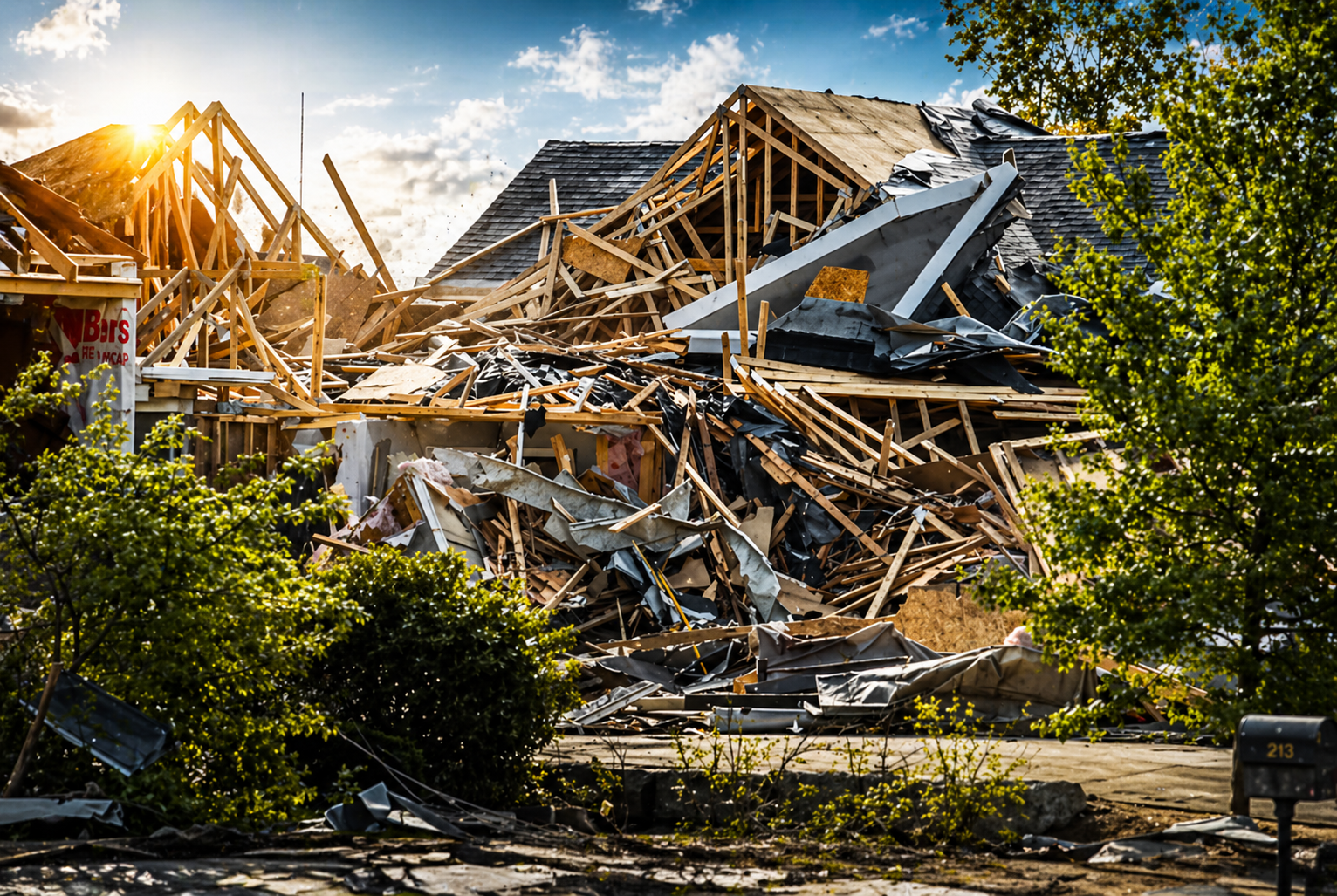


Wind damage is not a hypothetical in the Miami Valley this week. Reports of possible tornado touchdowns near Urbana and Ansonia are still awaiting National Weather Service survey confirmation — and the Storm Prediction Center has the entire region under an Enhanced Risk, level 3 of 5, with more severe weather moving in today.
At Thrush & Son®, family owned since 1960, we have walked more roofs after more Ohio storms than we can count. Three generations have taught us one thing above all: the homeowners who come through a storm best are the ones who decided what to do before the sirens.
The 30-Second Version
Shelter on the lowest floor, innermost room, away from every window. After it passes, photograph everything before you clean up. Then verify any contractor who knocks in the Ohio Secretary of State database — it is free, takes ninety seconds, and it is the single fastest way to spot a storm chaser.
Wind Damage Risk: What “Enhanced” Actually Means
The Storm Prediction Center rates severe weather on a five-level scale. Most people hear the words on the morning news and guess at the rest. Here is the plain version, and where today sits.
Level 3 is not a day to shrug at. Forecasters are calling for widespread damaging gusts — some potentially exceeding 75 mph — along with hail and the possibility of an isolated tornado across Champaign, Clark, Madison, Darke, Miami, and Montgomery counties.
Here is the part homeowners in Urbana, Springfield, and London do not always realize: a 75 mph straight-line wind does the same thing to a roof that a weak tornado does. Shingles lift, seals break, flashing pulls loose. The insurance claim looks identical. Straight-line wind causes far more roof loss across Ohio every year than tornadoes do — it just never gets a name.
Before It Hits: Where You Go Matters Most
Your Safe Spot, Decided in Advance
Every second spent deciding where to go is a second you are not already there. Warnings in this part of Ohio often come with less than ten minutes of lead time. Pick the spot now, tell everyone in the house, and do not renegotiate it while the wind is up.
A basement is best. No basement? The first floor — never upstairs. Wind pressure and debris impact are worst at height.
Put as many walls between you and the outside as you can. An interior bathroom, closet, or hallway. Bathrooms carry a bonus: the plumbing in the walls adds structure.
Flying glass causes a large share of storm injuries. And do not open windows to “equalize pressure” — that myth has never been true, and it costs you the time you needed.
A heavy table or workbench. Cover your head and neck with your arms, a mattress, or cushions. Bike helmets count — head injury is the leading cause of tornado fatalities.
If you live in a mobile or manufactured home, leave before the warning. Even a well-anchored unit is not a shelter in tornadic winds. Know the nearest sturdy building now, while you still have time to drive to it calmly.
The Ten-Minute Prep
Charge every phone. Bring in patio furniture, trash cans, umbrellas, and anything else that becomes a projectile at 70 mph. Put shoes beside your safe spot, because after a storm the floor is glass. Fill a pitcher with water. And make sure someone in the house has weather alerts enabled — outdoor sirens were designed to warn people who are outside, and they were never meant to wake you up indoors.
One more, and it costs nothing: walk your yard and photograph your home from all four sides. If wind damage happens tonight, those “before” pictures become the most valuable thing in your claim file.
Wind Damage: Documenting It the Right Way
The first hour after a storm sets up everything that follows. Do it in this order.
Treat every downed line as live. Stay clear of standing water near electrical equipment. Do not climb a wet or damaged roof — that is our job, and we carry insurance for it.
Wide shots of every elevation, then close-ups. Include debris on the ground: shingle granules in the gutters, siding pieces in the yard, a bent gutter apron, dented soft metals. Timestamps matter. Do not clean up first.
Tarp what is open to keep water out, and keep every receipt. Most policies cover reasonable emergency mitigation. What they will not cover is damage that got worse because nobody acted.
Call your carrier directly. Do not let a stranger file on your behalf. Your wind damage claim belongs to you — not to whoever knocked first.
Write down what you saw and when: the time the storm hit, the direction the wind came from, whether you heard hail on the windows. Memory fades fast, adjusters arrive days later, and specific detail is what separates a paid claim from a disputed one.
The Knock at the Door
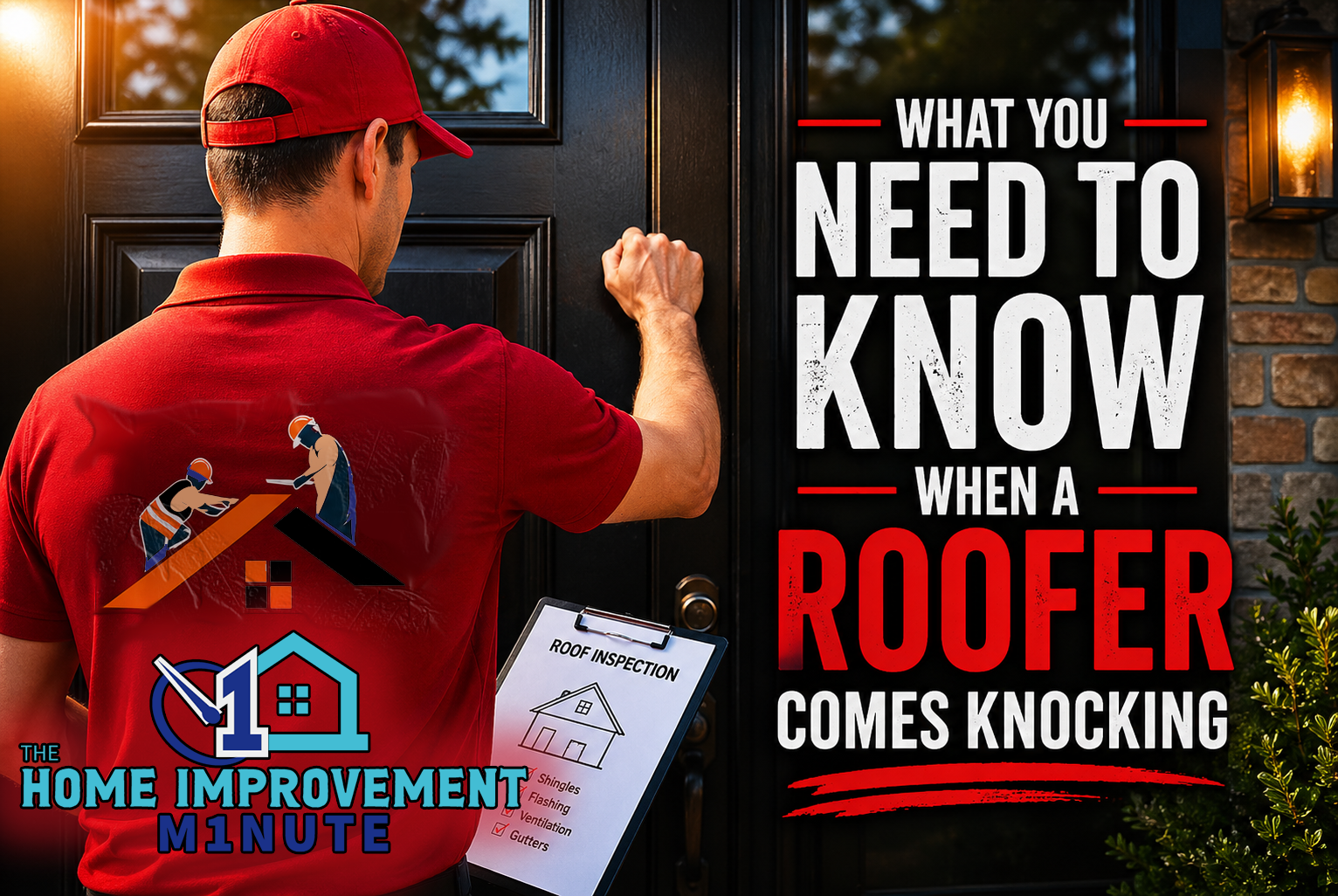
Within 48 hours of visible wind damage, out-of-state crews will be working these neighborhoods. Some are legitimate. Many are not. They are called storm chasers, and the pattern never changes: they follow the weather in, collect deposits, do fast work or no work at all, and leave before the first winter tests it.
By the time the leak shows up in February, the phone number is disconnected and the LLC has been dissolved. We have re-roofed more Champaign and Clark County homes behind these outfits than we care to remember — and the homeowner pays twice.
Red Flags Worth Walking Away From
✕ Unsolicited door knocking right after a storm
✕ “Today only” pricing or pressure to sign on the spot
✕ A P.O. box instead of a street address you could drive to
✕ An out-of-state area code or a temporary cell number
✕ A large deposit demanded up front
✕ An offer to “cover” or “waive” your deductible
✕ No verifiable online presence, reviews, or local references
✕ A bid dramatically lower than everyone else’s
That deductible one deserves its own sentence. When a contractor offers to eat your deductible, they are proposing insurance fraud — and accepting it makes you a participant, not a bystander. A legitimate company will never suggest it.
Any single flag might be nothing. Three together is your answer.
Choosing a Contractor Who Will Still Be Here
Longevity Is the First Filter
Search the company name in the Ohio Secretary of State business database. It is free and takes ninety seconds. If the LLC was registered a few months ago, that is a flag — storm chasers routinely form new entities before entering a market and dissolve them on the way out. You want years of continuous operating history in this state, under this name.
A warranty is only worth the lifespan of the company behind it. A twenty-five year workmanship guarantee from a business that will not exist in twenty-five months is a piece of paper, nothing more.
Reputation You Can Actually Verify
Look for a physical address you could drive to this afternoon. Check the Better Business Bureau record and note how long it has existed, not just the letter grade. Read reviews that mention the town you live in. Ask for local references and actually call one — homeowners are remarkably candid about a roof.
Manufacturer certifications matter too, because they are earned rather than purchased. GAF Master Elite status, for instance, is held by a small percentage of roofing contractors nationwide and requires documented licensing, insurance, and a sustained reputation. Certifications also unlock warranty coverage that uncertified installers simply cannot offer.
Three Questions Most Homeowners Forget
Adjusters work for the insurance company. A contractor who knows wind damage documentation will walk that adjuster through the roof and point out what gets missed. Hesitation here tells you everything.
It decides who is accountable for workmanship — and who you call when something needs fixing.
A local contractor gives you a name and a number without pausing. Anything vaguer than that is your answer.
Then verify the basics in writing: general liability coverage, workers’ compensation, and an estimate that spells out materials, timeline, payment schedule, permit responsibility, and warranty terms. Never sign the same day someone knocks.
What Happens With Your Insurance Claim
Every policy is different, and we will never tell you what yours covers — that conversation belongs between you and your carrier. What we can tell you is how the process usually runs, so nothing catches you off guard.
You file. The carrier assigns an adjuster. The adjuster inspects and writes a scope of damage. That scope becomes the basis of the settlement. If real wind damage gets missed during that inspection, it generally does not get paid — which is precisely why having your contractor on the roof alongside the adjuster changes outcomes.
Deadlines are real. Most policies require prompt notice, and waiting months to report wind damage is one of the most common reasons claims get denied. If you suspect damage today, get it documented this week.
The Takeaway Worth Sharing
A storm lasts twenty minutes. The contractor you choose in the days afterward is on your home for the next twenty years.
Send this to a neighbor before someone knocks on their door.
Let’s Get You Through This
Thrush & Son® — trusted exterior pros since 1960.
Proudly serving Dayton, Cincinnati, and Northern Kentucky with roofing, siding, windows, and doors. If this system leaves wind damage behind, we will walk your home, document what we find honestly, and tell you straight whether you have a claim worth filing. Free, no pressure — and nobody knocking on your door to sell you anything.
➡️ Schedule in Dayton➡️ View All Services
Or call us direct: (937) 833-5136 | 115 Jefferson St., Brookville, OH 45309
Urbana & Champaign County: (937) 815-4612
Further Reading
Avoid Costly Mistakes: Find the Right Company
The contractor vetting conversation, in depth.
Official sources: NWS Wilmington for local warnings and damage surveys, and Ready.gov for shelter guidance.
Stay Connected with the Thrush & Son® Family



inConnect with W. Allen Thrush on LinkedIn for leadership and legacy insights.
inFollow Corey Thrush on LinkedIn for innovation and forward-thinking vision.
inVisit the Thrush & Son® LinkedIn Business Page for company news, awards, and opportunities.
fJoin the homeowner family on Facebook for real projects, real stories, and community updates.
◎Explore behind-the-scenes craftsmanship on Instagram
◎Catch behind-the-scenes chaos and cuteness on BooBoo’s Instagram
@Follow Thrush & Son® on Threads for stories, tips, and updates.
