
Roofing terms, in plain English
Roofing terms can feel overwhelming when you aren’t in the construction world every day, yet homeowners are expected to make big decisions about their roof in that language.
That gap leads to confusion, miscommunication and costly mistakes. This glossary of roofing terms breaks the jargon into plain language, so you can talk with contractors confidently, read your estimates line by line and protect your investment.
Each definition comes from how our crews actually use the word on a Miami Valley job site. Where one of these roofing terms shows up on a quote, we’ve added a gold note telling you what to look for.
Five roofing terms that move the price
If you only learn five words before your estimate appointment, make it these. These roofing terms explain most of the difference between two quotes.
- 01SquareHow the job is measured and priced.
- 02DeckingWhat’s under the old roof, and what it costs if it’s bad.
- 03UnderlaymentThe backup layer if water gets past the shingles.
- 04FlashingWhere most leaks actually start.
- 05VentilationWhat decides how long the shingles last.
34 roofing terms, sorted for you
Filter by group, or scan them all. Gold cards are the watch-outs: the roofing terms that point to a shortcut.
3-tab shingle
A basic, single-layer asphalt shingle. The exposed part is cut into three equal tabs, which gives the roof a flat, uniform look.
On your estimate: Mostly replaced by architectural shingles today, so ask if a quote still lists it.
Architectural shingle
A multi-layer asphalt shingle with added depth and shadow lines. You’ll also hear it called dimensional or laminated.
Asphalt shingle
The most common residential roofing material: a fiberglass mat coated in asphalt and topped with mineral granules.
Cool roof shingle
A shingle made to reflect more sunlight and absorb less heat, which helps lower attic temperatures and cooling costs. Some carry the ENERGY STAR label.
Cricket
A small peaked structure built on the uphill side of a chimney or other projection. It splits the water and sends it around, so it can’t pool.
On your estimate: Wide chimneys often need one. If yours does, it should be on the estimate.
Designer shingle
A premium asphalt shingle shaped and colored to look like slate or wood shake, for higher-end curb appeal.
Drip edge
Metal trim along the eaves and rakes that guides water off the roof and away from the fascia.
On your estimate: It should be new, not reused. Missing drip edge is a common shortcut.
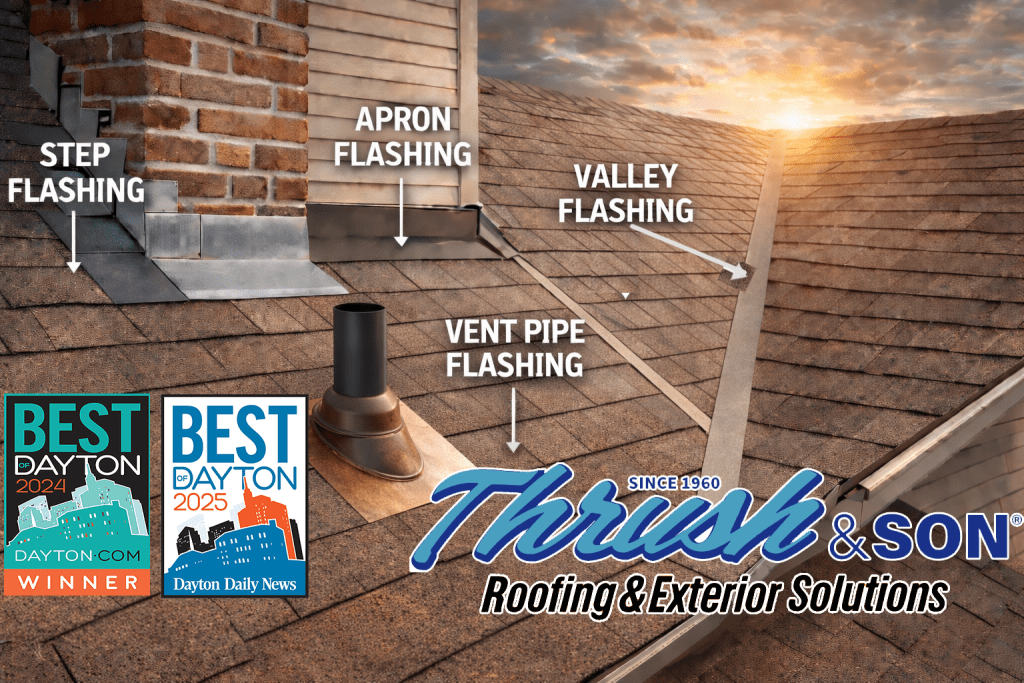
Flashing
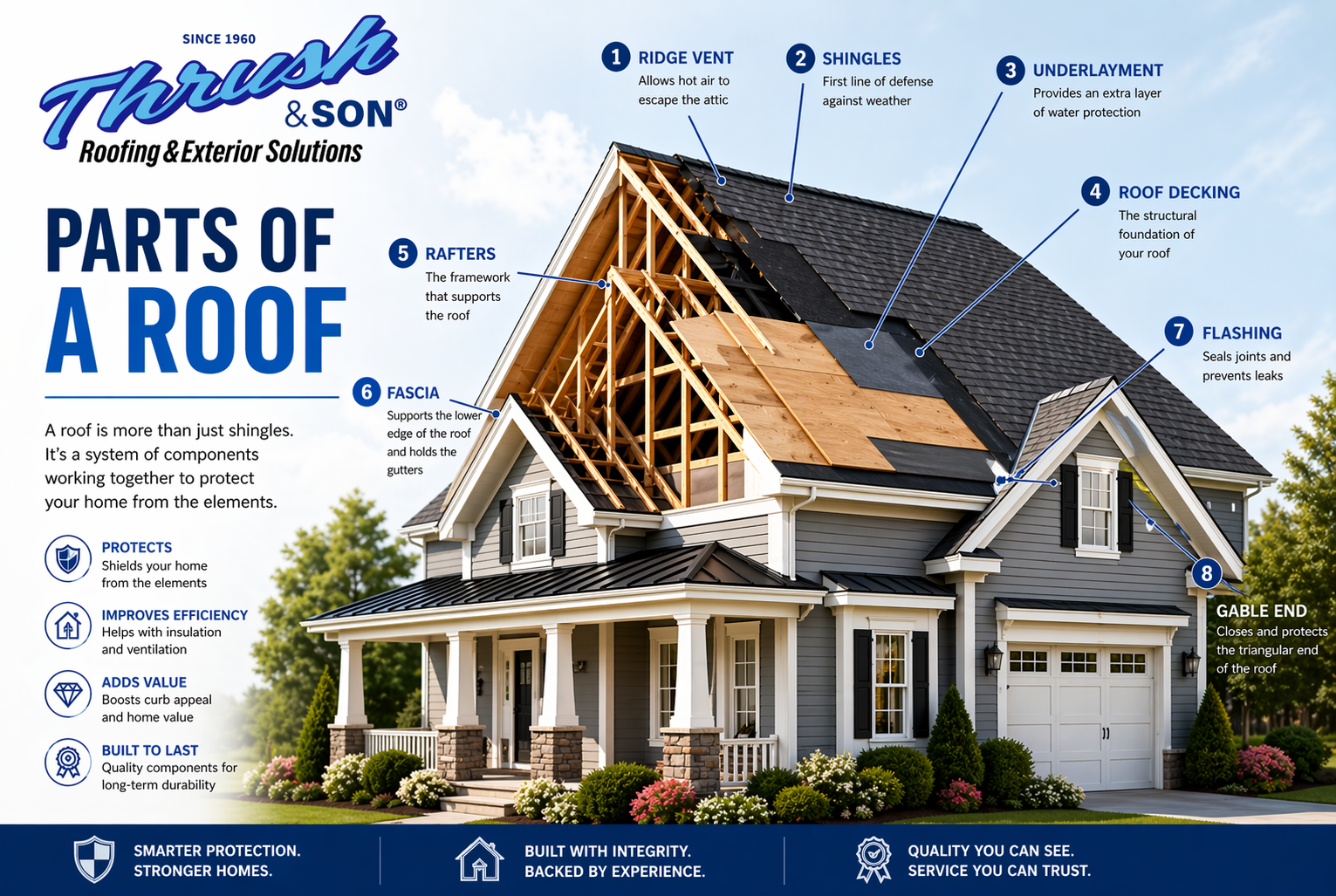
Metal or membrane pieces that seal the transitions and penetrations on a roof: walls, chimneys, valleys and pipes.
On your estimate: Ask whether the roof flashing is new or bent back into place.
Ridge cap shingles
Pre-bent shingles made to cover the peaks and hips, where two roof planes meet at the top.
Roof deck protection
Another name for the underlayment layer. It adds a second line of water protection beneath the shingles.
Roof ridge vent
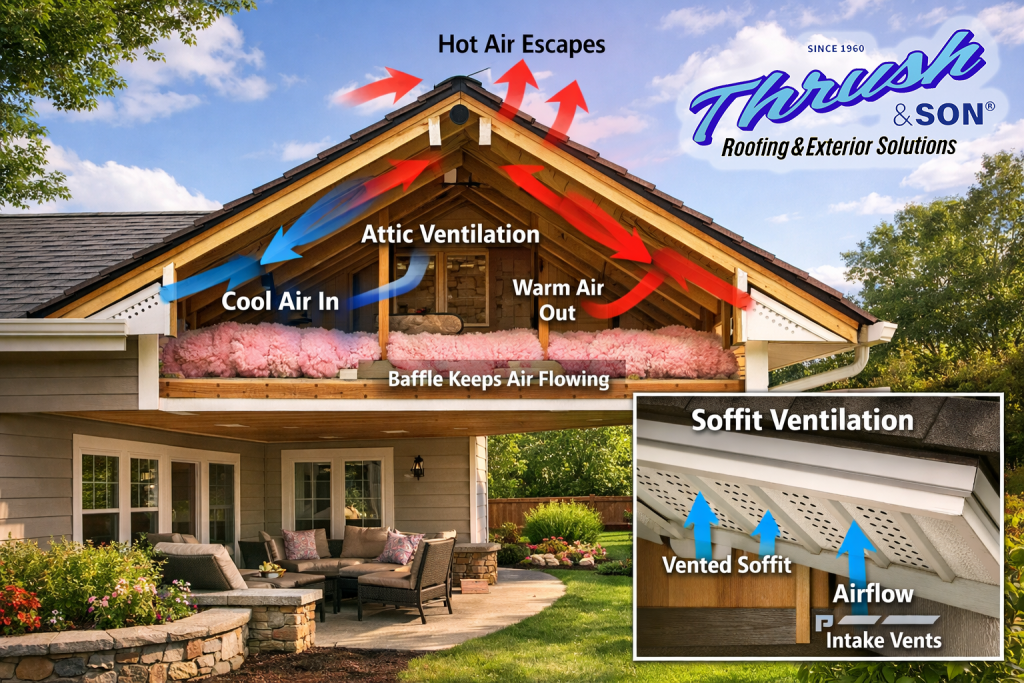
A low-profile vent running along the peak that lets hot, moist air escape the attic.
Roofing felt
The traditional asphalt-saturated paper laid between the deck and the shingles. Synthetic underlayments have largely taken its place.
Roofing underlayment
A water-resistant barrier installed over the deck to keep moisture away from the wood if water ever gets past the shingles.
On your estimate: Synthetic over the whole deck is the standard to look for.
Shingle
An individual overlapping roofing unit. Each course covers the joints of the one below so water sheds down and off.
Slope
The steepness of a roof, written as rise over run. A 6/12 roof rises 6 inches for every 12 inches across.
On your estimate: Steeper slopes take more time and safety gear, so they cost more to install.
Square
The roofer’s unit of measure: 100 square feet of roof surface.
On your estimate: A 25-square roof covers about 2,500 square feet. Compare quotes by squares, not by the house.
Starter strip
The first course installed along the eaves and rakes. Its sealant locks down the first row of shingles against wind uplift.
Tab
The exposed lower part of a shingle, separated from its neighbors by cut-outs.
Valley
The channel where two roof planes meet. Valleys carry a lot of water, which makes them a common leak point.
On your estimate: Ask whether valleys get ice and water barrier underneath.
Vapor retarder
A layer that slows moisture vapor moving from the warm house into the colder roof assembly.
Attic vent
Any opening that lets heat and moisture escape the attic. Good ventilation balances intake low with exhaust high.
Decking
The structural surface, usually plywood or OSB, that the entire roofing system is fastened to.
On your estimate: Damaged decking should be priced per sheet in writing before work starts.
Dormer
A section that projects out of a sloped roof, usually holding a window and adding headroom inside.
Eave
The lower edge of the roof that hangs past the exterior wall.
Fascia
The trim board fastened to the rafter ends. It finishes the roof edge and usually carries the gutters. See our fascia page for materials.
Gable roof
Two sloped sides that meet at a center ridge, leaving a triangular wall at each end.
Hip roof
A roof that slopes down on all four sides. It is naturally sturdy in high wind.
Sheathing
Another word for decking: the base layer beneath all the roofing materials.
Soffit
The finished underside of the roof overhang. Vented soffit is where the attic pulls in fresh air.
Vent
Any opening that lets air and moisture leave a structure.
High nailing
Fasteners placed above the shingle’s nailing zone. The shingle can tear loose in wind, and it can void the warranty.
Ice dam
A ridge of ice at the roof edge that traps meltwater and forces it back under the shingles.
Penetration
Anything that passes through the roof surface, such as plumbing pipes, vents, skylights or a chimney. Every one needs proper flashing.
Shiner
A nail that misses the framing or is left exposed. It can rust, let in water and frost up in winter.
Use these roofing terms at the kitchen table
Knowing roofing terms puts you in control. It helps you weigh estimates, ask sharper questions and spot when a shortcut is being taken. A roof isn’t a pile of materials; it’s a system where every roofing component has to work with the others.
Bring these roofing terms and questions to every appointment, and read our guide to comparing roofing estimates before you sign anything. If a storm is the reason you’re calling, start with our storm damage page.
- How many squares is my roof? Every quote should use the same number.
- What happens if the decking is bad? Get the price per sheet in writing.
- Is the flashing new or reused? New flashing is where leaks are stopped.
- Where does the ice and water barrier go? Eaves, valleys and every penetration.
- How is the attic ventilated? Intake at the soffit, exhaust at the ridge.
- How do you avoid high nailing? The answer tells you how the crew is trained.
A family company that speaks roofer
We define roofing terms all day because we use them all day, on real Miami Valley roofs.

Since 1960, Thrush & Son® has stayed family owned and operated, built on craftsmanship, integrity and long-term relationships. What began more than six decades ago has grown into an award-winning exterior renovation company that homeowners across the Miami Valley trust with their roofs. That longevity isn’t an accident. It’s earned through consistent quality, installation systems we stand behind and a commitment to doing the job right. As a GAF President’s Club contractor, we install complete roofing systems, not just shingles.
Want more plain-language guides like this one? We publish more of them on The Home Improvement Minute. You can also follow the family online:
- W. Allen Thrushleadership and legacy on LinkedIn
- Corey Thrushinnovation and vision on LinkedIn
- Facebookreal homeowner stories
- Instagrambehind-the-scenes craftsmanship
- X (Twitter)pro tips and updates
- LinkedIn company pagecompany news, awards and openings
Still decoding a quote?Roofing terms still not adding up? Send it our way. We’ll walk through every line in plain English, no pressure, and give you a written estimate of our own to compare.
Schedule now