
14 Window Terminology Terms for a Better, More Confident Upgrade
Window terminology can feel overwhelming when you’re starting the window replacement process. Most homeowners know they want better comfort, energy savings, and a cleaner look, but the language of windows can make shopping confusing fast.
A replacement window is far more than glass inside a frame. Understanding the most common window terminology helps you compare options with confidence, talk clearly with contractors, and make smarter decisions for your home.
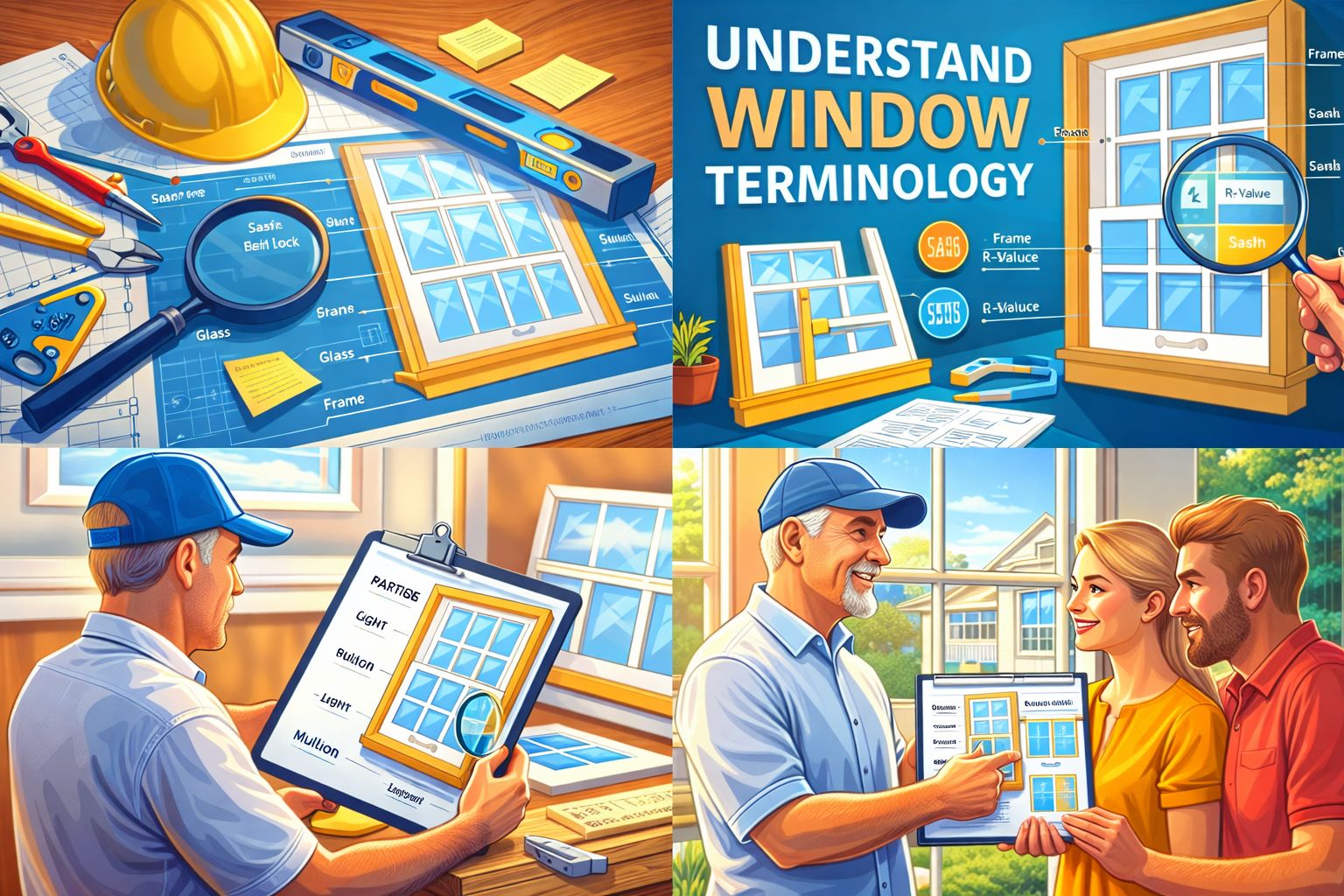
Why Window Terminology Matters Before You Buy
Learning window terminology isn’t about sounding informed. It’s about protecting your investment. The right words help you understand how a window works, what drives efficiency, and why certain upgrades cost more than others.
It also keeps estimates easy to compare. When two quotes describe the same window in different words, knowing the terms lets you compare them line by line instead of by price alone.
If you’re researching whole-home performance, our guide to Is Attic Ventilation Important? explains how airflow and insulation work together with windows to improve comfort year-round.

Window Parts: 10 Core Terms, Shown on a Real Window
Every window is built from multiple components. These are the window terminology terms you’ll hear most often on an estimate. Tap any term to see exactly where it lives.
Shown: a six-over-six double-hung window, mulled to a second unit.
Energy-Efficient Window Terminology That Impacts Comfort
Modern windows aren’t just about appearance. Performance matters, and these four window terminology terms decide how much heat stays inside your home in an Ohio January.
cold air
warm room
The gas-filled space between panes is where most of the insulating happens.
An inert, colorless gas sealed between panes. It’s denser than air, so it slows heat transfer through the glass.
The general term for the insulating gas, usually argon or krypton, that replaces air between the panes.
Resistance to heat flow. Higher R-values mean better insulation. For windows, it’s simply 1 divided by the U-factor.
How quickly heat escapes through the whole window. Lower is better, and it’s the number printed on the NFRC label.
Bonus: 3 Terms You’ll Hear on Every Estimate
These aren’t part of the 14, but they show up on nearly every replacement quote. Add them to your window terminology vocabulary before the first appointment.
A microscopically thin metallic coating on the glass that reflects heat back toward its source. It keeps winter heat inside and summer heat outside without darkening the view.
An insert window fits inside the existing frame. A full-frame replacement removes everything down to the rough opening, which lets the installer inspect for rot and re-insulate. Ask which one your quote includes.
The strip that separates the panes around the edge of the glass. Warm-edge spacers conduct less heat than metal, which helps reduce condensation along the bottom of the glass.
Put the Terms to Work: Read the NFRC Label
Every certified replacement window carries a label from the National Fenestration Rating Council. It’s where window terminology turns into numbers you can compare across brands.
For an Ohio home, start with the U-factor: lower means less heat lost in winter. Then check the solar heat gain coefficient, or SHGC, which shows how much of the sun’s heat comes through the glass, and visible transmittance, which tells you how much daylight you keep.
Want to see how U-factor and R-value convert? Our guide to R-value vs. U-factor breaks it down with a quick translator.
Illustrative values only. Always compare the label on the exact window you’re quoted.
Window Terminology Helps You Make Smarter Upgrades

Understanding window terminology gives you a real advantage when choosing replacement windows. The better you understand the language, the easier it is to spot quality, compare efficiency, and invest wisely.
Thinking about airflow beyond the windows? GAF’s roof ventilation calculator shows how balanced attic airflow supports long-term exterior efficiency.

Talk Windows With People Who Speak It
Now you know the language. Put it to work with a team that explains every line of the estimate in plain language. Thrush & Son® has helped Dayton and Miami Valley homeowners choose replacement windows since 1960.
- Since 1960
- Best of Dayton 2024 Winner · 2025 & 2026 Finalist
- BBB Accredited A+
Michelle, our AI assistant, answers 24/7 · Office: Mon–Thu 9–4, Fri 9–2
