
Solar Glossary: 21 Brilliant Terms You Must Know Now!
This solar glossary gives homeowners clear definitions of the most important terms in solar energy. Whether you’re exploring solar for your roof, evaluating quotes, or planning a switch to renewable power, these 21 key terms help you make informed, confident decisions.
The foundation comes from GAF Energy’s homeowner resources. Thrush & Son®, a family-owned roofing contractor since 1960 and a GAF President’s Club contractor, has updated this solar glossary for clarity, Ohio specifics, and the federal changes that took effect for 2026.
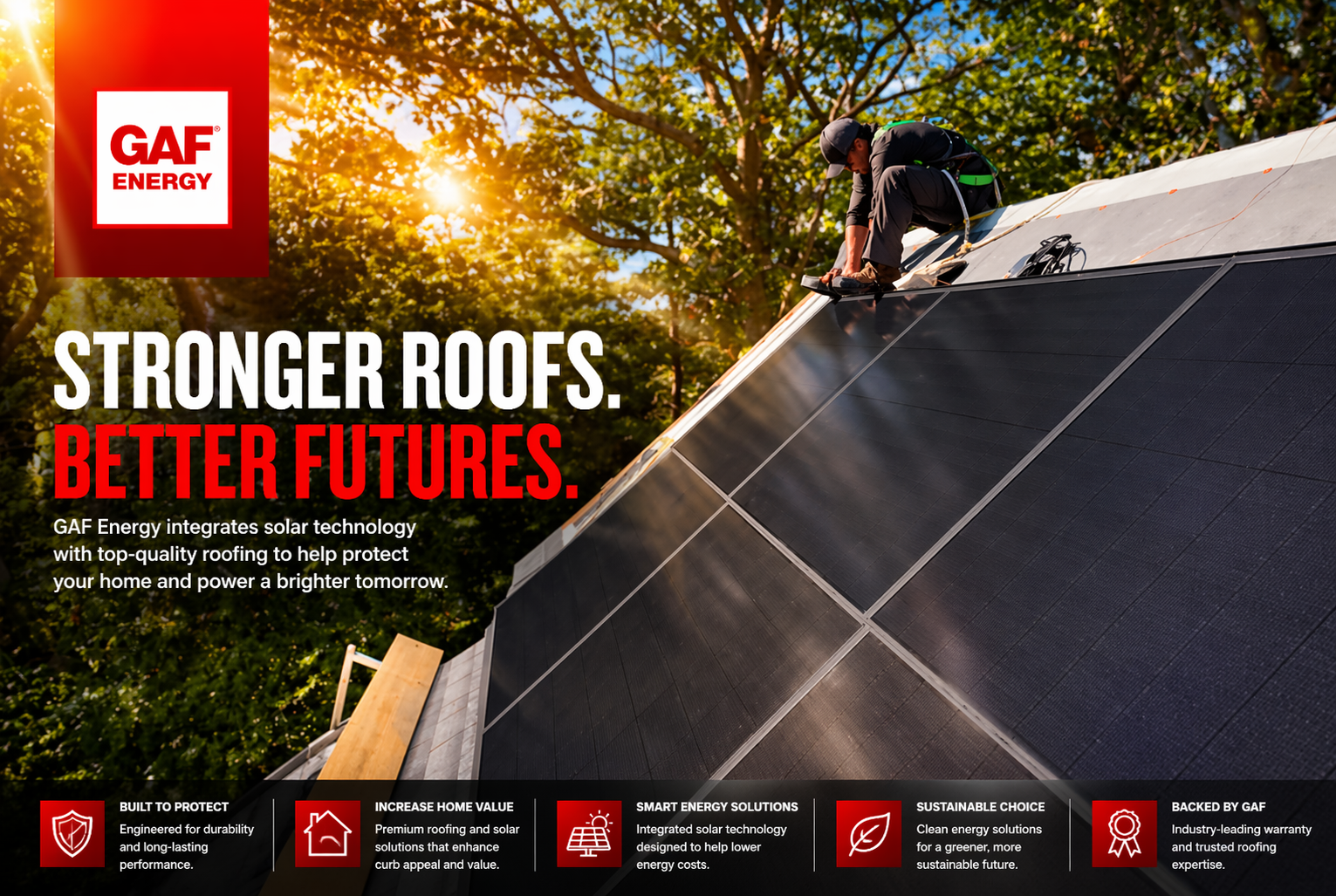
From Sun to Socket: How Solar Works
Before you dive into the solar glossary, here’s the whole system in one line. Each step points to the term that explains it.
Every term in the solar glossary below fits somewhere on that line.
The Solar Glossary: 21 Terms in Plain Language
Tap a category to filter the solar glossary, or tap All to see every term at once.
The process that converts sunlight directly into electricity using solar cells. It’s the foundation of every solar power system.
EquipmentA collection of solar cells that generates DC electricity from sunlight. Multiple panels form an array.
EquipmentA group of solar panels wired together to produce power as a single unit.
EquipmentConverts the DC electricity from your panels into the AC power your home uses. String inverters, microinverters, and hybrid inverters are the common types.
EquipmentA small inverter attached to each panel, so every panel works independently. A smart choice for roofs with partial shade.
EquipmentOne central inverter connected to a series, or string, of panels. Cost-effective, but output drops for the whole string if one panel is shaded.
EquipmentManages solar, battery storage, and grid power in one unit, which makes it easy to add a battery later.
EquipmentStores extra solar energy for use at night or during outages. Lithium-ion batteries dominate modern home systems.
EquipmentThe percentage of sunlight a panel converts into usable electricity. Most modern residential panels land around 20–23%.
PerformanceThe yearly loss in a panel’s output, typically about 0.5% per year. Quality panels still produce roughly 90% of their original output after 25 years.
PerformanceA unit of power, or how fast electricity is produced. System size is quoted in kW; in southwest Ohio, a 5 kW system typically produces around 6,000 kWh a year.
PerformanceA unit of energy, or how much electricity is used over time. Your utility bill is measured in kWh, and solar offsets it directly.
PerformanceA billing setup that credits you for excess solar power sent back to the grid. In Ohio, utilities credit that excess at the generation rate rather than the full retail rate.
PerformancePanels mounted on your roof. The most common and space-efficient option for homeowners, and the reason roof condition matters so much.
Install & systemsPanels on racks in your yard. They allow an ideal tilt and angle but require open land.
Install & systemsRoofing material that generates power while serving as the roof itself. GAF’s Timberline Solar is one example of this integrated approach.
Install & systemsConnected to the utility grid with no batteries required. Excess power flows back to the grid for credit.
Install & systemsA fully independent system with batteries, used where there’s no utility service.
Install & systemsGrid-tied with battery backup, so you keep power during outages and can use stored energy when rates peak.
Install & systemsThe time it takes for energy savings to cover the cost of the system. It depends on system price, incentives, your electric rate, and how your utility credits excess power.
Money & policyThe 30% Residential Clean Energy Credit. Under the 2025 federal tax law it ended for homeowner-owned systems placed in service after December 31, 2025. Ask a tax professional what applies to you.
Money & policyWhat Changed in 2026 for Ohio Homeowners
A solar glossary is only useful if the definitions match today’s rules. Three things shape the numbers on any Ohio solar quote right now.
The 30% credit ended
The Residential Clean Energy Credit no longer applies to homeowner-owned systems placed in service after December 31, 2025. Any quote that still subtracts 30% deserves a second look.
Credits at the generation rate
Ohio’s investor-owned utilities credit excess solar at the generation rate, not the full retail rate, according to Solar United Neighbors. Using more of your own power matters more here.
Payback takes real math
Without the federal credit, payback depends on system price, your electric rate, shade, and roof orientation. Ask any installer to show the calculation, not just the result, and keep this solar glossary handy while you read it.
This solar glossary is general information, not tax or financial advice. Confirm incentives with a tax professional.
Solar Starts With the Roof Under It
Here’s the part most solar glossary guides leave out. Solar panels are built to last 25 years or more, so they should go on a roof that will last at least that long. Removing and reinstalling panels to replace a roof later adds real cost.
- Check the roof’s age first. If it’s within a few years of replacement, replace it before solar goes on.
- Confirm the decking and flashing. Every mount is a penetration, and flashing is what keeps it dry.
- Look at integrated options. Solar shingles replace roofing material instead of sitting on top of it.
- Mind the warranties. Ask how a solar installation affects your roofing manufacturer’s coverage.

Why This Solar Glossary Matters for Homeowners
Understanding these 21 terms from this solar glossary helps you ask the right questions, compare quotes accurately, and choose a system that fits your roof, energy needs, and budget. GAF Energy created the foundation, and Thrush & Son builds on it with roofing expertise, roof integration, and long-term support.
Solar isn’t just panels. Done right, it’s a long-term upgrade that can lower energy bills and add value to your home. Done on the wrong roof, it’s a headache. Ready to keep learning?
Built on Trust Since 1960
We don’t just install products. We help you make strategic upgrades that improve comfort, increase value, and protect what matters most. Whether you’re weighing solar, choosing high-performance windows, or reinforcing your entire exterior, every project is designed for long-term performance and curb appeal. Bring this solar glossary to your next quote, and bring us your questions.
For more inspiration, explore our exterior home upgrades and see what’s possible.
Schedule a Roof InspectionExplore Dayton RoofingMichelle, our AI assistant, answers 24/7 · Office: Mon–Thu 9–4, Fri 9–2

