
Your soffit is where your attic breathes in
The panels under your roof overhang let cool air into the attic and keep birds, bees and weather out of the rafters.
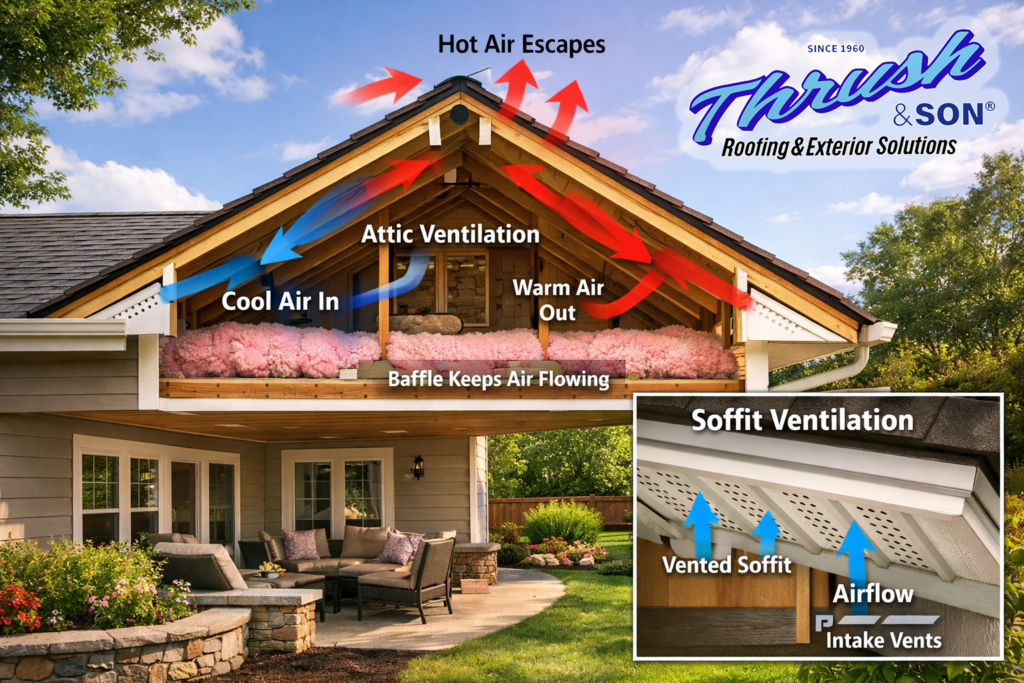
A soffit closes in the underside of your roof overhang, between the fascia and the wall. Vented panels let outside air into the attic at its lowest point. That air rises, picks up heat and moisture, and leaves through the ridge. When those vents are blocked, rotted or missing, that flow stops.
In the Miami Valley, a stalled attic shows up two ways. In summer the attic bakes and shingles age faster. In winter warm, damp air from the house condenses on the cold roof deck and turns into frost, mold and rot.
We install CertainTeed® vinyl panels, usually with new fascia and exterior trim or during a full siding replacement. We also do this work on its own.
- Vented or solidVented where the attic needs intake, solid where it doesn't.
- No paintingVinyl holds its color without scraping.
- Since 1960Three generations on Miami Valley rooflines.
Air in low, heat and moisture out high
Vented panels are only half of a ventilation system. The other half is at the ridge.
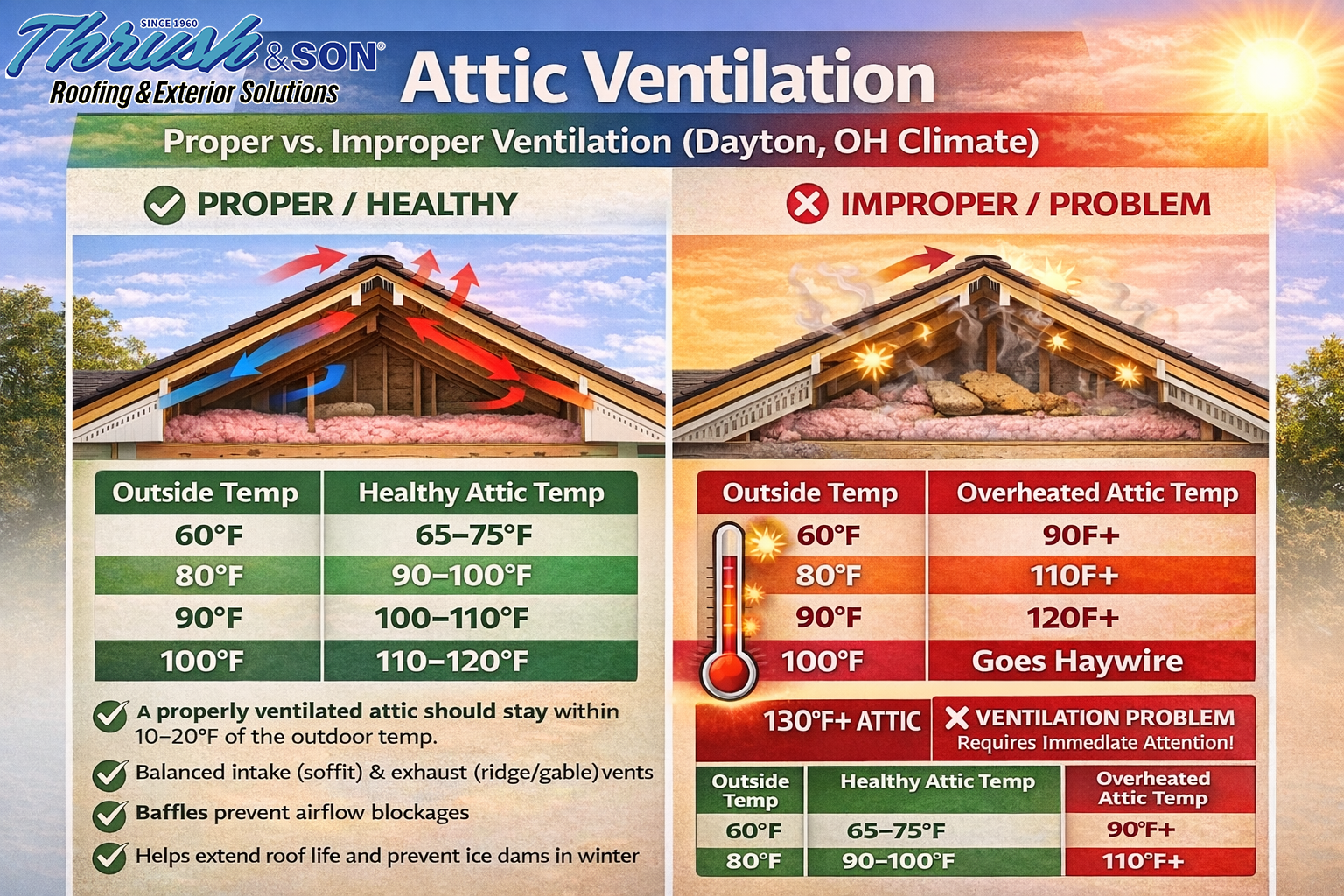
Three things we check before we vent your soffit
Is there an exit?
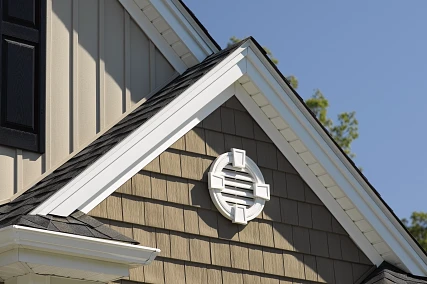
Intake without exhaust does nothing. We look for a ridge vent or other exhaust, and add one with your roof if there isn't.
Is the insulation in the way?
Blown-in insulation often buries the eaves. Baffles hold a channel open so air from the eaves can actually reach the attic.
Is the wood behind open?
New vented panels over solid wood don't vent anything. We open or remove the old wood so the vents lead somewhere.
Intake and exhaust should be roughly balanced. Too little intake and a ridge vent can pull conditioned air out of the house instead. The roofing trade magazine Professional Roofing explains the balance if you want the detail.
Three CertainTeed soffit styles, one for every overhang
Which one fits depends on how deep your overhang is and how close anyone gets to it.
-
 Most common
Universal Triple 4" Vinyl
The everyday choice for most overhangs. Three 4-inch panels per piece, available vented or solid, so one look runs around the whole house.
- VentingVented or solid
- ColorsMatched to CertainTeed siding and trim coil
-
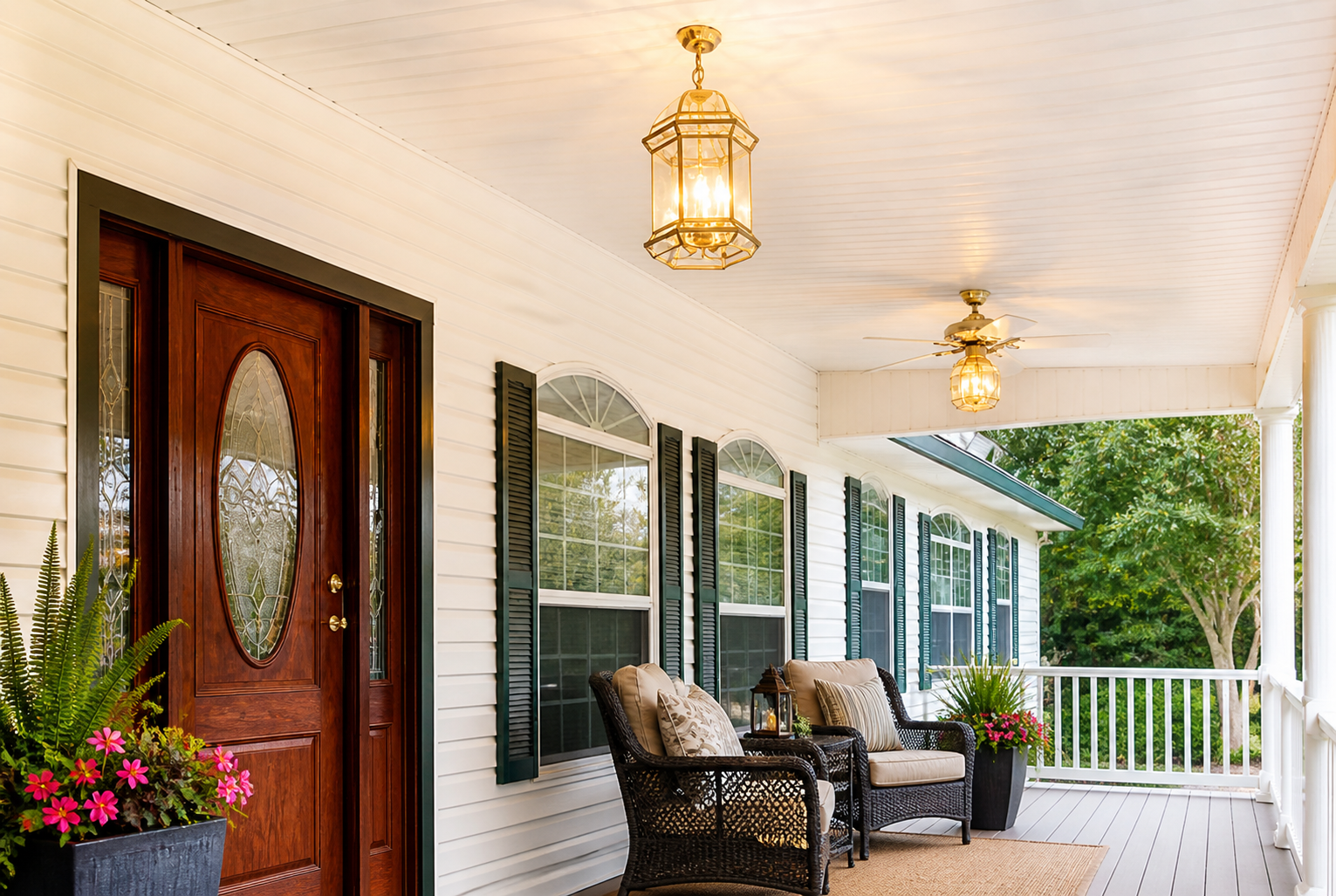
 Porch ceilings
Beaded Triple 2" Vinyl
Narrow beaded panels that read like a wainscot ceiling. We use them on porch ceilings and open eaves where the ceiling is up close and on display.
- VentingVented or solid
- ColorsMatched to CertainTeed siding and trim coil
-
 Hidden vents
Triple 3-⅓" InvisiVent®
The vent openings are tucked into the panel grooves, so the panels look solid from the ground while still moving air. A good fit for short overhangs.
- VentingHidden vents
- ColorsMatched to CertainTeed siding and trim coil
On wide overhangs, vinyl soffit needs support every couple of feet or it sags over time. We add nailers where the framing needs them instead of stretching panels across open spans.
Six signs your soffit is letting you down
You can spot most of these from the driveway or with a flashlight in the attic.
Birds, bees or squirrels
Nests and chewed openings at the eaves mean there are gaps big enough to get in.
Stains and peeling paint
Dark streaks or blistering paint on wood at the eaves usually mean water is getting behind the gutters or fascia.
Sagging or wavy panels
Panels pulling away from the wall or bowing between supports can let weather and pests into the rafters.
Frost or mold in the attic
Frost on the nails in winter or black spots on the roof deck point to air that isn't moving.
Ice along the eaves
Ice dams have more than one cause, including insulation. Blocked intake vents are one we check first.
Soft wood when pressed
If a screwdriver sinks into the wood at the eaves, the rot has already started.
How we replace a soffit
Look from both sides
We check the eaves outside and the attic inside, and show you what we find before we price it.
Fix the wood
Rotted fascia, rafter tails and sub-fascia get replaced. Gutters come down and go back up.
Open the airflow
Old wood is opened or removed, baffles go in where insulation blocks the eaves, and new panels go up.
Wrap and clean up
Fascia gets its trim coil cover, the yard is magnet-swept, and we walk it with you.

See your soffit before it goes up
Try overhang, fascia and siding colors together on a house like yours.
White overhangs disappear against most rooflines. A color that matches the fascia or the siding gives the overhang a finished edge. Our design center lets you test combinations before we bring physical samples to your estimate.
Open the design centerSoffit questions we hear most
Including the one most installers skip: what's behind the new panels.
What does a soffit do?
It closes in the underside of the roof overhang. Vented panels let outside air into the attic at its lowest point, and they keep birds, insects and weather out of the rafters.
Do I need vented or solid panels?
Most homes need vented panels along the eaves, because that's where attic intake air comes from. Solid panels are used where there's no attic above, such as porch ceilings and some gable ends.
Are vented panels enough to ventilate my attic?
No. Those panels are the intake. The attic also needs exhaust, usually a ridge vent, and a clear path between the two. If insulation is blocking the eaves, we install baffles so the air can reach the attic.
Can new panels go over my old wood soffit?
Only if the wood is sound, and only if the old wood is opened up behind any vented panels. Vented vinyl over solid wood looks right from the ground but moves no air. We check the wood first and replace anything that's soft.
Why are birds or wasps getting in at my eaves?
Usually through gaps where old panels have sagged, rotted or pulled away from the wall or fascia. New panels fitted tight to both edges close those openings.
Should soffit and fascia be replaced together?
Usually, yes. They meet at the same edge, the same water damages both, and the gutters have to come down for either job. Doing them together costs less than two separate trips.
Which CertainTeed products do you install?
We install Universal Triple 4-inch vinyl panels for most overhangs, Beaded Triple 2-inch vinyl panels for porch ceilings, and Triple 3-1/3-inch InvisiVent panels, which hide the vent openings in the panel grooves.
Let’s check your soffit and attic
We look at the eaves from outside and the attic from inside, show you what we find, and give you a written price before work starts.
