What Is Attic Ventilation? Why It Matters More Than Most Homeowners Realize
There are two sides to every roof story. Most homeowners focus on the shingles and materials they can see from the outside, but the truth is that protection also happens underneath. Inside your attic, ventilation plays a critical role in keeping your home comfortable, dry, and structurally protected. Understanding What Is Attic Ventilation is one of the smartest ways to prevent long-term roofing problems before they start. Homeowners often ask, What Is Attic Ventilation, because it’s not just about airflow — it’s about protecting your entire home system from heat buildup and hidden moisture damage.
What Is Attic Ventilation?
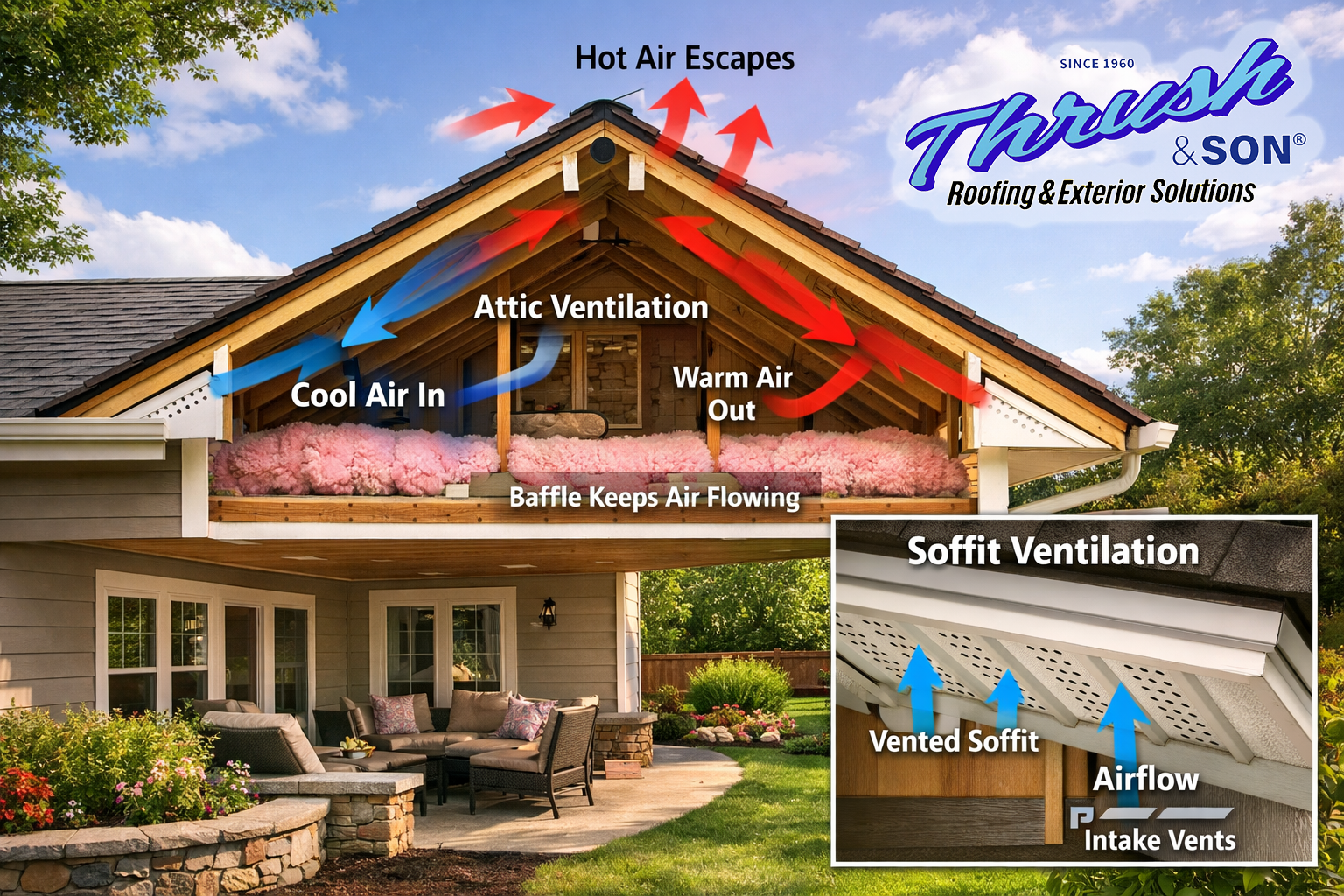
What Is Attic Ventilation? It’s the balanced movement of air through your attic using intake and exhaust vents. This system allows fresh outdoor air to enter while pushing trapped heat and moisture back out. The word “ventilate” comes from Latin, meaning “to fan.” In the simplest terms, attic ventilation helps your home breathe — replacing stale, overheated attic air with cooler, healthier airflow from outside. When you truly understand What Is Attic Ventilation, it becomes clear why this hidden system is just as important as the shingles above it.
How Does an Attic Ventilation System Work?
Attic ventilation works because hot air naturally rises. Intake vents, typically located beneath the soffits at the lower edge of the roof, allow cool air to enter the attic space. That fresh air flows upward through the attic and exits through exhaust vents near the ridge. This continuous cycle is known as passive ventilation — one of the most effective ways to keep your attic balanced without mechanical systems. This is exactly why What Is Attic Ventilation becomes such an important question for homeowners looking to extend roof life and prevent costly repairs. A key rule: the amount of exhaust should never exceed the amount of intake. Proper balance is what keeps the system performing correctly year-round.
Why Is Attic Ventilation Important?
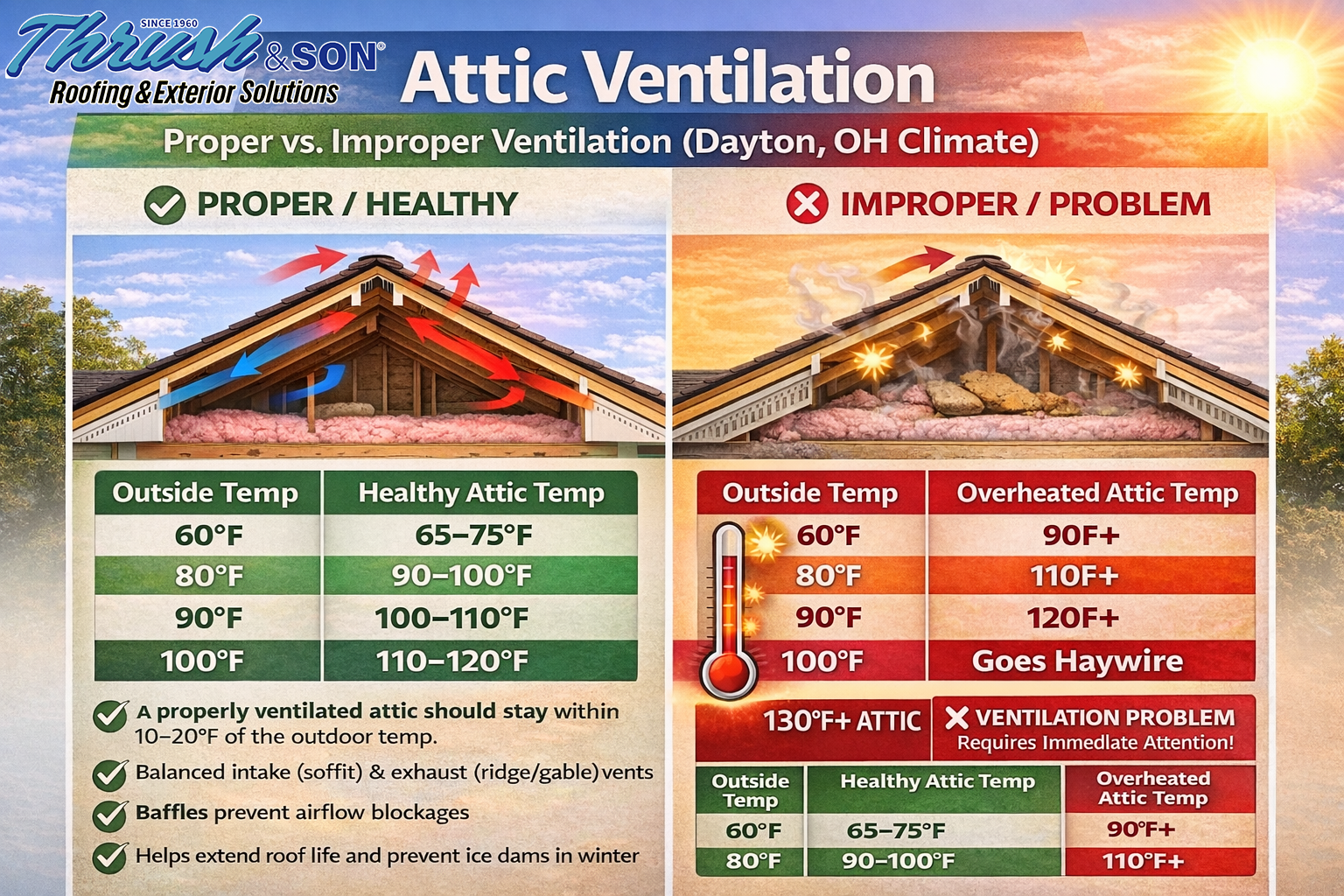
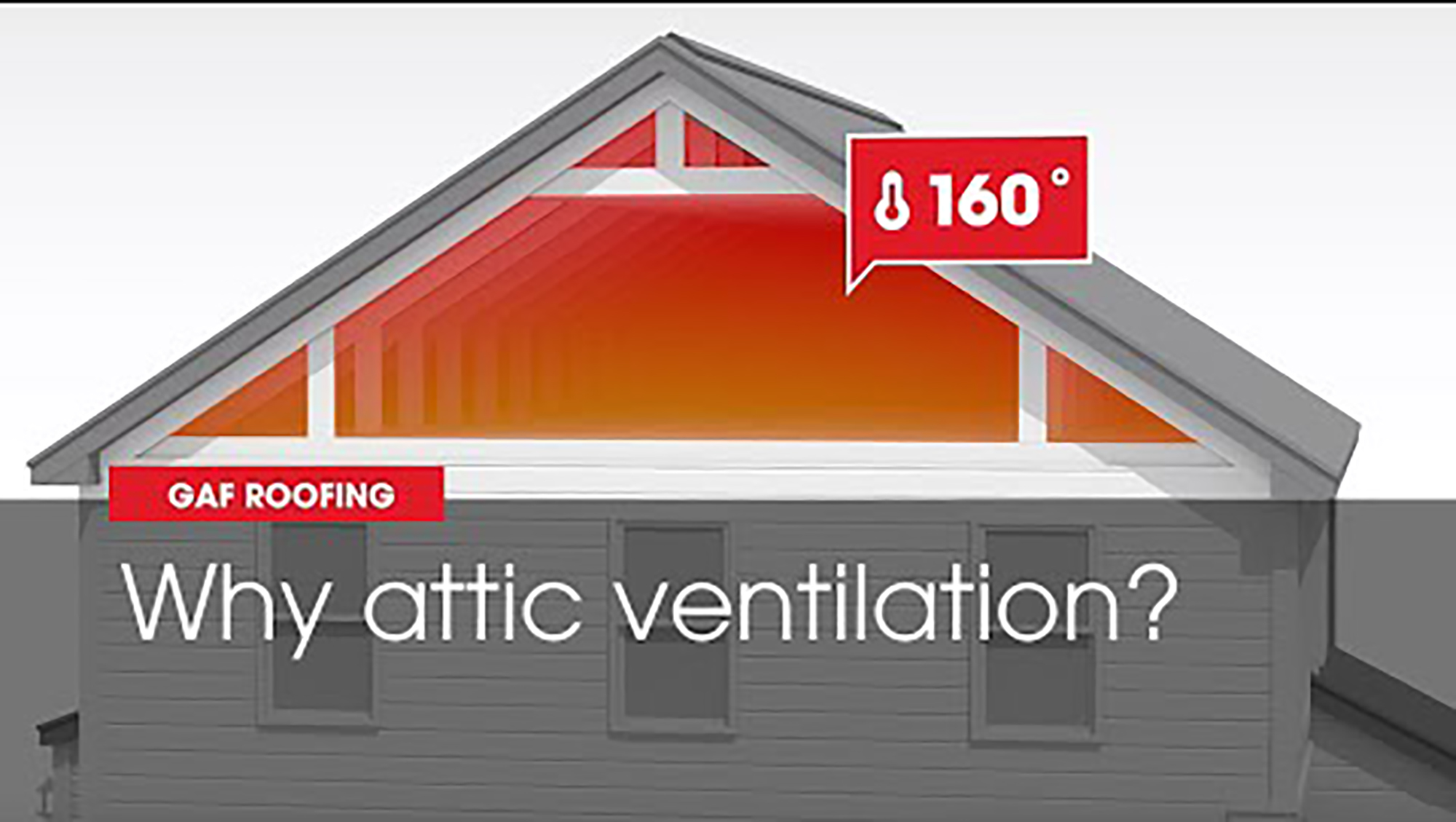
Without proper airflow, attic temperatures can soar past 160°F during summer. That heat buildup forces your HVAC system to work harder, increasing cooling costs and placing extra strain on your home. Even worse, trapped heat and moisture can slowly degrade roof decking, insulation, and structural supports — shortening the lifespan of your roofing system over time.
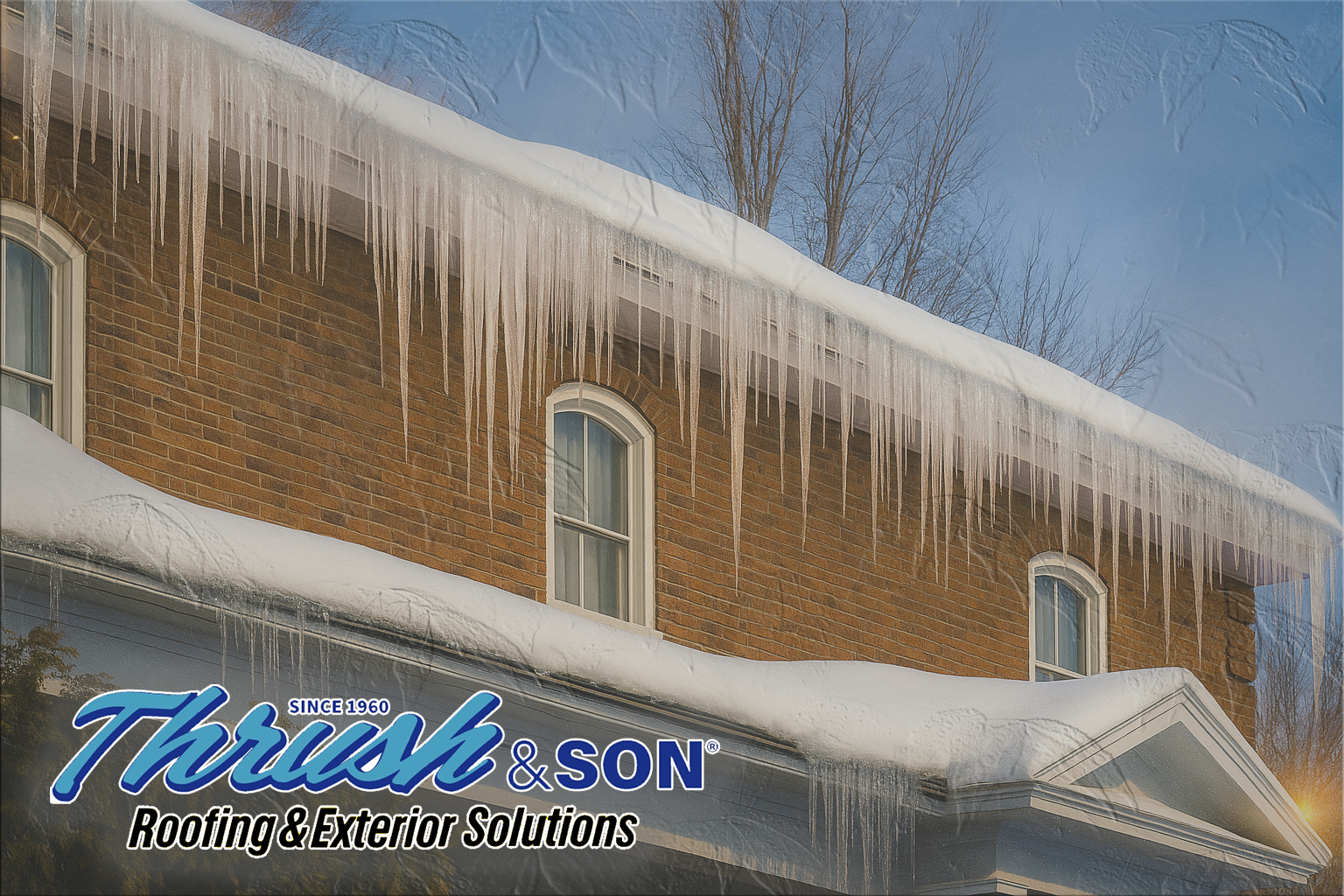
In winter, warm attic air can melt roof snow unevenly, leading to ice dams along the colder eaves. Those ice dams can force water backward under shingles, causing leaks and interior damage. In both summer and winter, What Is Attic Ventilation really comes down to controlling temperature and moisture before they create serious damage.
It Reduces Excess Moisture
Everyday life produces moisture — cooking, showering, laundry, and even breathing adds water vapor into your indoor air. That moisture naturally rises into the attic. When warm air hits cooler roof surfaces, condensation forms. Over time, this can lead to mold growth, mildew, wood rot, and insulation breakdown. Proper attic airflow is one of the most important answers to What Is Attic Ventilation, because it helps remove moisture before it becomes a serious structural problem.
It Helps Lower Energy Costs
A properly ventilated attic doesn’t just protect your roof — it protects your wallet. By pushing excess heat out during summer, your attic stays cooler, your ductwork performs better, and your air conditioner doesn’t have to fight extreme temperatures. Proper airflow reinforces What Is Attic Ventilation by keeping your attic cooler and your home more efficient through every season.
If you’re improving attic airflow, it also helps to understand how every part of your roofing system works together. Our guide on exterior home upgrades explores additional ways to protect your home year-round through smarter ventilation, insulation, and exterior performance improvements.
That improved airflow reduces strain on your HVAC system and helps lower energy bills season after season.
Attic Ventilation Protects More Than Shingles
Your roofing system is about far more than what you see from the street. Full protection comes from what happens beneath the surface — controlling heat, managing moisture, and preventing long-term damage. Once you truly understand What Is Attic Ventilation, it becomes clear why it’s one of the most important — and most overlooked — components of a healthy home. Once you fully grasp What Is Attic Ventilation, you can make smarter decisions that protect your roof, improve efficiency, and extend the life of your entire home system.
If you’re unsure whether your attic ventilation is properly balanced, working with a certified roofing professional can help ensure your roof system is built to handle every season for years to come. For additional ideas on improving exterior performance year-round, explore exterior home upgrades across the Miami Valley.
🔗 Stay Connected
➡️ Connect with W. Allen Thrush on LinkedIn for leadership & legacy insights.
➡️ Follow Corey Thrush on LinkedIn for innovation and vision.
➡️ Join our homeowner family on Facebook for real stories.
➡️ Explore behind-the-scenes craftsmanship on Instagram.
➡️ Get pro tips and updates on Twitter (X).
➡️ Visit our LinkedIn Business Page for company news, awards, and opportunities.