Written by Corey A Thrush
Understanding Warranties: The Costly Fine Print (Part 4 of 4)
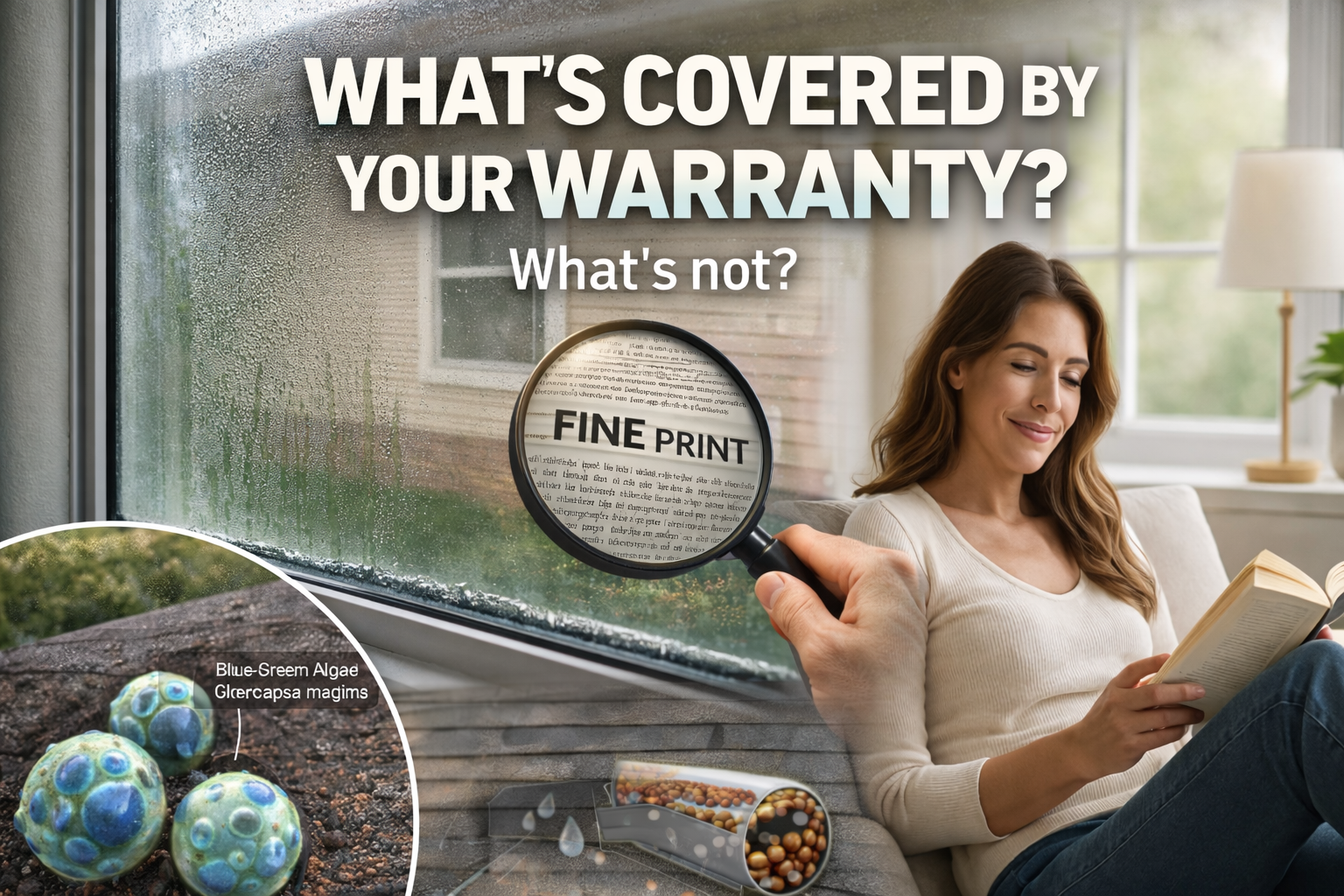
Understanding warranties is one of the most overlooked parts of any home improvement decision—and it’s usually the part homeowners learn about the hard way. A warranty isn’t a “everything is covered” promise. It’s a contract. And contracts come with exclusions, conditions, and responsibilities that can decide whether your claim is approved or denied.
This is the final post in our four-part series, What’s the Deal with Warranties? If you’ve followed along, you already know the mission: help homeowners make smarter long-term decisions by learning what manufacturers actually cover, what they don’t, and how to protect your investment before a problem shows up.
Quick series recap: warranties are only as valuable as your ability to understand them, document your work, and follow the requirements. If you missed the earlier parts, you can still catch up here:
- Part 1: What warranties really mean (series start)
- Part 2: Reading the fine print & exclusions
- Part 3: Roofing warranty realities & common claim traps
- Part 4 (this post): Understanding warranties for roofing details + window seal failure
Understanding Warranties Starts with “What’s Excluded?”

Here’s the truth most people don’t hear at the point of sale: many warranty disputes aren’t about whether a problem exists. They’re about who is responsible for that problem. Manufacturers often divide issues into two buckets:
- Material defect: something is wrong with what was produced (covered if it meets the warranty standard).
- Workmanship / installation: something was installed incorrectly or a related component failed (often excluded).
That’s why understanding warranties starts with learning the difference between a product defect and an installation/assembly issue—because a lot of “roof leaks” and “window problems” live in that gray area.
Understanding Warranties and the Roofing Flashing Gray Area
Let’s talk about flashings—chimney flashings, wall flashings, step flashing, and other transition details. This is one of the biggest gray areas homeowners run into with roofing warranty claims.
Many manufacturers consider flashing to be part of a complete roofing system functionally, but not a component they actually manufactured. Translation: even when a flashing failure causes a leak, it may be excluded because it’s treated as a workmanship detail or a non-manufacturer component.
So what happens in real life?
- If shingles fail to seal, blister, crack, or show true product defect patterns, the warranty claim is more likely to be considered.
- If a leak stems from chimney or wall flashings, the manufacturer may classify it as installation-related and exclude it.
- Even if the roof is approved for replacement under warranty, some warranties still exclude flashing replacement, leaving homeowners paying out-of-pocket for details that should be handled correctly the first time.
Bottom line: understanding warranties means asking one simple question before work starts: “If there’s ever a claim, what parts of this system are excluded, and who pays for them?”
For a broader perspective on consumer warranty basics (what “limited” vs. “full” can mean), this FTC overview is a good reference: FTC: What you need to know about warranties.
Understanding Warranties for Window Seal Failure
Now let’s move to one of the most common window frustrations homeowners face: seal failure.
Have you ever seen a window that looks foggy, hazy, or “dirty” between the panes—no matter how much you clean it? That’s usually seal failure. The insulated glass unit (IGU) relies on perimeter seals to hold insulating gas in and moisture out. When the seal weakens, the gas escapes and moisture creeps in, creating that permanent fogged look.
Seal failure isn’t rare. It happens. And it can happen for several reasons:
- Age: like any product, time increases the likelihood of failure.
- Temperature swings: expansion and contraction stresses seals and frames over the years.
- Moisture exposure: persistent humidity can accelerate breakdown in vulnerable assemblies.
- Manufacturing defects: it’s not common, but it’s real—and that’s why warranties exist.
Here’s where understanding warranties becomes critical: not all “window warranties” are equal, and the glass section often has separate rules from the frame/sash section.
Understanding Warranties: What to Ask Before You Buy
If you’re shopping replacement windows (or reviewing what you already own), focus on these questions:
- How long is seal failure covered? Ten years is common. Some go longer. Some vary by glass package.
- Is the warranty transferable? If you sell your home, a transferable warranty can be a real selling point.
- What about glass breakage? Many warranties exclude accidental breakage unless you purchase additional coverage.
- Is labor covered? Some cover parts only. Others include labor for a limited time. Labor is often where the real cost lives.
- What “maintenance” requirements exist? Sometimes warranties include upkeep conditions—especially on finishes and hardware.
If you want to go deeper on performance terms that show up around window decisions, this internal reference is a strong companion read: Window Performance Ratings: What the Numbers Really Mean.
Understanding Warranties Is Also About Documentation
Even the best warranty can get messy without documentation. Homeowners who have the smoothest outcomes tend to have three things ready:
- Proof of purchase: contract, invoice, product details.
- Install documentation: photos, completion records, permits (when applicable).
- Maintenance records: any relevant service history.
That’s why we tell homeowners to treat warranties like insurance: store them where you can find them fast, and don’t rely on memory when a claim comes up five to fifteen years later.
And if you’re planning broader exterior improvements this year, this guide can help you prioritize smart upgrades: Spring Exterior Home Upgrades (planning guide).
Understanding Warranties: The Real Takeaway
Most warranty problems aren’t caused by homeowners trying to “game the system.” They’re caused by assumptions. People assume flashings are automatically included. They assume labor is included. They assume the warranty transfers. They assume foggy glass is covered forever. Then a claim happens—and the fine print speaks.
Understanding warranties is simply learning how to remove those assumptions. When you know what’s covered, what’s excluded, and what triggers a denial, you protect your investment and avoid expensive surprises.
Built on Trust Since 1960

Since 1960, Thrush & Son® has remained a family-owned and operated company built on craftsmanship, integrity, and long-term relationships. What started more than six decades ago has grown into an award-winning exterior renovation leader trusted by homeowners across the Miami Valley. Our reputation isn’t luck—it’s earned through consistent quality, proven systems, and a commitment to doing the job right. For more ideas that strengthen your home’s exterior performance year-round, explore exterior home upgrades across the Miami Valley.
For additional ideas on improving exterior performance year-round, explore exterior home upgrades across the Miami Valley.
🔗 Stay Connected
➡️ Connect with W. Allen Thrush on LinkedIn for leadership & legacy insights.
➡️ Follow Corey Thrush on LinkedIn for innovation and vision.
➡️ Join our homeowner family on Facebook for real stories.
➡️ Explore behind-the-scenes craftsmanship on Instagram.
➡️ Get pro tips and updates on Twitter (X).
➡️ Visit our LinkedIn Business Page for company news, awards, and opportunities.