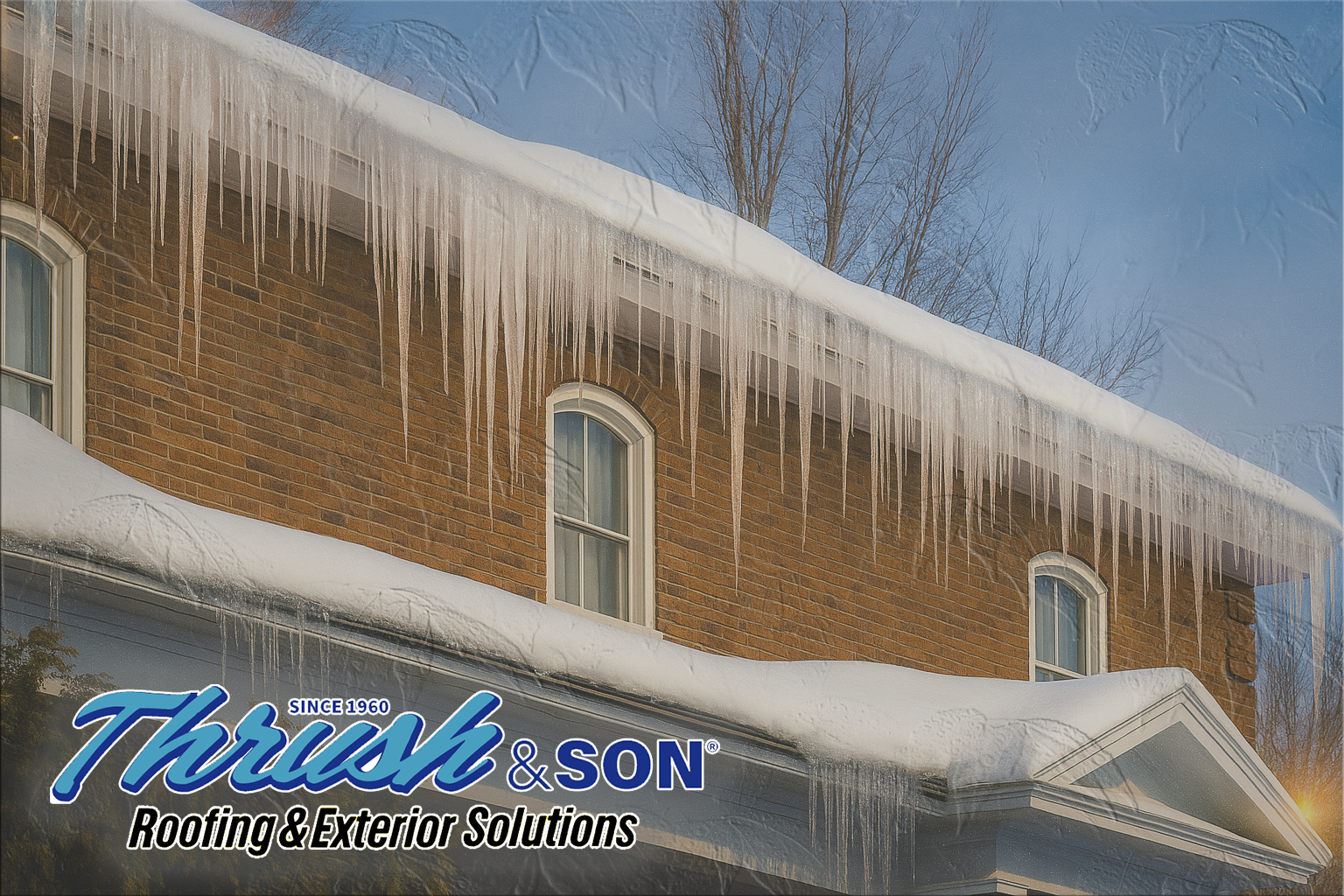
Ice Dam Prevention Guide: 7 Powerful Ways to Protect Your Roof
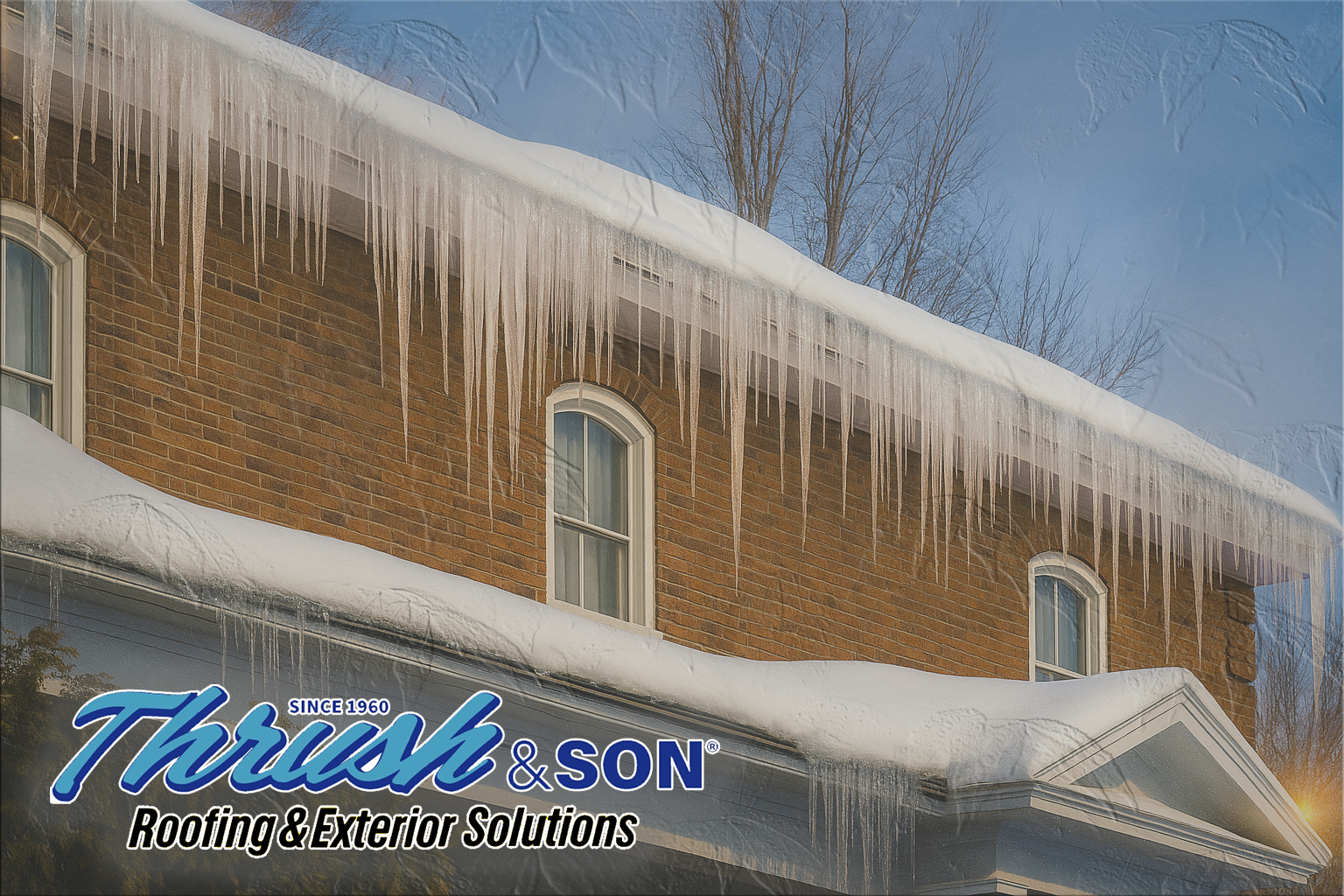
Ice dam prevention guide — those four words can save homeowners thousands of dollars in winter damage. Ice dams aren’t just an exterior nuisance or a seasonal annoyance. They’re a warning sign that your roof, attic, and ventilation system aren’t working together the way they should.
If left unchecked, ice dams can force melting snow back under shingles, soak insulation, stain ceilings, and damage walls long after winter ends. Understanding how ice dams form — and how to prevent them — is one of the smartest moves homeowners can make before cold weather sets in.
What Is an Ice Dam?
An ice dam forms when melted snow refreezes along the lower edge of a roof, creating a barrier that prevents water from draining properly. As water backs up behind that frozen ridge, it can work its way beneath roofing materials and into the structure of your home.
This is why icicles hanging from your gutters aren’t decorative. They’re often the most visible symptom of a deeper roofing and attic performance issue.
What Causes Ice Dams to Form?
Ice dams are the result of uneven roof temperatures. When the upper sections of a roof are warmer than the eaves, snow melts higher up and refreezes near the colder edges. This repeated freeze-thaw cycle creates the dam.
In most cases, the problem starts inside the home. Warm air rises into the attic and escapes through gaps, insufficient insulation, or poor ventilation. That trapped heat warms the roof deck above, setting the stage for ice dam formation.
Why Attic Ventilation Plays a Critical Role
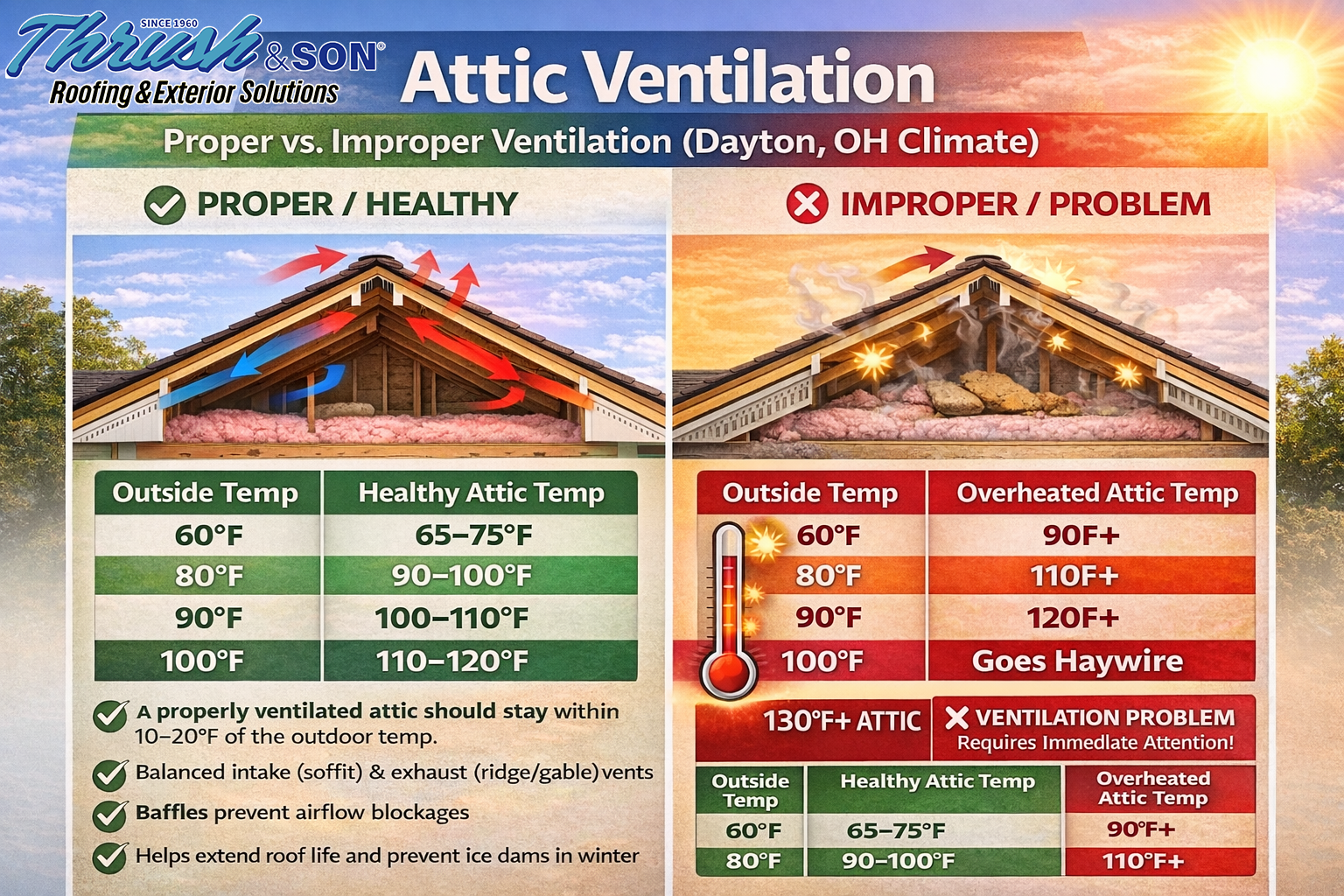
This comparison shows how proper soffit installation and balanced attic ventilation help regulate temperatures, while poor airflow can lead to overheating, moisture issues, and roof damage.
A properly designed attic ventilation system helps maintain a roof temperature closer to the outdoor air temperature. Intake vents allow cold air to enter, while exhaust vents release warm air before it can accumulate.
An effective ice dam prevention guide always includes attic airflow. Without it, even newer roofs can suffer winter damage despite quality materials.
For a broader look at how heat transfer affects home efficiency, the U.S. Department of Energy offers helpful guidance at
Energy Saver.
7 Proven Ice Dam Prevention Strategies
1) Improve Attic Insulation
Insulation slows heat loss into the attic, reducing roof surface temperature differences. Sealing air leaks before adding insulation is especially effective.
2) Balance Attic Ventilation
Proper intake and exhaust ventilation work together to flush warm air out. This is a cornerstone of any reliable ice dam prevention guide.
3) Install Leak Barriers at the Eaves
Leak barriers placed along vulnerable roof edges help block water intrusion when ice dams occur. They provide an added layer of protection where damage most often begins.
4) Keep Gutters Clear
Debris-filled gutters trap ice and slow drainage. Clean gutters allow melting snow to exit the roofline more efficiently.
5) Remove Excess Snow Safely
A roof rake can help reduce snow buildup after heavy storms. Avoid sharp tools or aggressive methods that can damage roofing materials.
6) Address Heat Sources Below the Roof
Bathrooms, kitchens, and recessed lighting can leak heat into the attic. Air sealing these areas reduces warm air migration.
7) Schedule a Professional Evaluation
Sometimes the best prevention starts with an inspection. A trained professional can evaluate insulation depth, ventilation balance, and roof design factors.
What to Do If You Already Have an Ice Dam
If an ice dam has already formed, avoid breaking ice aggressively. This can damage shingles, gutters, siding, and landscaping. In many cases, monitoring and allowing gradual melting is safer unless interior leaks appear.
If you notice water stains or dripping indoors, contact a roofing professional promptly to prevent further damage.
How Ice Dam Prevention Connects to Overall Home Efficiency
Roof performance doesn’t exist in isolation. Windows, insulation, and ventilation all work together. If winter comfort or drafts are concerns, this companion article on
vinyl replacement window benefits
explains how modern upgrades support energy efficiency and help reduce heat loss that contributes to ice dam conditions.
Start with Knowledge. Finish with Confidence.
An effective ice dam prevention guide isn’t about reacting after damage appears — it’s about planning ahead. When homeowners understand how roofs, attics, and airflow interact, winter becomes far less stressful.

For additional ideas on improving exterior performance year-round, explore exterior home upgrades across the Miami Valley.
🔗 Stay Connected
➡️ Connect with W. Allen Thrush on LinkedIn for leadership & legacy insights.
➡️ Follow Corey Thrush on LinkedIn for innovation and vision.
➡️ Join our homeowner family on Facebook for real stories.
➡️ Explore behind-the-scenes craftsmanship on Instagram.
➡️ Get pro tips and updates on Twitter (X).
➡️ Visit our LinkedIn Business Page for company news, awards, and opportunities.
Where Winter Protection Meets Long-Term Craftsmanship
Homeowners across the Miami Valley rely on smart planning and proven solutions to protect what matters most. Thrush & Son® delivers roofing and exterior services designed to perform through every season — from winter weather protection to year-round efficiency. When preparation matters, experience makes the difference.