
9 Easy Fixes for Window Condensation in Ohio Homes
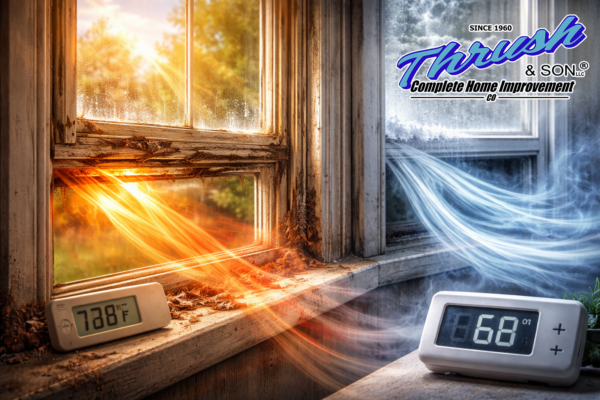
Window condensation is your house reporting its humidity. On a cold Dayton morning, the glass is usually the coldest surface in the room, so it’s the first place extra moisture shows up. A little fog in January is normal. Water pooling on the sill, mildew in the corners, or peeling paint below the window means the house is holding more moisture than it can handle.
The fix is rarely just the window. Below is how to read the fog, the humidity level your home should hold as the temperature drops, and nine fixes, from free habits to the point where new glass is the right answer.

Read the Fog Before You Fix It
Where window condensation forms tells you what’s causing it, and whether it needs a fix at all.
- On the room sideToo much indoor humidity for the outdoor temperature. The nine fixes below are for this.
- On the outside of the glassNormal, and a good sign. Efficient glass keeps heat in, so the outer pane stays cool enough for morning dew.
- Between the panesThe seal has failed and can’t be wiped or dried. Try our 10-second fog test to confirm it.
Window condensation in only some rooms is a clue, too. It usually points to a local source: a bathroom without a working fan, a kitchen, a basement bedroom, or a room full of plants.

The Right Humidity for the Temperature Outside
The colder it gets, the drier your house needs to be to keep window condensation off the glass. Pick tonight’s low to see your target, then set the furnace humidifier to match.
Common industry guideline for double-pane windows. A cheap digital hygrometer tells you where your house actually is. Year-round, the U.S. EPA recommends keeping indoor humidity below 60%, ideally 30–50%, to prevent mold.
9 Fixes for Window Condensation
Start on the left. Most window condensation clears up with the first group alone; the last group is for windows that stay cold no matter what.
Lower the moisture
Most fog starts here- 1Run the bath fan longerRun it during the shower and 20 minutes after. Then check that it vents outdoors; we often find fans dumping steam into the attic.
- 2Vent the cookingUse a range hood that exhausts outside, and keep lids on simmering pots. Recirculating hoods filter grease, not moisture.
- 3Turn down the furnace humidifierA whole-house humidifier set for comfort in November is often too high by January. Match it to the chart above to stop window condensation at the source.
- 4Dry out the basementRun a dehumidifier there, and keep firewood, drying laundry, and large plant collections out of living spaces in winter.
Move the air
Warm air keeps glass clear- 5Leave a gap at the glassKeep drapes and blinds a few inches off the pane and off the sill so room air can reach it. Open them during the day.
- 6Open the registersMake sure the supply register near each window is open and not blocked by furniture. Bay and bow windows need it most.
- 7Ease the overnight setbackA deep thermostat drop at night chills the glass, and the fog shows up at dawn. Keep setbacks to a few degrees in the coldest weeks.
Warm the glass
When habits aren’t enough- 8Seal the draftsCold air leaking around a frame chills the glass edge first. Caulk and weatherstrip gaps at the frame and sill.
- 9Upgrade cold windowsIf window condensation persists despite all of the above, the glass is the problem. Low-E glass, argon fill, and a warm-edge spacer keep the room-side pane warmer.
Shopping for a quieter, more effective bath fan? ENERGY STAR certified ventilation fans move more air on less power.

What Ignored Condensation Does to a House
Water that runs off the glass every morning doesn’t disappear. It soaks into the sill and the bottom rail, wicks into drywall returns, and feeds mold behind blinds and curtains. On wood windows, that’s how sills rot from the inside. Persistent window condensation is often the first visible sign of a moisture problem that also shows up in the attic as frost on the roof deck.
Bay and bow windows deserve extra attention. They project past the wall, so they run colder and show window condensation first, and their seat boards often hide water damage until it’s advanced. Check them first each winter.
When the Window Is the Problem
Two situations point to the window itself. First, fog, hazing, or mineral streaks between the panes: the seal has failed, the insulating gas is gone, and the unit needs replacing. Second, room-side window condensation that persists even with humidity in range: the glass is simply too cold, often an older double-pane unit with a metal spacer.
Modern glass packages keep the inside pane several degrees warmer, which pushes it above the dew point on most winter nights. Learn what’s sealed between the panes in our argon gas guide, see which glass your county needs in our ENERGY STAR 7.0 breakdown, and protect yourself when you shop with our replacement window buying secrets.
Fog That Won’t Clear? We’ll Find the Source
Thrush & Son® has served Miami Valley homes since 1960, founded by Wilbur Thrush and now in its third generation. We’ll trace window condensation to its source, check for failed seals and cold glass, and tell you plainly whether the answer is new windows or simply drier air.
- GAF President’s Club Contractor
- Best of Dayton 2024 Winner · 2025 & 2026 Finalist
- BBB Accredited A+
Michelle, our AI assistant, answers 24/7
Office: Mon–Thu 9–4, Fri 9–2
